Trumpism
is a natural reaction to the self-destruction of America’s industrial
base. But the president’s mania to wreck international trade agreements
and impose tariff barriers will result in diminishing America’s economic
and political influence around the globe.
by Eric S. Margolis-
( December 31, 2017, Toronto, Sri Lanka Guardian) There
is much President Trump does not understand about the outside world.
High up on the list is the crucial importance of US trade policy in
creating and sustaining the American Empire.
The key to the post-World War II US imperium was granting other nations
commercial access to the huge, vibrant American domestic market. This,
as much as the highly successful Marshall Plan in Europe, was
responsible for stabilizing the world economy and extending US
geopolitical power across much of the globe.
I vividly recall when war-ravaged Japan produced only junk and cheap
toys. A small town in Japan called ‘Usa’ produced fake Zippo cigarette
lighters stamped ‘made in USA.’ Five years later, I was amazed to
discover the quality and capability of new transistor radios from an
electric company later known as ‘Toshiba.’
Japan’s hard work and determination played a key role in rebuilding that
war-ravaged nation, half of whose cities and industries had been
fire-bombed into ruins.
But industrial Japan would not have risen from the ashes without access
to the American market which consumed an ever-larger share of Japan’s
high quality exports.
South Korea and then China followed the same growth curve, responding to
America’s insatiable demand for lower cost products. In both cases, the
boom in exports sparked rising economic activity in domestic industries
and commerce.
Today, large parts of the world economy depend on access to the US
market, its primary engine of growth. Canada and Mexico are prime
examples. Almost 80% of Canada’s exports go to the US. As a result,
Washington treats Canada like a dependency, though most Canadians don’t
seem to care.
A major trade war between the US and Canada looms, centered on efforts
by Washington to break into Canada’s heavily protected dairy, poultry
and swine markets. Amid all the heated exchanges between Ottawa and
Washington, there is hardly any mention of improving the cruel treatment
and lessening the terrible suffering of farm animals.
What President Trump and his advisors don’t seem to get is that China’s
access to Wal-Mart shelves deeply affects its behavior. Profits from
China’s exports have been plowed into $1.2 trillion of US treasury
instruments, making the Communist People’s Republic America’s leading
creditor.
It’s an old canard that nations that trade don’t go to war. Untrue. Just
look at Britain and Germany in 1914 or Germany and the Soviet Union in
1941. War, as the bellicose Trump threatens, is quite possible even
between major trading partners like the US and China.
Risks of a Sino-US military confrontation over the disputed South China
Sea or North Korea remain dangerously elevated. The dangers of war to
major industrial powers Japan and China also remain elevated, posing
another systemic risk to the world economy.
Trump’s campaign to return manufacturing to America and repatriate
profits held overseas makes good business sense. The ravaging of
America’s once mighty industrial base to boost corporate profits was a
crime against the nation by unscrupulous Wall Street bankers and
short-sighted, greedy CEO’s.
The basis of industrial power is the ability to make products people
use. Shockingly, US manufacturing has shrunk to only 14% of GDP. Today,
America’s primary business has become finance, the largely
non-productive act of paper-passing that only benefits a tiny big city
parasitic elite.
Trumpism is a natural reaction to the self-destruction of America’s
industrial base. But the president’s mania to wreck international trade
agreements and impose tariff barriers will result in diminishing
America’s economic and political influence around the globe.
Access to America’s markets is in certain ways a more powerful political
tool than deployment of US forces around the globe. Lessening access to
the US markets will inevitably have negative repercussions on US
exports.
Trump has been on a rampage to undo almost every positive initiative
undertaken by the Obama administration, even though many earned the US
applause and respect around the civilized world. The president has made
trade agreements a prime target. He has targeted trade pacts involving
Mexico, Canada, the EU, Japan, China and a host of other nations by
claiming they are unfair to American workers. However, a degree of wage
unfairness is the price Washington must pay for bringing lower-cost
nations into America’s economic orbit.
This month, the Trump administration threatened new restrictions against
120 US trade partners who may now face much higher tariffs on their
exports to the US.
Trump is in a hurry because he fears he may not be re-elected. He is
trying to eradicate all vestiges of the Obama presidency with the
ruthlessness and ferocity of Stalinist officials eradicating every trace
of liquidated commissars, even from official photos. America now faces
its own era of purges as an uneasy world watches.
Jonathan Michie-December 28, 2017 Professor of Innovation & Knowledge Exchange, University of Oxford
Whether you follow opinion polls, experts, the media, or soothsayers, a
few common themes have emerged regarding the economy in 2018 and beyond.
These
are Brexit, the rise of the robots and a continued obsession with
bitcoin and cryptocurrencies. Here’s a primer on how to better
understand these three stories that will dominate the news.
1. Brexit
Someone claimed to
have asked their iPhone: “Siri, what’s a good metaphor for Brexit?”
Siri replied with the news story of someone trying to kill a spider with
a blowtorch, and burning his house down. It nicely captures Britain’s approach to the EU.
Few would deny there are problems with the EU; some of which may be as
annoying as having an unwanted spider in one’s house. But there are
different ways of approaching these issues, some of which may prove more
drastic and costly than others. While moving the European Parliament
between Brussels and Strasbourg may be a costly waste of resources, and
the euro project never made economic sense, it is quite another thing for a country to voluntarily give up access to its key export markets – as was recently made clear by the founder of Cobra beer, Lord Bilimoria.
Even if the UK negotiates a favourable trade deal in 2018, what the
impact will be on UK industry is unknown and unknowable. Hence the
importance of developing an effective industrial strategy,
to maximise the chance of UK industry being able to continue to sell to
Europe, even if faced with tariff and other restrictions. It’s
important for industries to compete on the basis of high quality and
innovation. Such industrial success will also be key for finding new
markets, which may prove vital if European ones are blocked.
Brexit trade negotiations will start in 2018.shutterstock.comThe
industrial strategy looks good as far as it goes, in identifying
potential growth areas, and setting out the sort of investments which
will be required to stay at the forefront of new product and process
developments. But it’s hard to get too excited when a number of its
predecessors sunk without trace.
A big reason is that for over a century British industry has been locked in a trap of “short-termism”,
with managers focusing on the next quarter’s share price and dividend
payout, for fear that if these dip their company may be prey to
takeover. And behind this industrial weakness lies the dominance of
finance and the City of London, which has always been more interested in
global deal-making than domestic investment.
The unveiling of the latest industrial strategy left many asking who
is responsible for monitoring its performance and ensuring its success?
It is unlikely to succeed unless such a commitment is made – along with
delivering long-term industrial investment; greater corporate
diversity; a revolution in Britain’s education, training, and skills
base; the creation and implementation of regional policy; tackling
inequality of income, wealth, and opportunity; boosting Research and
Development and innovation; and ensuring environmental sustainability.
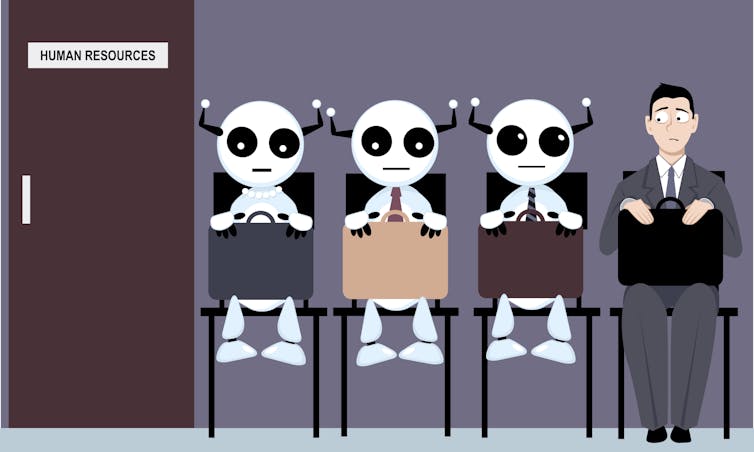
2. Robots and jobs
While the industrial strategy has focused on new technology sectors such
as robotics, these have also been depicted as threatening to wipe out
swathes of jobs over the next ten years. That may be, but we need to
recall that the same was said by the Luddites 200 years ago – and many times since.
There are two crucial aspects to why technology will not render us all
jobless. First, although new technology replaces some jobs, it creates others.
And given that technological innovation usually helps promote economic
growth, the outcome has generally been more jobs rather than fewer.
Second, if the number of jobs – or rather, the total amount of
employment – were to decline, this should be a good thing, as the work
could be shared out. This would give more time for leisure, with less
intensive, stressful work. That has long been the promise, though rarely the reality.
To reduce employment (either the number of jobs, or the amount each of
us had to do, if a reduced amount of employment enabled greater leisure
time for all) means increasing the amount produced per person (or per
person hour). In other words, higher productivity. This is not occurring
in Britain. Indeed, over the past ten years the UK has witnessed the exact opposite, with the rate of productivity growth declining rather than increasing. So, don’t plan for your three-day week just yet.
Bitcoin, blockchain and bubbles
Much of the above – stagnant productivity growth, the need for an
industrial strategy, even the vote for Brexit – might be laid at the
door of the 2007-08 global financial crisis and the subsequent global recession in 2009 – the first time the world’s output and income had fallen since the 1930s.
Another thing to be wary of into 2018 is the fact that the danger of a
repeat performance of this crash remains. International governments
prevented the global recession slipping into a 1930s-style global
depression by boosting government spending. But as soon as the immediate
danger had passed the UK government – and several others – reverted to
type, imposing austerity policies that held back the already fragile recovery.
So, another shock to the global system could create a further financial crisis and recession. Last time the trigger was home-loan defaults; what might trigger the next one? Defaults on the growing car-loan debts? International conflict and even war? Or perhaps the bursting of the bitcoin bubble? Blockchain technology
will be used increasingly for a range of activities – from the
accreditation of global online learning to the creation of
cryptocurrencies such as bitcoin, which are basically IOUs in digital form.
So the answer to the question whether the bitcoin bubble will burst, or whether bitcoin becomes mainstream, is “both”. Cryptocurrencies will
replace some of what current banking and monetary systems do. But the
extent may be limited by concerns over their use for illegal activities,
their heavy resource use in
an era when we need to be making less use of energy, and their
susceptibility to speculative bubbles and crashes, which always carries
the threat of more general crises and recessions.
With democracy on the decline across Asia, individual political
personalities more important than ever. Here are those who shaped the
news this year.
Xi Jinping, President of China
In 2017, Xi Jinping became the most powerful Chinese leader since Mao Zedong though insertion of his own political thought into the Communist Party’s constitution. The Economist has
now called Xi the world’s most powerful man. At the helm of the
planet’s most populous nation and second largest economy, the president
made strides towards his stated aim of restoring China’s historical
glory this year. Highlights were aggressive investment across Asia
through the Belt and Road initiative, staying in the Paris Agreement on climate change while Trump’s America pulled out, and refusing to back down on territorial claims in the South China Sea. Under Xi’s command, Beijing is tightening its grip over Hong Kong. In charge of “socialism with Chinese characteristics”, the world seems to be Xi’s oyster.
Widely considered to have changed the presidency forever, Donald Trump
dismantled decades of US diplomacy in Asia during 2017. Retreating from
the Obama administration’s “pivot to Asia”, Trump shied away from being
too enthusiastic in the promotion of human rights and democracy.
Instead, he welcomed a number of Southeast Asian autocrats like Duterte
and Prayut to the White House. His support for the Philippines’ drug war
has damaged the United States’ image in Asia while relentless Twitter shade directed at Kim Jong Un was
ridiculed the world over. Most recently, protests broke out in Muslim
nations like Indonesia and Malaysia over his intended decision to
declare Jerusalem the capital of Israel. If America’s time in the sun wasn’t already over, Trump has made sure of it.
Shinzo Abe, Prime Minister of Japan
On track to become Japan’s longest serving premier, Abe and his Liberal
Democratic Party won a shock election by a landslide after calling it in
October. The Prime Minister has sought to overall Japan’s post-war
pacifist constitution so as to allow the country to develop a strong
military of its own, which he had initially promised would take place in
2020. While that unpopular move has been shelved for now, Abe has
nevetheless declared he will “firmly deal” with North Korea, an aim towards which he has buddied up with Trump.
Narendra Modi, Prime Minister of India
A staunch Hindu nationalist of the Bharatiya Janata Party (BJP), the
leader of the world’s second largest country by population remains
wildly popular. A Pew poll released in November showed
that nine in ten Indians hold a “favourable view” of Modi. They are
happy with his economic management, but his Hindu nationalist platform
has emboldened communal violence aimed primarily at Muslims. More and
more Muslim Indians in 2017 fell victim to vigilante mobs for killing cows. In March, Modi selected a radical Hindu accused of inciting violence against Indian Muslims to lead the country’s largest state Uttar Pradesh. This furthered long-held fears that India will ditch its secularism and
become a “Hindu Pakistan” – in other words an intolerant, religious
state which offers little protection for its diverse minorities. Given
Modi has promised to create a “New India” by 2022, the march of hardline
Hindu nationalism looks to continue throughout 2018.
Aung San Suu Kyi, State Counsellor of Burma (Myanmar)
Thailand’s military seized power in 2014 for the 12th time
since Thailand became a constitutional monarchy in 1932. At the head of
its junta is Prayut Chan-o-cha, who insisted this year that he can “do whatever” without being held accountable.
The country’s formerly vibrant civil society and political parties have
come under the chill of military dictatorship, with rising prosecution
of dissenters under draconian cybercrime and lese majeste laws.
Having repeatedly promised a return to democracy via a popular vote, it
has now been delayed to November 2018. Nevertheless, along with a
number of Southeast Asian autocrats, Prayut was in 2017 invited to Trump’s White House. With the government pursuing former popularly-elected PMs Yingluck Shinawatra and her brother Thaksin, Thailand’s democratic future remains uncertain.
Basuki “Ahok” Tjahaja Purnama, former Governor of Jakarta
Jailed in May under Indonesia’s strict blasphemy laws for allegedly insulting Islam,
Ahok may not be a strongman but rather represents a victim of the ugly
identity politics which affected many societies around the world in
2017. After replacing now-president Joko Widodo as governor in 2014,
Christian, ethnically Chinese Ahok enjoyed strong support but
drew the ire of Islamic fundamentalists. Perhaps more importantly – he
made enemies with his no-nonsense style of leadership and
anti-corruption drive. Fears have grown for Indonesia’s historical religious tolerance amid rising fundamentalism –
of which Ahok is seen to be the most high-profile victim to date. As
the world’s third largest democracy, his case is emblematic of the
perilous nature of democratic values and human rights as we move into
2018.
Last
May three men from one family were shot dead, victims of the violence
that has spread as local people protest against miners
Burnt
and damaged sand excavators lying on the river near Jatpura village.
They were vandalised by angry villagers after miners shot three men from
one family. Photograph: Shaikh Azizur Rahman
“We didn’t know they had guns,” Santosh Yadav says. “If we knew they had
so many guns – that they were planning to commit a massacre – we would
never have argued with them.”
Months later Yadav still replays the morning of 19 May in his mind. The
decision he made with his uncle and cousins to go to the riverbank. To
confront the men mining sand near his village. Not to run when the
miners went to their vehicles and returned with guns.
“We were telling them to stop taking the sand,” he says, standing by the
same river on the outskirts of Jatpura, his village in the east Indian
state of Jharkhand. “They said, who are you to stop us? If we want to
lift sand, we will. Then they lifted their guns and fired.”
His cousin, Niranjan Yadav, died first, he says. Then his uncle, Uday,
who threw himself on his son’s body. The miners then turned their guns
on Vimlesh, the second son. Postmortem reports show all three were shot
at close range in the chest. “They also fired at me,” Yadav says. “To
save myself, I jumped back and hid behind one of the trucks, and then in
a hole behind a nearby bush.”
He stayed in the hole, he says, “shivering in fear” for minutes until
other villagers arrived at the river. “It is by sheer luck that I
managed to escape death that day.”
The cremation ground of Jatpura village. Photograph: Shaikh Azizur Rahman
The three Yadav men shot in May were victims of an unlikely
environmental crisis. Virtually every facet of modern construction
depends on sand. Heated, it becomes glass. Mixed with gravel, asphalt.
Bound with cement, concrete. With Asia in the midst of history’s largest
ever building spree, awareness is growing of the extent to which the world’s supplies are dwindling.
China used more cement between 2011 and 2013 than the US used in the entire 20th century. In India, by some estimates, the amount of sand used for construction has tripled since 2000. Demand is expected to keep soaring: the country plans to build at
least 60m new houses by 2024. “Demand for sand now outstrips that of
any other raw material,” says Sumaira Abdulali, the convener of the Awaaz Foundation, an activist group that campaigns against illegal sand extraction.
As supplies of sand close to major cities such as Delhi and Mumbai have
become exhausted, developers are turning to more remote regions to
source it, bringing them into conflict with smaller, usually vulnerable,
communities. Groundwater shortages, flooding, and depletion of fish and
other animal life often follow in the wake of unsustainable mining,
which activists claim can also weaken bridges and barrages along the
path of heavily mined rivers, leading some to collapse.
No reliable data exists for the amount of sand currently being mined in
India, Abdulali says. “But it’s quite clear when you visit the
countryside in India, there is hardly a creek, river or beach where you
don’t see the effect of sand mining.”
Also unknown is the toll of the hundreds of conflicts erupting in small
communities across the country between those who hold mining leases and
local residents. “But we know the violence is extremely widespread,”
Abdulali says.
Jatpura is a long way from the burgeoning cities of urban India.
Ranchi, the Jharkhand state capital, has just over one million
residents – tiny by Indian standards – and is six hours away by car,
along patchy highways that degrade and narrow as Jatpura nears.
The sand miners arrived at the beginning of the year, using excavators
and industrial vacuums that could slurp vast quantities of sand from the
riverbed. Watching over them were men the villagers called “lathait” –
Hindi for someone skilled at wielding a club.
Niranjan Yadav led the opposition to the project. The mining was veering
close to a patch on the banks of the river where Hindu villagers
traditionally burned their dead. Local people worried they would wake up
one morning to find the sacred earth heaped in the back of a truck.
The dredging also made the river treacherous. Holes began to appear
beneath the surface, sometimes 20ft deep. Villagers said that in April,
weeks before the Yadavs confronted the miners, a 12-year-old boy had
been playing in the water when he slipped into a crevice and drowned.
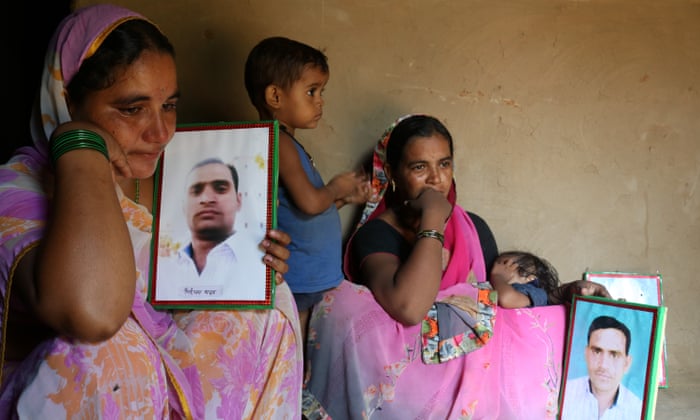
The widows Bindu Devi (left) and Rekha Devi of Niranjan Yadav and Vimlesh Yadav. Photograph: Shaikh Azizur Rahman
Resentment grew with each chunk of riverbed that was carted away.
“People who are in distant areas, rich people – like a mafia – are
becoming richer,” says another Jatpura resident, Sudama Ram. “We feel
very helpless. But we have our brothers with us in the village. The
whole village is with us. We are fighting.”
His remarks were met with approving murmurs among the other Jatpura
residents. It was true the village was fighting, but Ram had exaggerated
its helplessness. The pressure of runaway resource extraction had not
just turned the people of Jatpura into victims. Some believe it made
them into killers, too.
Satinder Singh was a manager from a nearby village who oversaw the sand
mining in Jatpura and other sites. After the Yadav men were shot and the
alleged gunmen fled, he remained close to the river “to keep watch”,
according to Neha Arora, the deputy commissioner for Garwha. Officers
found him beaten to death, and the house he had been renting in Jatpura
razed. Police believe that he was attacked by a mob, “but it’s difficult
to pinpoint who was involved,” Arora says. “Nobody is talking.”
The bodies are gone, but the rest of the scene that confronted police
when they arrived at the riverbank that morning is unchanged. The shovel
of one of the excavators is still half-buried in the sand, as if its
owner fled in a hurry. Several other vehicles are strewn about the site,
warped and gutted by fire.
Conflict has frequently accompanied mining operations in the Garwha
district. “It happens anywhere there is excavation of resources,” Arora
says.
The mining licence for Jatpura was held by Dharambeer Singh, a small
contractor from a nearby district. His lease permitted him to mine sand
close to the cremation ground, but not to use heavy machinery. Arora
says that he had been advised, like all contractors, to be “sensitive to
the issues of the villages”, to clearly demarcate the mine’s
boundaries, and to try to employ the villagers as labourers in order to
cushion their discontent.
“But I would not say that sensitivity is what they keep in mind,” she
says. The amount of money at stake and the nature of the business models
discourage it. “The [contractors] are target-driven, profit-driven,”
Arora says.
The shooting in Jatpura triggered protests in Garwha town and was raised
in the Jharkhand state assembly. The state has since amended its mining
policies. Lifting sand is now permitted only from large rivers, which
officials say can be mined more sustainably. The river by Jatpura,
classified as medium-sized, is out of bounds.
Arora says she is unsure why the use of heavy machinery, among other
legal breaches, continued in Jatpura for months without officials being
alerted. “We did not know what tension was brewing there,” she says.
In other cases, she says, village chiefs – or “mukhias” – have struck
deals with the miners to overlook their operations in exchange for a cut
of the profits. It is a lesser-known consequence of the vast demand for
sand: as well as environmental degradation, soaring sand prices
encourage corruption and spark conflicts within villages.
The fires that gutted the trucks and excavators on the morning of the
killings in May were not the last to be set on the riverbank that day.
After midnight, more than 500 men gathered at the cremation ground,
metres from where the Yadav men were shot. They watched silently as the
three bodies were placed on a wooden pyre.
It burned until dawn, until the men’s ashes caught in the wind and settled with the sand in the riverbank.
Burnt sand-carrying trucks lying by the ghat where sand mining took place near Jatpura village. Photograph: Shaikh Azizur RahmanAdditional reporting by Shaikh Azizur Rahman
Nahla
Arishi, a pediatrician, checks a woman infected with diphtheria at the
al-Sadaqa teaching hospital in the southern port city of Aden, Yemen
December 18, 2017. REUTERS/Fawaz Salman
ADEN (Reuters) - Nahla Arishi, chief pediatrician at the al-Sadaqa
hospital in this Yemeni port city, had not seen diphtheria in her
20-year career. Then, late last month, a three-year-old girl with high
fever was rushed to Arishi’s ward. Her neck was swollen, and she gasped
for air through a lump of tissue in her throat. Eight days later, she
died.
Soon after, a 10-month-old boy with similar symptoms died less than 24 hours after arriving at the hospital.
Two five-year-old cousins were admitted; only one survived.
A 45-day-old boy, his neck swollen and bruised, lasted a few hours. His last breath was through an oxygen mask.
One morning in early December, 16-month-old Sameh arrived at the
hospital carried by his aunt and delirious with fever. Arishi
immediately recognized a new case of diphtheria. “Put on your mask,” she
ordered the aunt.
Sameh’s father, a fighter in Yemen’s three-year war, rushed in, grabbed
his son, yanked off the baby’s shoes and threw them on the floor. “Sameh
is the light of the house,” he wailed, feeling the boy’s feverish brow
and body.
This is the emergency ward to a nation. After three years of warfare,
cholera and hunger, Yemen faces a new battle: In the past four months,
doctors across the country have recorded at least 380 cases of
diphtheria, a bacterial disease that last appeared here in 1992.
SPONSORED
Arishi, like her country around her, is struggling to cope. Every month,
she and her team drip-feed dozens of Yemen’s half a million severely
malnourished children. Her ward has also treated hundreds of the one
million people infected by cholera.
This spring, Arishi and her colleagues reopened an abandoned wing of
al-Sadaqa hospital, fenced it with chicken wire and created a makeshift
cholera treatment center. Now, they are converting part of that center
into a diphtheria ward, cordoning off isolation units by barring hallway
doors.
But with rusty oxygen tanks and only two functional ventilators in a
different part of the hospital – and with the expectation that the
cholera epidemic will worsen in coming months — her triage upon triage
is no longer working.
“We’re getting more patients but we can’t deal with them. We don’t have
supplies. We don’t have money,” said Arishi, “This war has got to end.”
For the past three years, Yemen has been the combat zone of a struggle
for regional supremacy between Saudi Arabia and Iran. Riyadh and some of
its Arab allies jumped into Yemen’s civil war in 2015 to help quell an
uprising by the Houthis, an Islamic political-religious movement backed
by Iran. In addition to airstrikes, Riyadh – with U.S. and U.N. backing –
has positioned ships in Yemeni waters as a way to stop arms reaching
Houthi militia.
But the blockade has ended up isolating a country that was already the
poorest in the Middle East. Vital provisions – food, medicine, fuel,
medical equipment, batteries, solar panels and more – are not getting
through. Humanitarian shipments of food and medicine have mostly been
allowed into the country. Yet Saudi-led forces have severely delayed aid
shipments or closed ports outright, especially in northern Yemen where
fighting and the humanitarian crisis are most acute.
The war and blockade have also thwarted Yemen’s vaccination programs.
Seven years ago, 80 percent of children were fully immunized with three
doses of diphtheria, whooping cough and tetanus vaccine, or DTP as the
combined shot is called, according to Zaher Sahloul, a critical-care
specialist who cofounded a nonprofit called MedGlobal. Now, he says,
that has dropped to 60 percent.
Poor record keeping means there are discrepancies in data related to
vaccine coverage. Yemen’s Ministry of Health says 85 percent of Yemeni
children have been immunized against diphtheria, whooping cough,
tetanus, Hepatitis B and bacterial influenza since the beginning of the
conflict, a mere two percentage point drop from pre-war years.
In late November, the U.N.’s World Health Organization (WHO) sent a
shipment of diphtheria antitoxins - designed to treat those already
infected - and vaccines to the capital Sanaa. The vaccines were delayed
by the Saudi blockade for a week, the WHO said.
In July, the Geneva-based International Coordinating Group on Vaccine
Provision earmarked a million cholera vaccines for Yemen. An initial
shipment of 500,000 doses was sent to the African Horn country of
Djibouti, and was ready to send on to Sanaa. But the WHO and local
authorities in Sanaa decided together to scrap the vaccination plan,
citing logistical and technical issues.
“Yemen needs a Marshall Plan,” said Sahloul, who was visiting
al-Sadaqa’s treatment center in December. “It is difficult to foresee an
optimistic scenario if the current conditions persist,” he said.
DISEASE AFTER DISEASE
Arishi began her medical career in the mid-1990s after Yemen unified
following years of conflict between communist and pro-western forces.
She joined the al-Sadaqa hospital, which was built in the 1980s with
funds from the Soviet Union.
In her two decades at the hospital’s pediatric ward, Arishi has seen
Yemen slowly come apart again. Even in the mid 2000s, the country faced
widespread hunger because of rising food prices. The feeding center of
al-Sadaqa’s hospital, she said, was crowded even before the new civil
war began.
In the spring of 2015, Houthi forces, aided by the now-deceased former
president Ali Abdullah Saleh, advanced south from their stronghold in
the Yemeni capital Sanaa and took over Aden’s airport. It was then that
the coalition of Arab states led by Saudi Arabia joined the war and
began launching airstrikes against Houthi-held enclaves. Fighting raged
until troops backing the officially-recognized government wrenched Aden
from Houthi control in July of that year.
During the first months of fighting, al-Sadaqa filled with hundreds of wounded children and adults.
By the middle of 2016, another group of patients began pouring into the
hospital. A cholera outbreak that started in Sanaa had spread to Aden.
Dehydrated children, their condition made worse by malnutrition, flooded
into her pediatric ward. Many did not survive, Arishi said.
Cholera can kill because patients quickly lose their fluids through
vomiting and watery diarrhea. When caught early, it can be treated by
replacing fluids.
When a second wave of cholera infections swept Yemen in April this year,
Arishi and her colleagues decided to set up the new treatment center.
They picked a building away from the main wings of the hospital to avoid
contamination and repaired it with funds from the WHO and medical aid
group Médecins Sans Frontières (MSF). Converting the building, which had
been abandoned for two years after the war, required “heavy cleaning
work, electricity, water system repairs as well as installing air
conditioners,” according to MSF.
Yet, like the country itself, al-Sadaqa was overwhelmed by the cholera
epidemic. Nationwide, a million people have been infected, according to
the International Committee of the Red Cross. The WHO says cholera has
killed more than 2,200 people.
Nahla Arishi, a pediatrician, checks a boy infected with diphtheria at
the al-Sadaqa teaching hospital in the southern port city of Aden, Yemen
December 18, 2017. REUTERS/Fawaz Salman
Most of the infected were in the populous north of the country. But
al-Sadaqa, which took in patients from across south Yemen, was also
unprepared. Arishi and her colleagues had expected 10 patients at a
time. Instead, by the summer, they were treating more than a hundred,
mostly adults, a day.
Since September, the spread of cholera across the country has abated.
However, doctors agree that a new wave of infections is likely in March,
when the country’s rainy season returns. Cholera spreads more easily in
wet weather, because the bacteria live in rivers and coastal waters
which swell with the rain. Rain brings sewage into sources of drinking
water.
In August, a new disease began to emerge. In Ibb governorate, 170 km
south of Sanaa, a 17-year-old boy was diagnosed with diphtheria,
according to the WHO.
Diphtheria is caused by bacteria that mainly infect the throat, nose and
airways and send toxins into the bloodstream. It has largely receded as
a global health threat, because much of the world’s population is
protected through routine immunization.
But the disease is highly contagious once it takes root, doctors say,
since it spreads in the droplets from coughing and sneezing. Small
children are particularly vulnerable because toxins from the bacteria
build up a coating of dead tissue that blocks their small airways.
Since the mid-August case, more than 380 patients have been admitted to
hospitals across Yemen with diphtheria-like symptoms, according to the
WHO. Doctors diagnosed the cases based solely on patients’ symptoms.
Close to 40 of the patients have died, by WHO estimates.
The first case of suspected diphtheria reached al-Sadaqa in November. Of
the seven children who arrived within a fortnight, nearly all were
initially misdiagnosed with mumps or flu. Four died.
Arishi faced the problem of isolating children with symptoms of
diphtheria. She asked hospital administrators to block a hallway door
with a cupboard. Behind it, she tried to isolate those who might infect
others.
But she lacked basic resources to treat the new disease. Al-Sadaqa
hospital, like most others in Yemen, does not have the reagents needed
to test for diphtheria. In fact, none of Arishi’s diagnoses has been
confirmed by laboratory tests.
Marc Poncin, an MSF emergency coordinator in Ibb governorate, said the
lack of recent experience means it could be harder to treat diphtheria.
“There has been a loss of knowledge regarding its treatment, because
it’s become something of a neglected and forgotten disease,” he said.
After a diagnosis, treatment is far from easy. Doctors can prescribe
antitoxins and antibiotics. But until a few weeks ago, Yemen had no such
antitoxin stocks.
The United Nations Children’s Fund and the WHO have imported more than 5
million doses of vaccines to immunize children in the worst affected
areas. The WHO has already distributed antibiotics to patients and, as
prophylactics, to their families.
Some diphtheria patients need emergency surgery to remove blockages from
their airways or need machines to breathe. But most of Yemen’s
hospitals don’t have such equipment. As of early December, only two of
al-Sadaqa’s three mechanical ventilators were working, and the hospital
didn’t have an isolated operating room for diphtheria patients.
The lack of resources has caused strains with the hospital’s supporters.
When Arishi cordoned off a part of the cholera ward for the incoming
diphtheria patients a couple of weeks ago, the WHO was not happy with
the decision, according to Hussein Hassan, head of the WHO’s Aden
office.
“We cannot confidently say that cholera is over. It is a seasonal
problem and it may come back. What happens if another wave starts and
the ward is filled with diphtheria patients?” said Hassan.
“I DIDN‘T WANT TO LOSE MY KID”
Arishi says there is another sign that Yemen is breaking down: parents’ waning faith.
She sees more examples of families that have not vaccinated their
children because they distrust both their government and international
organizations.
Earlier this month she confronted Saleh Khaled, the father of a
five-year-old boy called Yasir, who arrived with severe diphtheria
symptoms.
“Why did you not vaccinate your son?” Arishi asked.
Yasir’s first cousin, who was also five years old and unvaccinated, had
died a few days earlier. When the first symptoms had appeared on Yasir’s
neck and chin, the boy’s parents had given him honey.
Khaled said he had heard rumors, years earlier, about children who had
died after healthcare workers had allegedly switched vaccine vials with
insulin during a door-to-door vaccination campaign.
“I didn’t want to lose my kid because of something like this,” he said.
“We don’t trust the people who work in the health department.”
Others in the al-Sadaqa ward that day echoed similar fears.
“We live only because of God’s mercy,” said Khaled Nasser, the father of 16-month-old Sameh.
Nasser, a member of a local armed group that fights alongside
Saudi-allied forces, said fellow fighters had helped him buy medicine
when Sameh got sick.
Arishi herself barely ekes out a living. She makes $210 a month at
al-Sadaqa and works at a private clinic three days a week to supplement
her income. The mother of three treats neighbors and relatives without
getting paid. Her husband, also a pediatrician, works at another clinic
in Aden.
For Arishi, war is both burden and inspiration. She says it has made her commitment to medicine stronger.
“If I leave and my husband leaves and everyone leaves, who will stay to
treat our patients?” she said. “Aden is my city. It is my
responsibility.”
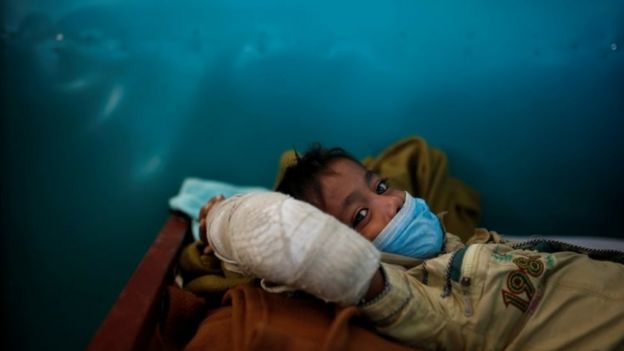
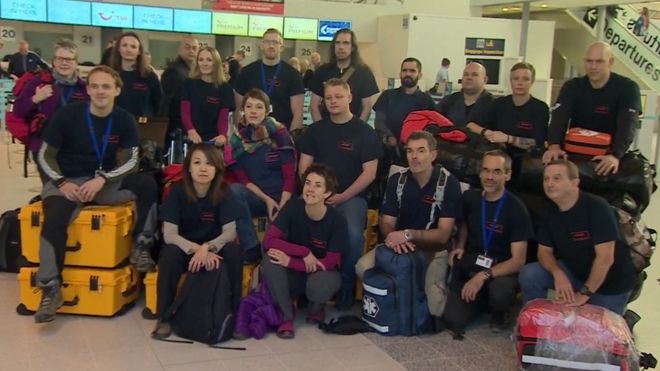
A team of British medical staff is travelling to Bangladesh to help
tackle an outbreak of diphtheria affecting Rohingya Muslim refugee
camps.
The first of more than 40 doctors, nurses and firefighters are on their
way to Cox's Bazar - at the request of the World Health Organization.
Cox's Bazar is home to more than 600,000 Rohingya refugees who have fled violence in bordering Myanmar.
The government said the deployment was "another proud moment for the NHS".
This is the first deployment of Britain's emergency medical team (EMT)
since it was certified by the World Health Organization in 2016.
The staff, who come from different parts of the NHS across the UK, will
be at the camps for six weeks working to fight the spread of diphtheria.
A group of 16 medics left from Manchester airport on Thursday, with the
remaining team members following in the coming days and weeks.
Among them was Derek Sloan, an infections and disease doctor who is
usually working in Fife but has also had experience of working in the
field.
He described the "emotional and psychological cost" of the work.
"Sometimes you don't really feel that until you get back," he told the BBC.
"Having done this kind of work before doesn't make you immune to the
difficulties of it. But we're also a good source of support to one
another and we are used to working in a difficult environment."
As of 21 December, the charity Medecins Sans Frontieres (MSF) said it
had seen more than 2,000 suspected cases in its health facilities. The
majority of patients were between five and 14 years old.
Crystal VanLeeuwen, the emergency medical co-ordinator for MSF at one of
the camps, said the living conditions of the camp presented added
challenges.
There is a "very poor water and sanitation situation, overcrowding... and low vaccination coverage", she said.
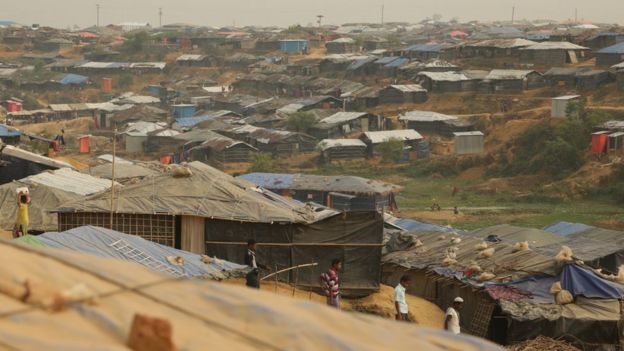
The Kutupalong refugee camp in Bangladesh has become overcrowded
An estimated 620,000 Rohingya have fled to Bangladesh following
persecution from the Burmese military in their native state of Rakhine,
since August.
The United Nations described the military offensive in Rakhine, which
provoked the exodus, as a "textbook example of ethnic cleansing".
Myanmar's military says it is fighting Rohingya militants and denies targeting civilians.
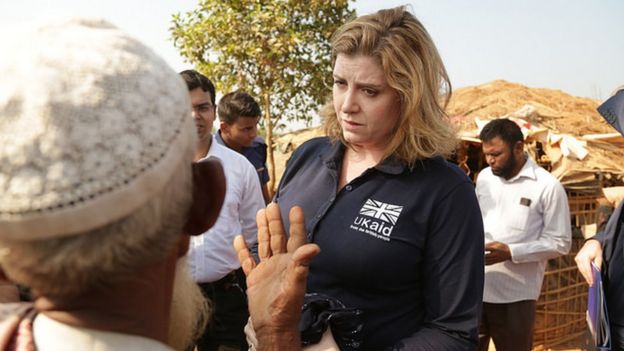
UK minister Penny Mordaunt met Rohingya refugees in Cox's Bazar earlier this year
International Development Secretary Penny Mordaunt said it was
"absolutely right" for the UK to "step up" and help ease the suffering
of the Rohingya families.
"This will be an absolutely critical deployment, in a race against time
for men, women and children at risk of dying from one of the world's
cruellest infections," she added.
The deployment will be funded from the department for international development's (DFID) Bangladesh humanitarian budget .




 December 28, 2017
 These
are Brexit, the rise of the robots and a continued obsession with
bitcoin and cryptocurrencies. Here’s a primer on how to better
understand these three stories that will dominate the news.
These
are Brexit, the rise of the robots and a continued obsession with
bitcoin and cryptocurrencies. Here’s a primer on how to better
understand these three stories that will dominate the news.
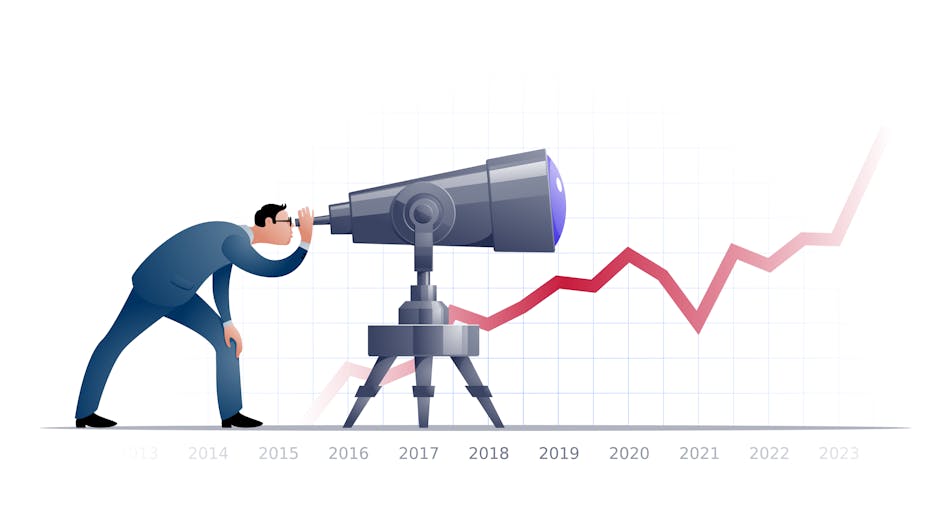
 No need to look so worried. shutterstock.com


 Michael Safi in Jatpura-Sat 30 Dec ‘17 21.00 GMT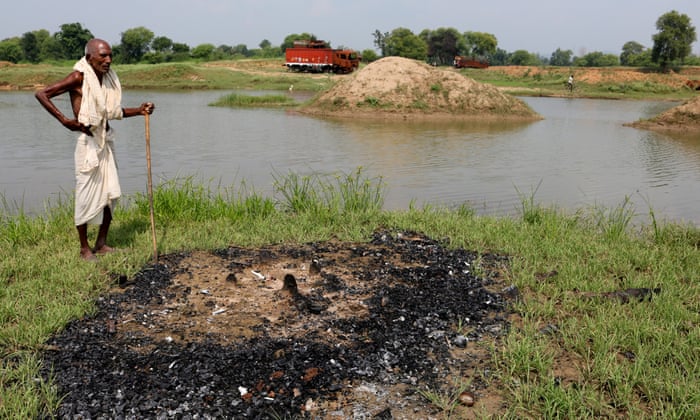


 28 December 2017