Mexican
President Andrés Manuel López Obrador takes part in the inauguration of
the government’s new militarized national guard police force. (Carlos
Jasso/Reuters)
Mexicans are deeply frustrated with immigrants after a year of
heightened migration from Central America through the country, according
to a surveyconducted by The Washington Post and Mexico’s Reforma newspaper.
More than 6 in 10 Mexicans say migrants are a burden on their country
because they take jobs and benefits that should belong to Mexicans. A
55 percent majority supports deporting migrants who travel through
Mexico to reach the United States.
Those findings defy the perception that Mexico — a country that has sent
millions of its own migrants to the United States, sending billions of
dollars in remittances — is sympathetic to the surge of Central
Americans. Instead, the data suggests Mexicans have turned against the
migrants transiting through their own country, expressing antipathy that
would be familiar to many supporters of President Trump north of the
border.
Washington Post
The face-to-face survey among 1,200 Mexican adults was conducted after a
sharp increase in immigration enforcement by Mexico following a June agreement with the Trump administration. Trump promised that deal would reduce the number of migrants crossing into the United States. He threatened to impose major tariffs on Mexico unless it complied.
For a year, Mexicans watched as a growing number of Central Americans
moved through the country on their way to the U.S. border. Some of those
migrants traveled by foot and bus in large caravans, sleeping in
small-town plazas and relying on donations of food and clothes. Once
they reached Mexico’s northern border, the migrants waited months for
the United States to process their asylum claims, often overwhelming
local shelters.
While migration from Central America through Mexico has existed for
years, the overall increase in migrants as well as their more visible
modes of transit turned the phenomenon into a public lightning rod. The
Trump administration’s immigration policy, which forces many
asylum seekers to wait in Mexico for their hearings, increased the pool
of migrants in northern Mexico and exacerbated the frustration felt by
many Mexicans.
The Post-Reforma survey finds 7 percent of Mexicans say their country
should offer residency to Central American immigrants traveling through
Mexico and trying to enter the United States. Another 33 percent support
allowing them to stay temporarily while the United States decides
whether to admit them. But a 55 percent majority says they should be
deported to their home countries.
When Mexican President Andrés Manuel López Obrador agreed to step up
Mexico’s immigration enforcement to avert U.S. tariffs, many analysts
expected his base to be disillusioned. López Obrador had long advocated
for migrants’ rights and the freedom of movement for asylum seekers.
But 51 percent of Mexicans support using the country’s newly formed
national guard to combat migration of undocumented immigrants in Mexico,
a key provision of the agreement. Just under half of Mexicans have
heard about the June agreement, but among those who have, 59 percent
favor it ,while 34 percent are opposed.
Some dissatisfaction with the migration pact may come from López Obrador
supporters who believe the agreement is unsympathetic toward Central
Americans in search of refuge. But in parts of Mexico, the
most vocal critique of the deal is that it has forced Mexican cities to
contend with a growing pool of asylum seekers. In some northern cities,
rumors have spread that African migrants are carrying Ebola. In others,
officials say they’ve simply run out of places for migrants to stay.
Last week, for example,
the governors of three northern Mexican states, Coahuila, Nuevo León
and Tamaulipas, signed a statement saying that they could not accept any
more migrants. They blamed López Obrador’s administration for allowing
so many asylum seekers to wait along Mexico’s northern border without
offering more resources to the region.
By August, Mexico expects to receive 60,000 asylum seekers who are
forced by the United States to wait for their hearings on Mexican soil.
López Obrador has said those migrants will be given work permits, but it
remains unclear who will provide their shelter or food. Many are likely
to spend months in Mexico before they are granted or denied asylum in
the United States.
“The number [of migrants] that the federal government is talking about
is impossible for us to deal with,” said Miguel Ángel Riquelme Solís,
governor of Coahuila, at a news conference.
A total of 11.6 million documented and undocumented Mexican migrants live in the United States, but unauthorized migration from Mexico has declined sharply over
the past decade. The Post-Reforma poll shows 78 percent of Mexicans say
it’s harder to migrate to the United States than five years ago. This
year, Guatemalans are on track to make up the largest group of migrants
apprehended at the U.S. border. It would be the first time in recent
history when Mexicans do not make up the largest group of migrants by
nationality.
López Obrador holds a 70 percent job approval rating eight months after
entering office, a strong standing albeit down from 78 percent in a
Reforma poll in March. While he took office as a lifelong populist,
López Obrador quickly had to respond to threats from Trump, mostly about
immigration enforcement. Many expected López Obrador — who once
compared Trump’s hostility toward Mexicans to the way Adolf Hitler spoke
of Jews — to condemn the U.S. president. Instead, he has largely
submitted to Trump’s demands on migration.
That posture prompted many Mexican public intellectuals to deride López
Obrador as a puppet of the U.S. president. Commentators suggested that
Mexico may not have paid for Trump’s border wall, but it had effectively
“become the wall.”
Yet the Post-Reforma poll suggests that such an approach hasn’t eroded
López Obrador’s popularity very much. A 54 percent majority say he is
standing up for Mexico’s interests in his dealings with Trump, though a
similar 55 percent say the recent immigration agreement was imposed upon
Mexico by the United States rather than being negotiated by the two
nations.
López Obrador gets relatively high marks for his treatment of migrants,
with 44 percent saying he has done a good job on the issue and
27 percent rating him negatively.
Mexicans continue to have an overwhelmingly negative opinion about
Trump. More than three-quarters of Mexicans dislike Trump, according to
the survey, and more than 8 in 10 say he treats their country with
disrespect.
The Post-Reforma poll finds a scant 2 percent of Mexicans name
immigration as their country’s most important problem, with a 55 percent
majority citing insecurity and 9 percent each mentioning corruption and
unemployment. Another 7 percent name the economy, followed by 4 percent
each who say poverty, political problems and social problems are the
country’s more pressing concerns.
A sizable minority of Mexicans see migrants as a safety risk, with
39 percent believing they commit more crimes than Mexicans; 21 percent
believe they commit fewer crimes, and 31 percent don’t see any
difference.
Mexicans’ views of immigrants appear to have soured sharply in the past year. A 2018 survey by the Pew Research Center found
57 percent said immigrants mainly strengthen Mexico, while 37 percent
said they weaken it. The Post-Reforma poll asked a similar question and
found opinion reversed: 64 percent of Mexicans say migrants are mainly a
burden on the country, and 20 percent see them as strengthening it.
Despite concerns about security and immigration, Mexicans are positive
on balance about their country’s trajectory. Some 40 percent say Mexico
is on the right track, while 26 percent think it’s on the wrong track,
and 32 percent fall in the middle.
A 53 percent majority reports trust in the national guard, which was
launched by López Obrador and has played a major role in increased
immigration enforcement. Two-thirds of Mexicans say they would like the
national guard to be in their city, and 45 percent say they feel more
safe with the force in place.
López Obrador receives positive marks on fighting poverty, corruption,
dealing with education and health issues. His ratings for some other
issues are underwater — 45 percent give him negative marks on fighting
drug trafficking and organized crime (24 percent rate him positively),
and 41 percent rate him negatively on security (while 32 percent give
him positive marks).
The survey was
jointly sponsored by The Washington Post and Reforma. It was conducted
July 9-14 among 1,200 Mexican adults through face-to-face interviews in
100 election districts across the country. The overall results have an
error margin of plus or minus five percentage points.
Estonian President Kersti Kaljulaid speaks on how to stand up against the far-right.
Estonian
President Kersti Kaljulaid leaves the Élysée Palace after a Bastille
Day working lunch during the visit of European leaders in Paris on July
14. GEOFFROY VAN DER HASSELT/AFP/GETTY IMAGES
BYBENJAMIN BATHKE|
The recent Financial Timesinterview with
Vladimir Putin was a reminder of how closely Russia has become tied
with anti-liberal interests across Europe. Putin described liberalism as
“obsolete,” denigrated sexual minorities, and praised closed borders
and ethnonationalist policies. Putin’s ideological allies, such as
Hungarian Prime Minister Viktor Orban, have brought their countries
geopolitically closer to Moscow in recent years.
But they’re not the only ones echoing Putin’s views. Right-wing populist and Euroskeptic parties are now represented in
23 out of 28 EU member states. Most recently, they made gains in
national elections in Finland, Spain—and Estonia, long on the front
lines of conflict with Russia, where the Conservative People’s Party, or
EKRE, almost tripled its seats in the Baltic nation’s parliamentary
election in early March and subsequently entered government for the
first time. Promising to protect an “indigenous Estonia,” the EKRE holds
five key ministries, including economic affairs, in a coalition led by
Juri Ratas’s Centre Party.
Protest against the EKRE joining the government and its views came in many forms,
from a concert with 10,000 people to counter a far-right march to a
movement calling itself “Koigi Eesti” (“Estonia for All”) that quickly
gained nearly 30,000 followers on Facebook—and politicians showing their indignation in public, as seen perhaps most prominently by President Kersti Kaljulaid. During
the government swearing-in ceremony on April 29, Kaljulaid, whose
position is separate from the coalition government, left the parliament
chamber, forcing an EKRE politician to salute to an empty chair.
Kaljulaid also showed her support for press freedom at the ceremony by
sporting a sweatshirt reading “speech is free” in Estonian. In office
since 2016, Kaljulaid is the fifth, first female, and youngest ever head
of state since Estonia declared independence in 1918. Acting as the
economic advisor to Prime Minister Mart Laar from 1999 to 2002,
Kaljulaid also served as Estonia’s representative in the European Court
of Auditors from 2004 to 2016.
Just before the European Parliament elections in late May, in which the EKRE slightly increased its share of seats, Foreign Policy spoke
to Kaljulaid about the reasons for the party’s rise, how to counter
anti-Europe sentiments, and Estonia’s role as a digital peacekeeper.
Foreign Policy: EKRE
politicians have made, among other things, misogynistic, anti-Semitic,
homophobic, and racist comments, including, “If you’re black, go back.”
How concerned are you about their behavior and them being in government?
Kersti Kaljulaid: I hate them for their behavior, and I
apologize for the image this might give. Decent people do not behave
themselves this way. That it is in any way OK to show these signs is not
a viewpoint we share in Estonia. I now have to explain their stupid
moves and claw back the territory. I’ve been speaking to ministers from
this party—our common understanding is that you cannot properly function
in an international, global society if you keep irritating people,
whether you believe the things you say or not. I have a nagging doubt
that some of these people don’t believe what they do.
I think they are totally new to this level of politics, and they simply
don’t realize what they do. I hope they stop soon; if they don’t, I’ll
keep apologizing for them. I really hope they will have no effect on our
economic and political development, but we have a coalition government
where the EKRE only has one-third [of 56 seats]. In parliament, we have a
68-seat liberal majority [of a total of 101 seats]. Again, I really
hate it that they behave this way.
FP: Marine Le Pen met with
several EKRE politicians in mid-May during her visit to Estonia,
organized by the Movement for a Europe of Nations and Freedom (MENF) as
part of a European tour to drum up support for the far-right in the EU
elections. Were you uncomfortable with this meeting taking place in
Estonia?
KK: I have absolutely no idea how the meeting came
about. It’s just my intelligent guess that the MENF noticed that the
EKRE now is in the Estonian government, and that’s why they organized
this gathering here. Like most Estonian politicians, I have not met with
any MENF politicians. Of course, they are citizens of the European
Union, so they have the right to meet, the right to gather and freedom
of speech.
In Estonia, we are very adamant that these rights apply to everybody, no
matter whether we like their ideas or not. Of course, we do not share
the views of Marine Le Pen on Russia. Even the EKRE has a big difference
of opinion in this basic question. But much like mainstream parties,
populists are a varied bunch. In some areas, we share their opinions; in
others we don’t.
FP: What do you think fueled the rise of the EKRE in Estonia?
KK: In older democracies, big swaths of the population
experience intergenerational poverty. They live in areas with only bad
schools. Their parents couldn’t go to a good school, either, and they
know their kids will also have bad schools. So the need for social
mobility is a fair claim. If we cannot get it evolutionary, some people
will soon try to have a revolution. This is nothing new.
In Estonia, things are somewhat different. Our school system, for
example, is extremely egalitarian, and access to health care is very
good. In the last 30 years, we caught up on decades of industrialization
under Soviet rule. It’s been an extremely quick change. Depopulation of
rural areas, concentration in the cities, and therefore the need to
constantly react to social inequalities, happened to us at double the
speed. This has created a feeling among people in rural areas that life
and developments pass them by. Of course they notice that the average
monthly Estonian salary has risen from 30 euros to roughly 1,455 euros
today and that the minimum salary is 500 euros. Even in the poorest
county, the average salary is now 900 euros.
Still, we have not been able to react quickly enough. In the 1990s, we
did not have the resources, and we sometimes missed opportunities. Take
road development: It makes no economic sense to put asphalt around a few
people. Politically, however, it makes a lot of sense. All of this has
brought us to a point with this feeling of discontent, which has made it
possible for the EKRE to rise. Some of its supporters have racist and
other views we absolutely cannot share, and I myself had to remind them
that the Estonian Constitution includes liberal democratic values.
Those who say that everything is simple, and therefore don’t want to get
complex questions from the media, tend to put pressure on the media.
But I’m quite sure that Estonia’s 11th place on the media freedom list [Reporters Without Borders 2019 ranking]
and the rule of law in this country will prevail. Estonia will remain a
democracy, but it doesn’t happen by itself. It does happen because we,
the liberal democratic politicians, manifest our belief in institutions
and in free media every day.
FP: What’s the state of the
EU on the eve of elections to the European Parliament? How can we
counter antagonism toward Europe and convince people of its advantages?
KK: Even if we end up with a ratio of four liberals to
two conservatives [in the European Parliament], it’s not a big issue.
Sometimes, it feels like we’re in a submarine where this horrible
loudspeaker noise is rising. But if you look at the latest Eurobarometer
survey, support for the euro is at an all-time high.
People asking basic questions about liberal democratic values is a fair
debate to have. What do countries get out of Europe? Will our languages
and multilingualism prevail?
I’ve been very critical in my statements during my 12 years in the
European Parliament. Because of this loudspeaker noise, though, today I
cannot say that the European budget in my mind is dispersed into too
many budget spheres and should be concentrated on a few really good
things like research and development, that cohesion should be limited to
two periods and thereafter should only remain safe, and so on. If I say
those things, Estonians will argue even the president is critical of
the European Union.
The hysterical rise of “Europe is bad” and “Europe is regulating too
much” limits our space for rational debate. I’m trying to overcome it by
pointing out the basics so that our populations finally understand that
the European Union is good for them—that Greece is the only country not
richer today than before becoming a member state, that the EU has given
us a digital Estonia, and that countries are no longer struggling with
banking stability. All this happened in the same European Union
regulative straitjacket. Europe is delivering.
Or imagine settling any European issue with Conference of the Parties procedures.
It would be hell on earth. It would take three years to decide on a
location of the congress, another two years to agree on the agenda, and
another year to agree on how we come to decisions—and only then we’d
have the congress. And then nobody implements the decisions. With the
European Union, we all know when the next meeting is, how we make
decisions, how we negotiate, and who thereafter implements the
decisions. Yes, it does take some time, but the European Union simply
makes sense. And you need to be able to explain it—simply—to your
grandmother and to your 3-year-old.
FP:Estonia’s e-Governance Academy has helped several
countries adopt e-state solutions, including Ukraine, Moldova,
Kyrgyzstan, and Armenia, as well as the Palestinian territories. Do you
see Estonia as a digital peacekeeper?
KK: The short answer is yes. Estonia is a country with
limited resources, but we want to do our part in making our world safer
and better. And indeed we think that our e-Governance Academy, which is
a joint venture between the
Estonian government and the United Nations Development Programme, can
help bring better understanding in the crisis-hit corners of the world.
Digital tools can help you keep track of who is still alive, who has
been born, and so on—without making people go to offices.
Similarly, we want Africa to use digital tools to a certain extent to leapfrog a few decades it lost. We are very active in Smart Africa [a pan-African government initiative to foster “sustainable socio-economic development”].
We also want to be in the United Nations Security Council to make digital part
of conflict resolution and to understand how international law applies
in the digital sphere concerning state sovereignty. Several U.N. working
groups haven’t managed to make significant progress. But if we can make
digital the domain where you act wherever you have a conflict to
resolve—and unfortunately countries like Ukraine with digital systems
are in conflicts—then we can probably fast-forward this thinking a
little bit. It’s extremely important that while Estonia is promoting
e-government globally, we also take responsibility for the protection of
sovereignty in the digital domain. You cannot do one without the other. This interview has been condensed and edited for clarity.
CREDIT cards belonging to Malaysia’s disgraced ex-leader Najib Razak
were used to spend over US$800,000 in one day at a luxury jeweller in
Italy, a court has heard.
The 2014 spending spree is the latest evidence of what critics say is
the lavish lifestyle enjoyed by Najib after he and his cronies allegedly
plundered state coffers.
The former prime minister, his family members and inner circle are
accused of stealing billions of dollars from Malaysian sovereign wealth
fund 1MDB in a fraud that stretched around the world.
The claims played a major part in Najib’s government losing power at
elections last year. He was arrested after being ejected from office,
and went on trial over the scandal in April.
At a hearing in the case Monday, a bank official said two credit cards
belonging to the ex-leader were used to spend 3.3 million ringgit
(US$803,000) at a branch of Swiss jeweller De Grisogono in Italy, state
news agency Bernama reported.
The money was spent on August 8, 2014, said Yeoh Eng Leong, a senior
official from Malaysian lender AmBank, although he did not disclose what
was bought, Bernama reported.
The cards were also used to pay over 460,000 ringgit at a Chanel
boutique in Hawaii and over 120,000 ringgit at a Shangri-La Hotel in
Bangkok, he told the Kuala Lumpur court.
Najib defended the Italian spending spree.
“This expenditure is for a gift to a senior member of the royalty of a
government and their entourage that has good relations with our
country,” he said in a Facebook post.
“It is normal to give gifts to leaders of other governments”.
The ex-leader has denied all the charges against him.
The current trial is the first of several that Najib is expected to face
over 1MDB, and centres on claims 42 million ringgit was stolen from SRC
International, a former unit of the fund.
During his years in office, Najib and his luxury-loving wife Rosmah
Mansor — who has also been charged over the fraud — came to symbolise
the rot in Malaysia’s elite.
Following the election, police discovered valuables, including cash,
jewellery and luxury handbags, worth up to US$273 million in properties
linked to the couple.
A heat wave featuring a life-threatening combination of heat and
oppressive humidity has begun to spread across the United States, with
excessive heat warnings and heat advisories in effect for at least 22
states and the District of Columbia. According to the National Weather
Service, 51 percent of the Lower 48 states are likely to see air
temperatures reach or exceed 95 degrees during the next seven days, with
85 percent experiencing temperatures above 90 degrees during the same
period.
Washington could see its first high temperature at or above 100 degrees
since 2016. In Chicago, the air temperature is also forecast to approach
the century mark.
The heat index, which is a measure of how hot it feels to the human body
when air temperatures are combined with the amount of moisture in the
air, are forecast to climb into rare territory in many cities, from
Chicago to Kansas City and eastward all the way north into southern New
England.
The moisture from former Hurricane Barry, drawn out of the Gulf of Mexico through the South, is intensifying the humidity levels over a sprawling area.
Michael Ventrice
✔@MJVentrice
Can anyone recall such widespread 70F+ dewpoint temperatures across the
eastern U.S.? It almost looks like Atlantic Ocean has decided to
encroach the eastern U.S.. I wonder how much a factor the recent rains
from #Barry plays a role in such an extreme forecast.
According to the Weather Service forecast office in Chicago, “The heat
is forecast to be oppressive and dangerous everywhere, with possibly
some of the hottest conditions since 2012."
The heat index in Washington, for example, is forecast to peak around
110 degrees on Saturday, with similarly sweat-inducing readings
predicted for the so-called “Acela Corridor,” up through Philadelphia
and New York. Chicago could see a heat index of near 113 degrees on
Saturday.
Because this is typically the hottest time of the year, it’s difficult
to break daily and all-time high temperature records, so a wave of new
temperature benchmarks are not expected. However, this event will be
remembered for its wide geographic scope, stretching from the Plains to
the East Coast, as well as the high overnight low temperatures that
stand a better chance of breaking records.
The temperature in the Phoenix
area hit 115 degrees July 16, making it the hottest day of the year.
Phoenix Zoo workers explain how animals beat the heat.(AP)
In New York, the temperature may not fall below 80 degrees at night between Friday and Monday.
Overnight low temperatures are important for determining the health
impacts of a heat wave, since the human body needs a respite from hot
conditions to stave off heat-related illnesses. The most vulnerable
populations to heat waves include the elderly, those with chronic health
conditions, athletes who practice outdoors, and children.
Extreme heat is the deadliest form of extreme weather in the United States, beating hurricanes and floods in a typical year.
Climate change is already making heat waves more frequent and severe
While hot weather in mid-July is to be expected, heat waves such as this
one are already becoming more common, longer-lasting and intense across
much of the world because of human-caused global warming.
For example, a study in
the journal Proceedings of the National Academy of Sciences last year
found a fingerprint of climate change in excessive heat events
worldwide. Specifically, it found that climate change has heightened the
chances for record heat across more than 80 percent of the surface area
of the globe where there is robust temperature data.
Trend in daily minimum temperatures during the summer months of June through August, 1895-2019. (NCEI)
A major climate assessment published
by the Trump administration in 2018 found extreme heat events are on
the increase in the United States and have been since the 1960s. Such
events, the report found, are already harming people, livestock and
infrastructure. Data shows heat
waves are affecting 50 major cities in the United States more
frequently now than several decades ago, increasing from twice per year
during the 1960s to nearly six heat waves per year in the 2010s.
(However, the Dust Bowl-era of the 1930s still tops the list of the most
extreme heat events in the United States, the report found.)
In keeping with a trend toward more humid heat waves, summer nights have warmed faster than
daytime summer temperatures in the United States, according to NOAA
data. In Washington, D.C., for example, lows of 80 degrees or higher
have occurred 32 times since 2010, whereas there were only 31 instances
from 1872 to 2009, according to the Capital Weather Gang’s Ian Livingston.
Indonesia has set ambitious targets for adopting renewable
energy technologies, including solar power. India serves as a useful
model for what is possible, Paul Burke writes.
Indonesia is behind the pack in terms of the adoption of solar power. The world’s fourth most populous country was outside the top 70 countries in terms of total generation of electricity from solar photovoltaics in 2016.
With substantial solar resources,
Indonesia has the potential to benefit much more than it does now from
the sizeable reductions in solar costs experienced globally over recent
years. Solar could play a major role in achieving Indonesia’s energy mix and emissions reduction targets.
One way forward is to look to India, which has had much greater success. India generated more than 700 times more solar power than Indonesia in 2017, thanks, in part, to a more investment-friendly and goals-oriented policy approach.
A team of colleagues and me from the Australian National University’s Grand Challenge project Zero-Carbon Energy for the Asia-Pacific have recently published a paper in Energy Policy on
insights for Indonesia from India’s relative success. We conclude that
there are a number of ways for Indonesia to break the cycle of low
investment in renewables.
The most important driver is having the political will. India’s solar
generation industry has benefitted from clear policy direction under
schemes like the Jawaharlal Nehru National Solar Mission. Indonesia, on the other hand, has seen underwhelming interest from political leaders and key players such as the state electricity utility, Perusahaan Listrik Negara (PLN).
The use of market mechanisms is also central. India has put reverse
auctions to good use, unleashing competitive forces that help drive
prices down. A key requirement for reducing solar prices is a low-risk
investment environment. India has sought to foster this via approaches
such as the establishment of solar parks for investors to locate their
projects and a plug and play model for these projects.
India has also used Renewable portfolio obligations. A green certificate schemein
Indonesia – whereby PLN could be required to purchase certificates
representing domestic renewable electricity generation – would have the
potential to create a much closer link between renewables adoption
targets and actual adoption levels than has existed to date.
Moreover, factors affecting the price of coal are relevant as well. India has a coal levy,
aimed in part at promoting the use of clean energy. In contrast, a
domestic market obligation has served to suppress coal prices in
Indonesia, making it difficult for renewables to compete.
The removal of these obligations and
the introduction of a levy that reflects the costs of using coal for
the environment and the economy would have the potential to create a
much more even playing field.
A key priority is maximising access to high-quality, low-cost solar panels. Currently,
Indonesia’s local content requirements and solar panel import tariff
serve to inflate project costs. Reforms in this area could help lower
energy prices for households and commercial consumers alike.
Under current arrangements in
Indonesia, any large new solar projects feeding into the grid must be
handed over to state control at the end of their contract period. This
acts as a disincentive to invest, particularly for projects that are
closely embedded with other assets such as malls, plantations, or
industrial estates. Investor interest could spike if these types of
requirements were relaxed.
Managing intermittent solar flows on the grid is a major challenge in
both Indonesia and India. Substantial investment in the grid and in its
management capacities will be needed over the coming years. This will be
expensive, but a coal-dominated expansion path would also involve
substantial outlays.
Our paper outlines other potential reforms for Indonesia, such as
strengthening the institutional framework for renewables and continued
progress in phasing out fuel and electricity subsidies.
The future for solar power is bright, but not all countries will
participate equally. Governments can do a lot to help by removing
regulatory and other impediments, as well as creating a more
investor-friendly environment. India serves as a useful example of how
to jump into the fast lane.
An open-access version of the research paper is available here. Information about the Zero-Carbon Energy for the Asia-Pacific ANU Grand Challenge is available here. A presentation of the research is available here.
The second-worst Ebola outbreak in history has killed more than 1,500
people in the Democratic Republic of the Congo (DRC) since it began last
August. And on Wednesday, nearly a year after the outbreak began, and
in the midst of renewed concerns over its spread, the World Health
Organization (WHO) declared the outbreak a public-health emergency of international concern.
The decision is meant to spur a stronger response from the international
community in hopes of ending the outbreak, which has proved difficult
to contain due to a humanitarian crisis DRC, attacks on health care
workers and rampant misinformation within the country. Concerns of further spread were reignited last month when infected individuals died in neighboring Ugandaafter traveling from the DRC. The disease’s presence was also recently confirmed in the DRC city of Goma, which is considered a transport hub and is near the Rwandan border.
“Now is the time for the international community to stand in solidarity
with the people of the Democratic Republic of the Congo,” WHO
Director-General Tedros Adhanom Ghebreyesus said at a press conference
Wednesday. “I stress this: The government of DRC is doing everything it
can. They need the support of the international community.”
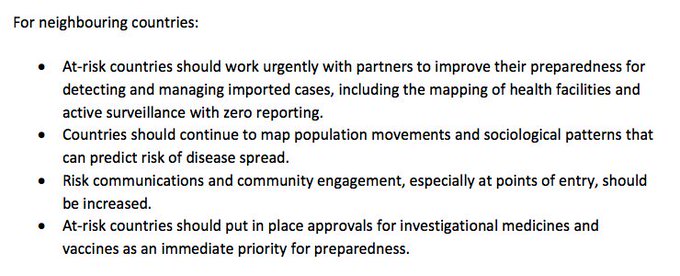
The International Health Regulations Emergency Committee on #Ebola in #DRC provided the following public health advice for neighbouring countries:
World Health Organization (WHO)
✔@WHO
BREAKING NEWS: The #Ebola outbreak in #DRC
constitutes a public health emergency of international concern, citing
concerning geographical expansion of the virus: WHO Director-General, @DrTedros following the IHR Emergency Committee’s recommendation #alert
The declaration came at the recommendation of the International Health
Regulations (IHR) Emergency Committee, which cited possible increased
national and regional risks associated with the outbreak. At three prior
meetings on the topic, the WHO declined to declare the outbreak an
international public-health emergency.
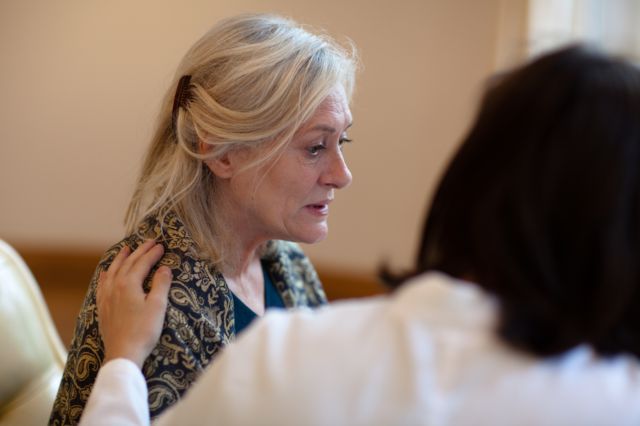
More women than men are living with Alzheimer's disease
Scientists say they may have discovered why more women than men have Alzheimer's disease and dementia.
It has always been thought that women living longer than men was the reason.
But new research presented at an international conference suggests this may not be the whole story.
Differences in brain connectivity and sex-specific genes linked to risk could explain the numbers, the researchers say.
Most people living with Alzheimer's - the most common cause of dementia - are women.
In the UK, about 500,000 women have dementia, compared with 350,000 men.
Most people who develop the disease are over the age of 65 but it is not a normal part of ageing.
Alzheimer's disease can affect younger people too.
Higher brain connectivity
Researchers from Vanderbilt University Medical Centre studied brain
scans of hundreds of men and women, looking at the pattern of a protein
called tau.
One of the characteristic features of Alzheimer's is the build-up of proteins called tau and amyloid in the brain.
When they form toxic, tangled clumps, this causes brain cells to die, leading to memory problems.
The researchers found differences between the sexes in how tau was spread across regions of the brain.
Women appeared to have better connectivity between the regions where tau
protein builds up - and this had implications for the brain, the study
said.
With this higher connectivity, women's brains may be at risk of faster spread of tau - and of cognitive decline.
Dr Jana Voigt, head of research at Alzheimer's Research UK, said the
study revealed "sex-specific differences in brain connectivity that
could contribute to differing Alzheimer's risk in men and women".
But she said more research was needed to see if there were ways of using
this information to treat people with the disease and reduce the risk
of it developing.
Sex-specific genes
Another study, from the University of Miami, found evidence that genes
specific to women and men could be linked to Alzheimer's risk.
The discovery could lead to unique risk profiles for men and women.
Brian Kunkle, who led the research, said that "genetics could contribute
to differences in risk and progression" of the disease between both
sexes.
However, whether this information can be used to identify men and women at risk of the disease is not yet known.
"We don't yet know why certain genes are linked with Alzheimer's risk in
one sex and not the other - but unravelling this could provide some
answers as to why more women are living with dementia than men," said Dr
Voigt.
The research was presented at the Alzheimer's Association International Conference in Los Angeles.
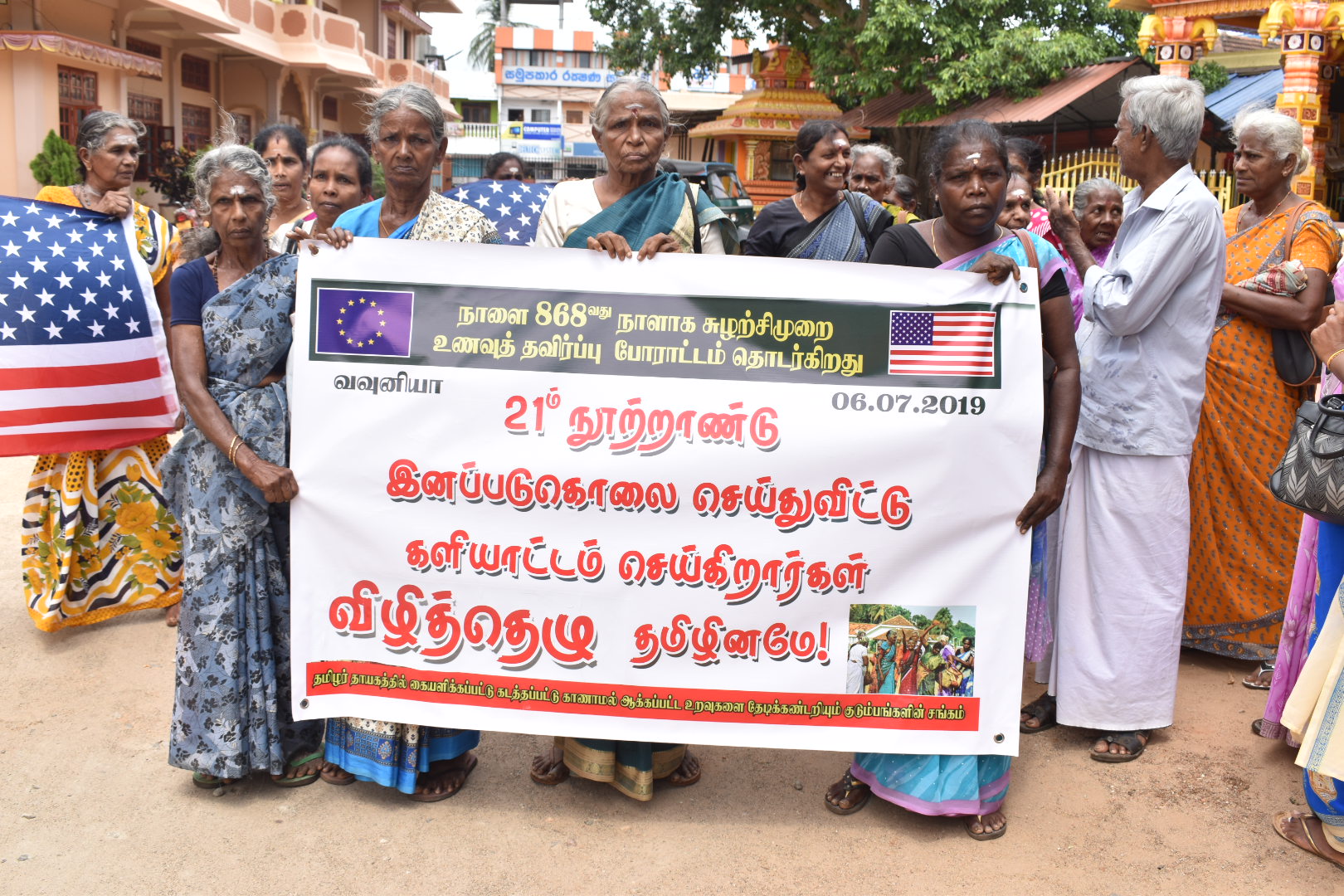
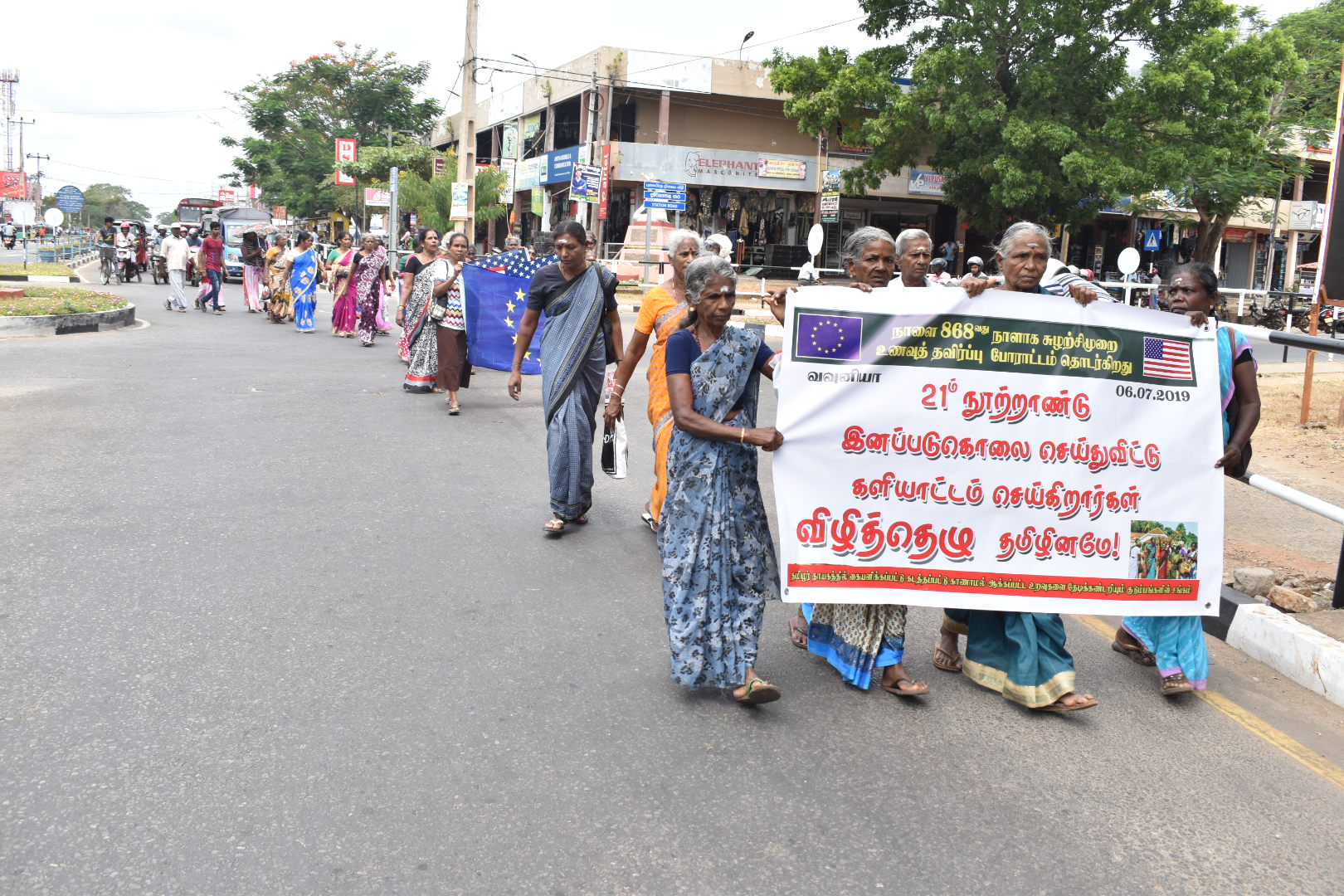
Tamil families of the disappeared who have been demanding information
regarding the whereabouts of their loved ones, marked 868 days of
protest last week, with a rally through Vavuniya town.
16 July 2019
The rally began at the Kandasamy Temple, where families of the
disappeared broke coconuts in a religious ceremony, and ended at the
Vavuniya Road Development Department.
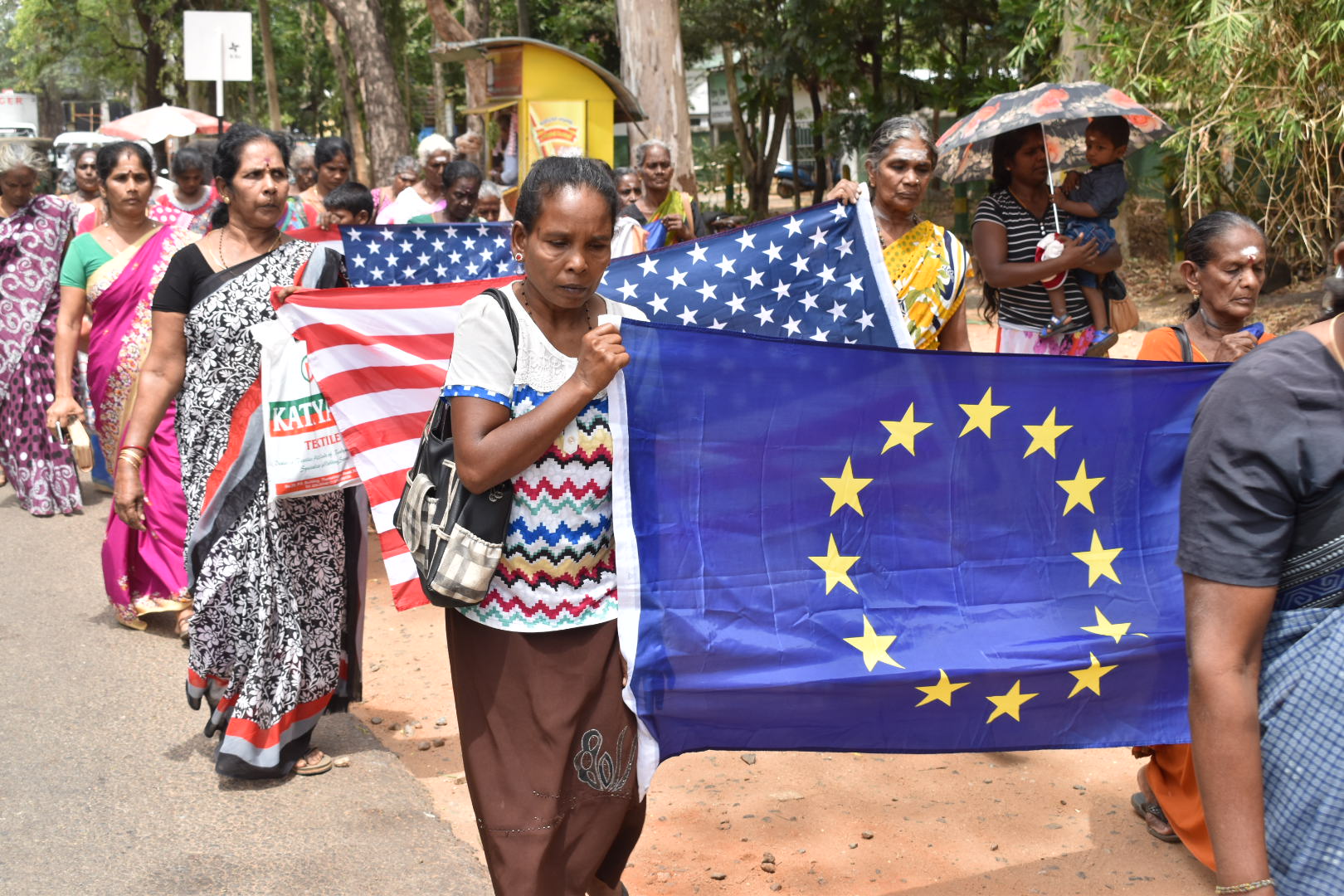
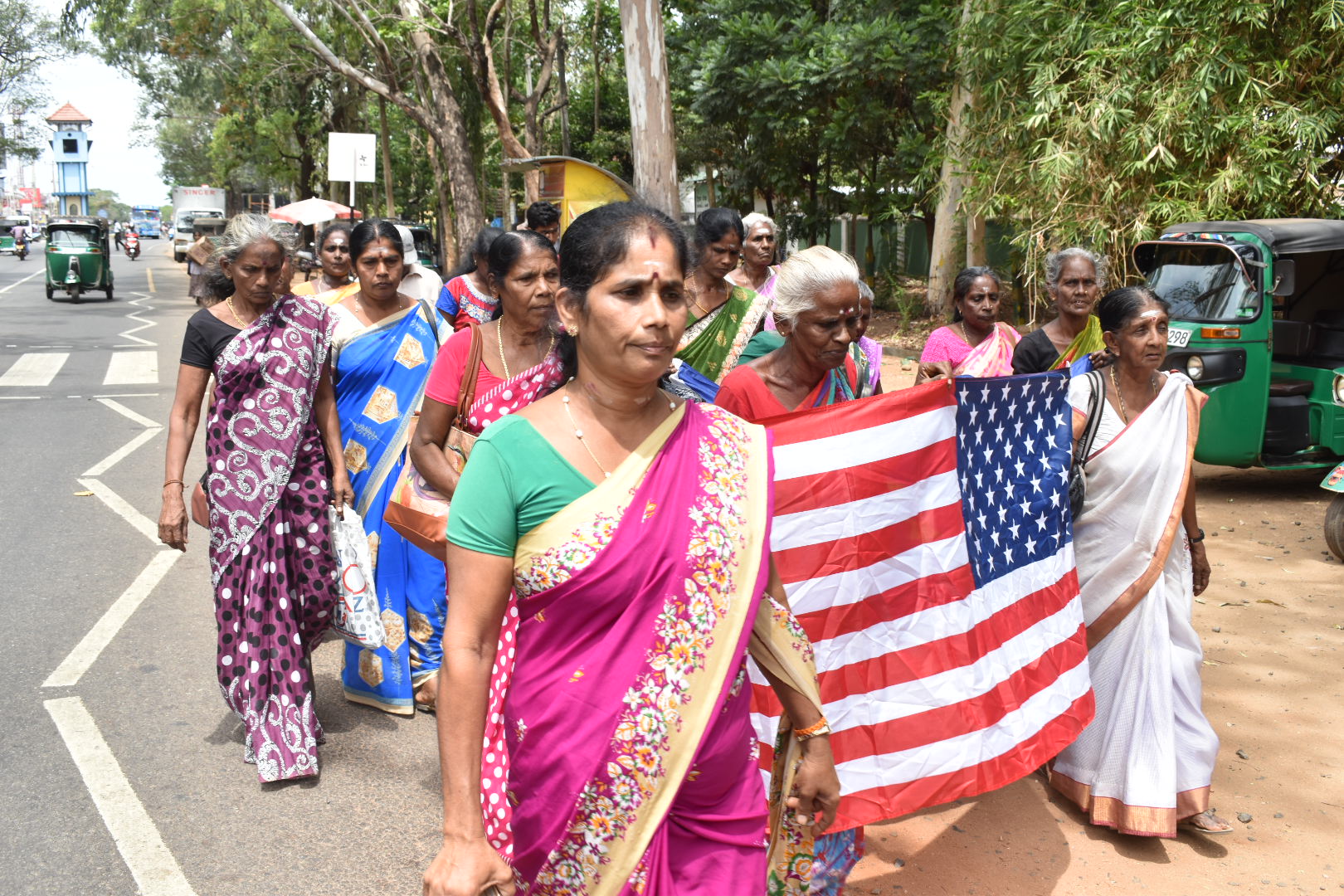
Protestors marched with American and European Union flags down the
streets. The protests, which have now gone on for more than two years
across the North-East, have called on the international community to
pressure Sri Lanka into taking action into locating the thousands of
Tamils who were forcibly disappeared.




 Estonian
President Kersti Kaljulaid leaves the Élysée Palace after a Bastille
Day working lunch during the visit of European leaders in Paris on July
14.
Estonian
President Kersti Kaljulaid leaves the Élysée Palace after a Bastille
Day working lunch during the visit of European leaders in Paris on July
14.