Peace for the World World ! Your War Our Lives

The Dalai Lama
A Brief Colonial History Of Ceylon(SriLanka)
Sri Lanka: One Island Two Nations
A Brief Colonial History Of Ceylon(SriLanka)
Sri Lanka: One Island Two Nations
(Full Story)
Back to 500BC.

Wednesday, June 29, 2022
Sri Lanka HRC has appointed a Special Rapporteur to report on violations of the Rule of Law on 9th and 10th May 2022

Image: Back cover of SL Briefing Note 26-Violent Assault on Peaceful Protest Site “GotaGoGama” &Accountability of Ruling Rajapaksa Family.
.png)
By Sri Lanka Brief-
Sri Lanka Human Rights Commission has appointed a Special Rapporteur to investigate and report to the HRCSL as to whether the law enforcement authorities provided adequate protection to the people, the damaged houses and in an extension of the efforts taken to uphold the rule of law on 9th and 10th of May 2022 are adequate and in line with the existing legal framework.
But the Special Rapporteur’s name is not given in the statement issue by HRCSL.
The statement:
On 9th May 2022, after a discussion at the temple trees (the official residence of the Prime Minister), a group of people attacked two peaceful protests in front of the Temple Trees and Galle Face (in front of the Presidential Secretariat).
Later violence spread all over the country and the properties of politicians and others were targeted and set on fire. The same day a group of prisoners were assaulted by an unidentified group. The HRCSL believed that the 9th and 10th of May violations led the country to lawlessness and alleged violation of the rule of law.
Therefore, the HRCSL decided to appoint a Special Rapporteur to investigate and report to the HRCSL as to whether the law enforcement authorities provided adequate protection to the people, the damaged houses and in an extension of the efforts taken to uphold the rule of law on 9th and 10th of May 2022 are adequate and in line with the existing legal framework.
Accordingly, the HRCSL appointed a Special Rapporteur for this task, and he has started his mission and is expected to submit his report after concluding its further proceedings.

Five investments to look out for in Sri Lanka post-IMF bailout

%20(1)%20(3)%20(1)%20(1)%20(1).png)
Tuesday, 28 June 2022
Once the US President John F. Kennedy said that when written in Chinese, the word ‘crisis’ is composed of two characters, one represents danger and the other represents opportunity. The Chinese phrase for “crisis” is “Wēijī:” 危机. Wēi, 危, does in fact mean danger, the word Ji (机), represents an incipient moment or crucial point when something begins or changes. Since it can be reinterpreted as, crisis time also is a time when things start to go awry. 
The crisis in Sri Lanka is also an opportunity for the country to bring forward an appropriate fiscal policy framework, vibrant leadership, investor-friendly policies, restructuring of the government sector, etc. The collapse of the Sri Lankan economy was gradually building up due to events in the past such as the civil war, socialist-centric economic policies, poor fiscal regulations, etc. However, the sudden downfall was due to a chain of recent events such as the Easter Sunday attack, COVID, and the Ukraine-Russian conflict, resulting in completely impacting the foreign currency coming in, especially from the tourism industry which annually brings over $ 5-6 billion; also, paying off the maturing ISB loans, global hike in fuel prices and the political instability brought the country to a deadlock.
The Sri Lankan authorities are now in discussions with the IMF; upon its confirmation, a recovery plan will be implemented while the debt will be restructured. The Government will promote and give priority to export-oriented businesses going forward and as a result prospects of FDI to Sri Lanka will increase following the IMF-proposed debt restructuring. Below is a layout of five projects to look out for:
1. The New Fortress Energy
The New Fortress Energy Inc. is a global energy infrastructure company listed on the New York Stock Exchange. The company accelerates the world toward the transition to clean energy and is known globally for expanding LNG infrastructure under Build, Operate, and Transfer agreements. In 2021 New Fortress Energy was interested in expanding its business in Sri Lanka and proposed to build the first offshore US liquefied natural gas (LNG) export facility and have it running in 12 months. However, due to complications the project was postponed but the interest in this project is still valid as the US LNG producers are working near peer capacity to supply buyers seeking alternatives to Russian gas over the crisis of Ukraine. 
Moreover, shortages of gas and demand for LNG have pushed global prices to new heights and spurred interest in new projects and countries such as India, Pakistan, Bangladesh, etc. are emerging markets with a lot of interest in expanding their national energy needs which are connected directly to three deepwater ports in Sri Lanka.
The agreement which was signed by the New Fortress Energy and the Sri Lanka Government in September 2021, focuses on building a terminal near Colombo. It also highlighted that the proposed LNG terminal will introduce LNG as an alternative source of cleaner energy in a quest to push Sri Lanka towards energy transition. As part of the agreement New Fortress will be given gas supply rights to the Kerawalapitiya Power Complex and will initially provide the Government with an estimated 1.2 million gallons per day of LNG. This will supply both the currently operational 310 MW Yugadanavi and an additional 350 MW at the Yugadanavi Power Plant to start operations from LNG by 2023.
2. Trincomalee Harbour and the Kurunegala-Trincomalee Expressway
Over generations, the harbour in Trincomalee was written in many books and publications for its strategic position, geographical formation of the natural submarine canyons, and most importantly the depth of the harbour. The harbour expands to an area of 1,630 hectares in water with a 500-metre-wide entrance making it one of the finest harbours in the world.
The two Panamax harbours in Sri Lanka, the Colombo Harbour which is known as a transhipment hub and is usually very busy and the Hambantota harbour in the south is developing to be linked to the industrial zone and has less military capabilities as the harbour is cut into the coast to avoid the heavy swells from annual monsoons, and its narrow channel makes the harbour useless for any military operation which gives less interest for global superpowers. However, the Trincomalee Harbour is ideally suited for a military base, yet it’s more likely that it will be developed as an energy harbour.
The current geopolitical interest in Asia puts the Indian Ocean as a strategic gateway, it is most likely that the US and its allies will engage in expanding its interest towards Trincomalee, and introducing LNG by the New Fortress could be the initial framework. 
However, ultimately the New Fortress Energy could expand its interest to Trincomalee port, which was mostly under the influence of India since 1987, yet the current global dynamics in the Indian Ocean are changing and India is now getting coupled with US businesses. The best example, the recent recoupling of the India-US business council under the US Chamber which is one of the world’s largest business organisations headed by the US Ambassador Atul Keshap, will eventually build more momentum for US business to establish in the region making Sri Lanka an important market for FDIs.
The inland infrastructure is very vital for improving investments and adding value, and linking the city of Trincomalee to the nation’s highway system would be something the investors and the Government might look into. The current expressway network to Kurunegala is proposed to be extended to Dambulla and to Trincomalee, in order to get all three deep sea ports into one network. The Bay of Bengal will then link to the Arabian Sea via land base corridor, changing global maritime routes forever and creating a lot of investment opportunities for Sri Lanka.
3. The Colombo Port City land lease
The Colombo Port City is one of the major investments in the Indian Ocean which is followed by many investors globally. Since the completion of the land reclamation, the project company identified 74 land plots, out of which 31 were completed in the technical proceedings. Six plots out of 31 will be released to the market first on a 99-year lease basis which can generate up to a $ 600 million investment commitment. As per the agreement between Urban Development Authority, CHEC Port City, and the Megapolis and Western Development Ministry, 286 acres out of a total of 440 acres of the liveable area will be leased to the CHEC Port City on a 99-year lease by the Sri Lankan Government.
Currently, the port city identifies the ‘Port City Villa Development’ in the land plot of 2-01-01 along with the Board of Investment Sri Lanka in an area of 27 acres with a minimum investment of around $ 400 million. The project also allows foreign investors many benefits including 100% ownership of real estate investments.
CHEC Port City has already signed a memorandum of understanding (MoU) with the Sri Lankan Government to develop a $ 1 billion worth building complex at Colombo International Financial Centre which will be established within the Port City premises.
So far, the construction work of a state-of-the-art duty-free shopping mall inside the Port City has already been started by two international companies which will draw another $ 2 billion for the building complex. The US-based Skidmore Owings & Merrill (SOM) was awarded the design contract to do the master plan of the design of the building.
The Sri Lankan Government approved the proposal to call for proposals to build a hotel, convention centre, hospital, and an international school on the State-owned land plots of Colombo Port City. The CHEC Port City has invested $ 1.4 billion in land reclamation and infrastructure development of the Colombo Port City project which will be an important investment project. In the midst of the crisis the Colombo Port City has been sailing smoothly meeting all the timelines and building the required soft and hard infrastructure.
4. Hambantota Industrial Zone
The Port Industrial Park holds around 600 acres of dedicated land, which is made available for the setup of businesses and industries. Having the Hambantota Port declared as a free port eases financial burdens in today’s fast-moving day and age for shippers and manufacturers to manage their cargo movement on import, export, and re-export. The Port Industrial Park follows and replicates the success of China Merchants Port’s strategic ‘PPC’ or Port, Park & City model, which was first effectively implemented in the renowned industrial zone – Shekou in Shenzhen, in China. This model has enabled investors to benefit from considerable savings in cost and time as a result of having the port within close proximity to their manufacturing plant
The industrial park has demarcated and classified three industry clusters, such as Heavy Industries, Light Industries, and Food processing Industries. The main aim of the Hambantota Industrial Zone is to set up any manufacturing industry that’s geared towards exports. Sri Lanka in the midst of two giant economies, India and China, holds strategic importance in mediating the future growth of the region.
So far, this vibrant development is made to attract investments and in 2020 November the Hambantota International Port Group signed a $ 300 million agreement with China’s Shandong Haohua Tire to manufacture tyres inside the Hambantota Industrial Zone, and is completing ground levelling to start construction, which also aims to employ local labour force and purchase locally sourced rubber. Also, another $ 16 million investment from China’s Shenzhen Xinji Group to set up a plug-and-play “Park in Park” facility in the Port Industrial Park. Shenzhen which is known as China’s Silicon Valley globally is known as a leading city in China and a technology hub, and through this investment, the company aims to transfer skills and technology and begin the production of household electric and electronic appliances.
In 2020 August the Hambantota Industrial Zone sealed another investment of $ 58 million with Sea Horse Yachts to assemble and export yachts. Sea House Yachts is a Maldivian company that expects to grow around 200 jobs and to make Sri Lanka a pioneer in the boat building industry.
The newly built Lanwa Sanstha Cement factory is adjacent to the Port Industrial Park and is able to discharge bulk raw materials for the Lanwa Sanstha Cement Factory via belts, and pipelines, and recently installed two cranes to move clinker, gypsum, and slag cargoes from vassals to the factory. The Hambantota-based Lanwa Sanstha Cement factory is able to enter the market with 2.3 million tonnes of capacity making it the largest cement factory in Sri Lanka. Moreover, under the Board of Investment Sri Lanka, another 400-acre land is established as the ‘Pharma Zone’ for investments in the production and exports of locally produced pharmaceuticals
5. The Colombo Light Rail
The Colombo light railway system is a long-due project in Colombo. Chinese firm Seoyoung Engineering undertook the feasibility study for the project in November 2017 and submitted it to the Sri Lankan Government in June 2018. However, the project was given the green light by the Sri Lankan Government to carry out with the support of the Japan International Government Corporation Agency (JICA) which is the official government agency for international projects. JICA also agree to offer $ 1.8 billion from the Japanese government under a 40-year repayment term and a 12-year grace period.
Construction of the first phase of the project is estimated to cost $ 2.2 billion and was scheduled to start in 2020. Commercial operations are expected to start by 2025. However, in 2019 the new government decided to halt the project. The light rail system will include 16 stations at IT Park, Malabe, Thalahena, Lumbini Temple, the National Hospital, Borella, Cotta Road, Rajagiriya, Welikada, Sethsiripaya, Battaramulla, Palanthuna, Robert Gunawardana, Colombo Fort, the transport centre and St. Joseph’s College. The estimated traveling time between Malabe and Colombo Fort was expected to be reduced to 30 minutes from the current 45-90 minutes.
Observations
The crisis in Sri Lanka is felt at all levels of society and apart from tourism, one of the most urgent solutions is to attract foreign direct investments to build export-oriented industries in Sri Lanka to strengthen the foreign reserves. The Sri Lankan Government urgently needs some breathing space till the negotiations at the IMF and debt restructuring is completed with both the donors as well as the private investors.
These projects can build some momentum to urgently improve foreign reserves and boost investor confidence. Moreover, when moving forward the current free trade agreements which Sri Lanka ratified as the South Asian Free Trade Agreement (SAFTA), the Asia-Pacific Trade Agreement, and bilateral Free Trade Agreements with India, Pakistan, and Singapore should be taken into consideration when identifying investments and expanding exports.
The ongoing negotiations of the Sri Lanka-China Free Trade Agreement could also be an important milestone to maximise Sri Lankan exports to the world’s fastest-growing and second-largest economy.
(The writer is an independent researcher on maritime affairs and BRI development. He graduated from Dalian Maritime University, and in 2016 was awarded by the Chinese Government a scholarship to complete a Master’s program in Environment and Natural Resources Protection Law at Ocean University of China. He is the co-founder of Belt and Road Initiative Sri Lanka (BRISL), an independent and pioneering Sri Lankan-led organisation, with strong expertise in BRI advice and support. He can be reached via e-mail: Info@brisl.org.)
TNA leader says diaspora will only assist in Sri Lanka if Tamil question is solved
%20(1).png)
28 June 2022
R Sampanthan, leader of the Tamil National Alliance (TNA) said that although the worldwide Tamil diaspora could contribute economically to alleviate the crisis in Sri Lanka, they would not do so unless the ethnic issue on the island is resolved once and for all.
Speaking to Sooriyan FM, Sampanthan said that the main reason for the current economic crisis in Sri Lanka was the absence of a permanent solution to the Tamil national question. The lack of this led to an armed struggle, he continued, adding that the government had to spend a huge amount of money to wage a war on Tamils for 30 years.
Similarly, due to corruption, bribery and non-fulfillment of promises made to the international community, many states around the world still view Sri Lanka with suspicion, he said.
Sampanthan went on to state that the only remedy to the current problem in the country is providing a definite solution with a fair, permanent and durable devolution of power to the Tamil-speaking people. No one has the power to deny the birthright of the Tamil people and they are entitled to demand self-determination, he added, urging Sinhala, Tamil and Muslim leaders to work together and find a solution to the ethnic problem.
Diaspora Tamils can make a difference, the veteran TNA leader continued, but noted that they must first trust the rulers of the country and that they expect a just solution to the ethnic problem. This national issue has remained unresolved for 79 years, he added. Without this happening the diaspora will not be wasting their money.
Speaking on the ongoing anti-government protests in the South, Sampanthan said that they carried a lesson for politicians on the island. The struggle is against corruption, in which the Tamil people must participate and fight together, he added, claiming that there is also a change taking place among the Sinhalese people.
Though Sri Lankan president Gotabaya Rajapaksa pledged to form an expert committee to formulate a new political system for the island when he met with the TNA on March 18, the TNA leader said he was doubtful that any such proposal would be produced.
Instead he called on protestors at Galle Face and other parts of the island to go beyond party differences and find a solution to the ethnic issue. For this to be realized and the country to be built, Sinhalese, Tamils and Muslims must unite together, he added.
He also added that the TNA is undertaking efforts to negotiate with the government and the international community, including India, with regards to a solution to the Tamil national question.
A solution would be coming soon, he added.
An ‘Essential’ Lesson In ‘Essentiality’

%20(1)%20(1)%20(1).gif)
By Ruwan Laknath Jayakody –JUNE 28, 2022

Ruwan Jayakody
Raving tentacles of writhing hopelessness, nourished by seething curses and boiling rage, undulating as they do, from the tributaries of languid bylanes, through to the torrents of main thoroughfares, and across the estuaries of filling stations and distributing centres, only to disgorge into the rapacious maw of dispenser pumps and cylinders, this is what queues in Sri Lanka, be they for fuel or gas, are.
Like the American art rock band, The Velvet Underground’s songwriter Lou Reed’s junkie in ‘I’m Waiting for the Man’, who is feeling “sick and dirty, more dead than alive”, waiting for that fix which is “never early” but “always late”, Sri Lankans too are learning more than they care to, that one has “always gotta wait”. A lot, it seems. “That…that was how I spent the day, just waiting, waiting, waiting…but waiting like a man running amok, senselessly, like an animal, with that headlong, direct persistence.” That was a day in the life of Austrian novelist Stefan Zweig’s obsessive protagonist in ‘Amok’, and it uncannily mirrors that of Sri Lankan citizens.
What is ‘essential’ about this devoted and long wait? There is another answer besides the obvious. Is it that we, the people, as British poet Philip Larkin further observes in ‘Next, Please’, being “always too eager for the future” have picked up the “bad habits of expectancy” of “something always approaching, every day”, something slow, wasteful, “refusing to make haste”, but a “sparkling armada of promises” drawing near, yet leaving us holding the “wretched stalks of disappointment”, as it “no sooner present than it turns to (the) past” or have we found, as American novelist Chuck Palahniuk notes in ‘Choke’, that “after you find out all the things that can go wrong, your life becomes less about living and more about waiting.”
But if Lankans, weary of waiting and entombed within expectation, are expecting the unguent of “an arrival, an explanation, an apology” as a character in American novelist Marilynne Robinson’s “Housekeeping” would have it, such is- in the backdrop of the Power and Energy Ministry Secretary being unaware last week as to why an eagerly awaited stock of 92 Octane Petrol had been delayed despite a previous assurance by the subject Minister – an exercise in abject ‘manna from heaven’ futility.
Instead, they are, of late, being emotionally goaded like the bull is by the toreros, with a lesson on the semantics of ‘essentiality’ by none other than the peoples’ sworn protectors, the law enforcers, the Sri Lanka Police- that is when the latter is not fending off their counterparts in the Army, both groups manning fuel sheds at present, providing ‘security’ for the stations, upon their being deployed as ‘crowd control’ against the helpless and wretched masses who for their part have only managed one incident of genuine bloodletting (a three-wheeler driver knifing a motorcyclist to death), some minor scuffles amongst each other, and major ones with gun toting, sky shooters in khaki and camo who have also claimed a civilian life (Rambukkana).
In a backdrop of video footage being shared on social media platforms of various Police officers, sometimes the same cop, driving multiple vehicles that clearly do not belong to the Police, bypassing queues to the pump, and elsewhere, whisking off with can after fuel can (supposedly to power generators at Police stations during power cuts, per the Police Media Spokesman), and also not lifting a finger against a Government Parliamentarian’s ‘thug gone wild’ brother for obstructing duties, it was observed by the Police Department’s mouthpiece who also is a Senior Superintendent of Police and an Attorney to boot, that while Police officers, owing to the round the clock nature of their work such as responding to 119 calls, other emergencies and investigations, are not encouraged to queue up, the Police would however probe and take action regarding any public complaints replete with express evidence attesting to instances of alleged nepotism, the exertion of undue influence and thereby the misuse of authority on the part of Police officers to procure and secure fuel for family and friends. Duty calls. “So, we cannot afford to have our officers in queues,” the said Spokesman emphasized.
Meaning is derived in part from context. The Oxford Dictionary defines ‘essential’ as something that is completely necessary and extremely important in a particular situation or for a particular activity. By this working definition, it is a given that the Police ‘service’ is of vital essence, but by that same token, so too is the time (for those in queues, this is now measured in days and weeks), and the limited stock quota of fuel (to the degree that it requires the person in the queue to repetitively engage in a Sisyphean rigmarole [it is a rigmarole as one can never really know for certain which shed will receive fuel, how much, when, and of recent times, where the queue even begins]), for the majority of those in queues.
Read More
Country in a mess: Recovery possible, but not easy
%20(1)%20(3)%20(1)%20(1)%20(1).png)
Wednesday, 29 June 2022
The country having gone through a heavy lockdown with the COVID pandemic is aiming for another lockdown, with Government offices closed on Fridays and two weeks work-from-home from 20 June. The decision was due to
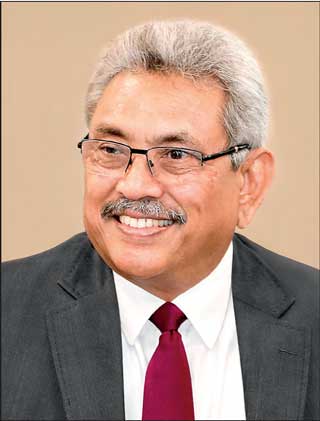 |
| President Gotabaya Rajapaksa |
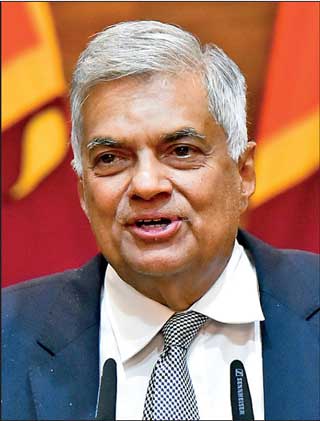 |
| Prime Minister Ranil Wickremesinghe |
non-availability of fuel for traveling to work. But private sector staff continue working.
The issues started with daily electricity power cuts since 22 February with fuel shortages caused by the foreign exchange crisis. The fuel shortage resulted in queues, which are becoming longer and longer, currently at the peak. In addition, cooking gas shortage led to another set of long queues. Even after price increases, the public are spending days in queues and there are occasional fights at fuel stations. The shortage of FE has affected imports; even medical supplies are running out.
How did this happen?
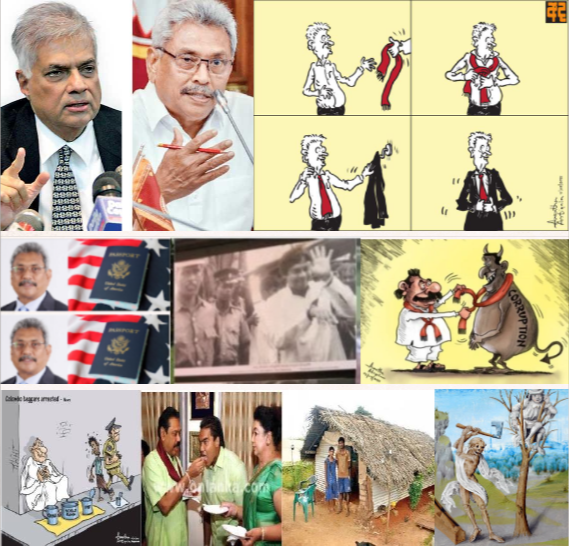
People blame President Gotabaya for the mess. True he did some blunders such as reversing taxes imposed on high income groups, heavily reducing State income. He may not have been aware that the increased taxes were imposed in agreement with IMF during the Yahapalanaya regime. Our governments since independence continued expenses over income except for two years, survived with loans. But the loans, also the loan interest, had to be paid, with more and more loans.
Gotabaya refused loans and FE reserves came down. Then came the COVID pandemic. Gotabaya, former Army Commander, may not understand economics, but he fought the pandemic as another war. With the Army’s help, Sri Lanka became among the first countries in the world to defeat the pandemic. But the country’s lockdowns reduced production and exports; meanwhile Government staff salaries remained intact, among few countries to continue. With shortage of funds to import chemical fertiliser for paddy cultivation, he suddenly announced moving over to organic fertiliser in April 2021, which resulted in crashing of paddy cultivation and farmers had no alternative but to protest. Today the Government has reversed organic farming, but chemical fertiliser is only a promise, expected in early July.
To prevent the public from starvation, the Government was forced to import rice mostly from India. It is claimed the Government spent more on importing rice than fertiliser imports.
Poor advice to President
President Gotabaya was not alone in taking decisions. He was assisted by the Governors of Central Bank, Prof. W.D. Laksman, succeeded by Ajith Nivard Cabraal until Nandalal Weerasinghe took over in April 2022. P.B. Jayasundara was the Secretary to President until Gamini Senarath succeeded in January 2022.
Ajith Nivard Cabraal continued to print money for Government expenses and defended the Rupee/Dollar rate at Rs. 203 exhausting most of the Dollar reserves. Finally when the Dollar was liberated it reached almost Rs. 375, now settled to around Rs. 360, resulting in a Rupee depreciation by almost 75%, forcing the public to face rising food costs and other costs, without salary increases.
Without FE for imports the Government was forced to seek Indian assistance to import oil, gas and others. This year alone it obtained an Indian credit line of $ 500 million and another 200 million later, now all used up and expecting more.
Seeking help from IMF
Nandalal Weerasinghe took over Central Bank Governorship in April and immediately sought IMF help to overcome the crisis and attended IMF discussions in Washington along with former Finance Minister Ali Sabry. Sri Lanka is expected to show proposed steps to overcome the crisis, also ways to settle the loans expected from IMF, including existing loans.
At an online meeting with IMF, the PM agreed to improve local income over expenditure to 1% by 2025. This will require rehabilitation of a large number of State organisations and heavy staff reductions, would sure to create unrest.
For the second round, the IMF team is already here and discussions are taking place. The team would get first-hand knowledge of queues and public unrest. But funds from IMF will be possibly only around August. When IMF agrees, other countries too would look at Sri Lanka more favourably.
Ending gas and fuel queues
The Prime Minister informed Parliament that with $ 80 million from World Bank and $ 20 m from the Treasury, 100,000 tons of gas would be imported next month and gas shortages would end.
Now, petrol prices have been revised to exceed Rs. 500. A car running 12 km from a litre will cost Rs. 40 a km for petrol alone. Most office staff will be forced to move over to bus travel. Three-wheel drivers have found selling petrol by staying in queue earns more than hires. This has resulted in petrol consumption coming down, shortening queues. Housewives will keep the filled gas cylinder in the kitchen, and cook with firewood.
Our politicians could set an example by using a smaller vehicle with a driver and a security guard without escort vehicles.
Renewable energy
The biggest foreign exchange expenditure is the import of oil for electricity generation, which could only be solved by replacing imported oil with renewable power generation using solar, wind, bio-energy and small hydro power, contract awards were suspended by CEB since January 2018.
Now that the Electricity Bill has been amended, Minister of Power and Energy Kanchana Wijesekera who had been concentrating on fuel supply, in a public discussion stated that plans for the electricity sector would be made public soon. The Minister who displayed his efficiency, the public expects him to handle CEB and take proper steps to resolve the issues.
First the 1,300 prospective investors capable of generating 4,000 MW of electricity registered and waited for over four years need be permitted to go ahead. But their proposals were based on former Rupee value and payable charges for generated electricity need be increased by 75%. But with increased loan interest rates by banks, some investors may not be willing to continue.
Immediate action
Installing roof-top solar would be the fastest way to reduce oil imports. Currently, CEB allows solar power generation only to the building’s maximum power consumption. The removal of restriction would allow large roofs of storage warehouses to be prioritised for solar installation. Also CEB’s unnecessary restrictions such as environmental approvals, joint inspections and many others, need to be removed. US Aid and Germany have already agreed to provide funds for import of solar panels. Thus, if the Minister initiates a proper plan, generating 1,000 MW from roof-tops within a year, reducing costly thermal power generation during daytime will not be difficult.
Country’s power requirement
The country started solar power plants in 2010 and wind power plants in 2012. With advancing technology solar prices came down in 2015, but CEB stopped RE project approvals in January 2018. Cost of electricity produced with solar is around Rs. 15-20, wind power around Rs. 12 for plants around 10 MW prior to devaluation. The country’s largest RE producer is the Mannar wind farm opened in December 2020, producing 103 MW costing $ 200 million. CEB engineers boasted that power produced cost only around Rs. 6 per unit. What cannot be understood is if the electricity produced is so low, why did not CEB continue with at least five more similar plants?
Currently coal power costs around Rs. 40 a unit, oil based power over Rs. 60 a unit, some plants reaching Rs. 120. Thus moving away from coal and oil to renewable energy is urgent for the country’s survival.
The country’s peak electricity demand is around 3,000 MW and is expected to reach 4,800 MW by 2030. Of the requirement large hydro produces 1,300 MW and 350 MW with private small hydro plants. Hydro production reduces with low rainfall and balance is managed with coal (900 MW) and oil powered plants.
The current coal and oil based electricity production amounts to 2,000 MW, but considering wavering nature of solar and wind, the country would need a capacity around 3,000 MW under RE and more in following years.
Considering the cost of Mannar wind power plant, a RE power plant would cost around $ 3 million per MW. Thus moving away from coal and oil will require around $ 9,000 million. The Government has requested only $ 4 billion from IMF; then how could the country find $ 9 billion? Thus help from every possible source is urgent.
Visiting Indian team
The Prime Minister informed the Parliament recently that India’s recent assistance amounts to $ 4 billion, whereas SL’s request from IMF too is $ 4 billion. The recently arrived four-member Indian team was expected to finalise another $ 1 billion credit line, for fuel and essential goods. The team has responded by saying it will consider.
MOU with Adani
Recently COPE Committee raised the signing of MOU with Indian company Adani for the generation of 500 MW of electricity with solar and wind power payable in dollars. The CEB Chairman’s behaviour forced him to leave his job; the entire process showed mishandling.
India came to our rescue during the most difficult period and is fair to make a request in return. If Indian PM Modi requested Gotabaya to award a contract to Adani, our Ambassador to India Milinda Moragoda could have discussed the matter with the Indian Energy Minister and signed an agreement nominating Adani as India’s representative. The Cabinet acceptance of agreement between the two countries make tender calling unnecessary.
Wind power in Tamil Nadu
Tamil Nadu just across Palk Strait, the Wind Power leader in India, produces wind power of 7,630 MW, 29% of India’s total. Tamil Nadu’s Muppandal wind-farm capacity 1500 MW is India’s largest.
North-western Sri Lanka especially Mannar region is blessed by the same wind stream, with a massive wind power generating capacity, well over the country’s requirement, needs making use early.
Sharing electricity with India
India imports/exports electricity between neighbouring countries and has issued the “Guidelines for Import/Export (Cross Border) of Electricity 2018”. Presently, India exports electricity to Nepal 700 MW, Bangladesh 1,160 MW and Myanmar 3 MW; also a high capacity link is under discussion. In addition, India imports around 2,000 MW of power from Bhutan.
India claims an interconnection between India and Sri Lanka is under discussion, but our politicians are ignorant. If we discuss and agree with India, the country will receive cheaper electricity around 500 MW within two years, reducing import of expensive oil.
Getting cheaper fuel and gas
Our sole refinery is 40 years old, and could only produce 25% of our needs; thus balance is imported. Meanwhile, one million ton capacity oil tanks in Trincomalee inherited from British idled for 75 years, were recently leased to India.
If we request India to install a large capacity crude oil refinery in Trincomalee as a joint venture, the excess capacity could be sent to India. They could purchase bulk crude oil when market prices are low and stockpile in available tanks. By the time refinery construction is complete in few years, the Russia-Ukraine war would have ended with lower oil prices.
IMF conditions for the loan
When SL requested funds from IMF, their conditions included rehabilitation of over 40 State organisations who have massively contributed to the current mess. But the organisations were not made public; even the ministers seem unaware of organisations coming under them.
Improving economy
Few years ago, foreign exchange earned through export of garments, tourism and receipt from locals employed abroad balanced the FE requirements. But today, after the COVID pandemic import Dollar prices have gone up, supported by the Russia-Ukraine war. Thus balancing imports is difficult. With better supply of fuel and gas long queues would disappear and tourism will recover. The depreciation of the rupee will make the country be more attractive to tourists. Re-emergence of tourism will improve dollar supply.
Garment exporters claim they could double the exports if sufficient workers are available. A positive side of the current crisis is increased cost of living will force idling girls at home towards employment in the garment sector.
Recently, the Daily FT front page highlighted the possibility of exporting chicken to Singapore if proper chicken feed is available, as import of Malaysian chicken has been banned due to bird flu in Malaysia and Sri Lanka is free from bird flu. Thus the Government needs to come up with incentives to investors to reduce unemployment and increase exports but soon.
Now powdered milk is a rare commodity, but packeted fresh milk is freely available in supermarkets, but at a higher price. In three to four years with the expansion of large cattle farms the country would become self-sufficient in milk products.
Light at the end of tunnel
Sajith Premadasa and JVP are boycotting Parliament sittings for a week claiming Ranil Wickremesinghe has failed to submit proper proposals for the country’s economic recovery. They seem to expect PM to correct blunders of 75 years within six weeks.
The country’s problems are longstanding. Mainly 1. Expenses over the income since independence. 2. Loading the State organisations with staff under political patronage. 3. State corporations making huge losses while their employees are getting paid heavily. 4. Sinhala-based education neglecting possibilities of future employment.
Sri Lanka expects a loan of $ 4 billion from IMF, the 17th loan. The country’s conditions are far worse and loan conditions too would be tougher, will address above, except the last. But unless the education issue is addressed, students in universities also in Advanced Level classes will have no future and will easily be pushed towards a revolution by JVP and other affiliated organisations.
The agreement with IMF will allow rescheduling existing foreign loans, also receive help from other countries. Already World Bank, ADB, some countries and organisations have helped below $ 100 million each.
Currently, agriculture has crashed without chemical fertiliser. The expected fertiliser in early July would be too late for Yala farmers, but they will still use. The Government is planning to import fertiliser for the Maha season. If they arrive by mid-September the farmers will cultivate every inch with paddy and highlands with corn; by next February the country would be self-sufficient in rice.
The biggest problem facing the country is the purchase of oil for electricity generation, which could only be solved by moving over to renewable energy. We would have achieved same long ago if not for the obstructions by CEB engineers, who were after commissions from private power producers. Meanwhile the politicians were dumb and deaf. When the current Government wished to amend the Electricity Act, the Opposition proposed RE projects under 10 MW be exempted from calling for tenders. If same was implemented anytime after January 2018 when CEB stopped all RE projects, the country would have been in a much safer position.
Reducing Government expenses would require reducing Government staff and rehabilitating State corporations, most making losses; easiest would be discontinuing all casual workers. To secure employment opportunities to future students, the Government needs to convert education to English medium and improve quality. Those already in universities need to be taught English and IT.
Most urgent is moving over to renewable energy eliminating oil imports for power generation. Each day’s delay will cost the country millions of dollars. Now the Electricity Act has been modified allowing negotiated contract awards, instead of calling tenders saving valuable time. First 1,300 investors waiting since 2018, next solar and wind power from Adani and the electricity transmission line from India. But the efficient running of the system will require upgrading power grids to accommodate new generating plants, while keeping a sharp eye on CEB who will wish to sabotage
HUMAN RIGHTS DEFENDER AND JOURNALIST THARINDU UDAWARAGEDARA SUMMONED TO THE CRIMINAL INVESTIGATION DIVISION

Status:
Summoned and questioned
About the situation
.png)
24 June 2022
On 22 June 2022, Sri Lankan journalist, media rights campaigner and human rights defender Tharindu Uduwaragedara was served a notice requiring him to appear at the Criminal Investigation Department (CID) in Colombo for inquiry on 28 June 2022. Tharindu Uduwaragedara was not given clear reasons for the inquiry except that it relates to the content of his YouTube channel, and that a complaint had been made against him by the Intelligence Division of the Sri Lanka Air Force (SLAF).
About the HRD

Uduwaragedara is a well known independent journalist and media rights campaigner who has been reporting on the ongoing citizens protests across the country against government corruption, mismanagement and the lack of basic resources including medicines, food and fuel. He is the former president and active member of the Sri Lanka Young Journalist Association (SLYJA) and an Executive Committee member of the Sri Lanka Working Journalists Association (SLWJA). He has worked at several Sinhala language newspapers including Ravaya and Anidda, known for their investigative journalism and open critique of the government. Tharindu Uduwaragedara has his own YouTube channel Satahan Radio, dedicated to independent reporting on social issues and human rights violations.
24 June 2022
Human rights defender and journalist Tharindu Udawaragedara summoned to the Criminal Investigation Division
On 22 June 2022, Sri Lankan journalist, media rights campaigner and human rights defender Tharindu Uduwaragedara was served a notice requiring him to appear at the Criminal Investigation Department (CID) in Colombo for inquiry on 28 June 2022. Tharindu Uduwaragedara was not given clear reasons for the inquiry except that it relates to the content of his YouTube channel, and that a complaint had been made against him by the Intelligence Division of the Sri Lanka Air Force (SLAF).
Tharindu Uduwaragedara is a well known independent journalist and media rights campaigner who has been reporting on the ongoing citizens protests across the country against government corruption, mismanagement and the lack of basic resources including medicines, food and fuel. He is the former president and active member of the Sri Lanka Young Journalist Association (SLYJA) and an Executive Committee member of the Sri Lanka Working Journalists Association (SLWJA). He has worked at several Sinhala language newspapers including Ravaya and Anidda, known for their investigative journalism and open critique of the government. Tharindu Uduwaragedara has his own YouTube channel Satahan Radio, dedicated to independent reporting on social issues and human rights violations.
Tharindu Uduwaragedara has been actively documenting the citizen’s protest since March 2022 and his YouTube channel is a tool to voice the messages of those (mostly youth) who are protesting against scarce resources, governmental corruption and mismanagement. He has been present from the outset at Galle Face, in Colombo, where peaceful protesters have set up a protest site, Gota Go Gama calling for the resignation of President Gotabhaya Rajapaksa. Tharindu Uduwaragedara set up the International Media Center-Colombo tent at Gota Go Gama, to support journalists reporting from the protest site. Tharindu Uduwaragedara has been openly critical of the current government and its policies, lack of transparency and the crackdown and reprisals against peaceful protesters.
Sri Lankan authorities have reacted violently to the protests. Reprisals including physical violence against peaceful protesters, surveillance, intimidation and arrest/detention on baseless charges are ongoing in an attempt to quash legitimate dissent. On 20 June 2022, 9 protesters were arrested by Sri Lanka police in one night alone1. Many others have been called for questioning, arrested and later released on bail. There has been no accountability to date for violence by security forces and government supported mobs against peaceful protesters, most notably on 9 May 2022.
On 22 June 2022, the CID served summons to Tharindu Uduwaragedara’s mother’s home in Bandarawela, Badulla District, ordering him to appear for an inquiry at the CID headquarters in Colombo on 28 June 2022. The summons contained the name and number of a sub-inspector of the police to be contacted for further information. Tharindu Uduwaragedara telephoned this officer and asked why he was being called for questioning. The officer refused to share details, stating only that the inquiry was related to the content of his YouTube channel and that a complaint had been filed against him by the Intelligence division of the Sri Lankan Air Force. Tharindu Uduwaragedara filed a complaint with the Human Rights Commission of Sri Lanka on 22 June 2022 against this treatment which he believes is linked to his reporting and human rights work.
This is not the first time Tharindu Uduwaragedara faces reprisals for his work. He has been subjected to harassment and surveillance, including during the current protests. Uniformed officers and unidentified individuals suspected to be intelligence officers have routinely visited the Media Center tent and inquired about his whereabouts. Those protesting and reporting are photographed continuously by security and intelligence officers. The recent summons issued to Tharindu Uduwaragedara is part of a pattern of persecution against those raising their voice against the current regime.
Front Line Defenders is concerned regarding the summons issued to Tharindu Uduwaragedara as we believe this is directly linked to his legitimate journalism and peaceful human rights work. All citizens and especially journalists and human rights defenders must be safe from reprisals when carrying out peaceful protests and expressing legitimate dissent against Government policies.
1 https://economynext.com/sri-lanka-lawyer-and-activist-senaka-perera-summoned-by-cid-95206/
Subscribe to:
Posts (Atom)