Peace for the World World ! Your War Our Lives

The Dalai Lama
A Brief Colonial History Of Ceylon(SriLanka)
Sri Lanka: One Island Two Nations
A Brief Colonial History Of Ceylon(SriLanka)
Sri Lanka: One Island Two Nations
(Full Story)
Back to 500BC.

Monday, July 11, 2022
The victory of Aragalaya: What actually happened to Gota and Ranil?
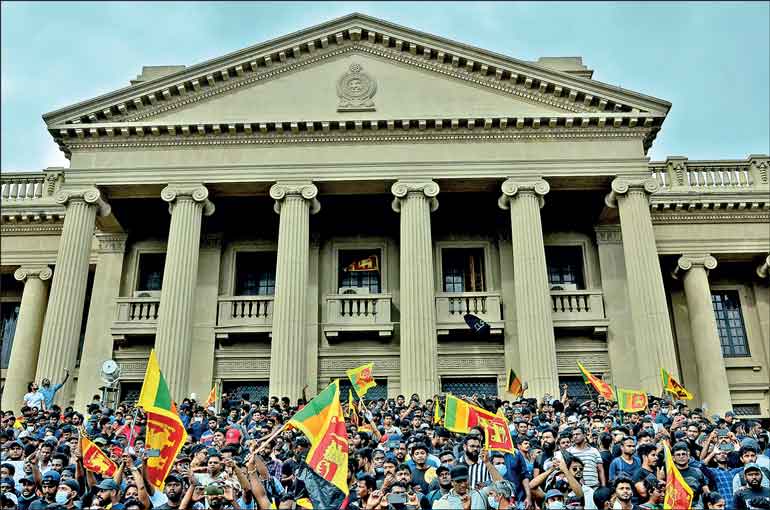
This is the first time in Sri Lanka’s history that protestors have entered a high security zone and got hold of the important buildings of government power. That was the message delivered to Gota and Wickremesinghe that they should step down immediately – Pic by Shehan Gunasekara
%20(1)%20(3)%20(1)%20(1)%20(1).png)
Monday, 11 July 2022
Ranil’s revelation in Parliament
Two weeks ago, Prime Minister and Finance Minister Ranil Wickremesinghe told Parliament and the country that Sri Lanka’s economy had collapsed. This was widely quoted in local as well as foreign media. Probably, he had been asking for forgiveness for his failure because he was not able to deliver anything that he had promised, or his close supporters had expected of him.
Valid reasons for the assertion that economy had collapsed
But he had valid economic reasons to make that assertion which had started long before he assumed the Premiership. Economy had been undergoing a great shrinking exercise pushing it to a negative region at about 6% in 2022. This was to be extended to 2025, and any recovery could be expected only after that.
Lack of dollars
Dollars did not flow into the country as he had expected trusting his economic competence. As a result, the black market in dollars continued to loom over Sri Lanka. Anyone wishing to buy dollars could not do so at the Central Bank’s artificial rate of Rs. 365 per dollar. It was another fruitless exercise that had been followed by Central Bank Governors, W.D. Lakshman and Ajith Nivard Cabraal who had maintained the dollar rupee rate at Rs. 200 per dollar. That artificial rate collapsed in the third week of March 2022. Without dollars in the Central Bank to supply to the market to quench its thirst for this hard currency, the prognosis was that the Central Bank’s current artificial rate too will collapse without warning.
Black market was still thriving with a high premium of Rs. 40-50 over the official exchange rate. Therefore, it was a self-deceiving exercise by both the Central Bank and the Minister of Finance. Without dollars, the country could not ensure the import program needed by people as well as industries. There were long queues for fuel, cooking gas, and milk foods. India had come to help Sri Lanka by extending a credit line, but that credit line too got exhausted quickly.
The delayed IMF bailout
Problems became more acute when the expected bailout package from IMF could not be completed at the staff level. The team that had visited Sri Lanka returned to Washington, DC without giving anything. That was because the country could not come up with a blueprint for debt restructuring which was a precondition for extending a bailout package by IMF. Two spanners had been thrown to Sri Lanka’s path in this connection. One was the court case filed by one of the investors in ISBs maturing on 25 July, namely, St. Kitts and Nevis based Hamilton Reserve Bank, demanding the full repayment of moneys due to them becoming a holdout investor impeding the debt restructuring process. Then, the US Senate Foreign Relations Committee issued a Twitter message laying out three additional conditions for any bailout package. They were not to be completed immediately. Hence, the staff level agreement will not be reached by end-August as he had envisaged.
Money printing and inflation
In the meantime, the past money printing had resulted in surging of all prices. Inflation that considers only consumer goods was running at 55% by end-June with food inflation rising to 80%, according to the underreported Colombo Consumers’ Price Index. It has a share of only 28% for the food category. But the Sri Lanka National Consumers’ Price Index which has a share of 45% for the food category was rising at a higher rate will reveal an inflation rate of close to 70% once the data are released by the third week of July. This is the highest rate of inflation which Sri Lanka has experienced in its post-independence history. Wickremesinghe should cage this monster with the support of the Central Bank which is already on a tight monetary policy program.
Stop funding the Government
IMF does not want the Central Bank to fund the Government anymore and has recommended that the Government should consolidate its budget – that is, it should reduce the budget deficit to an affordable level – by increasing taxes and pruning the expenditure except what is earmarked for supporting the poor. This is the biggest sacrifice which Sri Lanka should make and it requires all citizens from President to those in the street by giving up their modern lifestyles and being frugal in their approach to life. If the top leadership does not give an example to people, it is unlikely that they could command their support to go through the hardships. This is the challenge which the new interim government faces once it is formed.
Wickremesinghe inherited Gota’s sick economy
Wickremesinghe is not responsible for the current economic calamities in Sri Lanka. They are the handiwork of Gotabaya Rajapaksa and his key policy advisors. When he offered the attractive tax concessions to income tax and value added taxpayers, independent economists including this writer had warned Gota of its adverse consequences. (Visit: https://www.ft.lk/columns/Tax-cuts-Control-the-damage-before-the-unconventional-stimulus-backfires/4-691207). From the point view of his de facto policy advisor, it was a stimulus package. But it was an unconventional package because it had been offered without being asked by anyone.
I asked Gota to withdraw it before it would backfire by denting his revenue base. No ruler can survive or prosper by losing his revenue base. But it was implemented. Then in May 2020 I asked Gota again to postpone the costly tax reform because it has hampered the Government’s recovery plan (available at; https://www.ft.lk/columns/Constrained-fiscal-space-for-post-COVID-19-reconstruction-Consider- postponing-costly-tax-reforms/4-700327). But this was implemented without concern for its adverse repercussions. Over time, this tax cut became the ‘mother of all crises’ leading to all the economic ills which the country is now facing.
Sri Lanka has actually come to a standstill
When Wickremesinghe said that the country’s economy has collapsed, he has in fact understated the current state in the country. In my view, it is not merely a collapse of the country’s economy. It is the sad state where all the systems in the country have come to a standstill. The state, government, healthcare, education, transport, energy, power production, and all others have come to a standstill. This is similar to the Pompei City being overwhelmed by the soot of the Volcano Vesuvius that erupted without warning in 79 CE. People had died then and there while performing their day-to-day activities. Similarly, all Sri Lankan systems have stopped without the people being able to move forward or backward.
True cost of standing in queues
Standing in queues for days to buy the essentials – fuel, cooking gas, and milk foods – has been a daily annoying experience of Sri Lankans for many months now. The reason has been the inability to import them because of the lack of foreign exchange. This is not limited only to these items but to all other imported products like building materials, inputs for industries, and spare parts for motor vehicles. People are required to wait for months to get them. But what has been prominent has been queues for fuel and cooking gas where people had remained in those queues for days and nights.
I also stood in queues in my vehicle to buy petrol for four times. The first three times were in vain because even after staying in the queue for long 10 to 12 hours at a time, the expected petrol bowsers did not turn up. Disappointed, all those who stood in queues had to leave the queen at night. On the fourth day, I parked my car in the queue at 3 a.m. and waited patiently. The bowser laden with petrol came only at about 9 p.m. When I got my ration of petrol amounting to 20 litres, it was 11 p.m. In all, I had stood in the queue for 50 hours.
The money cost of a litre of petrol was Rs. 450. However, when the opportunity cost was added, it came to a staggering Rs. 12,000 per litre. That has been the real sacrifice that I had to make to get my petrol. When this happens daily, it is natural that people get annoyed, angry, and bitter. This is what led unarmed people of all walks of life to march to Colombo to demand both Gota and Wickremesinghe should step down on 9 July 2022.
Protestors finally reached their goal
The protestors met with stiff resistance from the Police. They were attacked by tear gas and water cannons several times. Yet their resolve could not be washed away by the high-pressure water cannons. When the attack was made, they quickly dispersed. But after the attack had ended, they quickly regrouped with a greater ferocity and vigour. At the end, they were successful in breaching the security barriers at both the President’s House and Presidential Secretariat and began to occupy them. Even the protestors held their media conference at the President’s House. This is the first time in Sri Lanka’s history that protestors have entered a high security zone and got hold of the important buildings of government power. That was the message delivered to Gota and Wickremesinghe that they should step down immediately.
Fun in the queue
Standing in the queue was another kind of experience. Though it is disappointing and annoying, there is a positive side to it also. It is the total strangers who meet in the queue. But they immediately form a bond among themselves because all of them have the goal. That goal tells them that collaboration and cooperation are the best weapons they have to realise their goal. Hence, a cooperating society is immediately formed without the direction of anyone. To kill the boredom and monotony, they start talking to each other because they now have a plenty of time to while away.
In this cooperating society, they become the law enforcers as well. In one of the queues I had stood, there was a motorist who had tried to insert his car well ahead of all of us into little space available between two cars. The drivers of the cars at either end were not present and hence, that stealthy act would have gone unnoticed. However, the youngsters who had stood in the queue behind me ran to that place and forced that stealthy driver to withdraw from the scene. In another instance, there was somebody who had squatted behind a car in the total darkness and doing something. When the same gang noticed it, they thought that he was stealing some valuable part from the car. They immediately ran up to him and chased him away. Even a policeman on duty would not have dome a law enforcement like that.
Opportunity to learn people’s opinions
I used the opportunity to learn of their views on President, Prime Minister, the Government, and various policies the Government had been adopting. They did not know who I was and therefore, spoke freely in my presence. None of them had any kind word for Gota or Wickremesinghe. Some even were abusive. That was quite understandable because they had stood in queues long hours totally exhausted and drained. If Gota or Wickremesinghe wished to learn of what people in the country would be telling about them, they could have employed a spy to gather that information. If they had done that, the writing on the wall would have been very clear to them. That is both Gota and Wickremesinghe are no longer loved, respected or believed. Most of them had wished that they both would have been eaten by sharks. That was the anger that had been boiling inside them.
Modern rules and using social platforms
In ancient times, kings who did not believe in the truthfulness of what their ministers were telling them had travelled in the night in cognito. Sometimes, they had disguised themselves as beggars and slept with other beggars. But it gave them an opportunity to learn of their opinions freely. In today’s context, Gota or Wickremesinghe does not have to travel in cognito to find out what people say about them. They can simply learn of it by examining the comments made by citizens on posts they had inserted to numerous social media platforms.
For instance, in one of his Twitter messages, Gota has expressed his shock at the shooting of the former Japanese Prime Minister, Shinzo Abe. But people who had commented below, numbering thousands, had cut him to pieces (visit: https://twitter.com/gotabayar/status/1545293070723194880?s=21&t=7EjXmkpURFzXxGZ5sCy_Ag). Wickremesinghe had also been given the same treatment by the public when he posted a Twitter message expressing his sorrow over the assassination of Abe (visit: https://twitter.com/rw_unp/status/1545323892906278912?s=21&t=7EjXmkpURFzXxGZ5sCy_Ag). The failure to do so has resulted in their losing power humiliatingly. In fact, Wickremesinghe had held the Premier’s post only for two months. During that period, he had become the target of public wrath.
Failure to read the writing on the wall
It is important that rulers should be sensitive to public criticism and ill-talks. It is equally important for them to learn of what people say about them by using whatever media platform available. It will enable them to read the writing on the wall and act accordingly. Failure to do so will become fatal for them as well as the country. This is exactly what happened to Gota and Wickremesinghe.
(The writer, a former Deputy Governor of the Central Bank of Sri Lanka, can be reached at waw1949@gmail.com.)

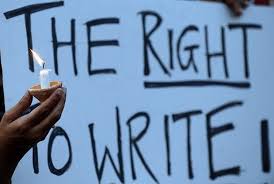
Sri Lanka President Rajapaksa orders to block mobile phone text messaging including WhatsApp & Facebook in Colombo city
.png)
By Sri Lanka Brief-
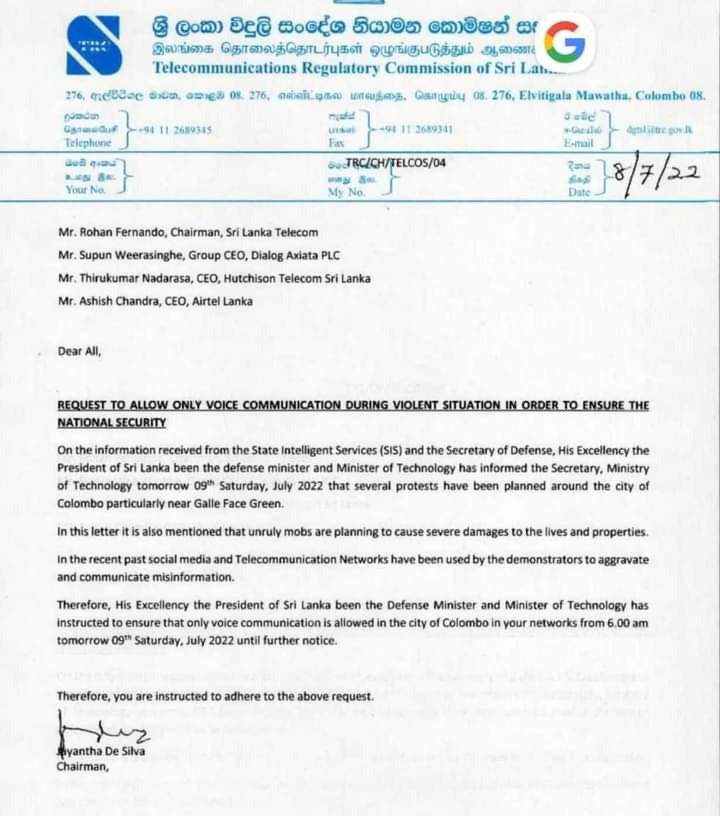
Head of the Sri Lanka Telecommunication Regulatory Body has ordered an indefinite ban over mobile messaging communications from 6 AM today i.e., 9th July 2022.
Sri Lanka president Gotabhaya Rajapaksa as the minister of defence and minister of technology has ordered to allow only voice communications in the city of Colombo.
This draconian measure has been ordered to weaken the massive peaceful protest calling for President Rajapaksa to resign.
Meanwhile Citizens Fact Check says that “it can confirm that this letter was sent to the telecommunications companies by the Sri Lanka Telecommunications Regulatory Commission. However, we still do not have enough evidence to state what is the reason for Jayantha de Silva, Chairman of the TRC, to announce that the Internet will not be blocked tomorrow after the letter was leaked to public.”
March Of The Damned: The Second Wave
“Everything in moderation, including moderation.” ~ Oscar Wilde

%20(1)%20(1)%20(1).gif)
They don’t need any political leadership, for the existing one is either shamelessly corrupt or hopelessly incompetent. They don’t need any motivation as the excruciating, psychological pain is enough to drive them to places where they had never been before. They don’t need any summons either. History has summoned them; the current circumstances have conspired to assemble them together as one single family, as one single community of Sri Lankans. No religion, no ethnic grouping, no allegiance to any political party can set them apart from each other. The current need is so desperate; it’s so immediate and its appeal is so irresistible.
A battered, condemned and a damned people banding together in order to express their collective anger, collective frustration and collective despair and asking their rulers to go home is not an alien concept to history. Its repetition generation after generation since the dawn of civilized governance has not ceased to wonder the simple mind and provoke the intelligent and wise. While, more often than not, the simple has agreed to follow the wise and intelligent, seldom has it failed to produce the desired results. Those who have not learnt have been condemned to relive the miseries and agonies of those who sat by and allowed the ruling murderers to continue.
A wise man once said that when material conditions of the majority continue to deteriorate and worsen, subjective conditions take over the process and attempt to finish the unfinished task at hand. Leadership devoid of any political bias and other artificial sociocultural divisions has finally realized that a second and probably the last wave needs new direction and even fresher impetus if it were to see to an anticipated end. How far has the movement matured, how far the movement gone in order to endure the insufferable pain and physical assault, one may not know as yet. But obliviousness of such end results should not deter the brave and courageous.
Ever since the swearing in of the new Minister, Ranil Wickremesinghe, our men and women have experienced only further corrosion of their day-to-day living instead of relief. Beaten by agonizing conditions and demand on sacrifice without any finality on the horizon, the people are now looking for any leadership that shows a glimmer of promise and a relaxation of the mind which they had not relished at least for a couple of years. When all hope is lost and dreams shattered, what else can they look to? Where else can they expect relief from? These burning questions without any plausible answers have been pounding the simple minds of the greater majority of our people. Offering that small window of relief and escape is no crime. Albeit the fact that the very notion that the current rulers are allegedly planning most unsavory and unorthodox, yet very crafty in implementation and diabolical in conception methods, they are sweating to step forward in an uprising with the aim of toppling a democratically elected government,.
Tears will undoubtedly drift along the sun-burnt cheeks of thousands of unsuspecting men and women; the cascading sweat and occasional blood-letting might impede the speed of the march. Yet, what other choice do they have? What alternative methods and strategic moves are left for them? When their children attempt to endure hunger without a cry of complaint and when the family’s daily sittings for a meal has been reduced to one a day, those empty and hungry stomachs shall demand that there should be a change, this time for good.
The proletariat does not need a more inviting condition for a march towards a meeting point of the damned. The damned has no other destination; they do not linger in their cushy drawing rooms watching television powered by generators despite the prolonged power cuts. The middleclass and the upper echelons of the societal ladder too might be going through some of their unique experiences in the midst of this crisis. With unforgivable apathy and almost total indifference hereto paid to their more unfortunate brethren, these merchants of human values who preferred more luxurious lifestyles would not hesitate this time from partaking of the same meal that has been served on their plates by their proletariat friends. Gone are the days of evening cocktail parties where they hobnobbed with their corrupt and vicious politicos. These politicos now cannot come out in the open. They are too afraid of the light that is shining on their sinful complexion and the pitiful nature as to how they are dealing with it.
A damned man could beg, borrow or steal to feed his child. A damned woman might be tempted to sell her body for a couple of bucks, for that is the only asset she has, in order to buy her baby’s needs, crying for milk and sweets. Thugs and sinners would resort to playing the free-market game of supply and demand, bartering a liter of gasoline for five hundred rupees more than the price at the tank. The damned will resort to any and all methods of bartering if such bartering brings about a relief from their daily stress of making their ends meet. Such is the dreadful fate of our people today.
One need not look any further; President Gotabaya Rajapaksa cannot go to his office; he was booed out of Parliament by its main elected representatives; Prime Minister Ranil Wickremesinghe doesn’t seem to understand his own role in government and is being treated as a joker of the worst order. The optics of both President and Prime Minister laughing freely inside the well of the House of Parliament and being escorted away most unceremoniously by their cohorts was a terrible sight for the beholder. Oblivion to the real conditions in the country was not more aptly displayed by this duo of political reprobates.
Saturday, July 9 shall dawn; what it shall bring upon the country is yet to be seen and would be largely determined by the organizers of the mass demonstrations and protest all over the country, mainly centered in Colombo. While in the Pettah, the commercial hub of retail and wholesale markets which used to thrive on supply and demand on the days prior to the advent of this economic collapse, Buddhist Monks in hundreds collect themselves to perform Satyagraha; clergy of other religious denominations gather around them in case of need of emergency attendance. Saffron robe has value now and those who wore it for sinful purposes of dividing a community into fragments of meaningless individuals might be suffering in their own self-made hells.
The suffering would be universal and relief, if it comes, too shall be common and collective. However, major uprisings organized and called to order are not necessarily predictable; nor are they expected to proceed according the planners’ schedules. But what is constant in this convoluted equation is the dire need of the people, not necessarily waiting for a quick and immediate relief and solutions, but for the word to come out from a trustworthy leader of impeccable authenticity.
We don’t have a Fidel Castro, Ho Chi Minh, Lenin or Trotsky. Yet, we do have some young men and women who happen to have fallen into the midst of our collective suffering and unbearable want of basic necessities. Extraordinary circumstances have fashioned some extraordinary leaders from amongst our youth. Whether they would finally succumb to the impulses and moods of power politics is yet to be seen. But let us not go there as yet. As a country, we have arrived at that threshold of change. He who hesitates now would be condemned to the dustbin of history. Only action and relentless action shall define and shape the movement and the collective desire of our people.
Read More
Church of Ceylon calls for the resignation of Prez, PM

%20(2)%20(1)%20(2)%20(1)%20(1)%20(2)%20(1)%20(1)%20(1)%20(1)%20(1)%20(1)%20(1).png)
2022/07/10
In a statement issued yesterday, the Church of Ceylon joined the Catholic Church and several Buddhist prelates in calling for the resignation of the president and prime minister. A statement signed by the Right Reverend Keerthisiri Fernando, Presiding Bishop of the Church of Ceylon and the Right Reverend Dushantha Rodrigo Bishop of Colombo, said that the President has to take personal responsibility for driving this country to a state of bankruptcy. “We wish to remind the President that a term of office can only be legitimate if the people still have confidence in the individual. The overwhelming call for his resignation from Religious leaders, to Civil society and the average man and woman on the street is a clear reflection that he has no mandate to govern this country anymore…The Prime Minister who never had the legitimacy to hold office. It is clear that there is no plan and no action to revive the economy other than the people having to tighten their belts and die in queues.”
Full text of the statement: We note with deep concern the deterioration of the state of our economy and the sheer sense of apathy with which those in power are approaching the plethora of problems faced by the people of our land. It has been nearly two months since a new Prime Minister was sworn in, much against the wishes of the people and ignoring the advice of Religious Leaders and civil society. The Cabinet that took office thereafter has failed to take any meaningful steps to alleviate the suffering of our people or secure any assistance from any party to improve the state of the economy. The present illegitimate Government is only capable of providing a commentary on the deteriorating state of the country from time to time and warning the people to prepare for worse. There is no plan of action, no clear roadmap or strategy for short, medium- and long-term recovery. It has now come to an absurd point where even the Ministers of this administration are openly calling for the resignation of each other. Clearly, there is no legitimacy for this Government even from within its own ranks.
We are extremely concerned that our people are dying on the streets languishing in fuel queues for days waiting to get a meagre supply of Petrol or Diesel. The supply of Gas and Kerosene for cooking is now a thing of the past. Many small and medium scale industries and businesses have collapsed pushing thousands of people to be out of employment. Our schools remain closed indefinitely causing irreparable damage to the future of our country. We are alarmed that the Police and Armed forces are now using excessive force on unarmed civilians in order to quell the state of chaos which is clearly not their own making. The increasing rate of suicide and crime is indicative of the extent of desperation to which our society has plunged. It is no longer possible for this so-called Government to remain aloof and indifferent to the call of our people. Any Government which cannot command the confidence of its own people will not stand a chance in commanding the respect of outside governments or funding agencies. Furthermore, it is ridiculous to expect outside agencies to bail out Sri Lanka when those who are responsible for corruption and mismanagement are still in control of the country. The lackadaisical attitude of such agencies in responding to the suffering of our people is a clear message that cannot be ignored.
Therefore, we reaffirm our call for the following:
1. The immediate resignation of the President who has to take personal responsibility for driving this country to a state of bankruptcy. We wish to remind the President that a term of office can only be legitimate if the people still have confidence in the individual. The overwhelming call for his resignation from Religious leaders, to Civil society and the average man and woman on the street is a clear reflection that he has no mandate to govern this country anymore.
2. The Immediate resignation of the Prime Minister who never had the legitimacy to hold office. It is clear that there is no plan and no action to revive the economy other than the people having to tighten their belts and die in queues. The past two months has demonstrated the inept inability and incapability of the present administration to grapple with the burning issues of our land. The fact that the situation has only got worse is clearly a testimony to this fact.
3. The formation of a truly representative interim administration which can regain the confidence of our own people and that of the international community. Such administration will be called to manage the present crisis swiftly while devising suitable short, medium and long-term strategies for economic revival. We are convinced that our country has much potential to rise and bounce back strongly if there is agreement on a common framework for governance and support for a realistic plan for economic recovery. Afterall, the vast majority of our people are intelligent, honest and hardworking men and women who have seen their dreams shattered overnight due to no fault of theirs. We must seek leadership which is capable of rallying our people at this time.
4. The urgent enactment of Constitutional reforms to prune down powers of Executive Presidency and reintroduce Independent Commissions. Strengthening the role of Parliament and securing the independence of other institutions which are essential to maintain checks and balances in governance are essential for this nation to progress with dignity. Such reforms should be the result of consensus drawn from all sectors of the people and should necessarily safeguard the interests of all communities.
5. The immediate reopening of schools by providing necessary facilities and prioritized support to function as normal as possible even with difficulty.
We call on the police and armed forces to act with discernment and restraint in the next few days as the people are agitating for their lives and livelihood to be restored. We wish to remind the tri forces and police that their own families have not been spared from suffering and that the future of their own children are also at stake due to the current state of affairs.
The suffering masses will have no option but to intensify their struggle since they are not heard by those selfishly clinging on to power. As a Church, we will support and stand by our people as they engage in peaceful demonstrations commencing from the 8th instant, calling for meaningful change in the direction of our country. We continue to pray for our land and for wisdom to navigate through these difficult times.
Back to Peddling! Reminiscing Raleighs & Humbers

%20(1)%20(1).png)
11 July 2022
My steadfast iron horse’s wheels are so keen on kissing the gravel paths. Nostalgia for that bygone time took me down memory lane six decades. ‘Country roads, take me home; To the place, I belong’- [with apologies to John Denver]
The usually awfully busy A2, an all-engulfing sprawl of dizzying traffic in the morning, was almost deserted as I pushed my old Raleigh bike down Galle Road, enjoying the cold morning breeze. With deflated tires on both wheels and corroded parts giving away, it was a tough task, but motivated by nostalgic memories of peddling down the lanes with friends, twinkling the bells at many a spot, and appreciating each ‘bloom’ and ‘bird’; I walked imagining I am cycling down in a relatively easy passage and crossed the main road at will instead of the usual 5-6 minute wait even at the zebra crossing while risking life before reaching the opposite pavement.
For children down the lanes; A surprise holiday, thrilled by the lucid ‘pitch’ in the centre of the lane playing a game of T/20 cricket, no tooting motorists; no disturbing the wickets!
Jokingly I said, “Can I join you putha?” they seem to be more focused on my Raleigh Sports.
“Sorry seeya, this is an under 12 game, we are enjoying our mid-term vacation, courtesy of the minister.”
A mischievous-looking urchin appears, “have you ever heard of mid-term holidays; you had only mid-term tests?” I commenced my sacred journey enjoying the chorus of a nursery rhyme as they sang along, ‘Pedal, pedal left and right; when they all come riding by…’,
Further down, towards the bazaar, proctor Silva was limping in his walking attire, “Very good morning, learnt a lesson? You Viyathmaga boys are back to cycling…, Eh? Your efforts
provoked a unique political reckoning. But we need amendments to the Traffic Act, providing cycle lanes”.
I crossed him saying-
"Oh, boy, they know little econ, only serve the crooks in the two politico camps— Private vehicles use 80% of fuel, whereas public transport that carries half the passengers, but they use less than 6 per cent, this is ridiculous, anyway, good luck chum"
“Government says it’s not a lockdown.” “No, it is only a Bogg-Down by a ‘Thel’ [B]Lockdown imposed on a politician- vandalized nation. Fuel pipes blocked, medicines bogged at warehouses, rice hoarded with the mafia, milk powder ship hogged in mid-sea, owner-less gas cylinders chained and locked on pavements,” replied the Lawyer.
The ideal time for a peaceful drive down Galle Road to the city in my car? I was delighted; unfortunately, it is locked and bogged down in the IOC’s petrol line for the fifth successive day. It will be a long wait and then face the multipronged attacks by the fuel Mafia replete with, Cops, Military, Essential services and the Helmet gang.
Before I reach my destination I met Doctor Fareed who was rushing for his morning prayers, “Excellent idea, old boy, cycle for a healthy life, you know apart from improving general health, will also cut the healthcare costs”.
I really wanted to get into road riding at 78. I loved biking down the countryside, the rise and fall of the track, taking pleasure in the village roads far away, and the song of the birds as our thoughts stay in the instant. Sure, I’ll be back biking, as my bicycle awaits, ever ready to ride in scenic shortcuts and enchanting environments.
Our evening rides ended on the beach, but not before a brief stop opposite Maestro vocalist, Wintson Paul Peiris’ on the Panadura Beach Road, for singing his golden oldie, ‘Bicykaley… , Bicykaley…, Duppath apage Bicykaley….’
Here comes Emeritus Prof Fernando, my schoolmate and former Econ head, Colombo Uni,’
“So, chum nice to see you with the old Sports bike, I remember the fall we had opposite the Convent, doubling on your Raleigh. Boy, fossil fuels cost $ 2,081 Mn. Read my paper on ‘Economic Recovery and Transport and Logistics in Sri Lanka’.”
“But Many Uni dons disagree with you,” I said. “Who? may be the Pera guys?”
“Most of them in all Unis”
“Oh, boy, they know little econ, only serve the crooks in the two politico camps— Private vehicles use 80% of fuel, whereas public transport that carries half the passengers, but they use less than 6 per cent, this is ridiculous, anyway, good luck chum.”
Michael bass’s son was very busy. A variety of branded Chinese, and Indian mountain bikes.., with gear speeds ranging from 6-10; all stacked under the tarnished sign, “Mykle the Tyncal” awaits their turn. The young mechanic who glanced at my badly perished, corroded and discoloured metal frame that gave an eerie appearance to the once elegant steel structure—ignored me. Two ladies in their teens, one was holding a mountain bike with a ‘Gota Go …’ sticker on the handle and was waiting for the mechanic to fix the Tomahawk of her friend who was tapping her feet to the beat of her earphone.
Failing to draw his attention, I broke the ice, “you are Michael’s son or grandson, I suppose” I said and he responded. “Yes, grandson; what can I do?”
“Tell me your name son, and can you bring my Raleigh Sports back to its former glory?”
“Ralee spot… where is that? They call me Tyncal”
“You know my dear, it was your grandpa Michael bass who attended to it from the day my dada bought the ‘Made in England’, two-wheeler for 265 rupees.”
Encouraged by the shocked facial expressions of the youngsters, I continued, “You know, an imported tyre cost just 2/25, that was in an era when Nat King Cole recorded – “Bicycle Built for Two” - 1963.”
‘Daisy, Daisy; I’m half crazy; All for the love of you, I can’t afford a carriage
But you›ll look sweet; Upon the seat, Of a bicycle built for two
Tyncal points his finger to a place further down “Sir, that’s Sundarams,” and continued, “he ran out of petrol for his scooty and he is starving at the IOC line, you better take it there after the 22nd, the tanker, as the ‘energetic’ minister says is in mid-sea.”
He wiped his majang hands on the overall, and turned towards me, “Did you ever have ministers in your days who informed well in advance the dates of oil shipments for you to plan your trips?” He pulled an empty condensed milk can, “just see, no lamputhel [kerosine] for cleaning,” and continued, “Sir, if you are in a hurry, Sundaram’s wife is there, they collect throwaway iron and rubbish in the dumps over there,” she would buy your ‘Lamborghini’ for fifty rupees.”
The two young misses couldn’t help bursting into loud laughter; perhaps they are yet to learn from their pretty, sporty and charming grand-mamas, how they peeped through the hedges in admiring the glittering ‘Raleigh Sports’ six decades ago.
Bob Dylan was timeless and relevant, when he sang…, ‘For The Times They Are A-Changin’
I left my treasure in the hands of Sunderam’s wife; she stretched a 100 rupee note.
“No, you keep both”
kksperera1@gmail.com
D-Day and a new dawn?

MARCH on!
%20(1)%20(3)%20(1)%20(1)%20(1).png)
Saturday, 9 July 2022
It has been a very long time indeed in coming. Only yesterday, it seemed as if many if not most Sri Lankans were slaves to their political masters, in one way or another. But today, the worm has well and truly turned. And our elected representatives are about to find out what it means when they claimed to be the ‘servants of the people’ yet callously and criminally sold out on their sovereignty.
I am happy to join with you all today, in what will go down in our island’s history as the greatest demonstration for justice, equality, freedom, and the hopeful start of a return to future prosperity.
Some 74 years ago, a Sri Lankan signed our nation-state’s independence decree, which came as a great beacon-light of hope to millions of Sri Lankan slaves who had been seared in the flames of withering injustice under a triad of colonial oppressors.
It came as a joyous daybreak to end the long night of our captivity.
But almost three-quarters of a century later, Sri Lankans are still not free.
Seven decades later, the life of our islanders is still sadly crippled by the manacles of racism and religious division, as well as the chains of chauvinistic discrimination on ethnic and other grounds, held in bondage by manipulative master machinators of scared men, sinister movements and subversively sacred monuments.
Three-score and 14 years later, the average Sri Lankan now lives on a lonely island of poverty in the midst of a vast ocean of material prosperity enjoyed by a privileged few.
For ever so long, the common citizen has been languishing on the margins of Sri Lankan society. And increasingly, the general populace under governors who no longer represent them exist as exiles in their own land.
So they are on the march today – to challenge, condemn, check, change, correct and consolidate their condition.
On the march
In a sense, they have marched on the nation’s capital to cash a cheque.
When the architects of our then young nation wrote the meaningful words of the Constitution, they were signing a promissory note to which every Sri Lankan was heir.
This note was a promise that all citizens – rich and poor; ‘guest’ or ‘host’; hale and hearty or in ill-health; men, women and children – would be guaranteed the inalienable rights of life, liberty, and the pursuit of peace with justice.
It is obvious today that successive Sri Lankan governments in general and the incumbent one in particular have defaulted on this promissory note… insofar as all citizens who are not politically connected or privileged are concerned.
Instead of honouring this sacred obligation, one administration after another has given the Sri Lankan people a bad cheque: a dud piece of paper which has, of late, come back marked ‘insufficient funds’, ‘bankrupt’, ‘defaulted on debts’.
Come let us build
But still, those who take to the streets today refuse to believe that the treasury of justice is bankrupt.
We – you and I and they – refuse to believe that there are insufficient funds in the great vaults of opportunity of this nation, or strength and vitality in its independent institutions.
That the executive can be redeemed, the legislature washed clean of its present and former impurities, and the judiciary encouraged to take a brave stand again.
So in a sense we have come to cash this cheque – a new promissory note that will give us, upon demand, the security of that justice we were promised; and the riches of a newfound freedom for which we fight today and forever, going forward.
We have also come to this iconic spot in which a cynical governor’s offices are the only blemish to remind Sri Lanka of the fierce urgency of NOW.
This is no time to engage in the luxury of cooling off because that ship with fuel is said to sail tomorrow or to take the tranquilizing drug of economic stability for the nation at the cost of political legitimacy for its government.
NOW is the time to make real the promises of democracy, and usurp the pretenders.
NOW is the time to rise from the dark and desolate valley of political opportunism that has been the bane of generations.
NOW is the time to take the radical path of social justice to the bright sunlit uplands of peace with the promise of prosperity for all.
NOW is the time to lift our nation from the quicksand of social, racial, political, economical, cultural, constitutional, legal, moral, ethical, and a host of other injustices to the solid rock of national unity, liberty, truth, peace and justice.
NOW is the time to make peace with justice and the promises of future prosperity a reality for all of this island’s children, not simply the scions of a political dynasty or pretenders to the throne of political power.
Fatal distraction
It would be fatal for those among the nation planning to remain ensconced in the relative, temporary safety of their comfortable homes today to overlook the urgency of the moment that is NOW.
This sweltering summer of the island’s masses’ legitimate discontent will not pass until there is an invigorating autumn of freedom, equality, and the right to enjoy state-sanctioned security for all.
July 9th is not a means to an end, but the beginning of the end for those to whom the end justifies the means.
Those who hope that all these angry islanders need to blow off steam and will choose to be content at the same old order of things will have a rude awakening if the nation returns to business as usual – or the business of politics as usual – after today.
There will be neither peace nor justice in Sri Lanka until every child, woman, and man is granted their full due as citizens entitled to a raft of government-guaranteed securities.
That rainbow spans the spectrum from food, energy and employment security to the freedom of speech, and the right to dissent, and critically engage corrupt governments and their cronies.
The whirlwinds of revolt will continue to shake the foundations of our fallen nation until the bright day of justice emerges and we can stand – if at first, a trifle shakily after all the turbulence; then increasingly firmly, as we regain our composure and seek to fulfil our potential – on our feet again.
First do no wrong
But there is something that the sensible among us must say to our people who stand on the warm threshold which leads into the palace of justice.
In the process of gaining our citizens’ rights amidst this panoply of wrongs, we must not be guilty of wrongful deeds ourselves.
Let us not seek to satisfy our thirst for freedom or our hunger for justice by eating the stale bread of violent rebellion or drinking from the hateful cup of bitter bloody brutal anarchy.
Unlike other days of citizen outrage fuelled by our despair, we must today and forever thereon conduct our struggle on the high plane of dignity and discipline – virtues that our so-called ‘leaders’ sorely lack.
We must not allow our creative protest to degenerate into physical violence.
Again and again, we must rise to the majestic heights of meeting physical force with islander peace and tranquillity, calmed and consolidated by our indomitable island spirit and that resilient sense of serenity which has stood us in good stead in leaner, meaner times.
The marvellous new militancy which has engulfed our protesting community islandwide must not lead us to a distrust of all governors in general.
For many of our once elected representatives, as evidenced by their vocal protests and practical activity on our behalf here today and there yesterday, have come to realize that their own fate is tied up with our destiny.
They have come to realise that their freedom to flourish as our future servants is inextricably bound to our freedom to lead the charge today.
Do not walk alone
We cannot walk alone. As we walk, we must make the pledge that we shall always march ahead.
We cannot turn back. There are those who are asking the devotees of the ‘Struggle’: “When will you be satisfied?”
We can never be satisfied as long as any Sri Lankan is the victim of the unspeakable horrors of police brutality or military might exercised against the very citizens they were meant to protect.
We can never be satisfied as long as our bodies, heavy with the fatigue of waiting long hours in never-ending queues for fuel that does not come, cannot gain a hearing in the courts of justice or the corridors of power, or have to suffer the ignominy of a lonely death on the grim streets of waiting in vain.
We cannot be satisfied as long as our Sri Lankans’ upward mobility is from a half-life under one corrupt administration grown fat on the plunder of our property to even less than that under a crooked other regime.
We can never be satisfied as long as our children are stripped of their selfhood and robbed of their dignity by such haphazard educational experiences as that which they had to undergo and endure recently.
We cannot be satisfied as long as a Sri Lankan punched in the stomach in the North is forgotten while one kicked at a fuel queue in the South is fumed over, and the perpetrator of such iniquitous violence is forgiven in both cases.
We are not satisfied, and we will never be satisfied until justice rolls down like waters and righteousness like a mighty stream.
Spare a thought for our true saviours
No one must be unmindful that some of today’s protestors have gone to GotaGoGama and NoDealGama whilst coming out of great trials and tribulations at home and away.
Some of them have walked leagues. Others have left angry spouses and hungry children to try and salvage some dignity for their families on the way forward. Some of them have come from lives where their struggle for gas, fuel, power, energy have left them staggered by the storms of daily life and battered by the strong winds of police tear-gas and bruised by water-cannon.
There are some such as that intrepid cross-bearer and the other artiste who walked weary miles to Galle Face to meet a fellow-sufferer who have been the veterans of creative suffering.
Many continue to walk or march and stand in solidarity with their fellow citizens in the faith that unearned suffering and undeserved persecution at the hands of a militarised state entrenched behind safe barricades is redemptive.
So after today is over, go back to Mirigama, go back to Aluthgama, go back to Rathuspaswela, go back to Rambukkana, go back to Wattala and Wattegama and Wahakotte, go back to the slums and trishaw-waththas of our inner city, knowing that somehow this situation can and will be changed.
Let us not wallow in the valley of despair any longer – They must go… one day, some day – Today.
End game
I write this for you today: even though we face the difficulties of today and tomorrow, we still have a dream.
It is a dream deeply rooted in the island home we have loved and lived in for millennia more than evil administrations can care to remember, shorn of their pernicious narratives that are designed to marginalise some and minoritise many others in more ways than there is space and time to tell…
I have a dream that one day this nation will rise up and live out the true meaning of its creed: ‘To constitute Sri Lanka into a Democratic Socialist Republic, whilst ratifying the immutable republican principles of representative democracy, and assuring to all peoples freedom, equality, justice, fundamental human rights and … the intangible heritage that guarantees the dignity and well-being of succeeding generations of the people of Sri Lanka.”
I have a dream that one day on the red-stained roads of Rathupaswela, the children of oppressors and the oppressed will be able to sit down together and share a cup of cold water against the heat of the day.
I have a dream that one day even the electorates of Kurunegala and Kilinochchi – districts once sweltering with the heat of injustice and simmering with the passions of jingoism – will be transformed into oases of peace with justice and plenty.
I have a dream that one day soon again we will all be able to readily travel from Jaffna’s northern bastions through historic central Kandy to deepest Dondra and a happier Hambantota on the maritime shores of a global milieu without let or hindrance; in a happy agnosticism to race, creed, or culture; and in only joyful celebration of an older civilisation than the commerce of rank politics and ridiculous theocracies.
I have a dream that our children perhaps and theirs for certain will one day live in a blessed secular land where they will not be judged by the ‘race’ they once belonged to or the ‘religion’ their parents professed to follow – but by the content of their character and their inalienable rights to full and fair citizenship.
I have a dream today: on D-Day, for a new dawn… Into that tomorrow, may my land awake!
I have a dream that one day, right in the heart of the business district, with its cynical generals and their bunker mentality, and those captains of commerce and industry complicit with them in transmogrifying a promenade for everyone into a citadel that stood fortress to protect the guilty from facing crimes against a nation, those who invested their time, money, energy, efforts and lives in the righteous cause of the Aragalaya against authoritarianism and incompetence and arrogance and corruption, will feel the winds of peace with plenty blow in our faces across the western seas…
I have a dream today. Once again, I say: Into that tomorrow, may my land awake!
I have a dream that one day every valley of suffering shall be exalted to salvation, every hill of bloated power and mountain of laundered money shall be made low. The rough places of robber baronetcy will be made plain. And the crooked places of rulers in collusion with rogues will be made straight. And the glory of our land shall be revealed. And all islanders who are humble enough to admit their erstwhile part in the wrack and ruin of our nation once – by thinking wrong and voting worse, and holding their peace while the wagons circled the innocent, and only spoke up and marched out when the terror and scarcity came knocking on their doors – shall see it together.
This is our hope.
This is the faith that I go back home with today.
With this faith, we will be able to hew out of the mountain of despair a stone of hope.
With this faith, we will be able to transform the jangling discords of our nation into a beautiful symphony of true community.
With this faith, we will be able to work together, play together, struggle again together if other oppressors arise, go to cricket matches together, stand up for freedom together, press on towards a still dimly perceived future of peace with prosperity together – knowing that we will be free and at peace with justice for all one day.
Today, it is already that tomorrow. Bless our land! Peace with justice for all has for too long avoided being our boon... So into that tomorrow, may my land awake!
| Editor-at-large of LMD | ‘May my land awake’ ‘Come let us build’ ‘March on!’ |
The Tea is Cold: Cinema as Social Responsibility

Photo courtesy of Brunch
.png)
GROUNDVIEWS-
A young man from Colombo, Randika, travels to Jaffna on an assignment to find out how the war has affected people there. At first he is more interested in sharing photographs on Instagram but gradually he realises the continuing pain and suffering of those traumatised by the war – a mother whose son disappeared hasn’t spoken for 15 years, a once prosperous businessman reduced to poverty, a man who dreamed of being an actor now walking on crutches and a man remaining loyal to the memory of his dead brother who was an LTTE fighter.
Randika’s story is told in a short film in Sinhala and Tamil by poet, screen writer and director Nayomi Apsara, The Tea is Cold. The many unresolved issues articulated by the people whom Randika meets bear testament to the fact that although the war has ended, the problems of the people in the north remain the same. As Randika’s translator, Vasantham says, it is the “big people” who cause the problems but it is the small people who pay the price. Randika and Vasantham, who has never had a Sinhalese friend, form a lasting bond during their travels together.
Director of The Tea is Cold, Nayomi Apsara, answers questions from Groundviews about what she learnt while making the film in Jaffna and the links between her film and the aragalaya.
What inspired you to do the film?
While waiting for an opportunity to do a production, the producers of The Tea is Cold, Alliance Development Trust and MinorMatters, approached me in the latter part of last year for this production. We decided to do a movie where we could address the youth, who could be reinforced with the idea that Sri Lanka is multi religious, multi ethnic and multi cultural and that therefore it is important to respect, accept and embrace people from different communities and backgrounds irrespective of differences whether it be ethnicity, religion, language or sexual orientation and that we are all equal as human beings. We also wanted to make the youth reflect on the factors that keep us apart as communities such as identity politics, economic interests, the lack of access to information and lack of critical thinking about issues in general.
What does the title mean?
Tea is a central element of Sri Lankan hospitality. There is tea in a couple of scenes in the movie. When tea, which should be served hot, is served cold we are not left with a pleasant feeling. I strongly believe that a transitional justice process should take place along with structural change in Jaffna, like a hot cup of tea served on time and not late when it’s cold. In addition, tea served cold signifies Randika’s wave of emotions in the movie. He was expecting a joyful experience yet he was left with a shocking comprehension of the ground realities in the North.
What did you discover were the main problems and issues facing people in the North?
Right to memorialization. The ending of the war was celebrated in the South but most of the communities in the North do not have rights for memorials of their loved ones. This needs to be addressed by the relevant authorities. I must say again that the right to cry over lost and dead loved ones must be preserved. How can we think of building a nation when we can’t even give such a simple and basic right to people? Mothers are still waiting for their disappeared sons, leading to psycho social concerns in the community. Some lands taken by the military during the war are still maintained as high security areas, leaving the families displaced.
What kind of real life experiences have you included in the film?
I improvised the script after meeting an elderly couple. We came across them while shooting in their neighbourhood. The couple were seated in a small farm next to their house. There were two roosters, two goats and a cow on the farm. The house and the farm had been situated between battlefields. They witnessed and heard the war up close. One night the couple abandoned the farm and the house and escaped to the jungle. After living in various places time to time, they returned to their land, which was found with great difficulty. The now elderly couple is still rebuilding their farm.
As a person from the South, how were you able to relate to the sufferings of the people in the North?
I really don’t know how to respond to this simply because it never occurred to me that I am an outsider or a stranger to the people and the places that I represent in the film. I only felt like a new person in a somewhat familiar place. I could relate to them as an artist and also as another citizen of this land who has had her share of uncertainties and suffering. For me, artists are global citizens in the sense that they tend to forget their cultural and political anchoring. When working on the script, during research I came across sufferings of many communities in the North. I had not been aware to the intensity of that suffering. With that experience, I broadened my research. As writers, filmmakers or artists of any medium, discussing the suffering of the other is a social responsibility, an obligation of the thinking citizens of a country. For me art that doesn’t address or deal with the issues and conditions that oppress human dignity, freedom and the right to love, is a waste of a major human capacity.
Do you believe cinema and art can work to build bridges between communities? How does cinema and art have a healing effect?
Cinema can enhance imagination and show the ways we live, our struggles in multiple perspectives and it broadens our vision and thinking. Most importantly, it can connect different cultures and introduce us to various forms of art. Cinema brings information, facts and possible facts to our lives that could be similar to our experiences. This capacity of cinema, which is common to art in general, can invoke deep and introspective emotions and expression in many forms. Such processes are, in fact, healing processes; they heal not only the viewers but also the creator of the work as well.
How would you relate your film to the Galle Face protests?
The arrival of people from the North to GotaGoGama (GGG), questioning the authorities, is directly linked to one scene of the movie where a mother went mute for 15 years after the disappearance of her son. At GGG not only were mothers and other relatives of the disappeared from the North standing next to injured soldiers but they were also next to wives and children of people from South asking for their disappeared loved ones. The capability of demanding justice in Colombo increased with the collective movement of GGG; this could be marked as progress. We also saw the first ever LGBTQ parade in Colombo, which was an initiative of GGG. I would say that GGG is a collective marker of people’s protest against manipulative powers of the elite politics that have ruined this country. In the same vein my film is also about that sort of manipulative powers of hegemonic politics of the South that oppresses the North. However, my film tells that in a much milder manner but with intimate emotions of brotherhood and love and with sharable compassion.
Is GGG a short term phenomenon or will people’s power make a lasting change?
There are rays of hopes. GGG should not only be a symbolic movement but one with a feasible action plan. It is a materially manifested movement, an embodied movement and that will generate its own discursivity in future moments of radical eruptions. Constitution, judiciary and executive presidency were the decision makers at all times. People’s power was repressed in 1988, 1989 and 2009. We can see some progress in 2022 with the people’s movement of GGG. However, my view is that GGG should not be a movement just to send Rajapaksas home but to operate deeply and struggle against the system of king makers and kings. GGG would become a call for major changes in the culture of partisan politics in the country. I hope that GGG will force the politicians of all the colours to speak the truth and see the reality of our existence as an island nation in a globalized era.
Subscribe to:
Posts (Atom)