Peace for the World World ! Your War Our Lives

The Dalai Lama
A Brief Colonial History Of Ceylon(SriLanka)
Sri Lanka: One Island Two Nations
A Brief Colonial History Of Ceylon(SriLanka)
Sri Lanka: One Island Two Nations
(Full Story)
Back to 500BC.

Monday, July 11, 2022
When your electoral wishes come true….

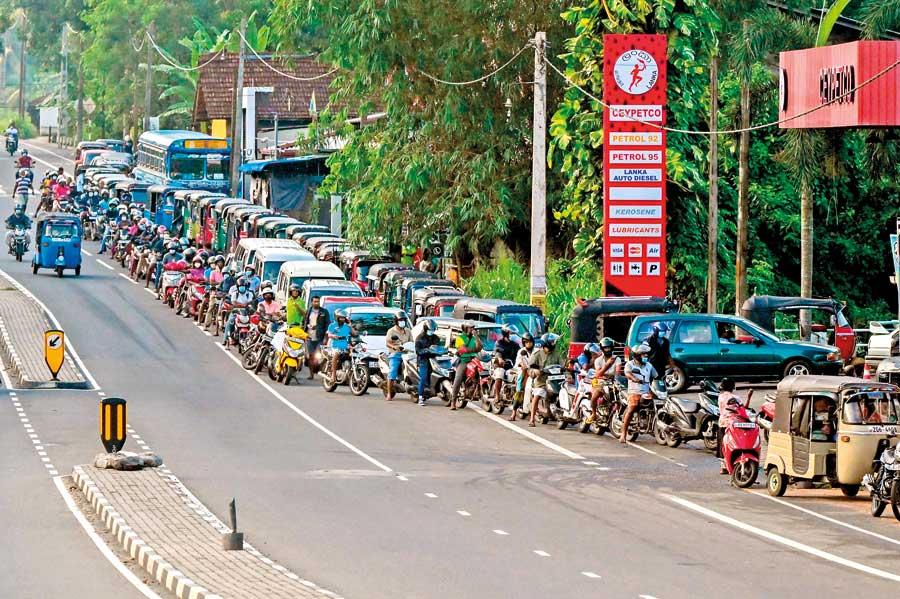
Army colonial assaulting a civilian at a fuel queue at Yakgahapitiya, Kurunegala
“Beware what you wish for, lest they might come true”
- Fleming MacLiesh
(Cone of Silence, 1944)
%20(1)%20(1).png)
6 July 2022
They always say ‘Beware what you wish for, for your wishes might come true’. Well, for the 6.9 million who voted for Gotabaya Rajapaksa at the last Presidential Elections and for the Rajapaksa appendage Pohottuwa, at the General elections, some of their wishes came true.
True to such an extreme an extent that even they might not have bargained for, even in their wildest dreams, or shall we say, nightmares? When they said, ‘Kanna nethath, Inna Ratak’ (A safe country to live, even if you have nothing to eat), the message was unequivocal; National security, was of paramount importance as the threats, real or perceived ones, had to be addressed swiftly , decidedly and ruthlessly. The jihadists, the Christian missionaries, the LTTE separatists, the NGO groups, the western imperialists, the Diaspora and all other traitors were to be bundled up in one heap and defeated by the militarized, Sinhala Buddhist, strong armed dictator-like rule of Gotabaya. 
Communal Element
While some called Candidate Gotabaya Rajapaksa, Diyasena, others hailed him as a Terminator. Vendaruwe Upali, eagerly awaited a Hitler. The most enthusiastic went as far as to draw a blood line to Gamini the Great King of the ancient Sinhala land. Whatever it was, one common factor was there; it had a communal element. At last, the ruler who would be enthroned by the Sinhala aspiration alone, without the help of the minorities. And with that assurance, came the warning to the minorities, “Know thy place, or else….!”
Well, the Regime started promisingly , stuffing up so many civilian positions with military officers, including the all powerful Task force appointed to tackle COVID-19. The militarization did not stop there, spreading to all spheres of life, including even academic institutes and archeological conservation. The majority did not complain; in fact they were happy. That is what they had wanted , it seemed. An euphoria based on the war victory had cemented the position of the military in the collective mind of the majority Sinhalese that everything to do with the military forces was good.
When the President pardoned a serviceman who had been found guilty of murder of eight unarmed civilians including three children, under very gruesome circumstances, there were many who defended the decision , purely on the basis that Staff Sergeant Sunil Rathnayake was a Rana Viruwa or a war hero. If some body has donned a military uniform somewhere some day , the matter needed to end there, the logic seemed to go.
War Hero syndrome
Admittedly, the Army and the security forces did a good job with the COVID-19 debacle , given the urgency of the situation that arose all around the country. Yet at the same time the excesses of their actions in doing so , specially with regard to their treatment of the medical professionals and the other staff including the PHIs is well documented. Now that the COVID menace is temporarily not the biggest problem but the subsistence of the civilians who are struggling to stay alive as all sectors of civil life coming to a crashing halt due to lack of fuel, gas, essential services and a failure of the state administration.
The Police and the security forces are seen again controlling places such as petrol sheds and gas distribution centers given the tense and volatile situations that arise now on a regular basis due to disputes over fair dealing of these much needed essentials. While many of the civilian population are truly helpless waiting in these queues get awaiting their meager quota of supplies, there are others who racket in these supplies, becoming black market suppliers in a very lucrative business.
In uniform
The government’s deploying of armed forces as well as police at these places , instead of maintaining order, has become places where complaints emanate with regard to the malpractices and excesses committed by these men in uniform. Police officers, from top to bottom are accused of using their official status to gain fuel on a preferential basis , to be sold black market, at some times thrice the price. At the same time , the incident that took place at Yakgahapitiya, Kurunegala, a few days ago , showed an army officer assaulting a civilian who was complaining about an irregularity that was denying him and the other ordinary civilians of their fair share. Many were incidents, which were recorded on social media where policemen assaulted, verbally abused and manhandled civilians who had raised voice over their grievance of not being treated fairly, in terms of their access to fuel, despite waiting in queues for days and nights.
Before the Gotabaya Presidency and in the aftermath of the Easter Sunday attacks, there was a general euphoria among the majority Sinhalese that a thorough militarization with all the trappings of a police state, with surveillance, questioning, screenings and curtailment of civil rights was the way to go , to ‘save the country’. At that point, it hardly occurred to the majority that such wishes could one day come to haunt them with those very draconian measures being directed against themselves. Rana viru gaaya, or obsessive admiration of the armed personnel was a catch phrase that did the rounds in the pre election propaganda and anyone who questioned its wisdom, was branded a traitor to the motherland. Such was the sentiment among the majority, those days.
Hood winked
Now those days are long gone. All know that all those Sinhala supremacist sentiments were whipped up to secure of the power for the Rajapaksas and many personalities such as Galagoda Aththe Gnanasara, Dan Priyasad, Namal Kumara as well as groups such as Bodu Bala Sena, Ravana Balakaya, Maha sohon balakaya etc., were just gimmicks to hood wink a Sinhala Buddhist constituency, always prey to such tactics in post independent electoral history. Now none of the so called Saviours of the nation are to be even seen in public and no whimper is raised when the dignity , sovereignty and in fact, the security of the country is in utter jeopardy, due to the incapacitation of the entire state as a result of the fuel crisis. Sri Lanka is now a begging nation, getting even aid from beggars in Tamil Nadu.
Now the entire state structure enters in to utter paralysis and totters on the cusp of collapse. The Regime and those close to them are using the only potent tool of the state, left intact, the military and the police to secure their survival and access to supplies. The police and the military are now their lapdogs. Neither are at the service of the people any more.
Cured for good
That sickness ‘Rana viru gaaya’ is now completely cured. Now the aching of the empty stomach predominates the mind, whether majority or minority. The Sinhala Buddhist supremacy is a laughable preposition as the authorities go begging to Muslim, Christian , Communist, Hindu and what not , countries, doing summersaults, roll over’s , tail wagging, or spread eagles, begging for help.
We wanted a country even without food, for us to live in. ‘Kanna nethath Inna Ratak’! And we got our wish, granted. Now time to enjoy a pack of cards or booze, while languishing at the petrol queue, day and night. It’s not every day that your electoral wishes come true, isn’t it?


-LeN Internal Information Service reveals
.jpg)
(Lanka-e-News -06.July.2022, 5.30PM) A recent secret letter sent by the Inspector General of Police C. D. Wickramarathna to the Defense Secretary Kamal Gunarathna has now been leaked to the media. It has been reported to the Lanka-e-News Internal Information Service that it is the initial plan of a conspiracy that the Ranil-Gotabaya junta government, which currently has only a meager popularity of less than 3%, to create paramilitary gangs for its own protection, leading the country to a terrible bloodshed in the near future.
Kamal Gunrathna has on 29 June confirmed receipt of the letter dated 27 June sent by the IGP. (The letter is shown below.)
According to the letter, during the Black Flag Week which starts on 5th and 6th July, a foreign intelligence agency will carry out an attack or sabotage targeting the North-Eastern or Southern Province and try to convince that it was carried out by the LTTE. The letter further states that the JVP, Frontline Socialist Party (FSP), and opposition groups have planned to attack the local government politicians and their houses. It is mentioned in the letter that another report has been sent by the IGP to Defense Secretary to confirm this story, but it is still unknown what that report is.
The important part of this letter is its second part.
A plan to kill opposition political activists...
This is a blatant lie and this is being prepared to create the necessary background for the governing party politicians, who are unable to face the general public these days, to form paramilitary groups that are friendly to them, and as in 88-89, to launch of a terrible and evil operation of killing opposition political activists. There is also a possibility that the government will carry out the attack themselves; for example, it was the government's own thugs who set the buses on fire during the public protest that took place near the President's private house in Mirihana.
LankaeNews is making this disclosure because we have evidence of it.
Government’s argument is that, since there was no police or army to protect those politicians on 9 May, they do not have confidence in the security of the police force, so they want to form a “group of loyal people” to protect themselves and their property.
SLPP MPs are under training…
Usually and currently, a member of parliament can legally own a pistol and one bullet magazine. But now, a pistol and 4 bullet magazines have been issued only for the MPs who are loyal to the Rajapaksas. The Ministry of Defense does not disclose the list of MPs who received extra ammunitions. That list remains top secret. According to the report LankaeNews received, the MP Dallas Allahapperuma's group or the other members who are now independent from ruling SLPP party have not received this ammunition bonus.
Apart from that, shooting training is also being given to those SLPP MPs at the shooting range in the Gonahena Camp belonging to the Police Special Task Force. It is also very secretive. No one can know about it except the concerned MP and the trainer.
SLPP local government politicians are ready for next hunting game...
In addition, the next plan is to issue firearms to local thugs attached to SLPP party. Alleging that "JVP, FSP and opposition groups are preparing for an attack targeting the local councilors and politicians”, this Gotabaya-Ranil government is planning to issue firearms and ammunition to village-level criminals who are friendly with the SLPP party and to form murderer gangs as their bodyguards.
Already, a group of local thugs including army deserters and army retirees loyal to governing SLPP party is under taking firearm training. They have been selected by the former Finance Minister Basil Rajapaksa.
Firearm training in Maduraoya and Gonahena...
This training is being carried out at Maduraoya Camp belonging to the Army, and Gonahena Camp belonging to the Special Task Force.
Prime Minister Ranil Wickramasingha has more experience in forming paramilitary groups than the Rajapaksas. It was during the 88-89 terror period. Information has been received about a plan to turn the country into a bloodbath in the near future, then form an unholy murderous alliance between SLPP and UNP, and go to the polls in 2024 and steal the votes easily.
The UNP has no place among the current opposition in a future election. They may have a little space only in the SLPP party. Currently, neither party has a popular base other than the state power. Hence, there is no other way for both sides to regain power except a murderous way.
It is certain that UNP regional leaders who do not have any popularity are adopting the said paramilitary groups. For example, Sagala Rathnayaka and Vajira Abeywardhana, who are not even MPs, have been given the number of armed guards in size that even ministers do not have.
The above said letter is like a whipper sent before the procession.
The people in this country must understand that the Rajapaksas, who gained power by detonating a series of Easter bombs, killing 300 people and paralyzing more than 500 people, will not hesitate to kill even 3 lakhs people in order to somehow maintain that power.
It has also been learned that a separate investigation is currently underway to find out whether the above letter was leaked from Kamal or Wickramarathna. (The relevant letter is shown in the image below.)
- by LeN Internal Information Service
---------------------------
by (2022-07-06 12:14:03)
What to know about the upheaval in Sri Lanka

Protesters demanding the resignation of Sri Lankan President Gotabaya Rajapaksa gather inside the compound of Sri Lanka's Presidential Palace in Colombo on July 9. (AFP/Getty Images)
%20(2)%20(2)%20(2).png)
By Claire Parker and Miriam Berger-July 10, 2022
The president of Sri Lanka agreed to step down later this month, the speaker of the country’s parliament announced, after protesters stormed the presidential home and office Saturday in a dramatic escalation of public anger over the government’s handling of a deepening economic crisis.
Prime Minister Ranil Wickremesinghe said Saturday he too would give up his post “to make way for an All-Party Government.” The president fled to safety Friday ahead of the protests, which saw dozens of people injured in clashes with police.
Saturday’s demonstrations were the latest in a months-long protest movement sparked by an unprecedented economic crisis in the South Asian nation. Fuel has almost run out, food prices and hunger have spiked and the country defaulted on its foreign debt repayment. The turmoil has felled the political dynasty that dominated Sri Lanka for nearly two decades. Protesters have vowed to occupy the presidential palace and prime minister’s home until Rajapaksa and Wickremesinghe formally resign.
Here’s how Sri Lanka got here:
Why are Sri Lankans protesting?

Sri Lanka is an island nation of 23 million people off the southeastern coast of India. The Rajapaksa family has exerted political sway over the country for most of the past two decades, with Mahinda Rajapaksa serving as president between 2005 and 2015 and then later as prime minister under his brother, Gotabaya. Mahinda was known for quashing the Tamil Tiger insurgency to bring Sri Lanka’s 26-year civil war to an end in 2009.
The family has experienced a dramatic fall in recent months as Sri Lanka struggles with its worst economic crisis since it gained independence in 1948, when it was called Ceylon. By early this year, food staples like rice had doubled in price from the year before. Inflation has caused hunger to worsen since then, with about 70 percent of Sri Lankan households reporting in a United Nations survey that they had cut back their food consumption. The country has been plagued by gasoline and electricity shortages.
Nightly protests in the capital kicked off in April, with protesters calling for the Rajapaksas to leave politics. Some demonstrations turned violent. Gotabaya’s cabinet resigned, but Mahinda refused to step down. In early May, clashes broke out between Mahinda’s supporters and anti-government protesters at Temple Trees, the prime minister’s compound. Mahinda said he would resign, but the violence continued, and the army took hours to arrive. Mahinda was eventually evacuated.
Gotabaya named Wickremesinghe to replace his brother as prime minister on May 12. But the protests carried on as the crisis worsened. Sri Lanka defaulted on its debt in May — and Wickremesinghe said last month the economy “faced a complete collapse.”
With its national Ceylon Petroleum $700 million in debt, countries and organizations abroad have been reluctant to send fuel to Sri Lanka. Medical workers, teachers and bankers in Colombo last week protested the lack of fuel they need to provide essential services. Some Sri Lankans have boarded boats to attempt dangerous, illegal journeys to India or Australia.
How did the economic crisis get so bad?
Return to menuDomestic factors, including government policies, are largely to blame. Gotabaya’s cabinet slashed taxes and resisted seeking aid from the International Monetary Fund as debt piled up. Gotabaya backed a ban on chemical fertilizers that dented crop yields as food prices skyrocketed worldwide. The coronavirus pandemic decimated Sri Lanka’s tourism industry, a key source of foreign currency.
Nirvikar Singh, an economics professor and South Asia expert at the University of California at Santa Cruz, told The Post last month the Sri Lankan government has been “astonishingly irresponsible and incompetent” at managing the country’s economic policy since Gotabaya took office in 2019.
Corruption and cronyism compounded the problem, with allegations implicating Mahinda and other members of the Rajapaksa family. In 2021, leaked financial documents included in the Pandora Papers showed that a niece of the Rajapaksa brothers had millions of dollars stashed in offshore accounts.
Global spikes in food and energy prices caused by the war in Ukraine have exacerbated the crisis. “This is the Ukraine effect,” Alan Keenan, an analyst at the International Crisis Group, told The Post in April. “A credit line for fuel you thought could last two months now lasts one. Even if you get a bailout, you’re buying less food, less fuel, less medicine.”
How have political leaders responded?
Return to menu
Since Wickremesinghe took over as prime minister in May, his government has resorted to desperate measures to alleviate some of the economic pain, including giving government employees a day off to grow crops in their backyards and allowing public sector workers to take five years of unpaid leave to seek jobs abroad.
The government has tried to negotiate with the IMF for a bailout, but Wickremesinghe said the effort has been complicated because the country is bankrupt. Sri Lankan authorities have sought aid from India and China, and Gotabaya called Russian President Vladimir Putin this week to ask for help with importing fuel.
But the measures have done little to alleviate the country’s economic woes, leaving many Sri Lankans unsure of how they will survive. Calls mounted for the president to resign.
“People from all walks of life have united with one intention — to demand that the corrupt president who clearly does not have a mandate, step down,” Himantha Wickremerathne, a 34-year-old lawyer who joined the protests, told The Post.
Hours after protesters seized the president’s residence on Saturday — with some jumping in the pool or cooking in the kitchen — the speaker of Sri Lanka’s parliament said Gotabaya Rajapaksa would resign from the presidency on Wednesday.
In the meantime, the European Union issued a statement Sunday urging political parties to “focus on a peaceful, democratic and orderly transition” to return to normalcy.
The Senate Foreign Relations Committee in a tweet said that Gotabaya “has lost the confidence of the Sri Lankan people” and called on political parties to “work together with the international community for a new government that respects the democratic and economic aspirations and upholds human rights the Sri Lankan people deserve.”
Hafeel Farisz in Colombo, Niha Masih and Gerry Shih in New Delhi and Ishaan Tharoor in Washington contributed to this report.
Torching Ranil’s Residence: Questions Surface About Another ‘Arabi Wasantha’ Incident

%20(1)%20(1)%20(1).gif)
JULY 10, 2022
As the country reels from the triumph and shock of the events of July 9, questions have been raised about the arson attack on Prime Minister Ranil Wickremesinghe‘s Fifth Lane private residence around midnight. It was an uncharacteristic finish to a day filled with triumph and celebratory sentiment, despite brutal baton charges, relentless tear gas attacks and live ammunition the demonstrators faced as they breached the Presidential Palace, Secretariat building and also the Prime Minister’s official residence the Temple Trees.
The Wickremesinghe residence on Fifth Lane where the Premier has always chosen to reside even while holding office and entitled to the Temple Trees official residence, was set ablaze after protesting crowds flocked to the site following the brutal attacks on six Sirasa TV journalists by Special Task Force personnel securing the residence.
STF personnel were caught on camera surrounding and assaulting the journalists and subsequently their colleagues who arrived on the scene to take them to hospital for medical treatment. A female journalist Sarasi Peiris who had been at the helm of the exclusive Sirasa coverage of the breach of President’s House and the relentless teargas attacks and baton charges the protesting crowds encountered, was also badly injured in the STF assault.
With the Sirasa cameras beaten back, scenes at Fifth Lane went dark. Incensed by the attacks on the media, crowds swelled at Fifth Lane and were repeatedly tear-gassed and beaten back, eyewitnesses told Colombo Telegraph.
Reports emerged on social media and messaging groups about unruly elements mingling with the sea of Aragalaya protestors, wielding poles and other makeshift weapons and threatening all those who dared to film events unfolding on their mobile telephones. Despite the heavy STF presence, the perimeter to the residence was breached and crowds reported seeing looting and destruction of property. Less than an hour later, Wickremesinghe’s home was ablaze, sending shockwaves across a largely triumphant nation, that had seen an unprecedented people’s movement bring the military and the political establishment to its knees.

Arabi Wasanthas henchman setting Army Bus on fire on 31 March 2022
The arson attack also brought swift condemnation upon the protest movement for allowing things to spiral out of control, with multiple messages of sympathy and solidarity going out to the Prime Minister and his wife. Ironically, despite the events that took place at the Mirihana protest on 31 March 2022, Sri Lanka’s Colombo elites were quick to heap blame on the protest movement and seek to discredit its aims. Those with familiar with the case of Arabi Wasantha and the Mirihana bus burning, are warning that there might be more to the attack on Wickremesinghe’s house than meets the eye.
The Mirihana protest outside President Gotabaya Rajapaksa’s private residence took a dark turn after a man drove an army bus into the melee. Soon afterwards the man and his assistant set the bus ablaze, escalating tensions and inspiring a vicious crackdown on the protest that had been largely peaceful thus far. The bus burning incident also paved the way for President Rajapaksa to declare a state of emergency, curfew and digital clampdown for several days.
The individual who gained notoriety by first driving the bus and then setting it ablaze in Mirihana is Satha Nalaka alias ‘Arabi Wasantha’ now facing charges under the public property act at the Gangodawila Magistrate’s Court.

Avant Garde boss Nissanka Senadhipathi with then Defence Secretary Gotabaya
Arabi Wasantha is an employs of Avant Garde Security based in Etul Kotte, the security firm owned and operated by former army major and Gotabaya Rajapaksa acolyte, Nissanka Senadhipathi. Senadhipathi’s security operation employees hundreds of ex military personnel, including Arabi Wasantha who was one attached to the Sri Lanka Air Force.
Despite video footage of the bus and the moment it was set ablaze, it took police nearly two months to locate Arabi Wasantha, who taunted law enforcement on social media during that time.
Once he was arrested on 20 May 2022, a strange series of events followed. Arabi Wasantha claimed he had driven the bus into the area to “save the life and property of the President”. On June 24, the CID marched into the Gangodawila Magistrate’s Court and urged the judge to grant him bail, claiming that he honestly had not known that the bus was “public property”. The Attorney General immediately filed a motion seeking to drop the charges against Arabi Wasantha, to the shock and outrage of the Magistrate.
Colombo Telegraph can now reveal that the AG and the CID were acting on the instructions of the newly minted Minister of Law and Order Tiran Alles, also a close associate of Avant Garde Chairman Senadhipathi. Together the two powerful political influencers were seeking to have the man tasked with turning the Mirihana Protest violent on 31 March set free and leaning on the Attorney General and the CID to get him bail from Court.

Tiran
In a bizarre twist, a volley of senior army officers marched into the CID headquarters in Fort to voluntarily provide testimonials for Arabi Wasantha, among them a Brigadier and seven other army officials. Strangely, the AG told court, the statements were made only after Arabi Wasantha was charged as a suspect in the case, and not before. The military personnel claimed that Arabi Wasantha had de-escalated the situation at Mirihana by his actions. The AG claimed this was completely contrary to what military and police personnel on duty at the protest had claimed.
Read More
Aragalaya 2.0: What of it?

%20(2)%20(1)%20(2)%20(1)%20(1)%20(2)%20(1)%20(1)%20(1)%20(1)%20(1)%20(1)%20(1).png)
By Uditha Devapriya-2022/07/10
“If I see one of those activists – for gay rights or for minority rights – come into the protests on Saturday, I’ll chase them out.” – A protester
What was President Rajapaksa thinking? At a time when people are queuing for fuel for miles and are dying at queues, at a time when vast swathes of his own electorate are calling for his resignation, at a time when the aragalaya is being revived, he decided to come to parliament. It was a calculated move, but one which backfired immediately: for the first time in the country’s history, Opposition MPs stood up and shouted at him to go home. In parliament too, Mr Rajapaksa has become our most reviled public official.
Optics matter. The press photographed Mr Rajapaksa chatting convivially with his Prime Minister. At the same time people were languishing under the hot June sun, waiting for days on end to pump some petrol into their vehicles. Elsewhere, at a passport queue, a woman went into labour. All unprecedented. Meanwhile, the President and the Prime Minister went on laughing with each other, oblivious to the pain and the misery. Such contrasts are hardly in the government’s favour. They can only aggravate the resistance.
At the time of writing this article, people are gearing up for Aragalaya 2.0. On July 9, from almost every corner of the country, they will be walking, cycling, taking the bus, doing what they can, to contribute to what they see as the resistance. The lack of fuel has not deterred and will not deter these people from marching to Galle Face. What happens to the protest movement after that is anybody’s guess. My favourite take is from Tisaranee Gunasekara in the DailyFT: whatever transpires on July 9, the political gridlock will continue.
The gridlock is not entirely the government’s fault. From a strategic perspective, this regime’s biggest asset has been the lack of a consensus within the Opposition. While a number of “sarvapakshika” or independent initiatives have brought together Opposition parties like the SJB and ex-government parties like the SLFP, these have not, in my opinion, borne enough fruit. On the other hand, the government has been able to get away with a number of misdeeds and misdemeanours. Prime among them, of course, has been the fuel shortage, which will continue for at least another two weeks.
The aragalaya itself appears to be heavily divided between those who welcome political formations and those who want to go beyond such formations. Wasantha Mudalige, the convenor of the Inter University Students’ Federation, toes the latter line. Charismatic and deeply inspiring, he has not been able to transcend the limits of his extra-parliamentarism. Dayan Jayatilleka’s critique of this attitude is arguably the most lucid: without engaging with MPs and political parties, the aragalaya runs the risk of eventual collapse.
I have noted before, in this newspaper, that from day one the #GotaGoHome movement embedded within itself two fatal contradictions. The first was the rift between its avowedly non-political credentials and its deeply political thrust. The recently unveiled manifesto, which includes such priorities as constitutional reforms and the immediate provision of fuel, gas, and medicine to the masses, is as political as it gets. Yet the aragalaya appears to have adopted a holier-than-thou attitude, to the very idea of politics.
The second contradiction was more fatal. In her take on the protests, Tisaranee Gunasekara highlights the dangers of letting elements that lent their support to the present regime, including political Buddhist monks, into the aragalaya. She also indicts those who, while critical of the government, fantasise about the military taking sides with protesters and toppling the status quo. In other words, she contends that it would be dangerous, if not counterproductive, to rely on institutions and individuals that once supported Gotabaya Rajapaksa, but are now distancing themselves from his government.
History provides important lessons in this regard. In an attempt to woo over sections of the military, then firmly identified with one of the most authoritarian regimes in Latin America, the Tupamaros drafted a letter offering an alliance in 1970. “We are not enemies,” the letter ran: “How could we be enemies?” Not surprisingly, it failed to convince the military to turn to them. Two years later, the Tupamaros were finished, killed by the bullet.
I would hasten to add, of course, that no protest can limit itself to purist elements. On the other hand, Gunasekara does have a point. That point was reinforced by MP Sumanthiran on Twitter recently: if the reason for the protests in the south of the country are gas and fuel shortages, what will happen when those shortages go away? If the momentum of the protests has been determined by the availability of essentials, can we expect the same level of commitment from protesters once those essentials return?
These are, to be sure, moral niceties. They may even seem irrelevant to discussions about the protests. But at one level, they are valid. Lakshman Gunasekara’s point is significant here: the Sinhala Buddhist nationalist middle-classes, concentrated in and around Colombo suburbs, which hedged their bets on Gotabaya, have now lost faith in the man they once saw as their saviour. Yet they are opposing him not because of his governance, but because of his failure to provide them with the most basic amenities at a time of crisis.
I think it’s important to maintain this distinction. The leaders of the aragalaya – if they can be called leaders at all – have tried to incorporate an ideological line into the protests. But for the many men, women, and children marching to Galle Face on Saturday, the protests seem to be the only way of venting their frustrations at an administration that has failed in its most basic functions. This is why not a few protesters see the intrusion of gay rights and minority rights activists as a distraction: because for them, the objective is Mr Rajapaksa’s resignation, and other priorities like “getting our stolen money back.” For a vast multitude, other aims, however progressive they may be, will at best be peripheral.
The writer is an international relations analyst, researcher, and columnist based in Sri Lanka who can be reached at udakdev1@gmail.com
The creators and profiteers of our misery
Those who are directly responsible for their misery continue to rule the country- or walk free to the bank while our children are starving
This is a crisis that was self-made by Gotabaya Rajapaksa and his handpicked acolytes for excessive profiteering and personal political survival
%20(1)%20(1).png)
8 July 2022
Sri Lanka is in the depth of an economic and political crisis of apocalyptic proportions. Many millions in the most vulnerable sections are skipping meals; Inflation has crossed 50% ( unofficial figures put it at two and half times (128% in May). The GDP in nominal rate has halved over less than six months- on purchasing party, it might have lost by a higher margin.
An entire economy is at standstill. Small and Medium Size businesses are fighting for survival, threatening large-scale joblessness. An entire grey economy has already been shut and agriculture is decimated, leaving the largest chunk of the Sri Lankan workforce unemployed and struggling to feed their families.
Schools are closed owning to the fuel crisis, depriving most of the country’s children of their only way up the ladder. Hospitals are barely functioning, and hundreds of life-saving drugs are out of stock. Even the ambulance service Suwa Seriya, warns of having to scale down the services owning to fuel shortage.
This is much more than a crisis that is caused by excessive borrowing or decades of poor economic management, as it is often attributed. Those are indeed root cases, but this is a crisis that was self-made by Gotabaya Rajapaksa and his handpicked acolytes for excessive profiteering and personal political survival. As a result, the incumbent regime that came to power after a race-baiting election campaign has decimated a decade of economic and social gains.
Gotabaya Rajapaksa is the chief architect of the current misery of the nation. He was ignorant and egoistic. He was the ‘Manchurian Candidate’ of a bunch of local businessmen, who promoted him and bankrolled his campaign. He reciprocated by announcing a set of extensive tax concessions which deprived the government of Rs 600 billion in revenue. The collapse of public finance has a cascading effect, leading to credit rating downgrade and as a result unsold bond issuance and eventual drain of the foreign reserve.
Then, Rajapaksa decimated the agricultural sector with the ban on chemical fertilizer.
But, the recklessness of Gotabaya Rajapaksa as much as he is ill-equipped to lead- (and a murderer in the eyes of many in the international community) could have been restrained under a team of competent policymakers.
Instead, he had world-class conmen to advise him.
Consider the chief economic hitmen who brought Sri Lanka to its knees- a feat that megalomaniac terrorist leader Velupillai Prabakaran could not achieve over two and half decades of a separatist terrorist campaign.
Ajith Nivard Cabral, the governor of the Central Bank under Mahinda Rajapaksa and Gotabya is a controversial figure in the first place. A Central Bank investigation in the 2000s found Mr Cabral’s association in an infamous pyramid scheme known as Gold Quest. After Mahinda Rajapaksa appointed him as the Governor of the Central Bank, the investigation was halted. Cabral, then, turned the Sri Lankan economy into one of a kind Ponzi scam, cooking books, overplaying economic performances and diverting the resources to Mahinda Rajapaksa’s dynastic dream.
Billions of state liabilities of foreign and commercial loans were transferred to State Owned Enterprises to lower the amount of severing debt- through SOE loans themselves were backed by sovereign guarantees. This could go on immediately after the end of the war as the economy was in the catching-up mood. But, the party ended sooner than it started as economic growth plummeted at the end of the second term of the Rajapaksa regime as corruption and deal-making took the best of it.
The second coming of Cabral under Gotabaya Rajapaksa was a lot more momentous. Gotabaya was ill-equipped for the job- running the national policy is surely a lot more demanding than running white vans. Cabral and fellow cronies were smarter. They made the best out of the inadequacy of the head of the state and turned the Sri Lankan economy into their own Ponzi scam. If they had been pilfering the golden eggs under Mahinda, now in a rush to loot whatever the remainder of an economy facing inevitable collapse – they killed the ageing goose. An estimated US$ 7.6 billion of foreign reserves that existed in 2019 evaporated to thin air under Gotabaya Rajapaksa’s presidency of two years- US$ 5.6 billion was spent on defending the Sri Lankan rupee at 203 LKR to US$. The unsustainable dollar peg created a black market and a few local wheeler-dealers with access to endless rupees made a killing by purchasing dollars in the parallel market at a Rs 30-40 premium.
They were privy to the end game. The Central Bank free floated the rupee after all its reserves ran out, without requesting an IMF facility – which might have helped to control the float. That would then have deprived the monied cronies of their insane gains. Today, these cronies are at 60 per cent profit as the rupee is traded at 360 per Dollar in the official market- or RS 15-18 more in the parallel market.
Cabral did not leave until he paid the last US$ 500 million in the foreign reserves to the bondholders in January, effectively draining it dry, despite all well-intentioned advice from local and foreign experts against it. Whose who are the beneficiaries of that last payment is treated as a banking secret, but many who have known the extent of nepotism suspect grand larceny.
The current government has rejected calls for a forensic audit into the last bond payment of US$ 500 million.
Cabral is a free man, but in any other country, he should be in jail. Sri Lanka has failed to hold looters of the national wealth accountable. Corruption became synonymous with the successive Rajapaksa regime, but Gotabya Rajapaksa took it to an end, letting the cronies suck dry the bone marrows of the nation.
Today, Sri Lankans have been robbed of their dignity and decades of their wealth. The further collapse of the rupee would wipe out whatever is left.
But, those who are directly responsible for their misery continue to rule the country- or walk free to the bank while our children are starving. This is a crime against the Sri Lankan nation. They should be held accountable, starting with the head of the state- if Sri Lankans are to have a semblance of justice.
Subscribe to:
Posts (Atom)