Peace for the World World ! Your War Our Lives

The Dalai Lama
A Brief Colonial History Of Ceylon(SriLanka)
Sri Lanka: One Island Two Nations
A Brief Colonial History Of Ceylon(SriLanka)
Sri Lanka: One Island Two Nations
(Full Story)
Back to 500BC.

Monday, July 11, 2022
Dragged into the darkness by dictatorship, democracy is the only way out into the light

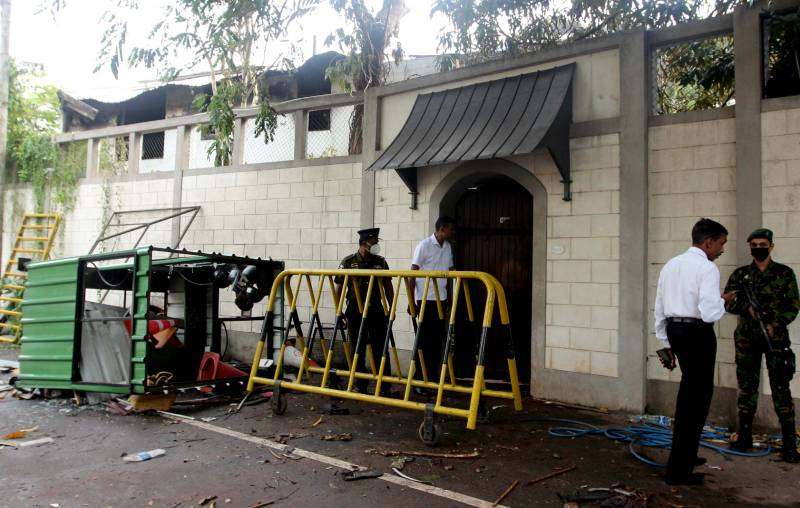
No matter how much anyone agrees with or opposes the policies of individual politicians, there is no justification for violence or arson
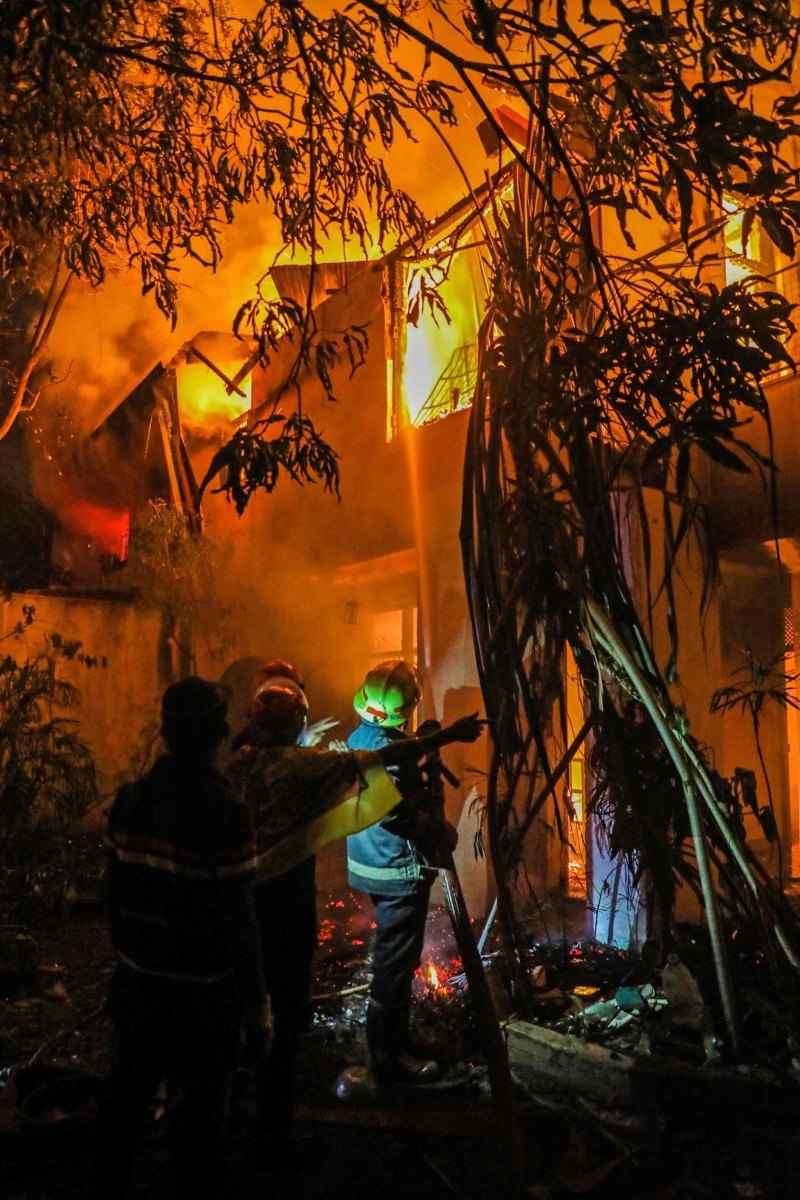
In this photograph taken on July 9, 2022, firefighters try to douse a fire at the residence of Sri Lanka's Prime Minister during protests in Colombo - AFP
%20(1)%20(3)%20(1)%20(1)%20(1).png)
Sunday, 10 July 2022
Saturday the 9th of July, was a moment of truth for our people. In coming together to Colombo in an unmistakable show of force, Sri Lankans brought to life the words of Albert Einstein that “in the midst of every crisis lies great opportunity.”
Sri Lanka has never faced a crisis of this magnitude, but I have no doubt that if our people can unite and remain singularly focused on the goal of saving our country, together, we will prevail. The whole country just came together to make clear that enough is enough. We have spoken with one voice against nepotism, graft, political witch hunts, ethno-nationalism and brazen administrative incompetence.
Now it is time for professionals, policy makers and political leaders to do their part. This is not a time for vengeance or more violence. There should have been none in the first place. It is a time for the Opposition to unite and do its duty, to send a message to the world that the Sri Lanka of tomorrow is a new Sri Lanka, one that is united and ready to regroup and rebuild.
The image of a corrupt, ethnically divided, bankrupt nation at the mercy of strongmen and militarised rule must give way to a new brand for a pluralist, united nation on the path to recovery and prosperity. From now on, the institutions that form the pillars of order and justice must know that they cannot get away with blindly following illegal orders.
The vast majority of our people have not taken to the streets looking for perks, political patronage or other personal benefits. They are fighting to save our country and are doing that duty to give future generations of Sri Lankans a chance at a better life. The Government has failed to protect its people and has failed to honour their oath to the people and the Constitution. The public service, especially the military, prosecutors and police, must not be the next to fail.
Never again can we tolerate an IGP, an Attorney General, military commanders or any of their subordinates who justify illegality by saying they were “just following orders.” This is the only way that they can restore their credibility and win back the faith of our people that has been squandered over a generation of cronyism.
It was chilling last night, to watch Police officers outside Ranil Wickremasinghe’s private residence targeting and brutally assaulting journalists, including a young woman, on live television. They thrashed reporters for simply doing their job under extremely difficult circumstances. As outrageous and barbaric as this attack was, it tragically and inexcusably gave way to one of the most disgusting acts of vandalism in our lifetimes. I was not alone in being shocked, devastated and enraged to see the historic home of one of our most senior political leaders set ablaze.
No matter how much anyone agrees with or opposes the policies of individual politicians, there is no justification for violence or arson. It is barbaric and unbecoming of anyone who claims to be fighting against what the Rajapaksas stood for. For better or worse, places like Medamulana and 55 5th Lane are iconic symbols of our democratic history and home to some of the most consequential decisions that charted the course of our nation.
They are home to politicians who at different times were elected by large majorities of our people. In a democracy, when such popularity weans, we speak with our votes and our voices on the street. You only need to look anywhere in the world to see that when regimes are dislodged through bloodshed, generations of bloodshed will follow. It is time that we stopped letting violence dictate the course of events.
The Rajapaksas were the capstone of a political culture in which far too often, Sri Lankans resorted to enacting political ends through violence and destruction. They bombed and burned buildings and left several journalists dead and ended the careers of many others through thuggery and brutality. At least now that the Rajapaksas are almost gone, it is imperative that we condemn all violence, especially attacks against people’s homes and against media personnel, in the strongest possible terms. Never again should anyone in Sri Lanka have to fear taking a political position or expressing an opinion, whether right or wrong, for fear of being abducted, assaulted, tortured, killed, or have their home or office bombed or burned. As the Rajapaksas go, their signature culture of violence must go with them and play no part in the next chapter of our country’s journey.
Now that the Government has collapsed, we must move swiftly to show the world that Sri Lanka will not descend into the kind of anarchy that plagued the countries who threw out strongmen during the Arab Spring. We have a proud tradition of constitutional rule and lawful transfer of power dating back to independence. Just as we had never defaulted on our debt before the Rajapaksas, we had never had a successful change of Government or leadership that was not dictated by law.
We must ensure that there is no question that the present regime lawfully ceases to hold power, and lawfully makes way for a democratically credible caretaker regime consisting of leaders with the necessary integrity and competence to stop the bleeding in the economy and to enact meaningful constitutional reform and put the country on the path to recovery.
This will be a long, arduous struggle. No sooner our political leaders make it possible, the people must get a chance to vote on who we want to be led by, and how we should be governed. It is essential that the new Constitution does not leave room for another Executive President who can overstay his welcome through fear or force. Under such a system, we will all have to rely on a dwindling number of talented professionals and courageous leaders to try and right the ship and mitigate the suffering of our people.
Rebuilding the credibility of our nation, demonstrating our stability to the world, ending the poverty and famine that has struck the poorest Sri Lankans must be the number one priorities of the next Government, but these things will take time. We will have to think very carefully about who we elect and what policies they put forward. We must respect the decision of our people and give our new leaders time to deliver. The entire world believes that it will take generations to repair the damage done by the Rajapaksas to the fabric of our society and to rebuild Sri Lanka into a functional state.
But the entire world also thought that the Mahaweli project would take decades. Sri Lanka did it in five years. No one thought that a country could win the cricket world cup less than a decade after building its national cricket infrastructure. In 2015, no one thought the Rajapaksas could be defeated. And in 2018 during the 52-day coup, no one believed that the people of our country could take the reins of Government back from the Rajapaksas.
And as recently as a few months ago, no one could have predicted that the Sri Lankan people would have the courage to rise up against a regime that commanded a two-thirds majority in Parliament with an iron fist and send them packing in less than two and a half years. On each of these occasions, the Sri Lankan people stunned the world by doing the impossible. Each one of us too can play a role by showing each other and the world that we stand united in times of need and crisis. The immediate task before us is to work together to stop our people from dying on the street, desperate for food, fuel and medicine. Even today, while some are desperate for these things, many live in abundance. Now we must realise that our country cannot be saved without hard work, courage and most importantly, personal sacrifice.
If you see someone in desperate need of the essential items that our Government has turned into luxuries, do what you can to share. Today, every ounce of fuel or handful of food makes a difference and can mean the difference between life and death for so many ordinary people.
For all the misfortune Sri Lanka has suffered at the hands of a few, our country and our people have a habit of surprising the world by outperforming expectations. We need to do so now more than ever. If we succeed in turning a new leaf and starting a new chapter, we can manifest the reality we want to see for our children

Corruption internationalised; Past haunts

Apart from the intricacies of the IMF bailout process, a huge trust deficit resulted in by the actions of the past and present governments also seem to be standing in Sri Lanka’s way in seeking assistance from foreign countries
Although specific cases of corruption and mismanagement have not been proved some of the Sri Lankan leaders have earned an unsavoury reputation internationally which in turn affects the country as a whole
%20(1)%20(1).png)
9 July 2022
A way out of the current economic crisis is not within sight. The government has sought financial assistance and support for debt restructuring from the International Monetary Fund (IMF) but the progress of that programme also seems to be slower than expected. Prime Minister Ranil Wickremesinghe who seems to be steering the programme said in Parliament on June 22 that a staff-level agreement is expected to be finalised with the International Monetary Fund (IMF) delegation that was in the country by the end of June, but it was not realised. 
A statement issued by the delegation before leaving the country on June 30 said “the discussions will continue virtually with a view to reaching a staff-level agreement on the Extended Fund Facility (EFF) arrangement in the near term.” And the Prime Minister on Tuesday told Parliament that such an agreement is expected to be arrived at in August. The statement also said, “Because public debt is assessed as unsustainable, Executive Board approval would require adequate financing assurances from Sri Lanka’s creditors that debt sustainability will be restored.”
Apart from the intricacies of the IMF bailout process, a huge trust deficit resulted in by the actions of the past and present governments also seem to be standing in Sri Lanka’s way in seeking assistance from foreign countries. A poor foreign policy followed especially during the former Mahinda Rajapaksa government and the current Gotabaya Rajapaksa government and corruption eating into the state machinery have been blamed for this trust gap.
The government on April 12 announced a preemptive default of the country’s all foreign debt as a last resort in its struggle to cope with the grave economic crisis. Then Hamilton Reserve Bank, a St Kitts and Nevis-based bank filed a suit in the Federal Court of New York Southern District last month against Sri Lanka over the country’s default on a $1 billion sovereign bond maturing this month. According to a part of the case documents published in Sri Lankan media, the Bank has accused the Rajapaksa family of “lining their own pockets through years of corruption.” Quoting former U.S. government officials and unnamed investigative journalists it said that the Rajapaksa family has amassed a multibillion-dollar fortune and hidden part of it in bank accounts in offshore jurisdictions such as Dubai, Seychelles and St. Martin.
Despite the fact that the bank has not substantiated these allegations, this indicates that the allegations of corruption at the highest level in Sri Lanka has been internationalised. Although specific cases of corruption and mismanagement have not been proved some of the Sri Lankan leaders have earned an unsavoury reputation internationally which in turn affects the country as a whole. This along with poor foreign policy which was highlighted by the bungling of some specific incidents seems to have distanced many countries from coming forward to rescue Sri Lanka from the current mess. The leaders of the country were running all over but no country, except for India has offered any considerable assistance. Others in fact are throwing crumbs – rice for a meal or a day or a few million dollars which is not sufficient to import a fuel shipment.
In an interview with India’s NDTV on the sidelines of the annual meeting of the World Economic Forum in Davos, Switzerland on May 26, International Monetary Fund Managing Director Kristalina Georgieva has bluntly said that Sri Lanka’s crisis is due to mismanagement. She had expressed this view while her organisation was dealing with Sri Lankan authorities in order to offer the country a bailout package. Corruption has been an item that is on the agenda of the IMF staff-level meeting with Sri Lankan authorities as well. The above statement issued by the IMF team on June 30 had mentioned corruption as one of the challenges that need addressing.
On June 20, while calling on the IMF to ensure that human rights are “central to any future economic reform programme” negotiated between the organisation and the Sri Lankan government, Amnesty International had also taken up the issues of corruption and mismanagement. In a letter to the IMF’s representative in Colombo, the rights organisation had pointed out economic mismanagement as one of the factors that had plunged Sri Lanka›s economy into crisis and called on the IMF to “build measures to guarantee accountability and public scrutiny to avoid corruption.”
The president of the Open Society Foundations Mark Malloch-Brown, a British diplomat who served as the deputy to the former United Nations Secretary-General Kofi Annan had said on June 24 that Sri Lanka had a history of diverting aid. He further said that the IMF must acknowledge the reason the country is in this mess by putting this issue on the agenda during their visit. He was referring to the last month’s IMF representatives’ visit to Sri Lanka. “Otherwise, they risk bailing out corrupt politicians instead of people in need,” Malloch-Brown warned. He was responding to a comment by economist Nishan de Mel who had claimed that systemic corruption in Sri Lanka has contributed greatly to the debt/economic crisis.
In addition to these warnings by various quarters on the bailing out of Sri Lanka without taking up the issues of human rights, corruption and mismanagement the United States Senate Foreign Relations Committee too had said on July 1 that any IMF agreement with Sri Lanka must be contingent on the independence of the Central Bank, strong anti-corruption measures, and promotion of the rule of law. “Without these critical reforms, Sri Lanka could suffer further economic mismanagement and uncontrollable debt,” it had said on its official Twitter account.
According to Daily Mirror of July 1 Japanese Ambassador in Colombo Mizukoshi Hideaki who met the Tamil National Alliance (TNA) had reportedly said that there is a risk of financial assistance to Sri Lanka being mismanaged and hence Japan will not support the country at this point. Later the Japanese Embassy had stated that there have been incorrect media reports on the Japanese assistance to Sri Lanka but had not specifically mentioned the Daily Mirror story or its contents.
It must be recalled that the European Parliament too had threatened through a resolution in June last year to do away with the GSP Plus concessions awarded to Sri Lanka unless the country takes some positive steps towards human rights and reconciliation.
One has to expect these statements and actions by various international institutions and prominent individuals to have a heavy influence on Sri Lanka’s IMF programme. Hence, it would be an immense challenge for the Sri Lankan leaders to address the issues of corruption and mismanagement within the IMF bailout process, on the one hand, they are systemic issues and many powerful people in politics and the officialdom have been accused of them while the country is facing a dire situation on the other.
A New Era of Politics Begins

Photo courtesy of The Korea Times
.png)
BASIL FERNANDO-
A peaceful mass uprising on July 9 has brought about the end of a political era that started with the promulgation of the 1978 constitution of Sri Lanka, a constitution that completely undermined democracy, the rule of law and human rights in the country. During a period of continuous protests over three months, the people demanded the resignation of President Gotabaya Rajapaksa. However, President Rajapaksa repeatedly refused to comply, claiming that he had been elected by an overwhelming majority of the people. The exasperated people gave the president an ultimatum to resign by July 9. Vast numbers of people from all over the country gathered at the president’s official residence and occupied it as well as the secretariat building. As a result of this clear demonstration of extreme dissatisfaction with his family’s greed and his own incompetence, which brought about a complete breakdown of the economy, the president finally agreed to resign on July 13. His decision has been communicated to the speaker of parliament. The prime minister has also offered his resignation.
We will later learn the details of how a new administration will established. However, we also need to maintain our focus on the long term changes that are required. There are several fundamentals that need to be considered if we are to resolve the structural problems that have been inherited as result of the introduction of 1978 constitution. For all practical purposes this constitution is a dead letter. However, it needs to be formally abolished by employing a process that involves the full participation of the people. We need to enact a constitution that is based on the principles of the rule of law, democracy and respect for human rights; these basic principles are the essential foundation and framework for building new structures of government and reforming public institutions. Given the systemic theft of the country’s and people’s resources and wealth by a small number of families, in order to decisively end corruption and the abuse of power, the most urgent need is the establishment of a comprehensive legal framework, with structural checks and balances, as well as clear and open accountability.
Without a clear, comprehensive and enforceable law to stop corruption, there will be no fundamental change in the functioning of the state. The establishment of functional state is an essential pre-condition for resolving the problems associated with the complete collapse of the economy that resulted from the debt crisis. Ridding the country of corruption is an essential condition for the creation of a stable political system, which could provide the requisite leadership to resolve the current economic and long lasting social problems. Only then will the government be in a positions to provide for the full welfare of all the people.
A stable political system can only be built and maintained on the basis of the effective system of administrative of justice. This necessarily involves the reform of the police, particularly the investigative branches of the police, by bringing the Attorney General’s Department under the rule of law and removing obstacles to the independence of the judiciary. This requires the strict enforcement of laws relating to non-interference with the administration of justice.
In the present circumstances, parliament should give priority to the necessary legislative changes, including making the requisite budgetary allocations, to achieve these changes.
Given the present desperate financial crisis, every higher income individual should agree to contribute their fair share in taxes to bring about economic and political stability.
The establishment of a credible political system that can eliminate systemic corruption and provide full accountability is essential to obtain the cooperation and support of all Sri Lankans, including those currently living outside the country. Once those systems are in place and effectively operating, Sri Lankans living abroad will be more prepared to contribute to dealing with the dollar crisis and thus resolve many of the hardships that people face.
Without such an overall change to the political system it will not be possible to win the cooperation and support of the masses of people who have taken to streets and also others who are unwilling to contribute financially for the lack of confidence in the political system. Obtaining the support of international agencies and other governments will also depend on these measures that need to be taken to ensure true political stability.
The attack on the Sirasa media team at the prime minister’s residence needs to be condemned and immediate action should be taken to investigate the incident, arrest all suspects and consider criminal charges to ensure justice.
As shown by people’s interventions in recent months, freedom of expression and freedom of association and assembly are the basic pillars for the protection of society and individuals. The present moment should be utilized to consolidate these rights; such a consolidation will create a fundamental change in the political culture in Sri Lanka.
The constant ongoing vigilance of the people is the only way to ensure that new systems of administration that are to be established will function for the benefit of the people and the nation. Therefore people should keep a peaceful vigil, particularly at the present time and in the months to come, to ensure that the needed substantial change for the better could be achieved in Sri Lanka. The people also need to establish new civil society groups to monitor the developing political landscape and to ensure that future permanent structural changes will include new features on the basis of, and which will protect, democracy, the rule of law and human rights.
Leaked: Security Deployment Plans To Obstruct July 9 Protests

* 07 water canons, 09 riot police units, roadblocks manned by tri-forces and STF
* Police surveillance teams and camera units to film demonstrations
* Intelligence via SIS, special police WhatsApp Group RoadBlock/Col.Central
%20(1)%20(1)%20(1).gif)
JULY 10, 2022
Extensive security plans and protocols to protect President Gotabaya Rajapaksa in the wake of massive public demonstrations planned for Saturday morning in the capital Colombo have been leaked, revealing sinister orders to police filming units and surveillance teams to record and monitor leaders of the aragalaya and the intelligence networks that will be operational in the area during the protest.
The orders dated July 7, 2022 have gone out to all DIGS, SSPs, SPs and ASPs and police divisions, signed by SSP Nishantha Chandrasekera (Colombo Central Division).
SSP Chandrasekera’s preamble states that the main objective of the deployment of a massive security contingent and riot control operations is “to ensure the safety of His Excellency the President of the Democratic Socialist Republic of Sri Lanka and to take necessary precautions in this regard.”
Secondary to this goal is the police intention to prevent damage to government buildings and public property.
The leaked document also makes clear that the Police Department fully anticipated the issuing of court orders that would have enabled security forces to set up at least six new roadblocks that would prevent the entry of demonstrators into the entire Colombo Fort area. However, on Thursday (7) the Fort Magistrate refused to issue orders preventing the protests.
Chandrasekera’s deployment plan reveals that film crews attached to the Crime Record Division will be mobilised at Saturday’s demonstration. The film crews will be assisted by special surveillance teams deployed around the agitation sites, the document shows.
SSP Chandrasekera orders all of his officers to stay tuned into a Whatsapp Group titled RoadBlock/Col.Central for intelligence reports. He also provides a list of telephone numbers for various intelligence commanders who will be in charge of intel delivery to police on duty in the Fort area on Saturday (9).
The leaked police documents identify “potential threats” as follows:
1. Protests, rallies and disruptive activities that could cause inconvenience to the President and the Government.
2. Rallies and demonstrations held to fulfill narrow political agendas.
3. Activities by extremist groups
4. Illegal activities by protestors at the protest site
5. Arson attacks, damage to property
6. Obstruction of roads and pavements
7. Obstruction of police personnel on duty
8. Provocative actions during peaceful protest
To serve our readers and for the safety of those who will participate in the protests on Saturday, Colombo Telegraph translated the salient sections of SSP Chandrasekera’s deployment orders. That translation follows below.
The original in the Sinhala language is also available in PDF here.
7 July 2022
To: All Senior Superintendents of Police, Superintendents of police and Assistant Superintendents of Police, All Officers in Charge of police stations, regional police divisions
Operational orders concerning 8-9 July protests
PREAMBLE
Social media communications reveal that a massive demonstration calling efor the removal of His Excellency President Gotabaya Rajapaksa has been organised by individuals including apolitical protestors at Galle Face, numerous organisations and political parties, trade unions, civil society organisations, university students, lawyers and religious leaders of all faiths. The demonstration will seek to obstruct the access to the President’s House.
Therefore a special security plan is in place in the Colombo Fort area.
Senior security officials have instructed that human and material police resources are placed in areas where apolitical activists are expected to congregate in order to prevent clashes and unexpected developments.
Objective of our deployment
The main objective is to ensure the safety of His Excellency the President of the Democratic Socialist Republic of Sri Lanka and to take necessary precautions in this regard.
In addition, it seeks to prevent the unauthorised entry of protestors into government offices, the obstruction of work inside government offices and damage to public property etc, illegal activities and obstruction of police personnel on duty and disturbance the peace.
Potential threats
Read More
Questions of corruption as over 17 million rupees uncovered in Rajapaksa's residence
%20(1).png)
10 July 2022
Following the breach of the Presidential residence yesterday, a video has circulated showing protesters recovering an estimated Rs. 17,850,000 in the President's residence.
The money recovered by activists of the Young Journalists Association (YJA) has since been handed over to the Superintendent of Police. However, concerns have been raised over a lack of transparency by the Police with continued fears that the money handed to senior police is being distributed to corrupt politicians.
YJA activists have claimed that their handover of the money has not been covered by the media whilst the police were quick to report "looting" following the events on May 9th.
QNI WATCH
Govt. has to stop money printing now, not in 2024: Harsha

%20(2)%20(1)%20(2)%20(1)%20(1)%20(2)%20(1)%20(1)%20(1)%20(1)%20(1)%20(1)%20(1).png)
2022/07/10
ECONOMYNEXT –Sri Lanka should stop money printing earlier than indicated in a statement by Prime Minister Ranil Wickremesinghe, opposition legislator Harsha de Silva said, though legislators have already given extensive powers to the agency engage in liquidity injections.
“Prime Minister Ranil Wickremesinghe talked about money printing,” de Silva told parliament.
“He said, the inflation is going up and the printing should be stopped. But he also said it can only be stopped by the end of 2023 or in early 2024,” Silva said.
“It cannot happen like that and you have to take a decision right now. We all must understand that if nothing is being done, the inflation will go up until 100 percent from the predicted 60 percent.”
Silva the country has already become an unlivable place for the general public and according to the CBSL data, the food inflation of the country has risen up to 80.1 percent in June, 2022.
Sri Lanka’s central bank has now created the worst currency crisis in its 72-year history.
Sri Lanka’s intermediate regime central bank was set up as a fundamentally flawed Latin America style agency with dual anchor conflicts in 1950 by US money doctor, giving soft-peggers the ability to trigger currency crises and high inflation abolishing a currency board where money printing was outlawed up to then.
However the agency had no active open market operations in the initial stages and it was restrained by a gold peg.
A reserve collecting peg collapses when the central bank prints money to keep rates down. Sri Lanka’s central bank repeatedly prints money whenever domestic credit picks up, regardless of whether state or private credit is picking up including when the US hikes rates under pseudo monetary policy independence, with devastating consequences on the people, critics have said.
However after 2015 with flexible inflation targeting the rupee was hit with extreme open market operations, to target an output gap (printing money to push growth up) creating currency crises and pushing growth down in their wake and impoverishing the people with rupee depreciation.
Under ‘flexible’ inflation targeting a reserve collecting peg was repeatedly bombarded with liquidity injections to manipulate rates down (call money rate targeting) until the currency collapsed.
The currency was depreciated under real effective exchange rate targeting including in 2017 when there was not credit pressure and the rupee was facing upward pressure and large volumes of inflows were sterilized, as growth and private credit slowed.
There is nothing politicians in Sri Lanka can do, whether in power or in opposition when Sri Lanka’s central bank decides to print money to drive interest rates down.
“I don’t know whether you can take that decision now because Nandalal Weerasinghe has been appointed as the CBSL governor,” de Silva told Prime Minister Wickremesinghe perhaps in a reference to central bank independence.
In 2018 as credit recovered, de Silva pleaded with the then leadership with of the central bank in vain to allow rates to go up as the currency was hit with liquidity injections, after giving ‘central bank independence’, to the agency during the ousted ‘Yahapalana’ administration.
Fiscal dominance including de facto fiscal dominance was removed by the Finance Minister Mangala Samaraweera raising taxes, bringing the deficit down and market pricing fuel in 2019.
The central bank printed money anyway ignoring political pleas and busted the currency from 152 to 182 and drove away foreign investors in rupee bond by undermining the credibility of the peg.
However politicians have the legislative power to tame soft-pegging central bank into either hard pegs or true currency boards like Hong Kong, or currency board like pegs like in East Asia and GCC countries with restricted open market operations.
They can also curb flexible pegs with true inflation targeting and a clean floating exchange rate which will also eliminate balance of payments crises and poverty.
Over the past 7 years three currency crises were created in rapid succession under flexible inflation targeting and output gap targeting.
In the 2020-22 crisis, where over 2.6 trillion rupees were printed the rupee has now fallen from 200 to 360 to the US dollar with soft-peggers impoverishing both wage earners and the elderly.
In the 2020-2022 crisis, the banking system was pumped with excess liquidity of up to 200 billion rupees under modern monetary theory up from around 60 billion rupees under call money rate targeting and output gap targeting, which is a milder version of MMT.The entire world is now suffering from liquidity injections made by the Federal Reserve under its dual mandate which is being conveniently blamed on Russia and Ukraine.
When your electoral wishes come true….

Army colonial assaulting a civilian at a fuel queue at Yakgahapitiya, Kurunegala
“Beware what you wish for, lest they might come true”
- Fleming MacLiesh
(Cone of Silence, 1944)
%20(1)%20(1).png)
6 July 2022
They always say ‘Beware what you wish for, for your wishes might come true’. Well, for the 6.9 million who voted for Gotabaya Rajapaksa at the last Presidential Elections and for the Rajapaksa appendage Pohottuwa, at the General elections, some of their wishes came true.
True to such an extreme an extent that even they might not have bargained for, even in their wildest dreams, or shall we say, nightmares? When they said, ‘Kanna nethath, Inna Ratak’ (A safe country to live, even if you have nothing to eat), the message was unequivocal; National security, was of paramount importance as the threats, real or perceived ones, had to be addressed swiftly , decidedly and ruthlessly. The jihadists, the Christian missionaries, the LTTE separatists, the NGO groups, the western imperialists, the Diaspora and all other traitors were to be bundled up in one heap and defeated by the militarized, Sinhala Buddhist, strong armed dictator-like rule of Gotabaya. 
Communal Element
While some called Candidate Gotabaya Rajapaksa, Diyasena, others hailed him as a Terminator. Vendaruwe Upali, eagerly awaited a Hitler. The most enthusiastic went as far as to draw a blood line to Gamini the Great King of the ancient Sinhala land. Whatever it was, one common factor was there; it had a communal element. At last, the ruler who would be enthroned by the Sinhala aspiration alone, without the help of the minorities. And with that assurance, came the warning to the minorities, “Know thy place, or else….!”
Well, the Regime started promisingly , stuffing up so many civilian positions with military officers, including the all powerful Task force appointed to tackle COVID-19. The militarization did not stop there, spreading to all spheres of life, including even academic institutes and archeological conservation. The majority did not complain; in fact they were happy. That is what they had wanted , it seemed. An euphoria based on the war victory had cemented the position of the military in the collective mind of the majority Sinhalese that everything to do with the military forces was good.
When the President pardoned a serviceman who had been found guilty of murder of eight unarmed civilians including three children, under very gruesome circumstances, there were many who defended the decision , purely on the basis that Staff Sergeant Sunil Rathnayake was a Rana Viruwa or a war hero. If some body has donned a military uniform somewhere some day , the matter needed to end there, the logic seemed to go.
War Hero syndrome
Admittedly, the Army and the security forces did a good job with the COVID-19 debacle , given the urgency of the situation that arose all around the country. Yet at the same time the excesses of their actions in doing so , specially with regard to their treatment of the medical professionals and the other staff including the PHIs is well documented. Now that the COVID menace is temporarily not the biggest problem but the subsistence of the civilians who are struggling to stay alive as all sectors of civil life coming to a crashing halt due to lack of fuel, gas, essential services and a failure of the state administration.
The Police and the security forces are seen again controlling places such as petrol sheds and gas distribution centers given the tense and volatile situations that arise now on a regular basis due to disputes over fair dealing of these much needed essentials. While many of the civilian population are truly helpless waiting in these queues get awaiting their meager quota of supplies, there are others who racket in these supplies, becoming black market suppliers in a very lucrative business.
In uniform
The government’s deploying of armed forces as well as police at these places , instead of maintaining order, has become places where complaints emanate with regard to the malpractices and excesses committed by these men in uniform. Police officers, from top to bottom are accused of using their official status to gain fuel on a preferential basis , to be sold black market, at some times thrice the price. At the same time , the incident that took place at Yakgahapitiya, Kurunegala, a few days ago , showed an army officer assaulting a civilian who was complaining about an irregularity that was denying him and the other ordinary civilians of their fair share. Many were incidents, which were recorded on social media where policemen assaulted, verbally abused and manhandled civilians who had raised voice over their grievance of not being treated fairly, in terms of their access to fuel, despite waiting in queues for days and nights.
Before the Gotabaya Presidency and in the aftermath of the Easter Sunday attacks, there was a general euphoria among the majority Sinhalese that a thorough militarization with all the trappings of a police state, with surveillance, questioning, screenings and curtailment of civil rights was the way to go , to ‘save the country’. At that point, it hardly occurred to the majority that such wishes could one day come to haunt them with those very draconian measures being directed against themselves. Rana viru gaaya, or obsessive admiration of the armed personnel was a catch phrase that did the rounds in the pre election propaganda and anyone who questioned its wisdom, was branded a traitor to the motherland. Such was the sentiment among the majority, those days.
Hood winked
Now those days are long gone. All know that all those Sinhala supremacist sentiments were whipped up to secure of the power for the Rajapaksas and many personalities such as Galagoda Aththe Gnanasara, Dan Priyasad, Namal Kumara as well as groups such as Bodu Bala Sena, Ravana Balakaya, Maha sohon balakaya etc., were just gimmicks to hood wink a Sinhala Buddhist constituency, always prey to such tactics in post independent electoral history. Now none of the so called Saviours of the nation are to be even seen in public and no whimper is raised when the dignity , sovereignty and in fact, the security of the country is in utter jeopardy, due to the incapacitation of the entire state as a result of the fuel crisis. Sri Lanka is now a begging nation, getting even aid from beggars in Tamil Nadu.
Now the entire state structure enters in to utter paralysis and totters on the cusp of collapse. The Regime and those close to them are using the only potent tool of the state, left intact, the military and the police to secure their survival and access to supplies. The police and the military are now their lapdogs. Neither are at the service of the people any more.
Cured for good
That sickness ‘Rana viru gaaya’ is now completely cured. Now the aching of the empty stomach predominates the mind, whether majority or minority. The Sinhala Buddhist supremacy is a laughable preposition as the authorities go begging to Muslim, Christian , Communist, Hindu and what not , countries, doing summersaults, roll over’s , tail wagging, or spread eagles, begging for help.
We wanted a country even without food, for us to live in. ‘Kanna nethath Inna Ratak’! And we got our wish, granted. Now time to enjoy a pack of cards or booze, while languishing at the petrol queue, day and night. It’s not every day that your electoral wishes come true, isn’t it?
Subscribe to:
Posts (Atom)