Peace for the World World ! Your War Our Lives

The Dalai Lama
A Brief Colonial History Of Ceylon(SriLanka)
Sri Lanka: One Island Two Nations
A Brief Colonial History Of Ceylon(SriLanka)
Sri Lanka: One Island Two Nations
(Full Story)
Back to 500BC.

Sunday, November 29, 2015
Bathiudeen Slaps PRECIFAC, Appoints Tainted Officer To Top Post At Ministry
 November 28, 2015
In a shocking case showcasing gross abuse of ministerial powers, Lanka
Sathosa Chief Engineer K Ariyawansha, whose services was terminated over
a multi-million rupee fraud has been re-appointed to a top-post in the
Industry and Commerce ministry by minister in charge of the subject Rishard Bathiudeen.
November 28, 2015
In a shocking case showcasing gross abuse of ministerial powers, Lanka
Sathosa Chief Engineer K Ariyawansha, whose services was terminated over
a multi-million rupee fraud has been re-appointed to a top-post in the
Industry and Commerce ministry by minister in charge of the subject Rishard Bathiudeen.
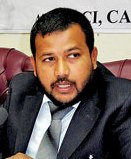 Minister Bathiudeen
Lanka Sathosa too comes under the same ministry. Ariyawansha has been appointed as a senior consultant to the ministry.
The Presidential Commission of Inquiry to Investigate and Inquire into
Serious Acts of Fraud, Corruption and Abuse of Power, State Resources
and Privileges (PRECIFAC),
which investigated the scam of over Rs 20, 000 million in Lanka Sathosa
ordered Ariyawansha to be sacked and also to keep him out of employment
from any state institution in the future.
Despite this order he has been recalled to duty by Industry and Commerce
Minister Rishard Bathiudeen and Ministry Secretary T N Tennakoon. He
has been appointed to a top post in the ministry.
A group of Sathosa employees last night petitioned the PRECIFAC against the minister’s decision to recall Ariyawansha.
Auditors and senior officers of Sathosa in a petition to the commission
stated that Ariyawansha had been involved in several financial frauds at
Lanka Sathosa which was proved during presidential commission’s
investigation.
Instead of filing action against Ariywansha who was under an affiliated
institution under the Industry and Commerce Ministry, Bathiudeen has
re-appointed him directly to the ministry staff.
Sathosa officials now say that
Ariyawansha is resorting to threats against Sathosa officers who gave
evidence before the commission in connection with the case.Read More
Minister Bathiudeen
Lanka Sathosa too comes under the same ministry. Ariyawansha has been appointed as a senior consultant to the ministry.
The Presidential Commission of Inquiry to Investigate and Inquire into
Serious Acts of Fraud, Corruption and Abuse of Power, State Resources
and Privileges (PRECIFAC),
which investigated the scam of over Rs 20, 000 million in Lanka Sathosa
ordered Ariyawansha to be sacked and also to keep him out of employment
from any state institution in the future.
Despite this order he has been recalled to duty by Industry and Commerce
Minister Rishard Bathiudeen and Ministry Secretary T N Tennakoon. He
has been appointed to a top post in the ministry.
A group of Sathosa employees last night petitioned the PRECIFAC against the minister’s decision to recall Ariyawansha.
Auditors and senior officers of Sathosa in a petition to the commission
stated that Ariyawansha had been involved in several financial frauds at
Lanka Sathosa which was proved during presidential commission’s
investigation.
Instead of filing action against Ariywansha who was under an affiliated
institution under the Industry and Commerce Ministry, Bathiudeen has
re-appointed him directly to the ministry staff.
Sathosa officials now say that
Ariyawansha is resorting to threats against Sathosa officers who gave
evidence before the commission in connection with the case.Read More
November 28, 2015
In a shocking case showcasing gross abuse of ministerial powers, Lanka
Sathosa Chief Engineer K Ariyawansha, whose services was terminated over
a multi-million rupee fraud has been re-appointed to a top-post in the
Industry and Commerce ministry by minister in charge of the subject Rishard Bathiudeen.
Minister Bathiudeen
Lanka Sathosa too comes under the same ministry. Ariyawansha has been appointed as a senior consultant to the ministry.
The Presidential Commission of Inquiry to Investigate and Inquire into
Serious Acts of Fraud, Corruption and Abuse of Power, State Resources
and Privileges (PRECIFAC),
which investigated the scam of over Rs 20, 000 million in Lanka Sathosa
ordered Ariyawansha to be sacked and also to keep him out of employment
from any state institution in the future.
Despite this order he has been recalled to duty by Industry and Commerce
Minister Rishard Bathiudeen and Ministry Secretary T N Tennakoon. He
has been appointed to a top post in the ministry.
A group of Sathosa employees last night petitioned the PRECIFAC against the minister’s decision to recall Ariyawansha.
Auditors and senior officers of Sathosa in a petition to the commission
stated that Ariyawansha had been involved in several financial frauds at
Lanka Sathosa which was proved during presidential commission’s
investigation.
Instead of filing action against Ariywansha who was under an affiliated
institution under the Industry and Commerce Ministry, Bathiudeen has
re-appointed him directly to the ministry staff.
Sathosa officials now say that
Ariyawansha is resorting to threats against Sathosa officers who gave
evidence before the commission in connection with the case.Read More

Four women Mahinda most disliked

Mahinda
incurred heavy expenditure to create a rift between the then United
States Secretary of State Hillary Clinton and Samantha Power working
through Lobby Ford entity in the United States and win over Clinton.
Mahinda was told by his Advisors on Foreign Affairs and International
Relations that during the 2008 election campaign of Barack Obama
Samantha Power had described Hillary as a monster and had insulted
Hillary noting there was a rift between Samantha and Hillary.

by Upul Joseph Fernando
(November 27, 2015, Colombo, Sri Lanka Guardian) A
glance to the past of Mahinda Rajapaksa’s Presidency that spanned nearly
a decade would reveal that there were four female names he mostly
disliked. The first of that four was Chandrika Kumaratunga. The second
was United States Ambassador to the United Nations Samantha Power. The
third was United Nations Human Rights Commissioner Navi Pillay. The
fourth was former United States Ambassador to Colombo Michele J.Sisson.
Of the four, Mahinda mostly hated or disliked Samantha Power. Whenever
Mahinda met with his Cabinet colleagues he used to repeat, “That thin
woman in the White House is the person who is creating all these
problems for me”.
Mahinda incurred heavy expenditure to create a rift between the then
United States Secretary of State Hillary Clinton and Samantha Power
working through Lobby Ford entity in the United States and win over
Clinton. Mahinda was told by his Advisors on Foreign Affairs and
International Relations that during the 2008 election campaign of Barack
Obama Samantha Power had described Hillary as a monster and had
insulted Hillary noting there was a rift between Samantha and Hillary.
So Mahinda waited till a battle erupted between Samantha and Hillary,
but it never occurred. Thereafter, Mahinda pinned hopes on Hillary’s
successor John Kerry. Kerry told the Senate that Sri Lanka would get
pushed to the lap of China if the United States proceeded with war
crimes charges against the South Asian island nation and also stated in a
report that such a stance would be detrimental to the interests of the
United States. What Mahinda gathered from that situation was that Kerry
would overpower Samantha’s powers.
Whatever Mahinda dreamt and thought, Samantha Power was not ready to
loosen her grip on Sri Lanka. The United States Ambassador Michele J.
Sisson who was in Colombo at that time acted on the instructions of
Samantha Power. At the time, the United National Party (UNP) experienced
division and tension and with the late Sobhitha Thera creating a
climate to introduce a common candidate to establish a just society,
Michele J.Sisson visited the Naga Viharaya to meet Sobhitha Thera. The
incumbent President Maithripala Sirisena was recognized for his services
as Health Minister by the Harvard University under a USAID Programme
and awarded a Harvard accolade when Michele was the US Ambassador in
Colombo. When Mahinda announced the conducting of a Presidential
Election, Michele left Colombo to work as the second-in-command to
Samantha Power. Today she is the US Deputy Ambassador to the United
Nations.
Samantha Power visited Colombo in 2010 and met Mahinda. She told him to
draw up a mechanism to probe war crimes in the country. Mahinda started
to hate her from that point. Thereafter, United Nations
Secretary-General Ban Ki-moon’s Panel visited Colombo to investigate war
crimes allegations. The UN Resolution against Sri Lanka on war crimes
surfaced during the period Mahinda was trying to gather China and Russia
to halt such exercise. While American Experts claimed that Mahinda’s
popularity was increasing in the face of a war crimes resolution against
the island nation, Samantha Power executed her agenda in Sri Lanka
through Michele.
Rev. S.J. Emmanuel
When the all-powerful Samantha Power visited Sri Lanka this week,
Mahinda was just an ordinary Member of Parliament. Moreover, the
Government had lifted the ban on eight Tamil Diaspora Organizations to
coincide with Power’s visit. These Tamil Diaspora Organizations had
dealings with Power in the past. The Rajapaksa Government banned these
organizations being jubilant over Indian Congress Government’s refusal
to grant the visa to Rev. S.J. Emmanuel who headed the largest Tamil
Diaspora Organization. However, just two months before the last
presidential election, the Spokesman for the Global Tamil Forum visited
India. That was after Narendra Modi’s Bharatiya Janata Party assumed
office.
Mahinda’s ouster and the de-proscription of Tamil Diaspora Organizations
by the Maithri-Ranil Government is a victory for Samantha Power’s
agenda. When civilians were massacred in Sri Lanka, the United States
maintained silence being unable to halt the war. Power had to embrace
that defeat. Hence in 2010 Power arrived in Colombo as a defeated
character. However, this time she arrived in Colombo with a victory
smile.
Crimes OIC arrested on bribery charge remanded

 November 28, 2015
The officer-in-charge (OIC) of the Crimes Unit of the Narahenpita Police
Station who was arrested for soliciting a bribe of Rs 2.5 million has
been remanded till November 30 after being produced before court.
The police officer was arrested by sleuths of the Commission to
Investigate Allegations of Bribery or Corruption yesterday at around
3.30pm yesterday (27) in the Kohuwala area.
The Crimes OIC had requested for the bribe from a doctor in order to
refrain from lodging a case against the latter regarding a certain
transgression.
He was arrested upon accepting the sum of Rs 2.5 million.
Head of Dialog, called to the CID

 Nov 28, 2015
Reports
reaching us from police headquarters confirm that the CID is trying to
take legal action against the chief executive officer of the Dialog
Company and the Director General Dr. Shridhar Saaripuththa Hans
Wijesuriya alleged for hiding evidence.
During
the investigation of the murder of Wasim Thajudeen the CID focused its
attention to the mobile conversations and it was revealed that it was
the Dialog Company which has issued many sim cards to the alleged
perpetrators.
Although the CID has requested the required data from the Dialog Company, so far the dialog has failed to provide. The CID has demanded these caller communication data during the 2012 period.
Mobitel & Etisalat
Apart Dialog the CID found sim cards issued by Mobitel & Etisalat companies and reports reaching us confirm that both the companies have provided those details to the CID. The Dialog Company has told the CID that since these data’s has been deleted from their database and they don’t have a way to retrieve and provide those. Despite Mobitel and Etisalat has provided these data to the CID a doubt has emerged why dialog could not provide these. Due to this problem the CID is unable to continue the investigation forward.
Hans’s father in law
The father in law of Hans Wijesuriya, Sunimal Fernando was serving as a consultant to the former president Mahinda Rajapaksa. Due to this both Hans Wijesuriya and Sunimal Fernando were great allies of the former president.
The former president’s son Namal’s name was also dragged into the murder of Wasim Thajudeen. The CID has focused its attention that Dialog failing to provide data was due to the relationship between Hans Wijesuriya and the president’s consultant.
Statement given by Hanz
When we inquired Hans Wijesuriya that can his company provide caller data of the sim card owned by the Dialog Company he said if a written request is made his company can provide these data. When we questioned Hans Wijesuriya why your company failed to provide the mobile caller data, he said that in order to give those data we need the telephone number of the person who called. After getting the number he said he would take action to provide those through his media secretary.
However following that there were no more calls from them he said.
Although the CID has requested the required data from the Dialog Company, so far the dialog has failed to provide. The CID has demanded these caller communication data during the 2012 period.
Mobitel & Etisalat
Apart Dialog the CID found sim cards issued by Mobitel & Etisalat companies and reports reaching us confirm that both the companies have provided those details to the CID. The Dialog Company has told the CID that since these data’s has been deleted from their database and they don’t have a way to retrieve and provide those. Despite Mobitel and Etisalat has provided these data to the CID a doubt has emerged why dialog could not provide these. Due to this problem the CID is unable to continue the investigation forward.
Hans’s father in law
The father in law of Hans Wijesuriya, Sunimal Fernando was serving as a consultant to the former president Mahinda Rajapaksa. Due to this both Hans Wijesuriya and Sunimal Fernando were great allies of the former president.
The former president’s son Namal’s name was also dragged into the murder of Wasim Thajudeen. The CID has focused its attention that Dialog failing to provide data was due to the relationship between Hans Wijesuriya and the president’s consultant.
Statement given by Hanz
When we inquired Hans Wijesuriya that can his company provide caller data of the sim card owned by the Dialog Company he said if a written request is made his company can provide these data. When we questioned Hans Wijesuriya why your company failed to provide the mobile caller data, he said that in order to give those data we need the telephone number of the person who called. After getting the number he said he would take action to provide those through his media secretary.
However following that there were no more calls from them he said.
Tahir Elci: Kurdish lawyer shot dead in Turkey
 Published on Nov 28, 2015
Channel 4's Foreign Affairs Correspondent, Jonathan Rugman, sat down
with Kurdish lawyer Tahir Elci on October 24th. Elci died after being
shot during a press conference today.
Published on Nov 28, 2015
Channel 4's Foreign Affairs Correspondent, Jonathan Rugman, sat down
with Kurdish lawyer Tahir Elci on October 24th. Elci died after being
shot during a press conference today.
Tahir Elci: Kurdish lawyer spoke of death threats
SATURDAY 28 NOVEMBER 2015
Channel 4's Foreign Affairs Correspondent, Jonathan Rugman, sat down with Kurdish lawyer Tahir Elci on October 24th. Elci died after being shot during a press conference today.
The Indian novelist recalls an extraordinary encounter in a Moscow hotel with the NSA whistleblower
Arundhati Roy with Edward Snowden and John Cusack. Photograph: Ole Von Vexhull
Arundhati Roy with Edward Snowden and John Cusack. Photograph: Ole Von Vexhull

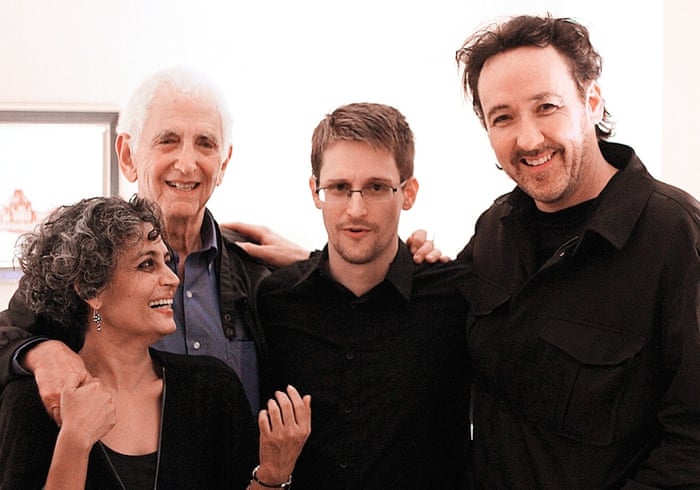
Roy with (from left) Daniel Ellsberg, Edward Snowden and John Cusack. Photograph: Courtesy of John Cusack

The Moscow Un-Summit wasn’t a formal interview. Nor was it a cloak-and-dagger underground rendezvous. The upshot is that John Cusack, Daniel Ellsberg (who leaked the Pentagon Papers during the Vietnam war) and I didn’t get the cautious, diplomatic, regulation Edward Snowden.
The downshot (that isn’t a word, I know) is that the jokes, the humour
and repartee that took place in Room 1001 cannot be reproduced. The
Un-Summit cannot be written about in the detail that it deserves. Yet it
definitely cannot not be written about. Because it did happen. And
because the world is a millipede that inches forward on millions of real
conversations. And this, certainly, was a real one.
The U.S. Air Campaign in Syria Is Suspiciously Impressive at Not Killing Civilians

The Pentagon says it has killed 20,000 suspected Islamic State fighters,
with only two cases of collateral damage. Something doesn’t add up.

To intensify the U.S.-led coalition’s war against the Islamic State,
also known as ISIL, the Pentagon is considering further loosening the
rules of engagement (ROEs) that are intended to minimize civilian
casualties and expanding the target sets that can be bombed. On Nov. 19,
Secretary of Defense Ashton Carter told MSNBC that the U.S. military was “prepared” to change the ROEs, and indeed the following day it was reported that
the coalition was seeking to increase airstrikes by “changing a policy
to protect against civilian casualties in Islamic State-held
territory.” The prospect of more bombs being dropped on more Islamic
State-connected targets was also endorsed this past week by presidential
candidates Hillary Clinton, Donald Trump, and Chris Christie.
Although largely missed by the presidential candidates, the ROEs against
the Islamic State have already been significantly relaxed. The week
ending on Nov. 17 was the most intensive seven-day period of airstrikes —
with 980 bombs dropped — since Operation Inherent Resolve (OIR) began
in August 2014, according to U.S. Central Command (Centcom). Moreover, OperationTidal Wave II —
an escalating series of strikes against Islamic State-controlled oil
infrastructure — now includes the bombing of hundreds of oil tankers,
which had not been targeted previously because, according to
OIR spokesman Col. Steve Warren, “the truck drivers, themselves,
probably not members of ISIL; they’re probably just civilians.” Now,
those trucks are being shredded by A-10 Thunderbolt II and AC-130
Spectre gunships 45 minutes after leaflets are dropped on them reading, “Get out of your trucks now, and run away from them.”
The assumption of those endorsing relaxed ROEs is that a higher number
of bombs falling on a larger array of targets will accelerate the
destruction of the Islamic State. But that’s fantasy. The coalition’s 8,300 airstrikes may have destroyed more than 16,000 Islamic State targets and killed more than20,000 suspected Islamic State fighters — including “one
mid- to upper-level ISIL leader every two days” — but this is wholly
insufficient. Does Carter really believe that with just a little more
air power, this enormous militant army will soon be degraded and
destroyed?
The first problem with this theory is that large militant armies are not
defeated, either exclusively or primarily, with air power. Military and
civilian policymakers repeat the mantra that “you can’t kill your way
out” of the problem posed by such adversaries, but then continue to call
upon air power to do just that. This is despite the fact that all of
the militant armies and terrorist groups that have been bombed and
droned for the past 14 years have survived. None have been completely
destroyed, which is allegedly the strategic objective against the
Islamic State. Moreover, the size of the al Qaeda-affiliated groups that the United States claims to be at war with have either stayed flat or grown, while the total number of State Department-designated Foreign Terrorist Organizations has grown from 34 in 2002 to 59 in 2015.
However, the larger concern with this mindset is the assured growth of
collateral damage and civilian casualties that will accompany
significantly loosened ROEs. Last month, Lt. Gen. Bob Otto, the U.S. Air
Force’s deputy chief of staff for intelligence, surveillance, and
reconnaissance, observed that
the coalition was “challenged in finding enough targets that the
airplanes can hit that meet the rules of engagement.” However, he added
an important caveat: “If you inadvertently — legally — kill innocent
men, women, and children, then there’s a backlash from that. And so we
might kill three and create 10 terrorists.”
There was a revealing indicator made public last week of just how
challenging it is for pilots to prevent civilian harm while conducting “dynamic targeting”
strikes — meaning against unplanned and unanticipated targets in a
compressed timeline — despite all the checks and balances in place. Late
on Friday, Centcom issued a press release that
summarized the findings and recommendations of an investigation into an
attack of an Islamic State checkpoint on March 13, near Hatra, Iraq,
which “likely resulted in the deaths of four non-combatants” even though
“all reasonable measures were taken to avoid unintended deaths of or
injuries to non-combatants by reviewing the targets thoroughly prior to
engagement.” This was only the second time, in 16 months of bombing,
that the command has acknowledged civilian harm; the other being in May
when Centcom published an investigation of
a November 2014 strike against the so-called Khorasan Group that
“likely led to the deaths of two non-combatant children.” In other
words, everybody within the command structure, including the pilot of
the A-10, did what they were trained to do, and four civilians were
still unintentionally killed at an Iraqi checkpoint.
To truly appreciate how this could have occurred, it is useful to dig into the 56-page redacted report of
the investigation that Centcom released on Friday. Most importantly,
the U.S. military was only made aware of the allegations of civilian
casualties by an April 2 email from an unidentified woman who claimed
that her black Kia Sorrento 2011 sedan — “that consisted of the Driver,
two women and three children” — was destroyed when “a Missile of
International Air Forces stroke [sic] the Checkpoint.” The
woman requested compensation for her car as “I have lost all my money
and this car was all I have…. Thank you for concern.”
Prompted only by this email — as one command element put it, “the 609th
AOC has not received a corroborating open source report of civilian
casualties matching this strike location/time” — an initial civilian
casualties (CIVCAS) credibility assessment concluded that the woman’s
claim was credible. From there, an investigating officer was directed to
“conduct a thorough review of the JTM [Joint Target Message] targeting
and tasking cycle to determine if any errors occurred or process changes
are required.” This investigation was conducted between April 22 and
June 1, and consisted of extensive audio and video reviews, and
interviews with all of the participants.
The investigation demonstrates how routine the events at the Islamic
State checkpoint near Hatra were on that fateful day. The black Kia
Sorrento and a GMC Suburban drove up to the checkpoint, pulled off to
the side of the road, and the occupants of both vehicles began to
“interact and act like they are associated with the [Islamic State]
checkpoint personnel” for 40 minutes while seven other vehicles passed
through the checkpoint. The person responsible for the final sign-off of
the strike was the director of the Combined Air and Space Operations
Center at Al Udeid Air Base, referred to as the Target Engagement
Authority (TEA). The TEA makes clear that he authorized a strafing of
the checkpoint personnel and that a single GBU-38 bomb be dropped on a
guard shack. However, when he reviewed the target “at no point was there
any discussion of vehicles in association with this strike,” and he did
not “grant the authority to strike any vehicles.”
At this point, the report becomes heavily redacted, making it impossible
to determine the specific chain of responsibility. However, it is clear
that the A-10 pilot, after conducting multiple passes over the
checkpoint, requests that the JTM be updated to include the two vehicles
and all of the enemy passengers, or EPAX, since “these two vehicles
appeared to be a part of the checkpoint.” The “Dynamic Targeting Chief”
then checks with an unnamed “Battle Director” and verbally updates the
JTM to authorize the A-10 to strike the vehicles. (This whole updating
process takes only 80 seconds.) The A-10 pilot then repeatedly strafes
“the EPAX and vehicles” and drops one bomb on the guard shack. The pilot
later estimated “that time of flight of the [redacted] rounds is 3-4
seconds, from trigger squeeze to impact.” The investigating officer
determined that “there is no evidence that the aircraft had any
opportunity to detect civilians prior to their strike.” The presence of a
child was only determined later by an imagery analyst and that “the
small signature is only visible for approximately one second before
rounds impact” and only by “pausing this tape on a large debriefing
screen and measuring shadow height.” Needless to say, this degree of
review and inspection is impossible when bombing a dynamic target.
The report ultimately reaches the critical conclusion, “The NCV
[Non-Combat Victims] = 0 objective was not met,” (bold included in
original), but then fully redacts the details of the “three execution
errors leading to this objective not being met.” The reader can only
wonder what those errors were or what corrective steps were implemented
to ensure that they were not made again. Interestingly, the identity of
the sender of the April 2 email was never determined, and there was no
further communication from her. Thus, no financial compensation was ever
offered for her destroyed Kia Sorrento nor was any given to the
families of the four civilians killed. Who knows if any of the Iraqis
impacted by the civilian casualties became more sympathetic to the
Islamic State or felt alienated by coalition airstrikes?
On Sunday, President Barack Obama was specifically asked about
“expanding the rules of engagement versus [the Islamic State].” To which
Obama replied:
“If we’re not careful about it … then you can alienate the very
populations that you need to win over, because ultimately those are the
folks who are going to have to drive ISIL out, stomp it out all the
way.” The president seems to understand the dangers of dynamic targeting
and collateral damage — and yet the paucity of publicly released
investigations or claims of such events belies that there’s a real,
ongoing problem here. Let’s restate the facts: 8,300 airstrikes, 16,000
Islamic State targets destroyed, more than 20,000 Islamic State fighters
killed — and only two claims of collateral damage. Either the U.S.-led
coalition is really, really, really good at bombing these days, or they
are shooting first and not asking questions later.
Photo credit: SAMEER AL-DOUMY/AFP/Getty Images
Brussels terror expert has applauded Israel’s atrocities
A tribute to those killed by Islamic State during its attack on the Bataclan concert venue in Paris. (Roberto Maldeno/Flickr)-----------------------Claude Moniquet


Source: Colorado shooter politically motivated, said ‘no more baby parts’ after attacking Planned Parenthood
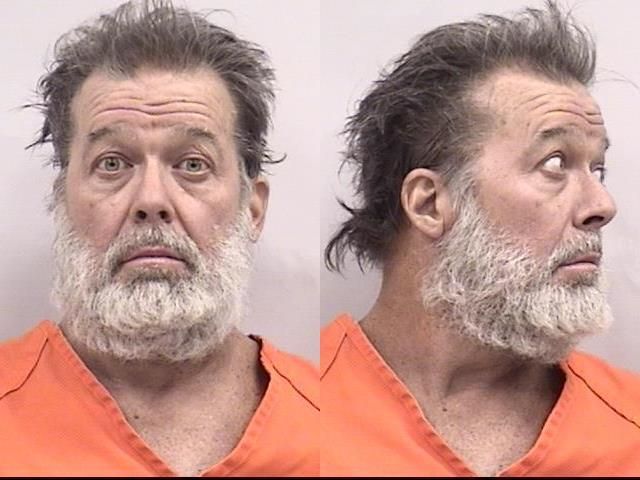

November 28

The gunman suspected of storming a Planned Parenthood clinic and killing a police officer and two others told the officers who arrested him “no more baby parts,’’ after being taken into custody, according to a law enforcement official.
The gunman suspected of storming a Planned Parenthood clinic and killing a police officer and two others told the officers who arrested him “no more baby parts,’’ after being taken into custody, according to a law enforcement official.
Iran seeks $25bn investment from energy
companies
The investments are related to sanctions relief brought by the nuclear deal between Iran and major Western powers

 Saturday 28 November 2015
companies
The investments are related to sanctions relief brought by the nuclear deal between Iran and major Western powers
Saturday 28 November 2015
Iran seeks $25bn in investments from several energy companies, Tehran
told foreign executives on Saturday as the government outlined new
contractual terms.
hOil Minister Bijan Zanganeh opened a two-day conference in the capital
attended by BP, Shell, Total of France, ENI of Italy, Repsol of Spain,
OMV from Austria and other major oil and gas companies.
The new investments are part of the sanctions relief related to the
nuclear deal between Iran and major Wester powers. The sanctions expect
to be lifted in early 2016.
The new Iran Petroleum Contract will replace "buy-back" agreements in
which foreign companies were paid a set price for all oil and gas they
helped Iran exploit. Iran at that point took over production.
The new contract will instead launch joint ventures for crude oil and
gas production with international companies being paid a share of the
total output, officials said.
The Iranian partner in a joint venture must have a majority stake of at least 51 percent.
Zanganeh said consultations with international companies led to the new
contracts, which would initially be four years in length at the
exploration phase, extendible for a further two years.
Iran will have between five and seven years to pay back initial sums
invested by the foreign companies once production starts but cooperation
and development in commercially viable fields could go on as long as 25
years, officials said.
"The contract models introduced today are not perfect or ideal, but an
effective and responsive model for both sides," Zanganeh said, noting
that $25 billion of foreign investment would constitute "success".
“Like any other human creation it may need amendment and development," he said of the new contract.
Iran has the world's fourth largest oil and second-largest proven gas
reserves and its energy industry has been under-developed since the
Islamic revolution in 1979.
No US companies present
Asked why no US companies attended Saturday's event, Zanganeh said there
was no bar on them considering Iran's energy market but American firms
were put off because sanctions are still in place.
"The atmosphere and climate is ready for the presence of these companies
in development of Iran's oil industry but they themselves have problems
for being present in Iran," he said.
Iran is scheduled in February to hold a conference in London regarding
investment and the new contracts which, if sanctions have by then been
lifted, could attract US energy giants.
An oil embargo imposed in 2012 by the US and European Union as
punishment for Iran's disputed nuclear programme - it denies ever
seeking to develop a bomb - severely damaged Tehran's energy industry
and sales income.
Stephane Michel, president of exploration and production for Total in
the Middle East and North Africa, described the contract and project
offers as an "important milestone" for Iran but said further analysis
was needed before any deal.
"We need to look at what was presented to better understand how it's
going to work and to make up our mind," he said. "But it's good to be
able to do that now, based on facts.
"It's complex and we need to study first the length of the contracts and
second who the partners would be, both in development and operations."
Iran produces about 2.8mn barrels of oil per day, compared to 4.0
million bpd in 2011, following US and other Western pressure on buyers
to steer clear of the country.
The nuclear deal, however, has paved the way for new tie-ups and 152
international companies were at Saturday's event, organisers said, along
with 183 Iranian firms.
Despite low crude prices Iran is intent on reclaiming lost market share
and has pledged to increase output by 500,000 bpd once sanctions are
lifted, independent of OPEC guidance.
Iran's regional rival Saudi Arabia has refused to cut its output despite crude prices falling massively in the past year.
Subscribe to:
Posts (Atom)