

Peace for the World World ! Your War Our Lives

The Dalai Lama
A Brief Colonial History Of Ceylon(SriLanka)
Sri Lanka: One Island Two Nations
A Brief Colonial History Of Ceylon(SriLanka)
Sri Lanka: One Island Two Nations
(Full Story)
Back to 500BC.
Sunday, December 31, 2017
Sri Lanka: How did it all go so wrong?

How did it all go so wrong? The reason is simple. The Prime Minister wished to manage the country in an inclusive and pragmatic manner. His actions in practice have been highly divisive and deeply flawed.

( December 30, 2017, Colombo, Sri Lanka Guardian) When
Ranil Wickremesinghe was appointed Prime Minister in January 2015 the
perception was that he would lead the country in an inclusive manner
towards restoring good governance and its values and institutions. It
was thought there would be no bribery and corruption; we would have free
press, free association, free elections, the rule of law as understood
in the West, independence of the judiciary, and public service integrity
and a solution would be found to the longstanding Tamil problem in
close collaboration with the Tamil bourgeoisie living locally and abroad
that would be acceptable to the majority community. Most of all, the
new government was expected to transform the economy by adopting free
market economics, ensuring the inflow of large scale foreign direct
investment to boost economic growth and raise continuously the standard
of living of the population.
The omens were good with all major parties onside to create an inclusive
one nation society with a sense of shared values and interests. Three
years have now passed since the Prime Minister assumed office. There
have been some positives and pluses. Yet, it is no exaggeration to say
the hopes we pinned on the Prime Minister have turned into illusions.
For many people optimism has turned into disappointment, discontent and
dissent. Much worse, politico-religious fanaticism has raised its head
and more may be lying in wait.
How did it all go so wrong? The reason is simple. The Prime Minister
wished to manage the country in an inclusive and pragmatic manner. His
actions in practice have been highly divisive and deeply flawed. The
Sinhala population (primarily the Sinhala Buddhists) today is more
divided, more polarized, and more aggressively politicized than ever
before.
Divisive actions of the government that were inimical to develop and
sustain national consensus for the clear-cut national purpose envisaged
by the Prime Minister are legion. Five choices made stand out.
First, and a very damaging own goal, was allowing justified perception
that the Prime Minister, though Mr. Clean himself, turned a Nelsonian
eye to corruption. The bond scams are the most visible example. There
are others (such as the award of tenders) that cannot be denied.
Additionally, many governance issues such as subverting parliamentary
procedures to postpone elections have undermined the people`s perception
of the Government`s good faith.
Second was the effort to crush the Rajapaksas politically. Listening to
the songs of sirens having a visceral hatred of the Rajapaksas primarily
for having annihilated the LTTE, the Rajapaksas have been pilloried
without evidence for robbing the country of billions of dollars. The
intensity of the animus against the Rajapaksas has had no limits.
Various institutional mechanisms such as PRECIFAC were established to
harass, hound and punish the Rajapaksas and their allies for alleged
misdemeanors. Western governments and agencies too were mobilized to
nail the Rajapaksas. It has outraged many in the country, especially
rural soldiers and policemen and their kith and kin, ever grateful that
the Rajapaksas decisively defeated the LTTE.
Common sense would have suggested that Mahinda Rajapaksa, who won a
majority of Sinhala and Buddhist votes at the Presidential Election, was
part of the solution to implement the Prime Minister`s vision to bring
about good governance, peace and prosperity, especially with regard to
the Tamil issue. All that was required was to let the widely perceived
misdemeanors of the Rajapaksas, particularly in respect of bribery and
corruption, be dealt with by a strengthened legal system, the rule of
law and the jurisdiction of the Courts of law. Politically, Mahinda
Rajapaksa with his mass following should have been treated as a worthy
opponent to be consulted on national issues, and not an enemy to be
given short shrift.
Third, were the highly divisive economic policies pursued by the government. These resulted in:
(i)
The sharp rise in wealth inequality to unprecedented levels. The wealth
gap between the “haves” and the “have-nots” is now much worse than
during the Rajapaksa era. It has given rise to alarming economic and
social disparities. The opportunity for economic mobility is
disproportionately in favour of the affluent classes.
(ii)
The relentless rise in the cost of living (the latest over 8% annually)
much faster, and much higher annually than in the Rajapaksa era to the
detriment of low and lower middle income groups.
(iii)
Economic development skewed more than ever before in favour of the
affluent. It stemmed from the unbridled large flows of credit from
financial institutions for the building and purchase of luxury
apartments, luxury hotels and luxury imports, notably of vehicles. Land
prices have rocketed sky high. Lending to financially less attractive
production-oriented sectors of the economy has been constrained. So too
investment in projects of benefit to middle and low income groups such
as low cost housing, agriculture and transport.
What a difference to the task of unifying the country, if the Government
had pursued a policy of austerity populism for a purpose, that of
achieving the Prime Minister`s vision for 2025.
All that was necessary for the success of austerity populism was to keep
the Yahalapana economic promises made in the 100 days Progamme frozen
for two years, and then delivered to the letter.
The benefits would have included:
(i) Public servants would all have had a nest egg of Rs. 250,000 (Rs 10,000 a month plus interest) in two years.
(ii)
A hundred billion rupees and more accruing to the Treasury in two years
(2015-2016) if petroleum and utility prices were kept at Rajapaksa era
levels. It would have resulted in the government budget deficit
plummeting, inflationary printing of money minimized and interest rates
low.
(iii)
Soft curbs and controls of lending by the banking and financial sector
for luxury investment and consumption goods, would have prevented the
turbo boost in luxury imports in 2015.
(iv)
Several billion dollars would have been added to the foreign exchange
reserves of the country. The collapse of oil prices alone in 2015
amounted to over well over $2 billion of savings, if not for the
misguided Government policies boosting imports. Likewise, an inflow of
$1.5 billion to the foreign reserves for the Port City project in
2015/2016, had it not been halted temporarily. Moreover, foreign
reserves would have benefitted from no exit of foreign money of $1
billion from the bond and stock market; and no fall in FDI s in
2015-2017 compared with 2014. Both outcomes occurred because of the lack
of market confidence.
(v)
No excess demand, no slide in the exchange rate, no increases in the
cost of living, no uptick in wages and inflation, no stock market in the
doldrums, no anaemic economic growth.
(v)
Repayment, without difficulty, of capital and interest of all immediate
and prospective Rajapaksa era foreign loans incurred for development
projects.
(vi) A “Master Plan” in detail to fast track implementation from 2017 onwards of the Prime Minister`s Vision 2025 and beyond.
Fourth was the co-sponsoring with the West of a far reaching Resolution
(30/1) at the Human Rights Council, supposedly to heal the wounds of war
and to promote reconciliation among all communities. It opened the
flood gates for Western (and UN officials) interference in the internal
affairs of the country. Logic demanded that the Prime Minister should
have resisted the unwarranted Western demands on the wording and
provisions contained in the Resolution. The highly divisive Resolution
diminishes the prospects of reconciliation. It is un-implementable as it
lacks legitimacy in the absence of approval by the Cabinet, Parliament,
President or the voters.
Reconciliation is not the issue. All communities in Sri Lanka recognize
that reconciliation of the Tamils and the rest of the population is
essential. Reconciliation, however, one must first deal with improving
the “condition of people” living in war-ravaged areas through relief,
rehabilitation and reconstruction of war torn areas. Western and UN
pressure on the government to fulfil its commitments relating to
Resolution (30/1) does not do that. Loads of money ($1 billion and more)
do. Sadly, the West has poured plenty of honeyed words at every turn on
reconciliation, but has given no money worthy of mention to do just
that.
The fifth was the Prime Minister`s whole approach to resolve the Tamil
issue. He has stuck to his long-held views in favour of granting
devolution on federal lines. The attempt to do that in the designing of a
new Constitution has galvanized even Buddhist monks, from the top
hierarchy down, to oppose the proposed Constitution. It is perhaps the
tipping point where the Government wishes have gone too far.
What was required to resolve the Ceylon Tamil issue was the above
mentioned “Marshall Plan” for people-oriented benefits in the areas
badly damaged by the LTTE conflict; integrating the country as a whole
by fairness in the composition of the Cabinet of Ministers at the
Centre, and in public employment of minorities at every level of
administration in proportion to their number in the population; and
reaching out to Mahinda Rajapaksa and the Joint Opposition to go beyond
the 13A in power sharing, in a consensual and incremental manner by
amending the current Constitution.
Why the Prime Minister adopted deeply divisive policies when his
intentions were the opposite are not known. Perhaps, he belongs to the
breed of politicians who believe in taking unpopular positions on
issues, sticking to their guns if needs be in the teeth of any political
storms, winning popular respect and thereby boosting political energy
for their set of reforms.
What happens next? It all depends on the outcome of the local government
elections. If the UNP wins a majority of Sinhala Buddhist votes there
will be no holding back the Prime Minister. On the cards are large scale
selling of the “family silver” including financial institutions, ports,
airports, agricultural lands to foreigners to pay off the Rajapaksa
debts and to shrink the size of the state; accommodating TNA demands to
lock-in 100% of the Tamil vote for the Prime Minister at the next
Presidential election; caving in to Western pressures on Resolution 30
(1) et al that are detrimental to the country`s sovereignty; extensive
market liberalization regardless of short term costs to the economy; and
corruption Yahapalanaya style.
On the other hand, if the SLPP trounces the UNP in the battle for the
Sinhala Buddhist vote, the roll-up of the Yahapalanaya maps is on the
cards. Sooner than later the Prime Minister too will meet his Waterloo.
The last candle will be extinguished of the well bred, well read, well
heeled, anglicized, urban politicians of the past. We will not see the
likes of him in politics again.

Name The Media: Pilots Guild Tells CEO Ratwatte

 December 30 2017
President of the Pilots Guild Capt. Ruwan Vithanage writing in response to his loss making CEO Suren Ratwatte of SriLankan Airlines, sought clarification on the veracity of his ‘New Year’ message sent to all employees where
he stated that the defining moments of the year gone by was the ‘Fake
News’ spread in the media about the national carrier.
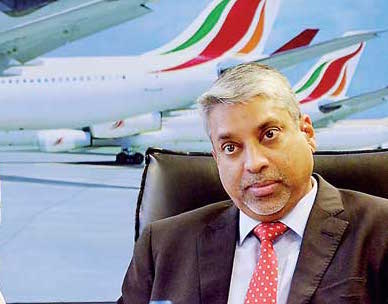
Challenging CEO Ratwatte to name the media institutions he labelled as
‘Fake News’ providers, the Pilot Guild President Capt. Vithanage wrote
“As there has been wide publicity given to the Airline by main stream
media in the recent past, we would appreciate if you could inform us of
any such fake or erroneous news that you are aware of. We are sure you
would appreciate the necessity and urgency in providing specific
information of instances where “fake news” has been publicized so that
we may in-turn, keep our Membership better informed of fact and
fiction”.
“I am avid reader of the Colombo Telegraph and really appreciate the contribution you have made to the journalistic scene in Sri Lanka,” he wrote.
This is when he intimated that he too wished to be a columnist for
Colombo Telegraph and in wanting to publish an article written by him.
From: Airline Pilots Guild of Sri Lanka
Capt. Suren Ratwatte, Chief Executive Officer,
SriLankan Airlines.
Dear Capt. Ratwatte,
Members of the ALPGSL are in receipt of your communiqué titled “Fake news”, circulated to all employees of SriLankan Airlines.
On the assumption that your communiqué was released due to fake news already being circulated about the Airline, the ALPGSL Membership have raised numerous queries and concerns, requesting for clarification on the veracity of the contents in your letter. As there has been wide publicity given to the Airline by main stream media in the recent past, we would appreciate if you could inform us of any such fake or erroneous news that you are aware of. We are sure you would appreciate the necessity and urgency in providing specific information of instances where “fake news” has been publicized so that we may in-turn, keep our Membership better informed of fact and fiction.
In response to your request for support towards transforming our Airline
into an “efficient and competitive business”, we assume you are aware
that we; as one segment of the conscientious and dedicated employees of
SriLankan, have made numerous contributions over the years; under your
Management as well as your predecessors, to achieve this objective.
Our Membership, despite being rostered with the minimum number of
off-days in each roster, are continuously called on to fly on these
off-days and extend our duty times. We assume you are also aware that a
cumulative of over 4000 days of annual leave are being carried forward
for the year 2018, as a result of our entitled annual leave being denied
on many occasions.
Read More
HIV cases increase in Vavuniya Sex workers most vulnerable

 BY Mirudhula Thambiah-2017-12-31
Case studies have revealed that an increase in prostitution in the Vavuniya District is the main factor in the rise in HIV cases in the region, Dr. Kumaragurunathan Chandrakumar, Medical Officer in Charge, STD-AIDS Control Programme, Vavuniya said. Recently, it was detected that female sex workers in Vavuniya are only concerned about their income and had avoided protected sex. "Female sex workers have multiple sex partners. Once they are produced in Courts, they are subjected to a medical examination. Every month we have been directed by Courts to screen between 3-5 female sex workers for HIV.
Therefore, in total, we screened around 17 female sex workers in Vavuniya for this year. Most of them lacked awareness of Sexually Transmitted Diseases (STDs) and Human Immunodeficiency Virus (HIV). Thus, we came to a conclusion that incidences of HIV in our district could be due to unprotected sexual practices by these workers," he said.
In November, we screened five sex workers. When we recorded their cases, it was obvious that they had multiple partners. If one of their partners were HIV positive, it is quite possible for them to be infected as most of the sex workers in Vavuniya revealed they rarely take precautions. The main source of infection could be through multiple partners, he added.
Ground reality
Being a commercial hub in the Northern Province, Vavuniya is a transit city that has adequate transport facilities for passengers who intend to travel to the North, East, West or South. "During our study, a female sex worker said she earns around Rs 10,000 per day. Thus, she earns a large income on a monthly basis. However, according to Sri Lankan Law they only have to pay a fine of Rs 100 in Courts. This is just a small amount of money and they are not serious about their misconduct. She also added that Vavuniya is one of the best paces for her business," Dr. Chandrakumar said.
He went on to state that HIV can be detected only after a period of three months. However these workers are sexually active on a daily basis, therefore the screening process should be continuous and they should be under observation for a longer period to analyze their health conditions.
So far, while 20 HIV cases have been detected in the Vavuniya District, only seven patients are currently surviving. Among them, four are obtaining treatment from the Anuradhapura General Hospital and three are being treated at the National Hospital in Colombo. They are aged between 20 and 65.
"The death of 13 patients out of 20 was due to late diagnosis. Most of these patients were admitted to the hospital with high fever. When it is impossible to figure out the reason for high fever, we screen the patient for HIV, and these 13 patients were diagnosed in such circumstances. It is known that continuous treatment for HIV-AIDS can increase life expectancy but not cure the disease," he said.
There are many lodges in Vavuniya that are mainly dependant on prostitution for their primary income. Lodge owners have contacts with female sex workers. "During our case study, a sex worker said that lodge owners connect them with the customers. The minimum amount for hiring a sex worker is Rs 1,800 per night. Rs 1,000 is paid for the worker and Rs 800 is collected by the lodges as their income. Apart from which Rs 2,000 is separately charged by the sex worker from customers, therefore, a sex worker earns minimum of Rs 3,000 as daily income."
Further, a sex worker said that she is able to earn more in her current profession than any other. For a month she is able to earn Rs 300,000. She is quite satisfied that her income is adequate to maintain her children.
Prostitution can be an easy source of income but sex workers should be quite aware of their customers and the spreading of STDs and HIV,
Dr. Chandrakumar noted.
Regular screening
Sex workers from all districts have gathered in Vavuniya, as it has become a main spot for prostitution and they are able to earn a large amount of income. "In other districts in the North also we are treating an increased number of patients for STDs. In Jaffna most patients do not go to the State hospital but obtain treatment from private clinics. But in Vavuniya there are less private clinics and the patients have no choice other than the State hospital. We also have patients coming from other districts due to social stigma and they do not want to reveal their health conditions. However we act confidentially as always," he said.
Dr. Chandrakumar stressed that sex workers who are subjected to HIV screening are advised of precautions and the severity of the disease. "We advise them to have protected sex. We also advised them about STDs and HIV. We told them that it is a must to attend HIV screening once every three months. We also went to every lodge and pasted warning stickers that stated 'avoid unsafe sex. Not only in lodges but in Army camps too."
Although prostitution is illegal, Police will take legal action only if they have adequate evidence and information. Lodges follow strict procedures to avoid raiding by police.
Meanwhile, Dr. Anusha Srishankar, Medical Officer in Charge, STD - AIDs Control Programme, Batticaloa District said that recent studies have detected that HIV prevalence is quite serious among homosexual individuals.
As part of STD - AIDS control programme, specific concentration and awareness will be created among homosexual individuals to control the severity and risk of AIDs. "The cooperation of homosexual individuals is quite important to carry out the awareness programme," she said.
2017 Women of the Year and their war against sexual harassment

 Rajan Philips-December 30, 2017
"When Paris sneezes, Europe catches cold," is a wisecrack attributed to
Prince Metternich, the Austrian diplomat during Napoleon’s domination of
Europe. In the 20th century, it was America’s turn to sneeze for the
whole world to catch a cold. It is still early in the 21st century and
with Donald Trump at the helm in Washington, the world is getting used
to ignoring America. As was duly seriously noted in The Island of
yesterday, the Trump Administration’s new National Security Strategy
(NSS) is not receiving the usual attention that past presidential NSS
statements have received. Even the marked shift from the Obama years is
not hugely exciting to Trump watchers. As some have suggested the
American media is pre-occupied with sexual harassment and is bent on
using the uprising against it to bring down Trump.
Some of the readers looking at my topic today for an year-end article
may justifiably wonder if this another case of catching cold from the
massive American media sneeze. To be frank, I did catch a rather bad
cold in the US over Christmas holidays but this article has nothing to
do with it and the question of sexual harassment of women is not only an
American matter. With the hashtag #MeToo eliciting millions of sexual
harassment experiences from women in nearly 100 countries, what began as
a huge gender sneeze in the US became a global roar of protest and
solidarity by women against sexual harassment.
Predictably, the Time magazine picked women ‘silence breakers’ against
sexual harassment as its 2017 Person of the Year. Equally, several other
national international journals and news agencies have also been
providing year-end coverage and commentaries on this year’s historic
social movement against sexual harassment. With impeccable timing, the
World Policy Analysis Centre at the University of California Los Angeles
(UCLA) has produced a report providing New Data on 193 Countries and
their legal mechanisms for Preventing Gender-Based Work Place
Discrimination and Sexual Harassment. Globally, 75% of working-age men
are in the labour force; but only 50% of working-age women are working.
Women are also paid less – on average earning only 77% of a man’s wage;
segregated into low-paying or part-time sectors such as service work and
cleaning; and under-represented in supervisory and managerial roles.
A global problem
Discriminations and gender harassment prevent about a billion women from
joining the labour force. At present, there are 1.35 billion women
working worldwide, but the number is estimated to increase to 2.39
billion if there is no work place discrimination or sexual harassment.
The discrimination and harassment of women are not only social problems,
but they also carry huge economic costs. For example, it has been
estimated that closing the gender gap in the US economy would add as
much as $4.3 trillion to the GDP by 2025; almost a 25% increase to the
$18.5 trillion American economy. Implications of closing the gender gap
and ending sexual harassment may not be as huge for other countries and
their economies, but proportionately they will be just as significant.
According to the UCLA report, 68 of the 193 UN Member countries do not
have specific laws to protect women from work place sexual harassment,
impacting 235 million women workers in those countries. Sri Lanka is
among the 125 countries with legislation protecting women, as well as
men, from work place sexual harassment. However, Sri Lanka is listed
among a minority of countries that do not have specific laws in other
areas such as prohibition of gender-based discrimination for job
promotions, providing access to vocational training, and ensuring equal
pay for equal work. Among the South Asian countries, India has
legislative protection in all gender-gap areas, and so has China.
In India, providing legal protection against work place sexual
harassment began with the 1997 Supreme Court ruling in the celebrated
Vishakha case (Vishakha and others Vs the State of Rajasthan). The
ruling gave rise to Vishakha Guidelines before parliament enacted
legislation against sexual harassment in 2013. According to the Indian
media, work place mechanisms and processes for identifying,
investigating and addressing sexual harassments are yet to be set up in
many Indian organizations and international companies working in India.
Universities and post-secondary educational institutions have become
notorious centres for sexual harassment involving female students and
employees who are harassed by male academics and administrators.
Ragging in South Asian universities is also a rite of passage for sexual
insults and innuendos targeting women. This is a spillover from what is
euphemistically called ‘Eve Teasing’ that goes on in the general
society. Women’s organizations have objected to the term ‘Eve teasing’
insofar it suggests that it is somehow Eve’s fault. Indian feminists
consider Eve teasing to be "little rape." Technically, although it is
not a legal term, Eve teasing is a form of sexual aggression that may
involve sexually suggestive words, jokes, hooting and catcalls, and
physical brushing and groping places. The incidence of physical brushing
has been notorious enough in public transport to separate female and
male passengers to exclusive sides in buses.
The 1993 UN Declaration on the Elimination of Violence against Women
targeted violence occurring in three distinct spheres: the family, in
the general community, and by state action. Violence against women in
the general community - involving rape, sexual abuse, sexual harassment
or intimidation, encompasses all public spheres including streets,
transport, universities and work places. Eve teasing in public is not a
common phenomenon in Western societies. But work place sexual
harassment, despite legislative protections against them in 125 of the
193 countries studied in the UCLA report, is a universal problem. What
has happened in the US in 2017 is wholly unprecedented. The question is
how far and wide will the avalanche that has been unleashed carry its
momentum through? Will there be fundamental changes in work place codes
of conduct and behaviour apart from the naming and shaming of high
profile men?
Trump’s inadvertent catalysis
For the agenda against sexual harassment, it is a good thing that
Hillary Clinton lost and Donald Trump won. A Hillary Clinton presidency
would have provided the Republicans and the American alt-right the
perfect excuse to launch a massive misogynistic counterattack; just as
they launched the racial backlash against the Obama presidency. On the
other hand, the Trump victory has given the American women the perfect
cudgel to wreak their revenge against Trump on the one ground that
disgusts all Americans –his vulgar and boastful obsession for groping
women. Knocking an elected president off his official pedestal is a
complicated political process, and is virtually impossible when the
President’s ‘Party’ commands the majority in both Houses of the
Congress. But they can knock everyone else on a charge of sexual
harassment.
And that is what American women have been doing against their harassers
in Hollywood, in the media, and even the US Senate and the House of
Representatives. The power of exposure magnified by the exponential
power of the social media has brought down hitherto unassailable
grandees of the American establishment. Trump promised to drain the
Washington swamp. It is his swamp that is being drained now, but the
celebrity swamp is not where the bulk of the harassment problem lies.
American researchers on sexual harassment always point out the obvious
fact that most harassment occurs at below-the radar work places, and the
majority of the perpetrators are not celebrities but mostly nondescript
men who under the system deny allegations and almost always walk away
Scot free. The women who are victims in these circumstances hardly have
the visibility or the resources like the victims of celebrities to
challenge their harassers. Again, this is not something unique to
America but part of the work place culture in most societies.
What the exposure of the celebrity harassers has done is to jolt all
women and many men to no longer ignore sexual harassment or be silent
about it, but to deal with it and eradicate it from all work places. It
would be a shame if this opportunity is not used for a fundamental
change in work place behaviour and culture. Much headway has been made
in reducing violence against women in family situations, and there is no
reason why similar advances should not be made in targeting and
eliminating sexual harassment in work places.
The term ‘sexual harassment’ was first used in a 1973 Massachusetts
Institute of Technology (MIT) report for dealing with gender issues at
the Institute. The term was also independently coined by a group of
women activists at Cornell University a few years later. One could see
in these efforts the head starts that American universities were making
towards identifying and addressing sexual harassment. It would take
nearly two decades before the term would resonate with the American
public at large. The occasion was the 1991 dramatic testimony of Law
Professor Anita Hill to the US Senate Judiciary Committee alleging
sexual harassment by then Supreme Court nominee, and now Justice,
Clarence Thomas, when Ms. Hill worked as a legal assistant to Mr. Thomas
years ago. It was a sham of a hearing by a committee of all men that
handicapped Professor Hill and did not want to block Thomas’s
nomination.
But American women rallied behind Anita Hill and inundated her with
their own experiences of harassment. There was no hashtag or internet
then. Complaints of sexual harassment in work places went up by 58%
after Hill’s testimony. Both Hill and Thomas are African Americans, but
Thomas is a conservative Republican who is opposed to affirmative
actions and was picked by President Bush Sr to replace Thurgood
Marshall, the first African American Supreme Court judge and a doughty
fighter for worker’s rights and affirmative action. Yet, in the course
of his statement to the Senate Committee, Clarence Thomas invoked the
famous saying of Martin Luther King: "judge me not by the colour of my
skin, but by the content of my character." Anita Hill shot back: "when
the content of his (Thomas’s) character came under question, he took
cover under the colour of his skin." Be that as it may.
What is different now, according to Gloria Steinem the matriarch of
American feminism, is that for the first time in her experience women
are being believed in their accounts of sexual harassment. That in
itself is a profound change. Legal academics agree. Women victims have
never been believed before. They had to prove harassment beyond a
reasonable doubt in legal terms. A cultural change is now upending the
legal protection of the harasser. But the cultural change must translate
into work place protocols and processes for preventing sexual
harassment, and for exposing and addressing occurrences of sexual
harassment.
The presence of Trump is huge a huge catalytic factor in the US for
advancing the frontiers of women’s rights and gender equality. Other
societies that are better off not having their own Trumps will be even
better if they could systematically target and eliminate work place
sexual harassment. It is a responsibility that falls not only on women
but also on men. Not all men are harassers, but even they must not
ignore or be silent about work place sexual harassment, if only for the
selfish reason of preventing someone close to them becoming a victim of
harassment in an unprotected work place.
Probe into police slaying of Palestinian math teacher to close
Maureen Clare Murphy-29 December 2017
Palestinian citizen by police in the Bedouin village of Umm al-Hiran in southern Israel.

For a second time the ministry’s police investigations unit has recommended to state prosecutors that no charges be filed against police.
Israeli police assert that Yaqoub Abu al-Qiyan, a 50-year-old math teacher, deliberately ran over and killed a police officer, 37-year-old Erez Levi.
“Verification of killing”
However, analysis by the UK-based research group Forensic Architecture indicates that Abu al-Qiyan was driving slowly and his vehicle only accelerated after he was shot at by police, suggesting he lost control of his car.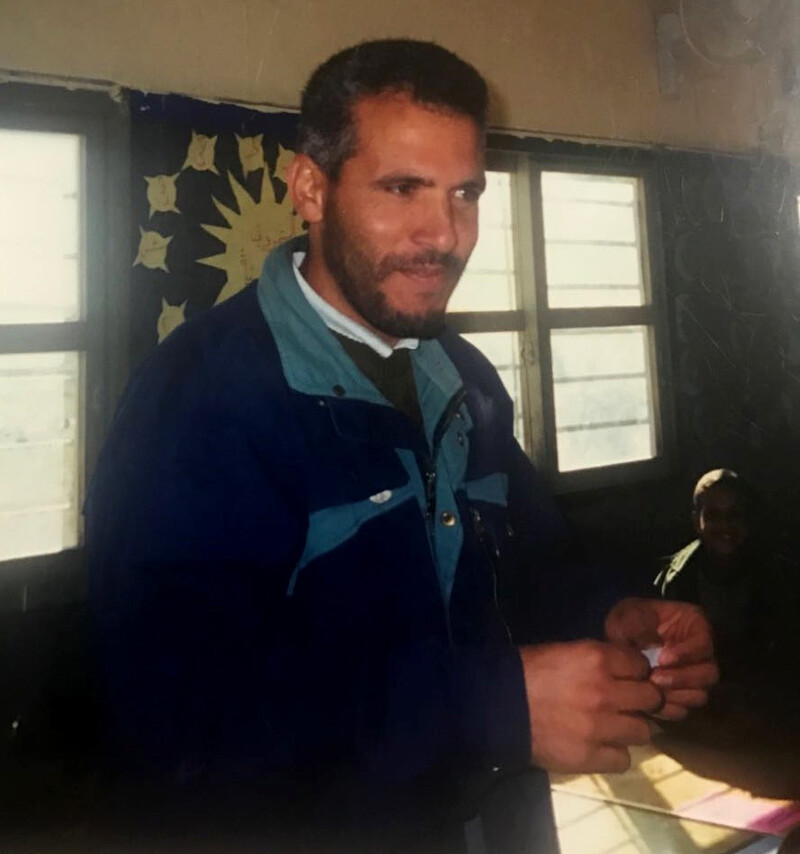
“This last shot is consistent with what the Israeli security personnel calls ‘verification of killing’ – the shooting to kill of already neutralized people,” according to Forensic Architecture.
Adalah, a rights group which filed a request for an investigation by the justice ministry’s police conduct unit into Abu al-Qiyan’s slaying, protested the recommended closure of the probe.
“The closure of this investigation means the [Police Investigations Department] continues to grant legitimacy to deadly police violence against Arab citizens of Israel,” Adalah stated.
“Though it was clear from day one that officers opened fire on a civilian without justification and in contravention of the police’s own open-fire regulations, it appears as if the [Police Investigations Department] is again whitewashing the most serious incidents.”
No police officer has been held responsible in more than 50 cases of Palestinian citizens killed by police since 2000, according to Adalah.
Home demolition raid
Abu al-Qiyan was killed as Israeli forces were preparing to demolish several buildings in Umm al-Hiran.The Israeli government seeks to evacuate the Palestinian Bedouin village in order to build a Jewish settlement in its place.
Several demonstrators – including Ayman Odeh, a Palestinian member of Israel’s parliament, the Knesset – were injured by sponge-tipped bullets and other weapons fired by police during the raid.
Israeli media have reported that the police conduct unit will also recommend closing an investigation of officers suspected of assaulting the Palestinian lawmaker.
Police and senior Israeli government officials wasted no time in framing Abu al-Qiyan as a terrorist immediately after his death.
Despite repeated requests, the Israeli justice ministry police conduct unit has not given Abu al-Qiyan’s widow a copy of her late husband’s autopsy report, according to Adalah.
Odeh told the Israeli daily Haaretz that he had little expectation that the police who shot Abu al-Qiyan and prevented him from receiving first aid, leaving him to bleed to death, would be held accountable for their actions.
“Shouldn’t someone also be punished for that?” Odeh stated.
Iran's government warns against 'illegal' gatherings after protests
 Sat December 30, 2017
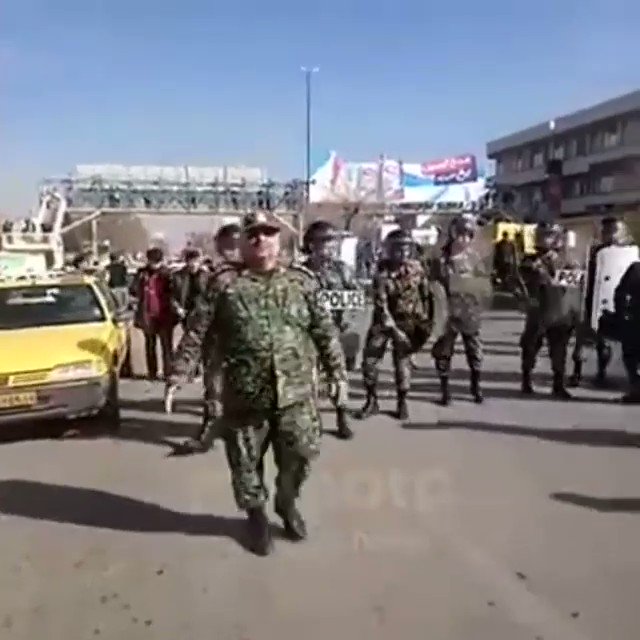
(CNN)Iran's government warned citizens Saturday against holding "illegal" public gatherings, following two days of rare anti-government protests which spread to a number of cities.
The protests -- described as the largest public display of discontent
since the 2009 Green Movement in Iran -- have emerged against a backdrop
of rising food and gasoline prices.
Three students were arrested in unrest outside Tehran University on
Saturday, an official with the Ministry of Science told Iran's
semi-official Iran Labor News Agency, ILNA. Two have since been
released, it said.
The demonstrations began Thursday in the northeastern city of Mashhad
before spreading to cities across the nation on Friday. They included
Tehran, Kermanshah, Arak, Qazvin, Khorramabad, Karaj and Sabzevar,
according to First Vice-President Eshaq Jahangiri, cited by official
news agency IRNA. Iranian media outlets reported a number of arrests.

A still frame from a YouTube video published on Friday, December 29
purporting to show a protest in Mashhad, Iran. CNN cannot independently
confirm its authenticity.
The unrest has prompted verbal sparring between Iran and the United
States, which on Friday urged Tehran to respect protesters' rights and
warned that the "world is watching."
An Iranian vice president said on Saturday the government would work
harder to resolve economic hardships, according to semi-official news
agency FARS, two days after rare anti-government protests spread to a
number of cities.
First Vice President Eshaq Jahangiri made the remarks without
acknowledging the protests, adding that some have used economic issues
as a "pretext" to hurt the government, FARS reported.
Interior Minister Abdolreza Rahmani Fazli warned Saturday that any
groups wishing to congregate must file an official request and be
granted permission.
"The police and security forces have tried to manage conditions. We have
received reports of calls to gather, cyber and social media based, and
such calls and any gatherings resulting therefrom, are certainly
illegal," he said.
Meanwhile, crowds of government supporters joined official
demonstrations held across the country on Saturday, state media
reported.
Angry chants
Protesters have been heard on videos distributed on social media as
chanting "Death to Rouhani," a reference to Iran's President Hassan
Rouhani, who was reelected earlier this year, but CNN cannot
independently verify the authenticity of the footage.

Iran's President Hassan Rouhani was reelected this year.
Some protesters in these videos also pointedly targeted their ire at
Iran's Supreme Leader Ayatollah Khamenei -- a rare display of dissent,
and something not widely seen in the pro-reform Green Movement protests,
which disputed the outcome of that year's presidential elections.
One resident told CNN they witnessed a protester tearing down a poster of Khamenei near Tehran University on Saturday.
Poorer Iranians have been involved in the new round of protests in a way
that wasn't seen in the 2009 Green Movement, an eyewitness in Tehran
noted. Iran currently sits 120th on the World Bank's Ease of Doing
Business Index, demonstrating the difficult economic situation in the
country. The high youth unemployment rate is of particular concern for
Iranians.

Iranians chant slogans as they march in support of the government in Tehran on Saturday.
The pro-government rallies held Saturday had been organized in advance
to commemorate mass demonstrations held in 2009 to challenge the
pro-reform protests.
An eyewitness in Tehran said nearly 2,000 people had gathered peacefully
for a pro-government rally there. State-run Iranian broadcasters showed
demonstrators waving the Iranian flag.
Meanwhile, coverage of the anti-government protests was very limited on state-run media, which referenced them only in passing.
US: 'The world is watching'
The White House voiced its support for anti-government protesters in a statement Friday.
"There are many reports of peaceful protests by Iranian citizens fed up
with the regime's corruption and its squandering of the nation's wealth
to fund terrorism abroad," said White House press secretary Sarah
Sanders. "The Iranian government should respect their people's rights,
including their right to express themselves. The world is watching."
US President Donald Trump subsequently tweeted the same message.
Many reports of peaceful protests by Iranian citizens fed up with regime’s corruption & its squandering of the nation’s wealth to fund terrorism abroad. Iranian govt should respect their people’s rights, including right to express themselves. The world is watching! #IranProtests
In a statement earlier Friday, the US State Department urged the
international community to support the Iranian people's "demands for
basic rights and an end to corruption."
"Iran's leaders have turned a wealthy country with a rich history and
culture into an economically depleted rogue state whose chief exports
are violence, bloodshed, and chaos," said spokeswoman Heather Nauert.
"As President Trump has said, the longest-suffering victims of Iran's
leaders are Iran's own people.
Iranian Foreign Ministry spokesman Bahram Qassemi pushed back against
the US comments a day later, saying the Iranian people gave no credence
to such "opportunistic" remarks by US President Donald Trump or his
administration.
His statement on the Foreign Ministry website also described "Mr Trump's government" as the main source of ill will toward Iran.
Trump tweeted about the situation again on Saturday, sharing footage of a speech he gave at the United Nations in September.
"Oppressive regimes cannot endure forever," Trump wrote, quoting his
speech. "And the day will come when the Iranian people will face a
choice."
"The world is watching!" he added.
Relations between Washington and Tehran are currently tense, with the Trump administration critical of what it sees as Iran's growing regional influence and alleged involvement in conflicts including Yemen and Syria.
Rouhani won a landslide re-election in May after campaigning largely on
social reform. His campaign also touted the merits of the 2015 nuclear
deal with the United States, the European Union and other partners which
has been rejected by Trump.

A demonstration at the University of Tehran on Saturday
Foreign intervention claim
Iranian officials have pointed to foreign intervention as being behind the anti-government protests.
"Unfortunately, most of the people who participate in these gatherings
are unsophisticated individuals who are not aware that these calls for
protest are made by anti-revolution elements," Mohsen Hamadani, Tehran
deputy governor in charge of security affairs, was quoted as saying by
the semi-official news agency ILNA.
"Most participants are not aware that anti-revolution elements are
calling people to demonstrate against social issues such as inflation
but chant untrue slogans."
Protesters have been temporarily arrested for participating in "illegal
demonstrations," according to Hamadani, who said the demonstrators had
not officially applied for permits to demonstrate.
Protests stem from 'economic difficulties'
The protests "show that frustration in the Iranian society right now is
very extensive, particularly when it comes to the economic difficulties
they have been facing," according to Trita Parsi, president of the National Iranian American Council and author of the book "Losing an Enemy."
While the economic situation is due in part to "mismanagement and
corruption," Parti said, it's also a result of the Rouhani government's
policies and the process of getting sanctions on the country lifted.
"The nuclear deal is overwhelmingly supported by the Iranian public, but
there was an expectation that much more economic development would come
out of it," Parsi said. But Iranians have not seen that turnaround.

Students protest Saturday at the University of Tehran.
Ultimately, the protests represent an internal dispute within Iran, but
international policy is also playing a role, he said. And Trump's
involvement is not necessarily beneficial to anti-government protesters.
"This is not about the United States, this is not about Trump," Parsi
said. "And Trump stepping into this is not necessarily helpful because
he doesn't carry any credibility in Iran."
Parsi pointed to several policy positions taken by the Trump
administration this year, such as the administration's opposition to the
Iran nuclear deal, his travel ban -- which targeted, in part, Iran --
and his "hugging Saudi Arabia."
"I think he's unaware of how illegitimate broad parts of the Iranian society view him," Parsi said.
While sanctions against Iran were eased under the 2015 deal in exchange
for curbs on Tehran's nuclear program, US sanctions imposed over
non-nuclear activities continue to have an impact.
Government supporters rally in Iran as protests enter third day
Supporters of the regime and anti-government protesters clashed at the entrance to the University of Tehran

Iranians
chant slogans as they march in support of the government near the Imam
Khomeini grand mosque in Tehran on 30 December 2017 (AFP)

Saturday 30 December 2017
Thousands of government supporters held rallies across Iran on Saturday
to mark the end of pro-reform protests that shook the country in 2009,
as a third day of anti-government protests broke out across the coutnry.
State television showed a rally in Tehran and marchers in the
second-largest city of Mashhad carrying banners in support of Supreme
Leader Ayatollah Ali Khamenei.
Saturday's protesters vowed to defend the Iranian revolution against
outside forces including the US, Britain and Israel but also called on
Iranian officials to do more to tackle the country's economic woes,
according to the semi-official Fars news agency.
 Iranian President Hassan Rouhani (AFP)
Planned in advance of the recent unrest, they mark the suppression of
anti-government protests in 2009, when the disputed re-election of
president Mahmoud Ahmadinejad triggered anti-government protests.
Following the announcement of the election results, supporters of
defeated candidates Mir-Hossein Moussavi and Mehdi Karroubi took to the
streets, mainly in Tehran, in daily rallies alleging election fraud.
As authorities suppressed the rallies, counter-protests in support of
the revolution and against what was alleged as the foreign backing of
the defeated candidates swept across the capital later that year and
have been marked annually since.
The Iranian government warned people against further protests on
Saturday as anti-government demonstrations sparked by anger over an
array of economic problems reportedly entered a third day.
"We urge all those who receive these calls to protest not to participate
in these illegal gatherings as they will create problems for themselves
and other citizens," said Interior Minister Abdolrahman Rahmani Fazli.
Social media postings indicated that a third day of protests broke out
in cities including Tehran, Shahr-e Kord and Kermanshah, where a video
showed dozens of protesters booing after police announced on a
loudspeaker that any gathering would be illegal. The footage could not
be authenticated.
The semi-official news agency Fars said up to 70 students gathered in
front of Tehran University and hurled rocks at police. A social media
video showed them chanting "death to the dictator" in an apparent
reference to Khamenei.
Regime supporters, gathered at the university entrance responded with
"death to the sedititionists" and appear to have outnumbered the
anti-regime protestors, videos posted on social media show.
Mehr news agency said 300 to 400 protesters were still around the
university, causing the closure of nearby streets and heavy traffic
congestion.
The numbers appeared to be smaller than demonstrations seen across other
major towns and cities on Thursday and Friday, which had been sparked
by high living costs but quickly turned against the Islamic regime as a
whole.
State news channel IRINN said it had been banned from covering the
protests that spread from second city Mashhad on Thursday to hit several
towns and cities.
Mashhad was the site of demonstrations against the government on
Thursday, where hundreds of people protested against high prices and
shouted anti-government slogans.
Police arrested 52 people in Thursday's protests, according to a
judicial official in Mashhad, one of the holiest places in Shia Islam.
On Friday, police dispersed anti-government demonstrators in the western
city of Kermanshah as protests spread to Tehran and several other
cities in the largest wave of demonstrations in nearly a decade.
Many reports of peaceful protests by Iranian citizens fed up with regime’s corruption & its squandering of the nation’s wealth to fund terrorism abroad. Iranian govt should respect their people’s rights, including right to express themselves. The world is watching! #IranProtests
The US State Department said in a statement that it condemned "the arrest of peaceful protesters".
US President Donald Trump tweeted that Iranians were "fed up with
regime's corruption & its squandering of the nation's wealth to fund
terrorism abroad" and warned Iran that "The world is watching!"
Iran's foreign ministry spokesman Bahram Ghasemi dismissed Trump's comments as "irrelevant" and "opportunistic".
Rising prices, foreign wars
The recent unrest reflects discontent over rising prices and alleged
corruption, as well as concern over Iran's costly involvement in wars in
Syria and Iraq.
The Revolutionary Guards, which along with its Basij militia spearheaded
a crackdown against protesters in 2009, said in a statement carried by
state media that there were efforts to repeat that year's unrest but
added: "The Iranian nation ... will not allow the country to be hurt."
Prominent conservative cleric Ayatollah Ahmad Alamolhoda called earlier for tough action against the protests.
"If the security and law enforcement agencies leave the rioters to
themselves, enemies will publish films and pictures in their media and
say that the Islamic republic system has lost its revolutionary base in
Mashhad," the state news agency IRNA quoted Alamolhoda as saying.
Vice-President Eshaq Jahangiri, a close ally of President Hassan
Rouhani, suggested that hardline conservative opponents of the
pragmatist president might have triggered the protests but lost control
of them.
"Those who are behind such events will burn their own fingers," state media quoted him as saying.
The protests spread to at least half a dozen cities on Friday, with some
attracting hundreds of protesters and others thousands, the BBC reported. In some cities police in riot gear and on motorbikes clashed with demonstrators.
Social media footage of the protests showed protesters chanting "death
to Rouhani" and "death to the dictator". Other videos showed chants of
"leave Syria, think about us," as protesters criticised Iran's military
and financial support for Syrian President Bashar al-Assad.
Protesters in Kermanshah shout "death to dictator" #iranprotests

Subscribe to:
Posts (Atom)