Peace for the World World ! Your War Our Lives

The Dalai Lama
A Brief Colonial History Of Ceylon(SriLanka)
Sri Lanka: One Island Two Nations
A Brief Colonial History Of Ceylon(SriLanka)
Sri Lanka: One Island Two Nations
(Full Story)
Back to 500BC.

Thursday, January 31, 2019
Nowhere to run, nowhere to hide
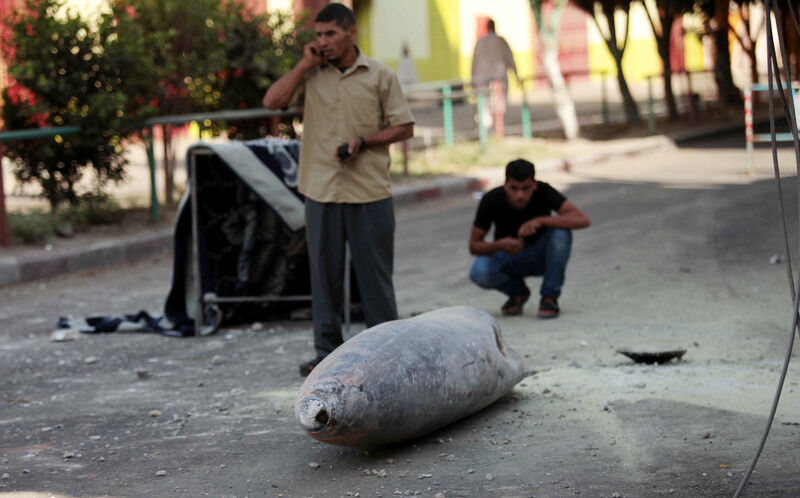 Many unexploded missiles were found in Gaza during — and after — Israel’s 2014 attack. APA images
The Electronic Intifada 30 January 2019

Where can you hide when you can’t run?
This is the question Gaza’s two million inhabitants ask themselves after every Israeli assault.
It was the question Abdallah Zaid, 45, last asked himself in November when a bombing raid came perilously close to his home in the Nasser neighborhood of Gaza City.
It was evening when a neighbor came and advised Abdallah and his family – spouse Naila and seven children – to evacuate their home. They feared that the building next door, home to the Hamas-affiliated al-Aqsa TVstation, was going to be a target for Israeli missiles.
They were right. On 12 November, Israel launched an intense bombing campaign a day after a raid into Gaza – apparently an intelligence gathering mission – had gone dramatically wrong.
In total, Israeli missiles hit more than 70 targets over the next day or so, including residential buildings, a hotel and the TV station, before a new ceasefire was called on 13 November.
As usual, residents in targeted neighborhoods were sent scrambling for safety. And as always they wondered: where to go?
“I didn’t know where we were going,” Abdallah told The Electronic Intifada. “We were barefoot. What mattered was to be far away from any danger near the house.”
The problem, he pointed out, is that “there is no safe place in Gaza.” There are shelters – primarily UN schools, though people sometimes seek shelter in mosques too.
But these don’t seem safe and people have lost faith in them since 2014, Abdallah said, when even the “schools were threatened.”
During the 2014 Israeli war on Gaza, a number of UN schools were struck by Israeli missiles and bombs, leaving dozens dead, including UN staff.
A number of mosques met the same fate.
An impossible task
For Gaza’s authorities, trying to protect people is an impossible task.Raed al-Dahshan, director of civil defense operations in Gaza, pointed to the lack of infrastructure to protect civilians.
“There is no safe place where Gazans can hide in case of bombings or war. There are no bunkers or buildings designed with bomb shelters,” al-Dahshan told The Electronic Intifada.
During the three Israeli wars on Gaza in the past decade, civil defense efforts have focused on conveying safety information to the public over the radio, directing them to take shelter away from windows, upper floors and balconies and seek out the strongest parts of their houses or buildings.
But information cannot combat a powerful army like Israel’s, which does not care about civilian casualties.
Al-Dahshan said this was clearly the case in 2014 in the Shujaiya area east of Gaza City which resulted in a massacre of at least 55 civilians in the area over less than two days.
Al-Dahshan was part of the rescue effort in the area at the time. He is convinced, he said, that the Israeli military knew exactly where people were but continued its assault anyway.
In the absence of safe spaces, some organizations are trying to prepare Palestinians in Gaza for how to act in the emergency situations they so often face.
One such program, designed by the Ma’an Development Center in partnership with UNMAS – the UN’s Mine Action Service – and Norwegian People’s Aid, was set up after the 2014 Israeli war on Gaza to deal with the unexploded remnants of war.
The project started with a publicity campaign to raise awareness of how to deal with unexploded ordnance.
Between 2014 and 2016, according to the UN, 17 people died and more than 100 were injured, including more than 45 children, as a result of not properly handling the unexploded remnants of Israel’s assault.
Preparing for war
Hani Abu Hatab, the Ma’an field coordinator for the program, said the project was created because no organization had taken such a step before and there was a desperate need.More than 60,000 people have now taken the program, mostly in areas previously affected by Israeli assaults, Abu Hatab said.
The training is divided into two parts. The first concerns general preparations for war including identifying the safest spaces in people’s homes – away from main roads and as far as possible from windows – and taking precautions like stocking up on food and water and making sure to have access to first aid kits.
People are also taught what to do and not to do during an offensive – such as staying away from public buildings or security installations – as well as after – not returning to partially destroyed homes because these might still collapse.
The second part of Ma’an’s training involves practical skills.
People are taught first aid, how to fight or contain fires and how to deal with the injured. They are also told how to identify, handle or not handle, unexploded remnants of war.
Ma`an has formed a group of emergency committees in local communities across Gaza. The idea is that a prominent member of the community will function as a liaison with Ma’an in order to help in times of emergency, whether by conveying information to the community, aiding local residents or helping lead rescue operations in the area, should they be necessary.
According to Abu Hatab, there are 186 such volunteers spread across all Gaza’s governorates.
Such public outreach is crucial in dealing with a population traumatized by war.
Frightened by the dark
Ahmed al-Saqa, 35, has come to hate the dark. Evenings and nights are when Israeli planes carry out attacks on Gaza.Like almost everybody else in Gaza, al-Saqa therefore keeps a close eye on the news, always looking for escalation.
He wonders where to go if another war breaks out. His house in Khuzaa, in the eastern part of Khan Younis, was destroyed in the 2014 war.
With the house not yet rebuilt, al-Saqa has since been living in rented accomodation in the Sheikh Radwan neighborhood of Gaza City.
“Gaza is surrounded,” al-Saqa told The Electronic Intifada. “Egypt in the south, the occupation to the north and east. And to the west is the sea and the occupation’s navy. This is our situation. We will be in great danger in another war.”
He is not the only one to be scared of the night. Back in November, Rand Abu al-Attah, 4, woke up in the middle of the night, again, terrified of the explosions she could hear from outside.
These are sounds parents can’t guard against. Alaa, Rand’s mother, said all she can do when the planes start bombing is take her daughter to the safest place she can find in the house, away from windows and doors, and pray.
“We cannot forget the scenes of the three Israeli wars on Gaza,” Alaa, 29, told The Electronic Intifada. “In 2014, we had to escape to the street when our neighbor’s house was bombed. Now, my daughter is getting older and she knows the sound of bombings. It horrifies her.”
Abdallah Zaid, who in November had to take his family into the street because of their home’s proximity to Al-Aqsa TV station, said he had grown weary of international TV footage showing fearful Israelis taking cover in bunkers.
“No one sees us running barefoot in the street, heading for schools and mosques that will also be targeted,” he said.
And like every Palestinian in Gaza, he has his own very personal war story, the kind that dominates people’s memories of the last decade.
Yazan, his 9-year-old son, was born on 27 December 2008, when a major Israeli attack on Gaza began.
“This was supposed to be a happy day,” he said. “But while my wife was giving birth in al-Shifa hospital, I was watching all the dead bodies coming in. It was not a happy day. We don’t want any more war.”
Ola Mousa is an artist and writer from Gaza.

Amnesty accuses online travel sites of profiting from Israel's occupation
Amnesty
International says websites like Booking.com and Expedia fail to tell
tourists the West Bank and East Jerusalem are occupied

Tourists
participate in a two-hour anti-terror course at the Caliber 3 shooting
range, near the Israeli settlement of Efrat in the occupied West Bank,
on 18 July 2017 (AFP)


Wednesday 30 January 2019
An Israeli official has accused Amnesty International of anti-Semitism
after the rights group released a detailed report accusing online
tourism companies of profiting from listings in illegal Israeli
settlements in the occupied West Bank and East Jerusalem.
Gilad Erdan, Israel's minister of public security and strategic affairs, tweeted that
Amnesty "has become a leader in the anti-Semitic BDS campaign",
referring to the Boycott, Divestment and Sanctions (BDS) movement for
Palestinian rights.
Erdan said the group's report is "an outrageous attempt to distort facts, deny Jewish heritage and delegitimise Israel".
The minister also asked his staff to examine the possibility of
preventing Amnesty International staff from entering Israel and
expelling those already there.
Many tourists we met during our study did not know that this is occupied territoires- Laith Abu Zayed, Amnesty campaigner
Earlier on Wednesday, Amnesty International called on Airbnb,
Booking.com, Expedia and TripAdvisor to remove home- and hotel-rental
listings in Israeli settlements and stop profiting from "war crimes" by
offering services there.
"In doing business with settlements, all four companies are contributing
to, and profiting from, the maintenance, development and expansion of
illegal settlements, which amount to war crimes under international
criminal law," the group said in its Destination: Occupation report.
'Misleading information'
The report studies several tourism listings, including in the West Bank
towns of Hebron, Khirbet Susiya, Khan Al-Ahmar, Qaryut and Jalud, as
well in as the East Jerusalem neighbourhood of Silwan.
About three million Palestinians currently live in the West Bank and
East Jerusalem, while around 600,000 Israeli settlers - including
200,000 in East Jerusalem alone - live in the same area in settlements
that are against international law.
Israel occupied the West Bank, East Jerusalem and the Gaza Strip in the
1967 war. It later unilaterally annexed East Jerusalem in a move never
recognised by the International community.
Laith Abu Zayed, an Amnesty campaigner, told Middle East Eye that online
tourism websites help Israel make its settlements "look normal" - and
they do not make it clear that these areas are considered occupied under
International law.
"Many tourists we met during our study did not know that this is [the]
occupied territories. They thought it's part of Israel because websites
such as Expedia and Airbnb list these places as part of Israel and this
is a piece of misleading information," Abu Zayed said.
READ MORE ►
Following a years-long campaign by Palestinian rights groups, Airbnb, a
privately owned US-based company founded in 2008, announced in November
that it would remove approximately 200 home-rental listings in Israeli
settlements in the occupied West Bank.
While the move was welcomed by Palestinians and their supporters, it was
immediately denounced by defenders of Israel, including members of the
Israeli government. On Wednesday, Erdan said that Airbnb's decision was
an act of surrender to the BDS movement, which "now comes with a
price".
However, Amnesty's report found that Airbnb's commitment did not extend
to 100 listings in settlements in East Jerusalem, "even though this too
is occupied territory".
It also said that as of January, Airbnb had not yet implemented its
decision and was still listing properties in the occupied Palestinian
territories.
Listings near villages slated for demolition
Abu Zayed said that of about four million tourists that travelled to
Israel last year, 45 percent of them visited the West Bank and East
Jerusalem.
“It is a big percentage and it contributed to profiting [off] the
occupation - the hotels and restaurants - and at the same time ignoring
Palestinians," Abu Zayed said.
"Take the Shiloh tourist site, for example. Last
week a Palestinian was shot and killed by an Israeli settler in the
area, which is surrounded by settlements listed by online companies. Tourists will never hear about that."
The shooter in that attack was from the Adei Ad settlement outpost, a
short distance from the Shiloh tourist site and the settlement of the
same name, in the north of the West Bank.
In its report, Amnesty noted that Israel has constructed many of its
settlements close to archaeological sites as part of an attempt to
explicitly link the modern State of Israel to ancient Jewish history.
Shiloh is a regarded by Jews as a holy site - with artifacts discovered there allegedly datingback to ancient Judea - but Abu Zayed said that a mosque had also been there for hundreds of years.
"Israel downplays or ignores the significance of non-Jewish periods at archaeological and historic sites," the report said.
Zimbabwean police files implicate army in widespread abuses
Exclusive: documents seen by Guardian suggest soldiers have been responsible for murder and rape during crackdown
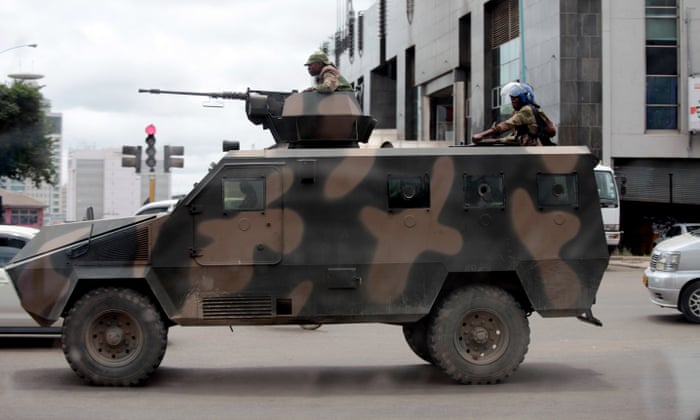
Armed soldiers patrol the Zimbabwean capital, Harare, on 21 January. Photograph: STF/EPA
 Jason Burke-
Internal Zimbabwean police documents passed to the Guardian suggest the army has been responsible for murder, rape and armed robbery during the ongoing brutal crackdown in the southern African country.
In more than a dozen investigation reports shared with the Guardian by police officials frustrated at the apparent impunity of the military, a series of alleged attacks are described, including two murders and the rape of a 15-year-old girl.
Police investigators wrote that all the acts were committed by men wearing army “uniforms” or “camouflage” – a style of wording allowing the police to avoid making direct accusations against the powerful military.
Officially, the Zimbabwe Republic police, the national police force, has blamed the violence on criminal “rogue elements” who have stolen army uniforms, and said the charges of widespread abuses by security and the armed forces have been fabricated. But in most cases described in the documents seen by the Guardian, the assailants carried automatic weapons, which few people other than soldiers and police possess.
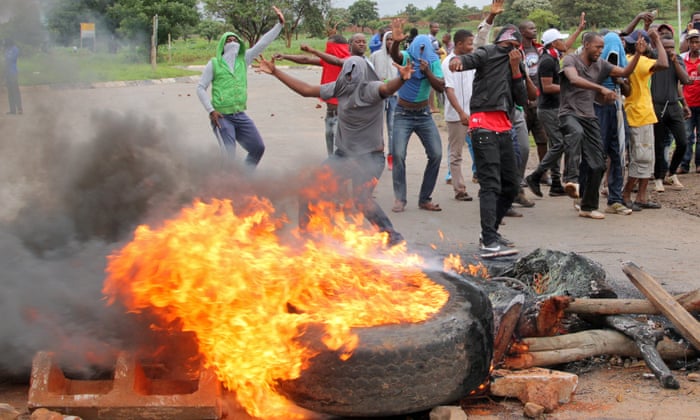 Protesters
stand behind a burning barricade during a protest on a road into Harare
on 15 January. Photograph: Philimon Bulawayo/Reuters
Protesters
stand behind a burning barricade during a protest on a road into Harare
on 15 January. Photograph: Philimon Bulawayo/Reuters
At least 12 people are thought to have died when security forces opened fire on civilians during a three-day shutdown called by unions after a fuel price rise this month. One police officer is believed to have been killed. The death toll is expected to rise.
The violence is the worst in Zimbabwe for at least a decade and has dashed any remaining hopes that the end of the 37-year rule of the autocratic leader Robert Mugabe 14 months ago would lead to significant political reform.
The leak of the documents suggests increasing tensions between the military and people within civilian law enforcement agencies.
One report, filed by police in Glenview in the capital, Harare, on 14 January, describes how a Toyota driven by two men, including a 29-year-old named as Trymore Nachiwe, was blocked by a pickup truck without number plates or other identification. Men in civilian dress and some wearing ZimbabweNational Army uniforms then got out of the pickup armed with stones, iron bars, machetes and teargas canisters, the report says.
They smashed the Toyota’s windows and ordered Nachiwe and his friend to lie down by the roadside, where they were punched and kicked repeatedly. Nachiwe managed to reach his home but died in hospital after seeking medical attention the following day.
Another report details the murder – apparently by security forces – of Kudakwashe Rixon, a 22-year-old, who was seized by uniformed men at a bus terminal in central Harare on Sunday.
The report, filed at Harare Central police station on 27 January, said Rixon had been driven with others to a remote “bushy area” where they were beaten with wooden clubs, whips made with metal wire and iron rods. Rixon managed to get home, where relatives tried to care for him but he died on arrival at Harare hospital a day later.
A third report describes how a 15-year-old in the town of Chitungwiza, outside Harare, was forced into a park by three men wearing army camouflage and carrying rifles and made to lie on a concrete table where she was raped.
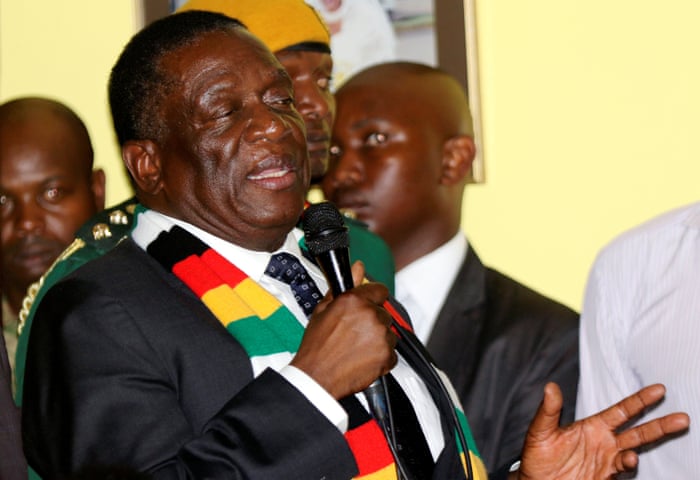 Emmerson Mnangagwa in Harare on 24 January. Photograph: Philimon Bulawayo/Reuters
Responding to earlier reports of violence, the country’s president, Emmerson Mnangagwa, promised that wrongdoers within the security forces would be held accountable. On Monday, he said he was “appalled” by a Sky News report showing security forces beating a handcuffed man.
The army has been responsible for a series of brutal crackdowns since Zimbabwe gained its independence in 1980, and played a key role in the ousting of Mugabe. Soldiers shot dead six civilians in Harare days after Mnangagwa won contested elections last year, and have deployed in strength in cities in recent weeks.
The reports also describe the alleged theft from homes and businesses of items including iPhones, computers, televisions, and even an electric iron. Twelve cans of beer were stolen in an attack on a bar.
Among dozens of reports of robbery are incidents in which groups of men wearing army uniforms and carrying automatic weapons arrived in unidentified vehicles, forced their way into homes through threats and then looted property worth up to $8,000.
In one incident, an eight-year-old was threatened with a handgun to force his parents to reveal their savings. In another, a man was stopped while walking home and beaten with whips. His wallet containing $235 was taken. In a shopping centre in Glenview, cash was taken from the till, along with telephones and drinks.
The documents – which apply only to Harare – do not give a comprehensive view of the extent of the violence associated with the crackdown, which took place across the country. Police were so stretched during the worst of the unrest and violence between 15 and 20 January that no or few reports were filed during this period.
Many crimes committed by security forces have not been reported to police because victims are often fearful of detention or further violence.
Courts are currently processing about 1,000 detainees, largely picked up in a series of sweeps by security forces through poor neighbourhoods in and around Harare, as well as other cities, since the unrest began.
Hundreds of activists, opposition politicians and civil society leaders are still in hiding. It now appears very unlikely that Mnangagwa will achieve his stated aim of ending Zimbabwe’s pariah status to unlock the massive financial aid necessary to avert total economic collapse.
This suggests basic commodities such as food, fuel and medicine will remain scarce and increasingly expensive, making further protests likely.
Authorities in Zimbabwe will face new pressure in coming days, as hundreds of thousands of civil servants prepare to strike after rejecting a government package to boost their income.
Courts are struggling to process the huge number of detainees, who are being kept in overcrowded cells and prisons. New “fast track” trials have involved up to 60 accused being represented by five lawyers appearing at courts to face charges that could lead to lengthy prison sentences. Seven people have now been charged with subversion, an unprecedented number.
On Tuesday hundreds of lawyers marched through Harare to protest against the continued deployment of the military and the new judicial procedures.
“Where people have committed crimes, please deal with them in accordance with the international law [and] follow due process,” Beatrice Mtetwa, a leading human rights lawyer, said.
Nelson Chamisa, the leader of the main opposition party, the Movement for Democratic Change, said the authorities were trying to divert blame from economic failings.
Armed soldiers patrol the Zimbabwean capital, Harare, on 21 January. Photograph: STF/EPA
Jason Burke-Internal Zimbabwean police documents passed to the Guardian suggest the army has been responsible for murder, rape and armed robbery during the ongoing brutal crackdown in the southern African country.
In more than a dozen investigation reports shared with the Guardian by police officials frustrated at the apparent impunity of the military, a series of alleged attacks are described, including two murders and the rape of a 15-year-old girl.
Police investigators wrote that all the acts were committed by men wearing army “uniforms” or “camouflage” – a style of wording allowing the police to avoid making direct accusations against the powerful military.
Officially, the Zimbabwe Republic police, the national police force, has blamed the violence on criminal “rogue elements” who have stolen army uniforms, and said the charges of widespread abuses by security and the armed forces have been fabricated. But in most cases described in the documents seen by the Guardian, the assailants carried automatic weapons, which few people other than soldiers and police possess.
Protesters
stand behind a burning barricade during a protest on a road into Harare
on 15 January. Photograph: Philimon Bulawayo/ReutersAt least 12 people are thought to have died when security forces opened fire on civilians during a three-day shutdown called by unions after a fuel price rise this month. One police officer is believed to have been killed. The death toll is expected to rise.
The violence is the worst in Zimbabwe for at least a decade and has dashed any remaining hopes that the end of the 37-year rule of the autocratic leader Robert Mugabe 14 months ago would lead to significant political reform.
The leak of the documents suggests increasing tensions between the military and people within civilian law enforcement agencies.
One report, filed by police in Glenview in the capital, Harare, on 14 January, describes how a Toyota driven by two men, including a 29-year-old named as Trymore Nachiwe, was blocked by a pickup truck without number plates or other identification. Men in civilian dress and some wearing ZimbabweNational Army uniforms then got out of the pickup armed with stones, iron bars, machetes and teargas canisters, the report says.
They smashed the Toyota’s windows and ordered Nachiwe and his friend to lie down by the roadside, where they were punched and kicked repeatedly. Nachiwe managed to reach his home but died in hospital after seeking medical attention the following day.
Another report details the murder – apparently by security forces – of Kudakwashe Rixon, a 22-year-old, who was seized by uniformed men at a bus terminal in central Harare on Sunday.
The report, filed at Harare Central police station on 27 January, said Rixon had been driven with others to a remote “bushy area” where they were beaten with wooden clubs, whips made with metal wire and iron rods. Rixon managed to get home, where relatives tried to care for him but he died on arrival at Harare hospital a day later.
A third report describes how a 15-year-old in the town of Chitungwiza, outside Harare, was forced into a park by three men wearing army camouflage and carrying rifles and made to lie on a concrete table where she was raped.
Emmerson Mnangagwa in Harare on 24 January. Photograph: Philimon Bulawayo/ReutersResponding to earlier reports of violence, the country’s president, Emmerson Mnangagwa, promised that wrongdoers within the security forces would be held accountable. On Monday, he said he was “appalled” by a Sky News report showing security forces beating a handcuffed man.
The army has been responsible for a series of brutal crackdowns since Zimbabwe gained its independence in 1980, and played a key role in the ousting of Mugabe. Soldiers shot dead six civilians in Harare days after Mnangagwa won contested elections last year, and have deployed in strength in cities in recent weeks.
The reports also describe the alleged theft from homes and businesses of items including iPhones, computers, televisions, and even an electric iron. Twelve cans of beer were stolen in an attack on a bar.
Among dozens of reports of robbery are incidents in which groups of men wearing army uniforms and carrying automatic weapons arrived in unidentified vehicles, forced their way into homes through threats and then looted property worth up to $8,000.
In one incident, an eight-year-old was threatened with a handgun to force his parents to reveal their savings. In another, a man was stopped while walking home and beaten with whips. His wallet containing $235 was taken. In a shopping centre in Glenview, cash was taken from the till, along with telephones and drinks.
The documents – which apply only to Harare – do not give a comprehensive view of the extent of the violence associated with the crackdown, which took place across the country. Police were so stretched during the worst of the unrest and violence between 15 and 20 January that no or few reports were filed during this period.
Many crimes committed by security forces have not been reported to police because victims are often fearful of detention or further violence.
Courts are currently processing about 1,000 detainees, largely picked up in a series of sweeps by security forces through poor neighbourhoods in and around Harare, as well as other cities, since the unrest began.
Hundreds of activists, opposition politicians and civil society leaders are still in hiding. It now appears very unlikely that Mnangagwa will achieve his stated aim of ending Zimbabwe’s pariah status to unlock the massive financial aid necessary to avert total economic collapse.
This suggests basic commodities such as food, fuel and medicine will remain scarce and increasingly expensive, making further protests likely.
Authorities in Zimbabwe will face new pressure in coming days, as hundreds of thousands of civil servants prepare to strike after rejecting a government package to boost their income.
Courts are struggling to process the huge number of detainees, who are being kept in overcrowded cells and prisons. New “fast track” trials have involved up to 60 accused being represented by five lawyers appearing at courts to face charges that could lead to lengthy prison sentences. Seven people have now been charged with subversion, an unprecedented number.
On Tuesday hundreds of lawyers marched through Harare to protest against the continued deployment of the military and the new judicial procedures.
“Where people have committed crimes, please deal with them in accordance with the international law [and] follow due process,” Beatrice Mtetwa, a leading human rights lawyer, said.
Nelson Chamisa, the leader of the main opposition party, the Movement for Democratic Change, said the authorities were trying to divert blame from economic failings.
The World to Come


The ruling elites are painfully aware that the foundations of American
power are rotting. The outsourcing of manufacturing in the United States
and the plunging of over half the population into poverty will, they
know, not be reversed. The self-destructive government shutdown has been
only one of numerous assaults on the efficiency of the administrative
state. The failing roads, bridges and public transportation are making
commerce and communications more difficult. The soaring government
deficit, now almost a trillion dollars thanks to the Trump
administration’s massive corporate tax cuts, cannot be eliminated. The
seizure of the financial system by global speculators ensures, sooner
rather than later, another financial meltdown. The dysfunction of
democratic institutions, which vomit up con artists such as Donald Trump
and hold as alternatives inept, corporate-indentured politicians such
as Joe Biden and Nancy Pelosi, is cementing into place a new
authoritarianism. The hollowing out of the pillars of the state,
including the diplomatic corps and regulatory agencies, leaves the blunt
force of the military as the only response to foreign disputes and
fuels endless and futile foreign wars.
Just as ominous as the visible rot is the internal decay. Among all
social classes there is a loss of faith in the government, widespread
frustration, a sense of stagnation and entrapment, bitterness over
unfulfilled expectations and promises, and a merging of fact and fiction
so that civil and political discourse is no longer rooted in reality.
The nation’s isolation by its traditional allies and its inability,
especially in the face of environmental catastrophe, to articulate
rational and visionary policies have shattered the mystique that is
vital to power. “A society becomes totalitarian when its structure
becomes flagrantly artificial,” George Orwell wrote. “That is when its
ruling class has lost its function but succeeds in clinging to power by
force or fraud.” Our elites have exhausted fraud. Force is all they have
left.
The United States is a wounded beast, bellowing and thrashing in its
death throes. It can inflict tremendous damage, but it cannot recover.
These are the last, agonizing days of the American Empire. The death
blow will come when the dollar is dropped as the world’s reserve
currency, a process already underway. The value of the dollar will
plummet, setting off a severe depression and demanding instant
contraction of the military overseas.
Seth A. Klarman, who runs the Baupost Group hedge fund, which manages
about $27 billion, just sent a sobering 22-page letter to his investors.
He pointed out that the nation’s ratio of government debt to gross
domestic product from 2008 to 2017 exceeded 100 percent and is close to
that in France, Canada, Britain and Spain. The debt crisis, he warned,
could be the “seeds” of the next financial crisis. He decried the global
unraveling of “social cohesion,” adding, “It can’t be business as usual
amid constant protests, riots, shutdowns and escalating social
tensions.”
“There is no way to know how much debt is too much, but America will
inevitably reach an inflection point whereupon a suddenly more skeptical
debt market will refuse to continue to lend to us at rates we can
afford,” he said in the letter. “By the time such a crisis hits, it will
likely be too late to get our house in order.”
The ruling elites, worried about impending financial collapse, are
scrambling to cement into place harsh legal and physical forms of
control to stymie what they fear could be widespread popular unrest,
nascent forms of which can be seen in the strikes carried out by
American teachers and the protests by the “yellow vests” in France.
The ruling ideology of neoliberalism, the ruling elites recognize, has
been discredited across the political spectrum. This is forcing the
elites to make unsavory alliances with neofascists, who in the United
States are represented by the Christian right. This Christianized
fascism is swiftly filling Trump’s ideological void. It is embodied in
figures such as Mike Pence, Mike Pompeo, Brett Kavanaugh and Betsy
DeVoss.
In its most virulent form, one that will be expressed once the economy
goes into crisis, this Christian fascism will seek to purge the society
of those branded as social deviants, including immigrants, Muslims,
“secular humanist” artists and intellectuals, feminists, gays and
lesbians, Native Americans and criminals—largely poor people of
color—based on a perverted and heretical interpretation of the Bible.
Abortion will be illegal. The death penalty will be mandated for a
variety of crimes. Education will be dominated by white supremacist
views of history, indoctrination and the teaching of creationism or
“intelligent design.” The pantheon of new America heroes will include
Robert E. Lee, Joseph McCarthy and Richard Nixon. The state will portray
the white majority as victims.
This Christian fascism, like all forms of totalitarianism, wraps itself
in a cloying piety, promising moral as well as physical renewal. The
degradation of mass culture with its celebration of sexual sadism,
graphic violence and personal dysfunction, its plagues of opioid
addiction, suicide, gambling and alcoholism, along with social chaos and
government dysfunction, will lend credibility to the Christian
fascists’ promise of a return to a “Christian” purity. The cloak of this
piety will be used to snuff out all civil liberties.
Central to any totalitarian ideology is a constant inquisition against
supposedly clandestine and sinister groups held responsible for the
country’s demise. Conspiracy theories, which already color Trump’s
worldview, will proliferate. The ruling rhetoric will whipsaw the
population, swinging from championing individualism and personal freedom
to calling for abject subservience to those who claim to speak for the
nation and God, from the sanctity of life to advocating the death
penalty, unrestrained police violence and militarism, from love and
compassion to the fear of being branded a heretic or traitor. A
grotesque hypermasculinity will be celebrated. Violence will be held up
as the mechanism to cleanse the society and the world of evil. Facts
will be erased or altered. Lies will become true. Political language
will be cognitive dissonance. The more the country declines, the more
the paranoia and collective insanity will grow. All of these elements
are present in varying forms within the culture and our failed
democracy. They will become pronounced as the country unravels and the
disease of totalitarianism spreads.
The ruling oligarchs, as in all failed states, will retreat into
fortified compounds, many of which they are already preparing, where
they will have access to basic services, health care, education, water,
electricity and security largely denied to the wider population. The
central government will be reduced to its most basic functions—internal
and external security and collecting taxes. Severe poverty will cripple
the lives of most citizens. Any essential service once provided by the
state, from utilities to basic policing, will be privatized, expensive
and inaccessible to those without resources. Trash will pile up in the
streets. Crime will explode. The electrical grid and water
systems—decrepit, poorly maintained and run by corporations—will
repeatedly turn on and off.
The mass media will become nakedly Orwellian, chatting endlessly about a
bright future and pretending America remains a great superpower. It
will substitute political gossip for news—a corruption already far
advanced—while insisting that the country is in an economic recovery or
about to enter one. It will refuse to address ever-worsening social
inequality, political and environmental deterioration and military
debacles. Its primary role will be to peddle illusions so that an
atomized public, fixated on its electronic screens, will be diverted
from the collapse and see its plight as personal rather than collective.
Dissent will become more difficult as critics are censored and attacked
as responsible for the decline. Hate groups and hate crimes will
proliferate and be tacitly empowered and condoned by the state. Mass
shootings will be commonplace. The weak—especially children, women, the
disabled, the sick and the elderly—will be exploited, abandoned or
abused. The strong will be omnipotent.
There will still be money to be made. Corporations will sell anything
for a profit—security, dwindling food supplies, fossil fuel, water,
electricity, education, medical care, transportation—forcing citizens
into debt peonage that will see their meager assets seized when they
can’t make payments. The prison population, already the largest in the
world, will expand along with the number of citizens forced to wear
electronic monitors 24 hours a day. Big corporations will pay no income
tax or at best a symbolic tax. They will be above the law, able to abuse
and underpay workers and poison the environment without oversight or
regulation.
As income inequality becomes more massive, financial titans such as Jeff
Bezos, worth some $140 billion, will increasingly function as
modern-day slaveholders. They will preside over financial empires where
impoverished employees will live in run-down campers and trailer parks
while toiling 12 hours a day in vast, poorly ventilated warehouses.
These employees, paid subsistence wages, will be constantly recorded,
tracked and monitored by digital devices. They will be fired when the
punishing work conditions cripple their health. For many Amazon
employees the future is now.
Work will be a form of serfdom for all but the upper elites and
managers. Jeffrey Pfeffer in his book “Dying for a Paycheck: How Modern
Management Harms Employee Health and Company Performance—and What We Can
Do About It” quotes a survey in which 61 percent of employees said
workplace stress had made them ill and 7 percent said they required
hospitalization as a result. The stress of overwork, he writes, may
cause 120,000 deaths annually in the United States. In China there are
an estimated 1 million deaths a year from overwork.
This is the world the elites are preparing for by setting in place legal
mechanisms and internal security forces to strip us of liberty.
We, too, must begin to prepare for this dystopia, not only to ensure our
survival but to build mechanisms to blunt and attempt to overthrow the
totalitarian power the elites expect to wield. Alexander Herzen,
speaking to a group of anarchists a century ago about how to overthrow
the Russian czar, reminded his listeners that it was their job not to
save a dying system but to replace it: “We think we are the doctors. We
are the disease.” All efforts to reform the American system is
capitulation. No progressive in the Democratic Party is going to rise
up, take control of the party and save us. There is one ruling party.
The corporate party. It may engage in petty, internecine warfare, as it
did in the recent government shutdown. It may squabble over power and
the spoils of power. It may come wrapped in more tolerant stances
regarding women, LGBT rights and the dignity of people of color, but on
the fundamental issues of war, internal security and corporate
domination there is no divergence.
We must carry out organized civil disobedience and forms of
non-cooperation to weaken corporate power. We must use, as in France,
widespread and sustained social unrest to push back against the designs
of our corporate masters. We must sever ourselves from reliance on
corporations in order to build independent, sustainable communities and
alternative forms of power. The less we need corporations the freer we
will become. This will be true in every aspect of our lives, including
food production, education, journalism, artistic expression and work.
Life will have to be communal. No one, unless he or she is part of the
ruling elite, will have the resources to survive alone.
The longer we pretend this dystopian world is not imminent, the more
unprepared and disempowered we will be. The ruling elite’s goal is to
keep us entertained, frightened and passive while they build draconian
structures of oppression grounded in this dark reality. It is up to us
to pit power against power. Ours against theirs. Even if we cannot alter
the larger culture, we can at least create self-sustaining enclaves
where we can approximate freedom. We can keep alive the burning embers
of a world based on mutual aid rather than mutual exploitation. And
this, given what lies in front of us, will be a victory.
Chris Hedges, spent nearly two decades as a foreign correspondent in
Central America, the Middle East, Africa and the Balkans. He has
reported from more than 50 countries and has worked for The Christian
Science Monitor, National Public Radio, The Dallas Morning News and The
New York Times, for which he was a foreign correspondent for 15 years.
‘This is your fault’: GOP senators clash over shutdown inside private luncheon
The Senate rejected competing proposals to end the partial government shutdown on Jan. 24. The Fix's Aaron Blake analyzes what could happen next.

“This is your fault,” Sen. Ron Johnson (R-Wis.) told Majority Leader
Mitch McConnell (R-Ky.) at one point, according to two Republicans who
attended the lunch and witnessed the exchange.
“Are you suggesting I’m enjoying this?” McConnell snapped back, according to the people who attended the lunch.
Johnson spokesman Ben Voelkel confirmed the confrontation. He said
Johnson was expressing frustration with the day’s proceedings — votes on
dueling plans to reopen the government, both of which failed to
advance.
The people who attended the lunch spoke on the condition of anonymity to
describe a closed-door session. Aides to McConnell, citing regular
policy on GOP lunches, declined to comment on the gathering.
The argument was one of several heated moments in a lunch that came just
before the Senate voted on the opposing plans to end the shutdown
offered by President Trump and Democrats.

Senate Majority Leader Mitch McConnell (R-Ky.) walks out of the Senate chamber after holding two votes on the shutdown that failed to pass on Thursday. (Bill O'Leary/The Washington Post)
The outbursts highlighted the toll the shutdown has taken on Republican
lawmakers, who are dealing with growing concerns from constituents and
blame from Democrats, all while facing pressure from conservatives to
stand with Trump in his demand for money to build a wall on the border
with Mexico.
The votes the Senate cast on Thursday were the first on the shutdown
since it began Dec. 22, with McConnell and other GOP lawmakers
previously refusing to vote on anything this year unless it had Trump’s
approval — a policy that has drawn widespread criticism.
The day ended with some limited signs of progress. After the votes,
McConnell and Senate Minority Leader Charles E. Schumer (D-N.Y.) engaged
in a face-to-face negotiation that senators hoped would lead to a
solution in the near future.
The first proposal, which Trump put forward, would have allocated
$5.7 billion for wall funding in exchange for temporary protections for
some immigrants. Only one Democrat voted for it. Two Republicans
rejected the plan.
One of the Republicans, Sen. Mike Lee (Utah), also spoke out in the
lunch. He explained that if Thursday’s votes were merely a party-line
exercise, there should be more changes to the nation’s asylum laws,
according to one of the people who attended the lunch. Lee also
expressed concerns about getting assurances for votes on his amendments.

Senator Mitt Romney (R-Ut.) speaks to journalists while walking to the Senate floor for votes on competing Republican and Democratic plans to end the government shutdown on Capitol Hill on Thursday. (Melina Mara/The Washington Post)
Six Republicans broke ranks to vote for the Democratic plan, which would
have reopened shuttered government agencies through Feb. 8, without any
wall money. Among them was Sen. Mitt Romney (R-Utah), who explained in
the lunch why he planned to vote for both bills.
Sen. Thom Tillis (R-N.C.), who voted for Trump’s bill but opposed the
Democratic plan, started to interrupt him and Romney snapped back,
according to one of the people who attended the lunch and another person
familiar with it. The exchange was lively but not particularly angry,
they said.
Representatives for Romney, Tillis and Lee did not immediately comment.
Senators also voiced their concerns about the shutdown directly with Pence, who was in attendance.
“Nobody was blaming the president,” said Sen. John Cornyn (R-Tex.),
speaking about the lunch to reporters afterward. “But there was a lot of
frustration expressed about the situation we find ourselves in.”
Also during the lunch, McConnell made clear to Pence and others in the
room that the shutdown was not his idea and was not working. According
to Republicans familiar with his comments, he quoted a favorite saying
that he often uses to express his displeasure with government shutdowns:
“There is no education in the second kick of a mule.”
McConnell started using that saying after the 2013 shutdown, which
lasted 16 days and ended after the public largely blamed Republicans.
That specific exchange was first reported by the Hill newspaper.
Foreign workers in Japan double in 5 years to record high


Jaman, an Indonesian worker at Japan's Nakamoto Mfg factory, in Oizumi,
Gunma prefecture, October 16, 2018. Source: Kazuhiro Nogi/AFP

By
THE number of foreign workers in Japan has doubled in the last year,
after a government push to hire from overseas in a bid to tackle the
country’s dire labour shortages.
According to official government figures released Friday, there were
1.46 million foreign workers in Japan, 14.2 percent higher than the
previous year. The number has tripled from 486,000 in 2008 to reach the
current record high.
Workers from China made up the highest proportion of newcomers with
nearly 390,000 in Japan as of October 2018. This was up 4.5 percent from
the previous year. Vietnam came in second with 317,000, up 32 percent
from 2017. And the Philippines supplied the third most, with 164,000.
The biggest industry for foreign workers was manufacturing with 30 percent, followed by retail, and hospitality.
According to the Japan Times,
the labour ministry attributed the rise to the government’s policy of
promoting the hiring of highly skilled workers, students as part-timers,
and trainees from developing countries under its technical intern
programme.
Despite the steep rise in immigration, foreign workers still constitute
only 2 percent of Japan’s total workforce. But this looks set to rise
significantly in the coming years following changes to immigration laws.
In December, Japan eased visa restrictions to be able to accept more foreigners in 2019. The changes come into force in April.

People stage a rally against a bill to allow more foreign workers in
front of parliament in Tokyo on December 7, 2018. Japan’s ruling parties
aim to pass through parliament on a bill to bring more blue-collar
foreign workers into the country. Source: Kazuhiro Nogi/AFP
The new rule allows more workers to take up jobs in sectors, such as
construction, farming and nursing, and gives them a pathway to permanent
residency. The scheme is aimed at tackling Japan’s labour shortage,
brought on by a low birth rate and an ageing population.
Unemployment is at its lowest level since the early 1990s, and last year
job availability rose to its highest in 44 years, with 150 jobs open to
every 100 people seeking work.
The government estimates more than 345,00 foreigners will enter the
country in the next five years to work in sectors facing a labour
crunch.
The new law has raised concerns of exploitation as employers use the change to secure cheap labour in sub-standard conditions.
A labour ministry investigation found that of the 6,000 firms that
currently hire a total of 260,000 technical trainees, about 70 percent
had broken labour regulations on illegal and unpaid overtime.
On Friday, Mitsubishi Motors, Panasonic and two other companies were
forced to cancel their technical internships after they were found to
have left the foreign workers in charge of work they were not authorised
to carry out under the programme.
The new push to hire from outside of Japan is a big turnaround in the
government’s approach to immigration. The country has historically only
granted working visas for highly skilled people with professional
training, such as doctors and teachers.
Port of Dover boss: Government has given no ‘firm direction’ over border security checks


In an interview with Channel 4 News, the port’s CEO said: “We still
don’t have firm direction on really what is going to be required… It
comes down to how they want to treat the border.”
The head of the Port of Dover says the government has given no “firm
direction” on technology for additional security checks, in the event of
a no-deal Brexit.
Doug
Bannister, the new Chief Exec of Europe’s busiest ferry port, told
Channel 4 News: “We haven’t got any physical comfort. We haven’t seen
increased manpower, we haven’t seen any new systems or processes.
“For us, the most important thing is what are the physical checks on the
dock. If those are minimal, then we can maintain operations. If a hard
border therefore means that we have to do physical checks on the docks
within our estate, then that is going to create a lot of problems for
us.”
In the interview, to be broadcast tonight at 7pm, Doug Bannister also
tells Channel 4 News that the government have yet to tell him that this
will not be the case.
He says: “It does seem to me to be a very huge task to get it all in,
tested and operational before the 29th of March. It comes down to how
they want to treat the border.
“So far – while we know the guys and gals across government are working
really, really hard on putting programmes in place and getting an
understanding and not just in the United Kingdom but also in the
European Union as well, about how this is all working – we still don’t
have firm direction on really what is going to be required.”
Saudi-led coalition threatens force against Houthis as UN seeks to save Yemen deal
UAE
minister threatens use of 'calibrated force' against Houthis in Yemen's
Hodeidah as Saudi-led coalition frees seven rebel fighters

Saudi-led coalition troops outside the Yemeni port city of Hodeidah, November 2018 (AFP/File photo)

Wednesday 30 January 2019
The Saudi-led coalition in Yemen has warned it may use "force" against
the country's Houthi rebels to make them abide by a United
Nations-backed truce, a United Arab Emirates minister and coalition
source both said.
"The coalition is prepared to use ... force to prod Houthi compliance
with [the] Stockholm agreement," a coalition source told AFP news agency
on Wednesday, referring to a ceasefire clinched at peace talks in
Sweden last month.
Anwar Gargash, the UAE's minister of state for foreign affairs,
similarly said on Twitter that the coalition may use "calibrated force"
to push the Houthis to withdraw from the strategic port city of
Hodeidah.
Yemen's warring parties agreed to withdraw from Hodeidah at the
negotiations in Sweden. But they have failed to pull out their
respective troops, reviving the threat of an all-out assault on the
city, which serves as a critical entry point for food and humanitarian
aid entering the country.
After large spike in Houthi violations over last few days, Coalition today struck 10 Houthi training camps outside of Hodeida Governate. Coalition prepared to use more calibrated force to prod Houthi compliance with Stockholm Agreement.

68 people are talking about this
Gargash added on Twitter the Western-backed, Saudi-led coalition - to
which the UAE belongs - struck 10 Houthi training camps outside Hodeidah
governorate on Wednesday.
"Coalition prepared to use more calibrated force to prod Houthi compliance with Stockholm Agreement," he tweeted.
The Houthis control Hodeidah while other Yemeni factions backed by the
coalition, which is trying to restore Yemen's internationally recognised
government to power, are massed on its outskirts.
UN envoy Martin Griffiths has been shuttling between the parties in
order to rescue the deal, the first major diplomatic breakthrough of the
nearly four-year-old war that has killed tens of thousands of people
and pushed Yemen to the verge of starvation.
Prisoner swap
Also on Wednesday, Saudi Arabia released seven Houthi prisoners, who
were flown to the capital Sanaa on Wednesday by the International
Committee of the Red Cross (ICRC), the day after a Saudi prisoner freed
by the Houthis arrived in Riyadh.
The apparent swap comes as Yemen’s warring parties are still hammering
out details of a larger prisoner exchange that they agreed to as a
confidence-building gesture at the peace talks last month.
Griffiths welcomed the release on Twitter and said he hoped it would
encourage the rapid implementation of the larger prisoner swap.
The SE is very encouraged by this positive spirit from the two parties, and hopes this will give a push to the rapid implementation of the prisoner exchange agreement. #Yemen

See OSE_Yemen's other Tweets
The ICRC, which provided the planes for both the freed Saudi and the
seven freed Yemenis, said in a statement it had acted as a neutral
intermediary and was not involved in negotiations over the releases.
“We are delighted these persons will soon be home,” Yahia Alibi, head of
the ICRC Regional delegation in Kuwait, said in a statement.
“We stand ready to act as a neutral intermediary so that thousands more affected by this conflict can return to their families.”
The organisation released a video showing a man on a stretcher being carried onto a Red Cross plane.
Citing rebel media Al-Masirah, AFP news agency named the Saudi soldier
as Mussa al-Awaji and said he had been released "without conditions, as a
humanitarian gesture".
The two parties agreed to exchange 15,000 detainees and have submitted lists of prisoners' names to UN mediators.
Subscribe to:
Posts (Atom)