Peace for the World World ! Your War Our Lives

The Dalai Lama
A Brief Colonial History Of Ceylon(SriLanka)
Sri Lanka: One Island Two Nations
A Brief Colonial History Of Ceylon(SriLanka)
Sri Lanka: One Island Two Nations
(Full Story)
Back to 500BC.

Tuesday, April 30, 2019
Jihadis In Sri Lanka
Given the rocky relations between the two ambitious politicians, such a lack of communication is understandable.

 Whenever
there’s a terrorist attack anywhere, I pray that Muslims weren’t
involved. And if they are, I cross my fingers and wish none of them were
Pakistanis. In the horror stories emerging from Sri Lanka, I seem to
have got my second wish. However, this is scant consolation for the
mayhem unleashed by a little-known Islamist group, the National Towheed
Jamaath (NTJ), backed by the militant Islamic State (IS) group.
Whenever
there’s a terrorist attack anywhere, I pray that Muslims weren’t
involved. And if they are, I cross my fingers and wish none of them were
Pakistanis. In the horror stories emerging from Sri Lanka, I seem to
have got my second wish. However, this is scant consolation for the
mayhem unleashed by a little-known Islamist group, the National Towheed
Jamaath (NTJ), backed by the militant Islamic State (IS) group.
On Sunday morning in the UK, I received a string of text and WhatsApp
messages enquiring about my safety. Friends knew that as I do every
year, I had spent the winter at our beach house in Sri Lanka, but were
unsure about my whereabouts. I immediately went on Twitter to discover
the bloodbath that had occurred in Colombo, Negombo and Batticaloa. The
rest of the morning was spent in trying to find out if our Sri Lankan
friends and their families were safe. As the magnitude of the atrocity
emerged, I knew that only an experienced and highly trained group could
have pulled it off.
In their long, brutal civil war, the Tamil Tigers had never deliberately
targeted Christians and foreigners. In any case, the defeated remnants
of the ethnic Tamil group are too demoralised to attempt such a complex
operation. That left Al Qaeda and IS as possible backers of the NTJ.
The former has given up launching indiscriminate attacks, so that left
IS. So I was not surprised when it claimed responsibility for the
multiple attacks. What did surprise me, however, was the revelation that
information about the impending suicide bombings had been passed on to
Sri Lankan security officials by Indian intelligence a fortnight
earlier. Both the prime minister and president claimed they had not been
informed.
Given the rocky relations between the two ambitious politicians, such a
lack of communication is understandable. Under the 19th amendment to the
constitution (drafted by Prime Minister Ranil Wickremesinghe),
President Sirisena has the defence portfolio, and thus responsibility
for security. There are reports he did not invite the prime minister to
meetings of the National Security Council.
Last October, he attempted to remove Mr Wickremesinghe but was thwarted
by the supreme court. Since then, their power-sharing arrangement has
become dysfunctional. Mahinda Rajapaksa, ex-president and the other
claimant to power, has cashed in on this criminal intelligence failure
and called on the prime minister to resign. As the next presidential
election looms, expect him to ramp up the rhetoric. And as his track
record shows, he is not above playing the extreme Buddhist/nationalist
card to further his agenda.
Perhaps more serious than this squabbling is the backlash against
Muslims that I had feared. Although the government has tried to cover up
the ongoing attacks against Muslim families and businesses, there have
been multiple reports of anti-Muslim actions, especially from Negombo, a
largely Christian area.
Sri Lankan civil society has been appalled by this mindless (though
understandable) backlash. One friend has announced her intention to
stand guard outside Colombo’s Jumaa Masjid at Friday prayers. People
remember how monks of the Bodu Bala Sena (BBS) led mobs who killed
several Muslims following a petty altercation near Kandy a couple of
years ago.
There is a deep undercurrent of nationalism among elements of the
majority Sinhalese who basically say that Sri Lanka is for Buddhists,
and the minorities live there on sufferance. This is despite the fact
that Muslims constitute only nine per cent of the population; many of
them have descended from Arab traders who came to the island centuries
ago.
There has never been a history of discord between Muslims and Christians
in Sri Lanka. So if the aim of the NTJ and IS was to create conflict
between the two minority communities, they have succeeded beyond their
wildest expectations.
In the small town in the south a few kilometres from our beach house,
there are a couple of mosques, three churches and several temples. While
the Muslims largely keep to themselves, I have never heard of any
attacks on their peaceful community. But now, there is palpable fear of a
backlash.
One warning sign I have observed with increasing (and depressing)
frequency is the way younger Muslims now dress: women often wear the
full burqa, while even teenage boys sport long, Saudi-style dishdashas
and straggling beards.
Sinhalese also complain about the lack of cleanliness in Muslim
neighbourhoods and the consumption of beef in a country that largely
avoids cow slaughter. All this is grist to the BBS mill. After Sunday’s
slaughter, these memes are likely to be magnified.
Another aim of the attacks was probably to cripple the economy. Tourism,
after the setback of last October’s constitutional crisis, was just
recovering when the bombers struck. It will be a long time before the
country can calculate the full cost of a colossal intelligence failure.

Easter Sunday Bombings: Convene A Parliamentary Select Committee

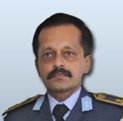
Arun Kumaresan – Air Vice Marshal (Ret’d)
To identify Public officials in all sectors who acted as stooges to the Political authority
 A
week has gone since the Easter Sunday bombings, and to the credit of
our intelligence agencies and security agencies, they have shown their
professionalism in their ability to swiftly react and contain. But these
‘positives’ need not make us complacent as this gruesome incident had
all the hallmarks of a preventable event. Our law enforcement’s and
security agencies’ professionalism has been repeatedly compromised by
the political authorities over decades. This resulted not only in
anarchy and mayhem but also allowed criminals, drug mafia, murderers,
etc to roam free after committing heinous crimes against populace. They
also continue to aid and abet to reelect their political masters thro
all dubious means. In this context, whilst all ambits of these flaws
cannot be investigated due to the exhaustive nature of such flaws by our
political authorities, at least, the following needs an urgent scrutiny
by the legislature to stem this tide of ‘utter impunity’ by our
political authority. As a reference point to facilitate the said PSC,
following points are tabulated:
A
week has gone since the Easter Sunday bombings, and to the credit of
our intelligence agencies and security agencies, they have shown their
professionalism in their ability to swiftly react and contain. But these
‘positives’ need not make us complacent as this gruesome incident had
all the hallmarks of a preventable event. Our law enforcement’s and
security agencies’ professionalism has been repeatedly compromised by
the political authorities over decades. This resulted not only in
anarchy and mayhem but also allowed criminals, drug mafia, murderers,
etc to roam free after committing heinous crimes against populace. They
also continue to aid and abet to reelect their political masters thro
all dubious means. In this context, whilst all ambits of these flaws
cannot be investigated due to the exhaustive nature of such flaws by our
political authorities, at least, the following needs an urgent scrutiny
by the legislature to stem this tide of ‘utter impunity’ by our
political authority. As a reference point to facilitate the said PSC,
following points are tabulated:- Did Mr. Azath Salley (the present Governor WP) and All Ceylon Jammiyathul Ulama (ACJU) President Sheik M.I.M. Rizwi inform as far back as January 2014, the existence of a religious fundamentalist organization with documentary evidence to the then Secretary Defence Mr Gotabaya Rajapaksa ?
- What action was taken on Mr. Azath Salley’s information or whether both of their assertions are mere fabrication?
- The law enforcement attempted to stop a protest march in late 2014 in Panchikawatte/Maradana area, by this organization that carried out the Easter Sunday bombings. Who gave the instructions to allow this march to proceed?
- Did National Thowheed Jama’ath (NTJ) or any members of the said organization receive state patronage and funding to work as intelligence operatives and/or underworld political activists?
- Did Mr Azath Salley inform the Secretary Defence in January 2019 & then again recently in the presence of CID officials, the threatening nature of the said organization with credible information?
- Did All Ceylon Jammiyathul Ulama (ACJU) President Sheik M.I.M. Rizvi Mufthi, give details about the NTJ Leader Mohamed Zahran to the then Defence Secretary Hemasiri Fernando in January 2019 ( & to any other previous holders of the said office )?
- Did politically powerful interfere in the investigations into an ammo & explosive haul recently recovered that appeared to be connected to NTJ enabled the release of the suspects who were under custody?
- Did Indian Intelligence inform thrice with specific details such as names, targets etc?
What action was taken by those who received the said intelligence information?
Was
this information brought to the notice of the National Security Council
and if so who were the members present and what directions were given
by the Council?
- Identify the reasons for counter action not being initiated and ascertain any hidden complicity that prevented such actions or was it due to mere utter lethargy?
- What was the delay in convening the National Security Council when summoned by Hon. Prime Minister immediately after this horrific incident?
- Who prevented the Hon. Prime Minister entering the meeting room of the NSC at the Ministry of Defence on that sad day this incident took place and who made him to wait for approximately 30 minutes? Identify the reasons behind such action?
- Who were involved in giving instructions that caused the delay in convening the NSC??
- Ascertain from the Secretary to the President and the Secretary of Defence the reasons for not inviting the Hon. Prime Minister and the State Minister of Defence
for a single meeting of the National Security Council held after October 2018; and
for a majority of meetings held between the periods 2015 to Oct 2018.
Read More
EATING BITTERNESS AGAIN

 Capt Elmo Jayawardena-Tuesday, April 30, 2019
I will make this article short, simply because what I am writing is extremely sad. Two hundred and fifty plus totally innocent people died on Easter Sunday morning due to random bomb explosions. Many more were maimed and are fighting for their lives in hospitals. The extremists who are responsible would have had their own reasons for creating this terrible tragedy. Everyone has reasons for everything they do: but does that give them the right to kill innocent people? They planned, they came, they bombed, and the ones who paid the price were people who had gone to church on this Black Easter to pray and those who sat at a table to enjoy a celebrative breakfast.
So we heard the sirens again of ambulances carrying the wounded screaming to reach hospitals. Shell-shocked by-standers in semi-zombi mode were talking in whispers, making attempts to figure out what had happened. A ghostly silence shrouded everyone and those who were old enough were dragged back to pre-Nandikadal days which we have almost forgotten in the last ten years. It is four days as I write since the first bomb went off in Katuwapitiya. The gloom has gathered around everyone. And it has spread across the island like a weed-clogged wave. We do not know what happened except bombs killed people and we do not know why it happened. We also do not know what is going to happen. In some ways it is a dejawu of the days of our ethnic conflict. We fed on bitterness for three decades, the taste is well remembered and that is what is most frightening.
Grieving families
I paid my humble respects to a dear friend, Menik Suriyarachchi and her daughter 10 year-old Alex. They both died in the Negombo blast. I shook the husband Sudesh’s hand mumbling meaninglessly as I was totally incapable of any form of consolation with words. What can you tell a man who had lost both his worlds, the loving wife and a darling daughter? Driving back from the wake I thought of my old basketball friend Remigius Perera of Shamrocks and Sri Lanka fame. He had gone to Kochchikade Church for Easter mass. His final ‘time-out’ was called by a vicious suicide bomber who did not know him at all. Didn’t know Remigius was a simple tall man who played basketball. He didn’t have to die like this leaving a grieving family totally bewildered for the absolute waste of it all. That is what is so sad about this, everyone who died or got maimed had nothing to do with anything that is connected to this carnage.
Then came the aftermath and they started passing the political blame ball. It was embarrassing to watch them on television screens. I do not have any knowledge of security strategies and how they are implemented. But when a big-wig says we didn’t know this was so big, I wonder where he draws the death toll demarcation line of what is big and what is small? Then The Island editorial states that a senior minister dropped a bombshell at a press conference. I too saw it on a broadcast of ‘Ada Derana.’ He categorically stated that some people were arrested as suspects of terror activities in January; places were mentioned and so were the bomb-making equipment they were caught with. A terrorist training camp was mentioned. According to his revelation a powerful politician used his influence and got one of the arrested freed who was subsequently identified as one of the Easter Sunday suicide bombers. Suspected terrorist, police arrest and then released through someone’s political clout. Where is the bombshell without a name? Who is this un-named Rumpelstiltskin? Two hundred and fifty innocent lives lost. Their devastated loved ones sure have a right to know.
Terror attack warning
By April 11 it is said that there was a warning of a terror attack given by an intelligence arm of a friendly neighbouring country. The warning was repeated and with some details and names and it was also mentioned that the probable date was Easter Sunday and the attack would be against Catholic churches. The so-received information was printed and distributed to the relevant people in the helm of national security. It certainly would have gone to many a nook and corner so much so that an elderly gentleman on a hospital bed had warned his politician son to avoid going to church on Easter Sunday as there were stories going around of a possible bomb attack.
The Minister who was warned by his father lying on a sick bed may not have gone to church. So would the masses that were killed had they known the possibility of this horrendous tragedy.
I know for sure there were 5 other people who didn’t know of this possible heinous crime. My friend Menik Suriyarachchi and her little darling daughter did not know. So was my basketball friend Remigius who had no idea of any planned bomb attack. That is 3 out of the 5 people who definitely were unaware. The balance two knowing would have made all the difference.
Unfortunately, they happen to be the Captain and the Vice-Captain of our nation. What kind of a circus is our governing administration? Who is responsible for this breakdown of vital communication? Will they ever be exposed and charged for their negligence? Or like so many other instances will all this end up under the proverbial carpet?
Looks like we are on track again to eat bitterness, as if 30 years weren’t enough.
That is the sum-total of this unbelievable chain of events. What I wrote here is what I gathered from the newspapers and from the television channels.
Who knows what is true and what is not? As sad as this situation is what is infinitely sadder is the mockery I see at times in press conferences and the ones who make vain attempts grinning like clowns to pass the buck, whilst some others try to pick Brownie Points at the expense of a national tragedy.
Two hundred and fifty innocent lives that were lost on Easter morning should not be pawned for political excuses or political gain.
Sadly, all that of course, come straight from Diyawanna Oya.

Global terrorism threatening democracy should be tackled at global level

The Easter Sunday attacks are the work of an extreme group and should not be used to castigate a particular religion or faith – Pic by Shehan Gunasekara
- Enemies of Democracy – Part 2
 Call for rising above narrow prejudices or biases
Monday, 29 April 2019
The gruesome killing of unsuspecting civilians in Sri Lanka by an extreme Islamic group connected to Islamic State or IS last week has been roundly condemned by local – religious, political, and civic – as well as global leaders.
The message delivered by all of them had one common plea: This is the work of an extreme group and it should not be used to castigate a particular religion or faith. In other words, everybody expected the masses to behave rationally and act beyond narrow personal prejudices and biases. This is in line with common characteristics which we all inherit.
Man has divided himself artificially
We, Homo sapiens or Men the Wise, are same everywhere genetically. Thus, unlike animals of different groups, they can merge and reproduce offspring that are fertile and capable of reproducing themselves. Nature has no division of human beings. It is humans who have divided themselves artificially into different groups.
Ethnically, people have divided themselves as white, black, yellow or brown. Culturally, Eastern or Western. Faith-wise, Christians, Muslims, Hindus or Buddhists. Thus, the whole world is a diverse society and when one lives in such a society, one has to accept, appreciate and understand different practices which others are following. If one group tries to impose its systems on others, it leads to conflict, conflict to suspicion, suspicion to hatred and hatred to aggression.
Destruction of man through implosion and explosion
When a society fails to check the boiling aggression, the inevitable result is man attacking man in numerous ways. First, it may be at a psychological level where people of other ethnicities or faiths are condemned in public. Then, it can spread to physical levels causing physical harm to them. Both these attacks are destructive.
The psychological attacks convert man into a subdued being by forcing him to suppress his intellectuality. It leads to destroy man from within causing implosion. The physical attacks destroy him by setting a process of explosion from outside. Sri Lanka had witnessed both these types of attacks being hurled by one community against another with total impunity.
The latest has been what it went through last week where some extreme Islamic elements had gone into action causing bloodshed and mayhem. Whoever who is causing such mayhem, it is a threat to democratic coexistence by denying right to live and right to prosper peacefully.
Man has always been battling with himself
But throughout history, mankind has been destroying each other on these lines. In the middle ages, there were battles between Islam and Christianity. Each side wanted to finish the battle by annihilating the other. Of them, the most gruesome was the battle for Jerusalem, which was claimed as the seat of faith by both parties. As documented by Oxford educated historian, Yuval Noah Harari, in his Sapiens, in some instances, the carnage made by battling humans was so gruesome that the streets of Jerusalem had been flooded ankle-deep with human bloods.
But with the general economic prosperity created by the advent of the industrial revolution, the focus of battle got shifted from religion to economics. Both the first and the second world wars were fought not for religious supremacy but for economic supremacy. However, in the recent past, while economics is still the main cause, the focus has shifted to ethnicity and religion. Accordingly, the extremists belonging to all religions have begun an all-out war against other believers.
It’s a global terrorism today
 When
these wars have spread from a centre to faraway places on the planet,
they have become globalised terrorism. One such group which has taken
terrorism to global level in the recent past has been the Islamic State
or IS aspiring to convert the whole world into a single Islamic State on
the line of the Caliphates that existed many centuries ago. Though its
military power has been checked by counter military attacks in Iraq and
Syria, its seat of administration, it seeks to show its strength by
conducting isolated terrorist attacks in other parts of the world. Thus,
the recent terrorist attack orchestrated by IS in Sri Lanka has been in
line with this strategy. All it had to do was the use of its financial
strength and ideological concoctions to recruit local agents to carry
out the attacks.
When
these wars have spread from a centre to faraway places on the planet,
they have become globalised terrorism. One such group which has taken
terrorism to global level in the recent past has been the Islamic State
or IS aspiring to convert the whole world into a single Islamic State on
the line of the Caliphates that existed many centuries ago. Though its
military power has been checked by counter military attacks in Iraq and
Syria, its seat of administration, it seeks to show its strength by
conducting isolated terrorist attacks in other parts of the world. Thus,
the recent terrorist attack orchestrated by IS in Sri Lanka has been in
line with this strategy. All it had to do was the use of its financial
strength and ideological concoctions to recruit local agents to carry
out the attacks.Resemblances with economic globalisation
Thus, in many respects, it bears a close resemblance to economic globalisation. Both have origins in a foreign land, involves fund flows, recruit local workers and produce an output for the global market. The only difference is that economic globalisation produces a desired output called a global good, while global terrorism produces an undesired global output called a global bad. While the global good adds to the welfare of people, the global bad does the opposite. Hence, the latter has to be forced on protesting consumers by using terror tactics.
Willing and unwilling followers
What do global terrorists want? They have brewed an ideological concoction unique to them and want to send that bitter mixture down the throats of others by using coercion. First, they come up with verbal threats and those who yield to their threats willingly are hailed as their own brethren. Then, they target the unwilling. This group is coerced to accept their line of thinking and the worldview they have painted at the threat of causing physical harm. This group forms the unwilling followers.
Terrorist edict: Destroy who don’t obey
Thus, even the followers have two different class statuses, the willing always getting precedence over the unwilling. All others are vilified as enemies deserving to be destroyed. A lot of human efforts, talents and financial resources are then spent to plan and execute the destruction. The modus operandi usually takes the following form.
First, the foot soldiers who are to carry out the destruction on the ground are indoctrinated with an extreme religious ideology. They are often told that there is only one religion which is true in the world which is theirs. When others practice different faiths, it prevents them from attaining the ultimate goal of going to heaven. Thus, they are told, those obstacles have to be removed.
That is the greatest service they can perform for God from whom they have got everything in life: livelihood, success at examinations, career advancement, family life, intelligent and super children and so on. Hence, it is morally correct to destroy all others who practice different faiths. Then, the deadly schemes are funded out of moneys raised globally for the purpose. Weapons and explosives are acquired, foot soldiers are lined up and the final assault on those who stand in their way to reach heaven is carried out.
Global terrorism should be tackled by global action and not merely by national action. This is because global terrorism is a global bad like global warming affecting all the nations in the globe. Today, it is in Sri Lanka. But tomorrow, it will be in another country. Hence, these incidents are not isolated ones confined only to national borders of a country. The terrorists will continue to fight their war with the global community since they have the necessary ideological backing, funding and a continuous supply of foot soldiers to fight their war. Thus, the global community should get together in order to fight this war. For that purpose, a global action programme should be drawn with common funding, intelligence sharing and joint collaboration. Without this, any action taken by individual states to eradicate terrorism with a global origin will not be a success. It is therefore time for the global community to work together
No dearth of voluntary foot soldiers
On earth, those who have sacrificed their life in the hope of going to heaven are hailed as martyrs. Though there is no evidence that they have reached heaven as expected, those on earth continue to believe so. Hence, when one person has sacrificed his life, there are many more to take his place. As a result, there is no dearth of volunteers willing to sacrifice their life for the sake of their faith. Thus, carnage continues and since it is directed from foreign lands, national governments fail to eradicate it.
Mistrust is a threat to democracy
Democracy thrives in an environment where people trust each other. At an individual level, a person should trust his neighbour, his employer, businessmen who supply his needs, teachers, religious leaders and so on. This trust is needed to build personal human relations as well as numerous economic relations which a person has to have. But the fear with which everyone gets inflicted due to terrorist attacks, because it is his or her life which is at stake, causes them to mistrust everyone. At every corner of the street, he will see death approaching him. Therefore, he will not step out of the house. Even when he is inside the house, though it may be fully protected, he runs into unexplainable fear if he is disturbed by the slightest noise coming from outside. As the proverbial Sinhala saying says, he will see a terrorist even in a water basin in the kitchen.
Reinforcing fear in people
Once a person is inflicted with fear, the first casualty will be the rational thinking and sanity. Friends, relatives, media personnel, politicians, religious leaders, knowingly or unknowingly, contribute to reinforce fear in him.
Immediately, after the recent terrorist attacks in Sri Lanka, I continued to receive messages, posters, short audio clips and videos which all asked me to be careful and to be on the alert because there are all kinds of Sri Lanka’s enemies who are at work to destroy this beautiful island. It appeared that the objective of the senders of these unsolicited messages was to drive fear into me. When one examines them carefully, one would soon find that the messages conveyed or stories narrated do not stand to reasoning. Yet, the gullible people swallow them without subjecting them to any critical inquiry or background checking.
Without stopping at that, they re-forward these fear-striking messages to their contacts as if they are doing some service them. But, knowingly or unknowingly, they help terrorists to achieve their goal: striking fear into their target group.
The fallacy of a strong man
The fear that is built in the minds of people and the consequential irrational thinking then become a fertile ground for the appearance of person in the guise of a saviour but with some dictatorial ambitions with him. This is the biggest danger to democracy as I have argued in the previous article in this series (available at: http://www.ft.lk/columns/Enemies-of-democracy-–-Part-I-Demand-for-a-strongman-to-rule-the-country/4-676699 ).
The danger with such saviours is that at the time they get power, they appear to be fully docile and well-intentioned. But sooner or later, after they have tasted the power, they become monsters making it impossible for people to remove them resorting to normal democratic processes. The authoritarian rules that are created in those countries, as I have argued, tend to suppress freedoms of people in the name of national interests.
To get the people’s support for the repressive actions, feelings of nationalism are aroused among the citizens. Once they are intoxicated with nationalistic feelings, they are presented with a host of enemies threatening the very existence of the nation. All repressive and authoritarian actions are justified on that ground. Hence, without due checks and balances in place, it is inappropriate to call a strong man to assume power simply to eradicate the menace of terrorism in the country. The post-2009 period in Sri Lanka is a testimony to this.
Global origin of the present terrorist attack in Sri Lanka
The present terrorist attack in Sri Lanka has a global origin. IS has set up a terrorist cell in the country in order to destroy the targets of its choice as and when it chooses to do so. They have funded the cell, supplied it with explosives and provided training to foot soldiers. Sri Lankan armed forces will be successful in apprehending the local agents and bringing them to justice. But it will not end the threat of terrorism, since its global masters are still at work.
What this means is that global terrorism should be tackled by global action and not merely by national action. This is because global terrorism is a global bad like global warming affecting all the nations in the globe. Today, it is in Sri Lanka. But tomorrow, it will be in another country. Hence, these incidents are not isolated ones confined only to national borders of a country. The terrorists will continue to fight their war with the global community since they have the necessary ideological backing, funding and a continuous supply of foot soldiers to fight their war.
Thus, the global community should get together in order to fight this war. For that purpose, a global action programme should be drawn with common funding, intelligence sharing and joint collaboration. Without this, any action taken by individual states to eradicate terrorism with a global origin will not be a success.
It is therefore time for the global community to work together.
(W.A. Wijewardena, a former Deputy Governor of the Central Bank of Sri Lanka, can be reached at waw1949@gmail.com.)
Bloody Easter Sunday: Terrible tragedies and pathetic explanations

by Rajan Philips-April 27, 2019, 7:16 pm
 The
worldwide coverage of Sri Lanka’s Easter Sunday calamities has
established most of the facts about the stunning scale and coordinated
execution of the bombings, and raised some fundamental questions about
the external dimensions to this tragedy, its internal agencies and the
senseless way they have implicated the social and political interests of
Sri Lanka’s Muslim community, and above all the abject failure of the
divided Sirisena-Wickremesinghe administration to act on more than
sufficient prior information and potentially prevent the Easter Sunday
Tragedy. The former Army Chief Sarath Fonseka rightfully lambasted both
the government and the (joint) opposition in parliament for their
collective omissions. As he said, the entire government deserves to
stand down and resign itself before the people.
The
worldwide coverage of Sri Lanka’s Easter Sunday calamities has
established most of the facts about the stunning scale and coordinated
execution of the bombings, and raised some fundamental questions about
the external dimensions to this tragedy, its internal agencies and the
senseless way they have implicated the social and political interests of
Sri Lanka’s Muslim community, and above all the abject failure of the
divided Sirisena-Wickremesinghe administration to act on more than
sufficient prior information and potentially prevent the Easter Sunday
Tragedy. The former Army Chief Sarath Fonseka rightfully lambasted both
the government and the (joint) opposition in parliament for their
collective omissions. As he said, the entire government deserves to
stand down and resign itself before the people.
General Fonseka pulled no punches at the Rajapaksas for failing to lay
the foundation to develop a professional security intelligence apparatus
for the state after the war, instead of using state resources to spy on
and silence political opponents and personal enemies. Even now, it is
political calculations rather than genuine concerns that seem to be
driving the leading figures of the establishment – that includes
Sirisena, Wickremesinghe and the Rajapaksas and their entourages, in
their reactions to the Easter Sunday tragedy. With elections on the
radar, the potential candidates will do everything to shift blame and
gain political mileage. This is reprehensible but not at all surprising.
To be clear, while taking to task the establishment leaders for their
collective failure, we should not divert from the hugely individual and
familial tragedies involving over three hundred people who died and over
five hundred who were injured on Easter Sunday. The majority of them
had congregated to celebrate mass on Easter Sunday, which marks the
resurrection of Christ, one of the two most canonically important
religious celebrations on the Christian calendar (the other is not
Christmas, but the arrival of the Holy Spirit, fifty days after Easter).
The others were unsuspecting tourists, many of whom were repeat
visitors to the island. It will take many seasons to fully repair the
psychological scar that Sri Lankan tourism was dealt last Sunday. While
we cavil at the Sri Lankan establishment and commiserate with those who
suffered, we should also applaud the hundreds of Sri Lankans – the
individual medical doctors (thankfully, the GMOA has kept its mouth shut
so far), emergency relief workers and ordinary good Samaritans, who
rose to the occasion to compensate for the disaster that their leaders
had collectively failed to prevent.
Going by the news reports and commentaries over one whole week, it seems
to me that the American government, and - for different reasons, the
Indian Government, are officially more worried about the tragic events
in Sri Lanka than the island’s establishment figures. A few American
commentators have called the Easter Sunday attacks as the biggest
coordinated terrorist attack after 9/11 (2001) in New York and
Washington. Both Indian and American agencies have reportedly been
providing intelligence information to Sri Lankan authorities. Although
the American Ambassador in Colombo has denied that her government had
any prior knowledge of the attacks, that does necessarily mean there was
no intelligence sharing by American agencies. The FBI officially
arrived in Sri Lanka after the tragedy to help the Sri Lankan government
with the investigations.
There are no doubts, however, about the information provided by India.
India alerted Sri Lankan officials on three occasions – a coincidental
number for the Holy Weekend, recalling St. Peter’s three disownments of
Christ after his agony in the garden ofGethsemane. The first was on
April 4, second on Holy Saturday, and finally on the morning of Easter
Sunday before the services. The warnings were not acted upon and the
explanations have been pathetic. More heads should have rolled, and
should continue to roll, than the singular and the open-mouthed head of
the Defence Secretary. Many questions remain and below is a
representative selection of them.
Probing Questions
The Heads who were not informed: This has been the stock explanation of
the Head of State and the two, but divided, Heads of Government. Many
people believed the Prime Minister when he confessed that he had not
been kept in the know – about information provided by India. That seemed
believable given the antipathy between President Sirisena and Prime
Minister Wickremesinghe and the Sirisena’s exclusion of Ranil
Wickremesinghe from National Security Council effectively since October.
But when the President belatedly arrived from Singapore and added that
he, too, was left out of the intelligence loop about Easter Sunday
warnings, it did not convince anybody but only added a ton of suspicion
to the vast national disbelief in our political leaders.
If the people are to believe that the President is not lying, he should
do something more than get only the resignation of the Defence
Secretary. He should also explain on what basis he kept the Prime
Minister out of the National Security Council (NSC) and ordered the NSC
officials to disregard the Prime Minister. The President might have been
getting wrongheaded advice that he has the power to do anything with
the Prime Minister except firing him. But Sirisena should know that even
unlimited powers do not give the President the right to act like a mad
hatter and endanger national security.
The Prime Minister’s insouciance: The President’s exclusion does not
absolve the Prime Minister of his own omissions. He should have
protested this serious breach of national security protocol at the top
of his voice in cabinet, in parliament and to the country at large. That
he did nothing of the kind is a monumental dereliction of duty
considering what the country had to suffer on Easter Sunday as a result
of the petty political games between Sirisena and Wickremesinghe.
Sirisena’s puerile games are well known, but Ranil Wickremesinghe may
have been playing his special long game – giving Sirisena the long rope
to hang himself by keeping quiet about his (RW’s) being kept out of the
national security look. And not for the first time, the Prime Minister’s
cunning has boomeranged, except this time it has taken a huge toll of
lives on the country.
Security sleep at the switch: Was it only the breakdown in high level
communications that left the police and security forces to literally
sleep at the switch until they were woken up by the early morning blasts
on Easter Sunday? Or was there anything deliberate in not disseminating
the information given by India and not acting on those warnings? What
surprised and angered many people was the lightning speed with which
police and security forces began arresting suspects, and arresting them
in stunningly large numbers. Obviously, police had information on these
suspects and when a warning was given about impending attacks targeting
churches and hotels, it should have been obvious to anyone to connect
the two dots.
The New Year holidays the previous weekend has been suggested as a
potential reason for the security lapse. The lapse was really a crime
and holidays can never be a mitigating factor. Another red herring is
about the President’s war on drugs and the attendant neglect of security
issues. This red herring has spawned its own conspiratorial red herring
– that vested interests who are alarmed by the President’s war on drugs
wanted to create a diversion away from the world of drug business. Are
the drug lords smiling now? No cause is implausible after a plausibly
preventable tragedy has occurred in spite of prior warnings about it.
In 1962, it was the tormented senior police officer’s (Stanley
Senanayake) drunken loose talk at home that led to the government being
alerted by the officer’s father-in-law (P de S Kularatne) in the nick of
time to foil a well-planned coup d’etat against the first government of
Sirimavo Bandaranaike. In the light of the crucial role that rumours
and gossip play in Sri Lanka, especially in Colombo’s establishment and
political circles, it is difficult to believe that information about a
major attack could have been so severely ignored only as a result of
negligence. Will the Presidential Commission of Inquiry be able to
separate truth from gossip and rumour and let the people know what
really happened?
Political interference and Police indifference: A remarkable development
immediately after Easter Sunday was the rallying of several Muslim
community leaders not only condemning the senseless attacks on Easter
Sunday, but also complaining that police and their political masters
have consistently failed to take action even though community leaders
had been warning about extremist activities of miscreants who were fully
free to put their plans into action on Easter Sunday. On Easter Monday,
Minister Kabir Hashim dropped a political bombshell accusing "a
powerful politician" of forcing the police to release from custody a
suspect who had arrested over incidents in Mawenella. The released
suspect became one of the suicide bombers on Easter Sunday. The
identities of individuals who carried out the attacks and the
influential politicians who allegedly sponsored them or protected them
from police action have all been exposed now.
The main worry, however, should be that these interferences are
systemic, and they fit into the larger practice of government and
political leaders telling police what to do and what not to do. The
practice in its most blatant form was started and perfected by the
Rajapaksas. The main reason the present government could not firmly put
an end to this practice is because the two main government leaders
separately wanted to protect the Rajapaksas from prosecution. Once you
start politically interfering with the system, you cannot limit the
beneficiaries to be only those whom you like. Rank outsiders can also
benefit and wreak havoc after they are set free. That’s what the nine
suicide bombers did on Easter Sunday. They are now known to be who they
were. But what is not known sufficiently is the broader of cast people
in the establishment who knowing or unknowingly sat on their hands when
the prior information from India was swirling around. They too serve,
who only sit and wait.
ISIS and the Indian Factor
For the whole of last week until the statement by Brigadier Chula
Kodituwakku on Friday, virtually all detailed reports were provided by
the Indian, American and British media, and they were reproduced by the
local media. A missing component in the reporting of the information
provided by India to Sri Lanka is whether and how Sri Lankan officials
engaged their Indian counterparts after the information was passed on to
them. As far as I have seen, there has been no report of any serious
engagement by anyone in Sri Lanka with anyone in India, or even with the
Indian High Commission in Colombo which was making its own arrangements
to protect its precincts, to follow up on the information provided by
India. This lacuna raises a number of questions, and one would hope that
the Presidential Commission of Inquiry will spend some time probing
this matter. The main question is weather there is a tendency in Colombo
to downplay any information that comes from India. And whether
President Sirisena is part of this bias.
No doubt, there is an understandably entrenched bias against India
within the Sri Lankan establishment circles. But how far will Sri Lanka
go cutting its security nose to spite India? At one point, India played
the regional-imperial role in aggravating Sri Lanka’s national question,
although it was the blunders by successive Sri Lankan governments that
enabled India to gatecrash into Sri Lankan politics. At a later point,
India was forced to deploy its army against the LTTE and eventually
extend a strong helping hand to the Sri Lankan government to exterminate
the LTTE. Putting old and recent histories aside, there is much common
ground between India and Sri Lanka in dealing with the fundamentalist
abuse of Islam (that is the true phenomenon, and not Islamic
fundamentalism which is a misnomer) and its violent manifestations in
India and in Sri Lanka.
A special feature of this common ground is the linguistic and cultural
affinities between the Muslims in South India and Sri Lanka. Indian
intelligence reports have alluded to connections between fundamentalists
and militants in the two countries. Moderate community leaders in both
countries should establish their own connections to combat the rising
menace of extremism. The Sri Lankan government for its part must focus
on developing better relationships with state governments in South
India. The establishment leaders in Colombo will do their countrymen a
great service by striving more to co-operate with state governments in
South India rather than flying to South Indian shrines and consulting
South Indian astrologers.
At the same time, it would be regressive and counterproductive to seek a
chauvinistic commonground based on Hindutva in India and Buddhist
extremism in Sri Lanka to counter Islamic extremism. Hindutva is the
mode of operation for Prime Minister Modi. A Sri Lankan version of that
would be the preferred mode someone like Gotabhaya Rajapaksa. Barring
Pakistan, South Asia has provided a buffer against the spread of
extremist ideologies from the Middle East into Asian countries. The
basis for this resistance has been India’s secularism. The rise of
Hindutva and other religious extremism will only fan the flames of
extremism on all sides. For Sri Lanka, it would be a colossal folly.
The birth of the hotchpotch movement for the Islamic State of Iraq and
Syria (ISIS) is in many respects a reaction to the failure of west’s
interference in the Middle East, and its support of the state of Israel
against the stateless Palestinians.President Trump has dropped all the
pretentions of his predecessors and fully aligned his America-First
policy with the Israeli-Only policy of the re-elected Benjamin
Netanyahu. Even though Trump has found common cause with Arab countries
who are opposed to Iran and ISIS, the fundamental source of the Arab
world’s resentment against America and the west is not disappearing
anywhere. Even though, ISIS has been dealt a crushing territorial
defeat, its capacity to sporadically sprout attacks in far flung places
is a constant worry to the Americans.
The Easter Sunday attack in Sri Lanka is being seen by the Americans is
one such attack in a far-flung location. As commented in the New York
Times yesterday, the Sri Lankan attacks came four weeks after the "ISIS
caliphate was erased in Iraq and Syria, four months after Trump had
declared victory over ICIS. Even though there is no overarching evidence
about the role of ISIS in the Sri Lankan attacks, observers have
pointed out the many indicators of ICIS’s inspirational involvement in
the attacks. They view the Sri Lankan bombings as a "harbinger for a new
phase of ISIS attacks."
Whatever might have been the provocations for its genesis, the methods
and madness of ISIS do not belong in a civilized world. Since Sri Lanka
has been sucked into its orbit, it has no choice but to act in concert
with others. But a greater part of what Sri Lanka can and must do
involves domestic politics and the way in which the state will
reconfigures its relationship with its plural population and address
their specific resentments. Historically, political resentment among the
Sinhalese was manifested by the JVP insurrection, the LTTE took the
Tamil resentment to unprecedentedly deadly levels, and now the Muslim
resentment has been devastatingly played out by a small group of Sri
Lankan Muslims on Easter Sunday. But unlike the JVP and the LTTE, which
had no external inspiration, the National ThowheethJama’ath, or its
splinter group, would seem to be driven almost entirely by external
(ISIS) inspiration.
The external inspiration did not start with ISIS, or come about in a
sudden flash. It has been building up over a number of decades and
through multiple channels. Yet, without dismissing the domestic support
for the Towheeth group as lunatic fringe, it is fair to say that the
overwhelming feeling in the Muslim community to the group and its
actions on Easter Sunday is one of horror and revulsion. The current and
future governments must consolidate this sense of horror and revulsion
among broad sections of the Muslim community and encourage them to push
back on the fundamentalist abuse of their religion by small groups of
misguided individuals.
Sri Lanka Stands United

The Muslim community should disown terrorism publicly and conduct a two to three-hour vigil for the people who have died
We need to be extremely watchful of those waiting in the wings to exploit the tense situations that the country is going through
Nothing has been done to insult Islam by the Christian community though 359 persons have died and though it has been proved that Islamic extremists were responsible
In the aftermath of multiple bomb attacks on Easter Sunday for which the Islamic State claimed responsibility, Daily Mirror, spoke to several parties on strengthening the harmony among the different ethnic and religious groups. 
26 April 2019
The explosions on Sunday have claimed 359 lives so far and injured many
more leaving a country mourning, devastated and in fear of further
explosions.
 The people the Daily Mirror, spoke
to said that the recent string of massive violence should not be
reflective of the Muslim community as it was perpetrated by a small
group of fanatics. They spoke of ways of strengthening harmony amongst
the communities and praised the forbearance and tolerance of the
Christian community.
The people the Daily Mirror, spoke
to said that the recent string of massive violence should not be
reflective of the Muslim community as it was perpetrated by a small
group of fanatics. They spoke of ways of strengthening harmony amongst
the communities and praised the forbearance and tolerance of the
Christian community. “We have asked mosques to collect funds to rebuild churches and assist those affected.”
 N.M. Ameen - Muslim Council of Sri Lanka
President of the Muslim Council of Sri Lanka, N.M.Ameen said that the
Muslim community vehemently condemns the explosions. “Islam does not
endorse violence. We have asked mosques to collect funds to rebuild
churches and assist those affected. We will have a special prayer during
Friday jummah prayers for the dead and others who were affected.
This is very unfortunate. We have not had a quarrel with Christians and we have lived closely with the Sinhalese, Tamil and Christians. We must rebuild these relationships. Each person should work towards it. We ask politicians to come together,” he said.
“These activities are carried out by a small group of people. They are
only Muslims by name. We informed the defence secretary before about the
National Thawhid Jamaath organization. But this was not taken up by the
authorities.We express our deepest sympathy to our Christian brothers,”
he added.
“The perpetrators should be punished.”
Dr. D.M. Farook - President of All Ceylon Union of Muslim Youth League Front
President of the All Ceylon Union of Muslim Youth League Front,
Dr.D.M.Farook, said that Islam does not allow violence. “The
perpetrators should be punished. Otherwise, it will go on,” he said.
"The well- organized, unbelievably synchronized suicidal terrorist assaults targeting innocent people at prayers, stand condemned as the most cowardly acts of despicable terror"
“All Extremist Islamist groups should be banned right away.”
 Shreen Abdul Saroor - Women’s Action Network
Co-founder of Women’s Action Network, Shreen Abdul Saroor said that all
extremist Islamist groups should be banned right away. “Islam does not
teach extremism. If anyone teaches Islam in an extreme manner which
disconnects us from the other communities, that should be banned. We
live in a multi-ethnic community. Before calling others extremists, we
need to look at our own selves from what we were twenty years ago,” she
said.
Ms. Saroor who was in Negombo at the time she was speaking to the said that Muslims in Negombo were unable to pay respect at the funerals in their neighbourhood because of a fear of retaliation. “But reaching out to other communities is important. Being inside is not going to help the Muslim community. I know there is a lot of fear mongering but everyone’s life is valuable and lots of valuable lives have been lost.
Ms. Saroor who was in Negombo at the time she was speaking to the said that Muslims in Negombo were unable to pay respect at the funerals in their neighbourhood because of a fear of retaliation. “But reaching out to other communities is important. Being inside is not going to help the Muslim community. I know there is a lot of fear mongering but everyone’s life is valuable and lots of valuable lives have been lost.
The Muslim community should disown terrorism publicly and conduct a two
to three-hour vigil for the people who have died. Everybody is at home
comfortably saying that this is not Islamic and this is not our people.
We have to publicly call them terrorists. We have to tell people that
there is no place for terrorism in Islam. We should close our shops for
two to three weeks and mourn for the dead,” she said.
“Muslims of Sri Lanka have nothing to do with those terrorists.”

M. M. Zuhair- PC
In a statement, President’s Counsel M.M.Zuhair said: “The well-
organized, unbelievably synchronized suicidal terrorist assaults
targeting innocent people at prayers, stand condemned as the most
cowardly acts of despicable terror.
That they dared to carry through the pre-planned attacks despite knowing
that their plans had leaked with substantial accuracy, ten days earlier
clearly establishes one fact. They had made-up their sick minds to kill
themselves in their lunatic mission to murder the innocents.” He also
said that suicide is prohibited in Islam, no matter the cause. “They
have earned a permanent place in hell according to Islam,” he added.
“By and large the Muslims of Sri Lanka had successfully harmonized
themselves with all other ethnic and religious communities over the
centuries. What then led a few of its youths to launch on Easter Sunday
deadly suicide missions to kill innocent tourists and people at
prayers?... The state investigators must diligently investigate to get
at the truth and the genuine extent to which this deadly cancer may have
spread,” he said adding that people must show the maximum cooperation
without any hesitation to detect the remaining violence-prone
extremists.
"Relationships among communities can be protected by the security forces and the government stating very clearly at all times that no community should be targeted and that this was done by a small group of fanatics and extremists"
“Investigators will no doubt ensure that vested interests, both internal
and external are not allowed to mislead them from apprehending innocent
friends and family members of violent extremists. Muslims must devise
plans to rehabilitate persons subject to extremism and persons who
misinterpret the religion for collateral purposes,” he said.
“Muslims appear to live in fear of a backlash. They could also face
harassments at the hands of mischief makers. Every such incident should
be reported to the Police. They must also face the situation with
patience and grace.
These suicide bombers have also broken through the hearts and minds of millions of Muslims in Sri Lanka and elsewhere. The time has come for us all to be vigilant of those who mislead us. We need to be extremely watchful of those waiting in the wings to exploit the tense situations that the country is going through. We have a clear message to the country. Muslims of Sri Lanka have nothing to do with those terrorists with Muslim names!” he said.
These suicide bombers have also broken through the hearts and minds of millions of Muslims in Sri Lanka and elsewhere. The time has come for us all to be vigilant of those who mislead us. We need to be extremely watchful of those waiting in the wings to exploit the tense situations that the country is going through. We have a clear message to the country. Muslims of Sri Lanka have nothing to do with those terrorists with Muslim names!” he said.
“Need to keep reaffirming the values of dignity, equality, tolerance and freedom.”
 Ermiza Tegal - MPLRAG
Attorney-at-Law Ermiza Tegal of the Muslim Personal Law Reforms Action
Group (MPLRAG) said: “It is a time for grieving and picking up the
pieces. It is time to focus on caring and coping. While it is the duty
of the authorities to take swift action against these horrific crimes,
it falls on the shoulders of all the peace-loving communities of Sri
Lanka to unite in caring, unite against hate and to set an example of
responding with love as many already have.
"By and large the Muslims of Sri Lanka had successfully harmonized themselves with all other ethnic and religious communities over the centuries. What then led a few of its youths to launch on Easter Sunday deadly suicide missions to kill innocent tourists and people at prayers?... The state investigators must diligently investigate to get at the truth and the genuine extent to which this deadly cancer may have spread"
We, including our leaders, need to keep reaffirming the values of
dignity, equality, tolerance and freedom as it is those very values that
have been attacked and rendered fragile.”
Meanwhile, in a statement, MPLRAG said that Sri Lanka must emerge
stronger as a more compassionate and just nation to defeat the efforts
of terrorists. “The terror inflicted on Sri Lankans was meant to cause
suffering, instil fear and panic, and tear our communities apart. We
cannot give in to this.
We understand that anger is a normal reaction to pain and suffering. We
must resist all efforts meant to cause distrust, disharmony, and
division. We must not allow any more people to suffer any form of
injustice or indignity,” the statement read.
The statement further added that no one religious, ethnic, or linguistic
group can or should be held responsible for the actions of a few
individuals whose ideologies are too extreme to comprehend.
“Politicians should not rouse racism so as to take political advantage to increase their voter base.”
 Ven. Dambara Amila Thera - Nalanda University College
Ven. Dambara Amila Thera of the Nalanda University College praised the
forbearance of the people and said: “Few days has passed since the
explosions. But no Muslim person, no mosque has been attacked.
Nothing has been done to insult Islam by the Christian community though 359 persons have died and though it has been proved that Islamic extremists were responsible,” he said expressing his gratitude towards the forbearance people have shown.
Nothing has been done to insult Islam by the Christian community though 359 persons have died and though it has been proved that Islamic extremists were responsible,” he said expressing his gratitude towards the forbearance people have shown.
He added that politicians should not rouse racism so as to take political advantage to increase their voter base. “In any case, people are intelligent now and they understand what caused the series of unfortunate incidents,” he said.
"The terror inflicted on Sri Lankans was meant to cause suffering, instil fear and panic, and tear our communities apart. We cannot give in to this"
“Not reflective of the position of anyone in the community.”
 Dr. Paikiasothy Saravanamuttu - Centre for Policy Alternatives
Executive Director of the Centre for Policy Alternatives, Dr.
Paikiasothy Saravanamuttu said: “The investigations should be conducted
swiftly without any fear or favour. The lapses in the security
establishment are absolutely appalling.”
“The relationships among communities can be protected by the security forces and the government stating very clearly at all times that no community should be targeted and that this was done by a small group of fanatics and extremists, and that is not reflective of the position of anyone in the community,” he said.
Subscribe to:
Posts (Atom)