Peace for the World World ! Your War Our Lives

The Dalai Lama
A Brief Colonial History Of Ceylon(SriLanka)
Sri Lanka: One Island Two Nations
A Brief Colonial History Of Ceylon(SriLanka)
Sri Lanka: One Island Two Nations
(Full Story)
Back to 500BC.

Friday, July 31, 2020
The mosque and the market in Muslim politics
 Friday, 31 July 2020
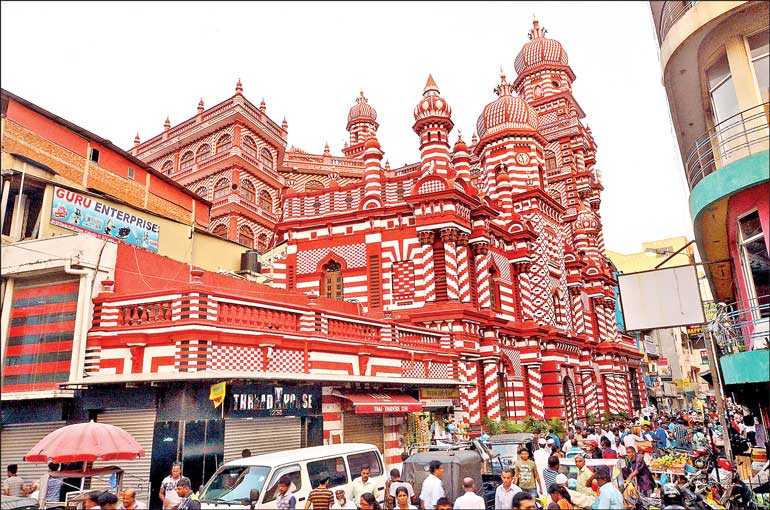
Historically, trade and religion had been the two principal agents that moulded the thinking and behaviour of Muslims – Pic by Shehan Gunasekara
The mosque and the market in Sri Lanka represent two principal agents of change influencing Muslim political thought and action.
By saying this, what is meant is not that these two institutions act as platforms for any particular brand of political ideology or campaign, but that the type of religious indoctrination relayed through the pulpit and the rationale underpinning economic behaviour and attitude of Muslim traders and businessmen, a representative profession in Islam, have combined historically to nurture a mode of political thought which believes that the only way by which the Muslim community could survive and prosper in post-independent Sri Lanka is by joining the ruling party and Government.
This was why from the time of political independence and introduction of party-based parliamentary democracy, a vast majority of Muslim candidates who contested elections did so either as members of the two dominant and winnable parties, UNP and SLFP, or as independents.
After winning their respective seats however, these independents, with one or two exceptions, joined the party in power. Although party-hopping is not entirely a Muslim phenomenon and has been a trademark of political opportunism in all communities, this practice among Muslims has a religious and economic rationale, which has escaped the attention of social scientists.
 To start with, Muslims arrived in this country as traders, and Islam came along with them. Although it was the Arab traders who first introduced Islam into this country, it was the Indian Muslim traders who during the 16th century and after spread that faith vigorously, so much so that until the infiltration of Wahhabism in the 1980s, Islam in Sri Lanka was sealed with an Indian stamp.
It was not the so-called purified Saudi-Wahhabi variety, but the syncretic Indian type, influenced largely by Hinduism, that dominated Sri Lankan Muslim religious beliefs and practices. Thus, historically, trade and religion had been the two principal agents that moulded the thinking and behaviour of Muslims.
How does one relate this phenomenon to modern day political behaviour? To a trader, market size and stability is the chief determinant in profit-making. The larger the market size in terms of customer volume, and lower the turbulence or volatility, greater the opportunities for sales and profit.
In Sri Lanka, it is the majority Sinhalese and their spending habits that mainly determine market size. Even today, almost all successful retail trading outlets owned and operated by a handful of Muslim businessmen are located only in Sinhalese districts, towns and cities, a development that has given room for anti-Muslim propaganda and spread of Islamophobia among groups of Sinhala-Buddhist ethno-nationalist zealots.
However, from the point of view of the trader, everything in the trader’s arsenal of skills should be employed to keep Sinhalese customers happy, friendly, and satisfied. For example, the trader should be fluent in the language of the customers, be familiar with their customs and traditions, and be able to train and employ, wherever possible, as supporting staff in their shops members from the customers’ communities.
Besides, to maintain peace and stability in the market, the trader should also be supportive of dominant political trends found in the clientele community. One glaring example from Sri Lanka’s post-independent past should illustrate this mentality.
This was in relation to the Sinhala-Only Bill in 1957. In spite of the fact that Tamil is the mother tongue of more than 90% of Sri Lankan Muslims, two-thirds of whom live in the Northern and Eastern Tamil-dominant provinces, and that Muslim contribution to Tamil literature is amazingly sizeable, every Muslim political leader without exception supported that Bill.
Because, being essentially a “business community”, its economic survival depended on that support. Sinhala is the language of the majority of Muslim businesses’ clientele. The same argument may be lodged for the unanimous approval of Muslim politicians when Buddhism was given “foremost place” in the Republican Constitution of 1972.
No Muslim parliamentarian dared to object to that move, because once again Buddhism is the religion of the customers. The commercial adage “the customer is always right” is typical of Muslim thinking. In short, political pragmatism dictated by economic necessity compelled the community to support the actions of whichever party or faction that captured power. Even when the community created its own ethnic party, Sri Lanka Muslim Congress, it was only a vote-catching mechanism and a platform to bargain for special favours and coalesce with the party in power. Thus, Muslims had always been with the mainstream of politics.
This attitude of siding with the majority was reinforced by religious indoctrination. Throughout the history of Islam in this country, the most consistent message relayed by imams and religious preachers has been that human life is transient (no one disagrees with this) and that the reason why we are born in this world is to serve Allah and to prepare ourselves to attain paradise in the Hereafter. Serving Allah meant observing the religious obligations encoded by the Five Pillars of Islam. Taken together, these two messages, one constantly reminding about death and impermanency of life and the other promising heavenly rewards for those serving Allah, create a mindset that shuns or marginalizes serious involvement in mundane matters such as politics. Why should a mind impregnated with otherworldly commitment bother about politics, human rights, democracy, climate change, patriotism and so on? Why should a pious Muslim care about who governs this country and how? So long as a Government maintains peace and stability to earn a decent living and practice one’s religion, a Muslim would support that Government even if it turned out to be tyrannous. After all, imams in the past had already laid down a rule that tyranny was preferable to anarchy, and there are numerous sayings of the Prophet Muhammad and legal judgements that condemned social conflict and disorder, and which suggest that Islam encouraged unconditional obedience to a ruler.
With this background, it is worth reviewing the prevailing campaign by Muslim candidates who are appealing to their community voters to support Mahinda Rajapaksa’s SLPP on 5 August 2020. Although MR and his sibling, President GR, proclaim publicly that they have no prejudice against any community, and that they consider everyone a Sri Lankan, forces that are working behind the scene and campaigning at grassroots level, including some academics, members from the Sangha, certain media moguls and their team of journalists, are openly anti-Muslim and Islamophobic. Not only under MR’s second term of presidency, but also under the current GR’s presidency, Muslims have suffered immensely at the hands of ethno-nationalist Buddhist supremacists. True, the macabre act of April 2019 carried out by a bunch of Muslim lunatics provided these forces with a powerful propaganda weapon to spread hatred against Muslims. However, neither MR nor GR nor anyone from their team had taken any measures to restrain these forces. The situation does not seem to improve.
Yet, a group of Muslim politicians, realizing that SLPP has a good chance of capturing the Government, are contesting under its banner and advocating the idea that Muslims should be a partner in the coming regime. There is also no doubt that even those Muslims contesting under different banners and symbols, if they win, would eventually join the Government. The same mentality of joining the winning party continues to prevail despite the bitter experiences suffered by Muslims since 2013. The community seems to think that larger their number in the legislature, greater would be the chances of checking the anti-Muslim forces backing the SLPP. Once again wining special favours and privileges seems to dominate Muslim political strategy. Little do they realise that all that SLPP wants from Muslim parliamentarians is to lend support to its move to revise the Constitution and make the Presidency more dictatorial. It is a pity that Muslims refuse to consider this danger seriously, and are prepared to be hoodwinked by their own leaders.
Never in the history of post-independent Sri Lanka did Muslims back progressive forces in the country. Even when some progressives joined in a coalition with SLFP in 1970, Muslims, who benefited substantially in terms of education under that Government, eventually deserted the coalition and supported the UNP in 1977. Badi’s State-supported Islamic Socialist Front, which wanted to change the community’s mosque-market oriented political direction, proved no match to the mullah-merchant reactionary Anti-Marxist Front cobbled up by M. H. Mohamed. Thus, the political conservatism of this community and its readiness to join the winners after every election is the natural outcome of their unique history and religiosity. It is the mosque and the market that ultimately rule Muslim politics. If this is what meant by pragmatic politics then, in the context of the current wave of Sinhala-Buddhist ethno-nationalism, which is forcefully othering the minorities, it has outlived its use-by date.
In conclusion, of all the parties and candidates that are vying for power at the forthcoming election, only Anura Kumara Dissanayake’s JVP-led NPP has the most constructive ideas to save Sri Lanka from descending into a militarised state with economic misery, communal frictions, and compromised territorial sovereignty. NPP is not the old JVP driven by Sinhala chauvinism, and AKD is not campaigning on behalf of any ethnic group or class. Will Muslim voters wake up and vote for NPP, at least to strengthen its hands in the next legislature? If not, let them at least reject SLPP outright.

An unusual increase of students belonging to one community at Law College in 2012 : PCoI told

 30 July 2020
In 2015, the State Intelligence Service (SIS) had reported that there was an unusual increase in Muslim students at the Law college in 2012, former SIS Director SDIG Nilantha Jayawardena yesterday informed the PCoI probing Easter Sunday attacks.
Referring to a report made on July 20, 2015, Jayawardena said that out of 203 students, there were only five Muslim students at the Law college in 2003. However, in 2012, 78 Muslim students were admitted to Law College and as a percentage it was 25.24% of the overall students.
Explaining his opinion Jayawardena said that this was part of an attempt to invade key positions by minorities.
"I can only warn the relevant institutions. The Ministry of Justice and Law College should investigate the matter," witness said, responding to a question raised by the Commissioners.
Witness further said that the LTTE also assured many students in areas under their control and they also passed their university entrance exams.
"This is one approach minorities can take. This kind of invasion happens in France and some other countries. At SIS we observed the trend and its up to the relevant officials to take the necessary measures," he said.
Jayawardena also said that in 2013, the All Ceylon Jamiyyathul Ulama (ACJU) was making Rs.1.5 million a month from halal certification. At that point 204 companies had obtained halal certification for over 4,500 products, he informed the Commission. (Yoshitha Perera)
All citizens of Sri Lanka have a historic choice to make at the Parliamentary Election
Tamils in Sri Lanka is a significantly weakened community today – the population is relatively small with reduced electoral strength, and its educational and economic performance are among the worst in the country.

Following statement issued by the Global Tamil Forum
 July 30, 2020
The people of Sri Lanka are facing some crucial choices. The outcome of the Parliamentary Elections set for August 5, 2020, has the potential to determine the country’s course for decades. Democratic fundamentals and pluralist character of the state are at stake without exaggeration. The Global Tamil Forum (GTF) urges all citizens of Sri Lanka, including those from Tamil and Muslim communities, to view these elections with long-term perspective and exercise their franchise prudently and responsibly. Otherwise, the price of apathy could be too high.
All Sri Lankan citizens: an opportunity to influence governance processes
The authoritarian trajectory of the Rajapaksa Presidency is unambiguous – Presidential rule through decrees and task forces, key civilian functions entrusted to serving and retired military officers (some of whom credibly implicated in serious human rights violations), an atmosphere of intimidation and fear leading to media self-censorship and silencing of civil society activists, and insecurity among the minority communities. It is in this atmosphere that Rajapaksas are seeking 2/3rd majority to change the constitution, in particular, to abolish the 19th Amendment. It is not difficult to contemplate where this will lead to – executive power without checks and balances, marginalisation of Parliament and Judiciary, and key institutions made irrelevant. In such a quasi-democracy, rule of law and human rights will become expendable, and impunity will reign. The argument that a strong leader with unconstrained power is a must for development and prosperity is phony and self-serving.
The last two attempts at constitution making (1972 and 1978), where the political parties that drove the process had 2/3rd majority, were disastrous, and their effects are still crippling the country. Democratic fundamentals and the multi-ethnic, multi-lingual, multi-religious character of the state were severely compromised to satisfy the power greed of the rulers. There is no indication that politics or statesmanship will be any different this time. In fact, if history is a guide, the outcome could be worse than what was achieved during the last two attempts. It is crucial, therefore, that all citizens should unite in denying the present rulers unfettered freedom for constitution making, rather ensure that only a widely consulted and compromised charter will be possible.
While a functioning democracy with checks and balances are important for all citizens, it is so paramount for the minority communities. When the fangs of the majoritarian state unfairly target minority communities, even the theoretical possibility of legal recourse can be significant. So, it is vital that Tamil, Muslim and Christian communities study their electoral options and act wisely.
Tamil community: need for honest reappraisal
Eleven years after the end of war, re-evaluating political circumstances and electoral possibilities is a must for the Tamil community. Gaining a respectable and secure status in the country is still a dream and there are many disappointments to contend with – no tangible outcomes on constitutional and accountability fronts, lack of momentum in returning to normalcy for the war-affected, and lingering concerns about protecting identity of the Tamil majority North-East. However, it is also undeniable that during the last five years there was notable relief for the Tamil people due to de-escalation of the military stranglehold in the North-East and people enjoyed some normalcy and freedom which included the right to memorialise the war-dead. How much of these could be lost due to the electoral outcomes is one important question to consider.
The Tamil political leadership during the last decade has earned some positive marks on the national politics of the country – its role in the 2018 constitutional crisis being one notable example. A far-sighted political approach has somewhat weakened the apprehensions and animosities existed between the Tamil and other communities. Further, the Tamil nationalistic politics in Sri Lanka is viewed in the major capitals of the world as a far more progressive one than what it used to be. These fundamental building blocks are crucial for future political settlements, and need to be further strengthened, not weakened, as Tamil struggle moves on.
Tamils in Sri Lanka is a significantly weakened community today – the population is relatively small with reduced electoral strength, and its educational and economic performance are among the worst in the country. Meeting political aspirations, though overwhelmingly the dominant issue for Tamils, is one of many objectives for the rest of the country. While the Tamil community should never take its eyes off from achieving political outcomes, it is no longer tenable that it be approached in a sequential manner, i.e. – ‘political resolution first, economic development later’. It is crucial that the Tamil political leadership become more cognizant of this reality and take necessary initiatives in this direction.
The Sri Lankan political leadership’s intransigence in accommodating the legitimate aspirations of the Tamil community, made the Tamils look to the international community and India, with hope and expectation. While this is an integral part of the Tamil political struggle and need to be strengthened and leveraged to the maximum, this cannot substitute an effective political and civil society engagement with all communities in the country. This, too, needs to be a factor when Tamils consider their political choices.
Tamil votes: crucial choices
The Tamil community face monumental challenges today. The Rajapaksas-led political ‘movement’ does not have many parallels in Sri Lanka’s history. It relies entirely on Sinhala-Buddhist vote and highly insensitive to the concerns and aspirations of the minority communities. No commitment to accountability and reconciliation (withdrew from co-sponsorship of UNHRC resolution), increased militarisation of civil functions (military officers for every village in the North-East), and the appointment of all-Sinhala task force to ‘preserve the historical heritage of Sri Lanka’ in the multi-ethnic Eastern Province are a few examples. More ominous is the possibility of losing some of the fundamental reforms such as power devolution under 13th Amendment and the parity status for Tamil language. A major economic contraction Sri Lanka is expected to undergo could lead to intensifying authoritarianism and militarisation, and in all likelihood the minority communities will be used as scapegoats for the wrong doings of the powerful.
The period ahead will test the capability of the Tamil political leadership. Forming effective partnerships with the elected representatives from all minority communities and with those from the majority community with progressive views could be critical, so is fostering effective engagement strategies with the international community and India. If Rajapaksas are denied 2/3rd majority, such coalitions would be particularly powerful in preventing the constitution being amended on their own right. Perhaps the better strategy for the Tamil community could be protecting its hard-won gains, while exploring opportunities for furthering its community interests.
So, what should the Tamil community do at this election? First and foremost, ensure that people appreciate the significance of this election and the power of their vote – every vote matter. Second, no vote should be wasted on the multitude of independent groups and those representing country-wide parties, as these could only dilute the strength of the Tamil representation for future political engagements. Overly unrealistic agenda and an inward-looking insular political strategy is not the most suited in the present circumstances. The question for the Tamil voters is, among the parties that represent Tamil national interest, which party and candidates are the best suited to navigate Tamil politics through the turbulent times ahead.
Appeal to vote
Despite the fundamental weaknesses in Sri Lanka’s democracy, the country is often viewed favourably by the international community because it unfailingly conducts elections which are viewed largely as free and fair. In such circumstances, voting is fundamental and in fact the most powerful tool available to effect political, social and economic transformations in the country. The Global Tamil Forum (GTF) appeals to every citizen of Sri Lanka, and the Tamil people in particular, to cast their precious votes and cast it wisely, keeping the long-term interest of the country and their political, economic and democratic rights in mind.
To Vote Or Not To Vote? Election Apathy Is Not An Option


The writer [whilst misquoting Hamlet] has in recent times increasingly come across a worrying and despondent notion that opposition [via voting] to the relentless march of the Podujana Peramuna is a futile exercise. This despair arises from the realization that the main opposition UNP and its non-compliant offspring the SJB have consistently demonstrated their incompetence in most matters and that they are both happy to be slaves and willing vassals to the President, even more pliant than perhaps his own party! In this shameful abrogation of political leadership they are also complicit in the president’s open militarization of government and the ethnic distancing this will espouse. Despite the constantly spouted mantra that repealing the 19th amendment to the constitution is the panacea to all the ills of the Yahapalana government (YPG), this has been shown to be dallying with the truth by legal luminaries who are familiar with this much maligned document. The 19th amendment gave most executive power and authority back to the government and its head and if one really wants to serve the nation, despite its several short comings, the government has within grasping reach the tools needed to raise the country from a “Near Failed State into a South Asian model.” To still be called a “Developing Nation” after 70 plus years should rankle as a matter of national shame.
So why is the SLPP hell bent on a 2/3rd majority? After all with sibling as president, there is little obstruction to prevent an economic and social miracle from taking place in Sri Lanka despite Covid-19 and the Easter attack, which our neighbours would surely want to emulate. The writer must agree with the better informed many who have said that by repealing the 19A the little good by the YPG will be discarded, lock stock and barrel. This includes discarding of the checks and balances brought in by the many commissions, diluting power of parliament, strengthening presidential power to frightening proportions, removing presidential term limits and importantly, whitewashing the murky past of corruption, murder, criminal impunity that became the hall marks of the previous MR led UPFA government. As has already begun happening, pending cases against the faithful will be judged, politically motivated and new cases will be brought against potential opponents. From GR’s inaugural address onwards he made it clear that minorities no longer matter in the destiny of this country and if they want even a few crumbs from the table, they must like Fido, behave well. In addition, militarization is increasingly encroaching civilian life, particularly in the North and East. In the South, voters must then be cautious that electing MR and his band of goons (please note that many of Gotabaya Rajapaksa’s Viyathmaga devotees will baulk at the chance of breaking bread with these types) they open the door to deadly corruption, non-scrupulous destruction of our natural resources, violation of the law, suppression of minority rights, sexual abuse and much more.
Therefore handing a 2/3rds on a platter must be prevented at all costs even if the alternatives are not immediately appealing. In the recent past it was even fashionable to claim one had “spoilt” ones vote since none of the aspirants would pass muster. “Why bother? SLPP is going to win anyway.” Another frequently heard refrain these days to justify not voting against their seemingly undefeatable onslaught.
However please consider the simple arithmetic to prove how disastrous this attitude could be. Assume there are 10 voters on the lists of whom, let’s say 5 vote SLPP. If the other votes are spread over the balance opposition parties including UNP, SJB, NPP and TNA, 5 out of 10 votes will give 50% vote and most possibly power in Parliament. If however 2 voters decide out of sheer disgust to stay at home instead, SLPP wins 5 out of 8 votes, which is 62.5% with all the resources at hand to wean the odd opposition member to make the magic 2/3rds. If 3 stay at home, they win the prize cup hands down, a dire situation indeed. Of course it is not quite as simple as the presidential race where a simple majority decides the winner. Things in the General Election get complicated with electorates, bonus seats etc. but the principle is the same. Spoiling and not voting come to the same thing and lends a helping hand to the SLPP endeavours. It would be difficult to convince the SLPP supporters of the perils of untrammelled power, but everyone who rejects and rebuffs the principles they [pohottuwa] stand for, must vote for a party and their candidate (please note that voting for party alone is counted as a spoilt vote) so if you are sick of the UNP and its breakaway off spring, the SJB then please do seriously consider the NPP as a rational choice to ensure there is a systematic, credible and vocal opposition in parliament that will block unfettered freedom to do as they please.
Read More
The pre-poll acid tests (pt. I): How to pass the ‘Oh!’-Levels

Once more, into the breach! – For better, or worse?
Friday, 31 July 2020In a few days’ time, we as a nation may make choices that will last at least a generation; and likely, your lifetime and mine. On balance or the surface of things, it appears good to be prepared. And best to be prepared for better or worse. Now to gird one’s loins and don the old armour of ‘democratic-republicanism’, and all that jazz… or worse!
Not to be facetious – or worse, fatalistic. But the public sphere of political shenanigans is alive and well, to the detriment of the health of the body politic. And it would be good for the true power behind the throne – people who elect their representatives – to go far from the madding crowd first. And best to consider the bigger picture after doing so. Well away from the hubbub and hurly-burly of sheer opportunism (or worse) that’s becoming more clamorous by the day. Hint… it’s a long weekend.
There is some use for philosophy in adversity. The same for poetry, it could be said. That the worst are full of passionate intensity while the best seem to lack all conviction judiciously sums up the potent combination of these lost arts.
Just take the test already – before I lose your interest completely?
1. Health-check.
 Cold? Cough? Can’t quite breathe? Yes, you’re experiencing pre-election respiratory syndrome. Take a moment. Chill. Swallow your pride, not simply the propaganda. Feel a bit better? Pick up that pen or pencil, put aside those little green pills, and put down your thoughts…
2. Pl do tick below.
Which of the following statements are true?
a. All political parties are equal.
b. But some are more equal than others.
c. Can tell the difference just before they’re voted in and/or just before they’re kicked out.
d. Democracy is dead… but then again, it was never very much alive and well, was it?!
e. Every vote counts. (At least that’s what the idealists tell us.)
f. Feels like campaigning politicians invented the word ‘covidiot’ (OED). QED.
g. Good, bad and ugly that politics has replaced cricket as the national ‘sport’.
h. Hideous that so many cricketing heroes have become ‘zeros’ by supporting LBWs, run-outs, and other unsporting contenders unfit for those fair pavilions.
i. In some far-flung future, a cricketer will lead the country (like Vaclav Havel once led Czechoslovakia to freedom – say the poets; as philosophers do about Solon).
j. Just go with your heart is good advice for those with a dicky ticker. First check if your favourite candidate is a molester, rapist/racist, tax fraud, or any other form of cheat, coward, criminal. Finally eschew him/her and/or their party. For it’s not whom you vote for that counts, but which party nominates winning-losers.
3. MCQ. Pick one.
A. A good way to separate the wheat from the chaff is:
i. How much time your representative has spent in parliament in the past five years.
ii. The quality of bills proposed and calibre of speeches made on its behalf.
iii. Time spent in the electorate making a difference on the ground rather than gallivanting around their central district living the high or low life…
iv. Have they made a full confession of past misdemeanours and/or a public declaration of assets?
B. Which of the following is ‘the lesser of the two evils’?
i. A militarised bureaucracy with all the attendant discipline, virtue, lawfulness, etc. – but the very real possibility of the ‘return of the king’… viz. nepotistic cronyism, nasty chauvinism, etc.?
ii. A liberal democracy with all the accompanying liberty, laxity, awfulness – and the likelihood that there will be another disaster (e.g. 4/21, or worse) in its wake…
iii. (Or is there a middle path? A short-term compromise? For once, in the country’s best interests, as well as that of its people? For e.g. a ‘hung parliament’ with not even a simple majority for either major bloc? So for that to happen, is there a cool clear contender who’s clean and competent?)
C. Culture in Sri Lanka and Sri Lanka’s much-vaunted little-valued civilisation of centuries is best identified, defined, and protected by:
i. A presidential taskforce.
iii. A prime ministerial probe into allegations of vandalism of heritage sites.
iii . The relevant subject minister being guided appropriately by able bureaucrats and competent civil servants.
iv. Some harebrained hodgepodge of inept academics and apathetic professionals (or worse).
v. An independent commission set up along the lines of all those others.
4. Fill in the blank.
(From the options given in parentheses. Note to non-members of the SJB – ‘parentheses’ means ‘brackets’.)
A. All it takes for a peaceful republic to safeguard its own best national interest is ___ (A strongman / Two strongmen – together or separately / A good small cabinet of ministers guided by a technocratic leader / The usual suspects in the emperor’s new clothes / A band of brothers dressed as wolves in sheep’s clothing or vice versa; who can tell? / A cabal from parties of both parts).
B. We’re on the verge of a sea-change from a ___ into a ___ (Democracy à dictatorship / Democracy à mixed system / Duh – what change? the more things change on the surface, the more they remain the same / Dude… don’t deceive yourself – we’re on the cusp of a major paradigm shift / Death to all change-mongers!).
C. Could we do any worse than ___ (A bond scam (or worse) again / A Helping Humbugstota: how-do-you-do? very well indeed! / A ^^i& deal: $hh, mum’s the word: play dumb and stay stumm or swim with the fishes / Ye gods of crime, corruption, and chauvinism in virtually every camp)?
D. The defining issue of this election will be ___ (Statism vs liberal democracy / National security / The economy/ Handling of the COVID-19 epidemic in SL / LGBT rights and wrongs / Issue? What issues for these ‘ladies & gentlemen’?)
E. Ranil is ___ (A winner who never quits / A quitter who never wins / Either or both / Who cares, anyway? / Other).
F. Sajith is ___ (His father’s son / His mother’s son / Too pish-posh for words / Too wordy for the hoi-polloi / Other).
G. Mahinda is ___ (A champion / A charlatan / A churl who never knows when to quit / A son of the soil who knows how to win hearts and minds / Other).
H. All other candidates are ___ (Superfluous / Super-foolish to fancy their chances at becoming an MP much less the PM /upercalifragilisticexpialidocious, especially if you’re SP or an SJB supporter).
5. A. Essay I. The Age of Democracy is over. That old hat died with the advent of the novel coronavirus. There is a new spirit of Benevolent Authoritarianism that’s about, which is in the best interests of people and planet. It is a Brave New World of test, trace, isolate – and police, try, prosecute all defenders of the old faith and newly convinced dissidents raging against the dying of the light. So be it – the world has changed, and we must change with it, or be left behind (or worse).
B. Essay II. Think again. Argue against yourself. Be bold. Be brave. Be a bit of a bother but by heaven and hell and all that’s in-between be better than you’ve ever been before at packing the benches with brigands, bullies and bulls in a China shop… pun possibly intended.
6. Short answers.A. Ask yourself if – wait… sorry.com – I’ve forgotten everything! Argue. For bonus points, start up a twitter handle @LestWeForgetItAll with #MathakaNé as its hash-tag.
B. Be that as it may, there is a populist project to dismantle our democracy’s pluralism. Be aware/alert. Failing which: be apathetic and ignorant? #IDK #IDontCare
C. Can a sea-change into something rich and strange ever take place under this or any other regime as long as we have the likes of WW to hold SL to ransom? Be careful.
D. What do you think a 2/3rd majority will do to the face of sovereignty, pseudo-religion, authoritarian rule… Do you think at all, dear? And what about! Be brief. Be true. Be honest.
E. Every citizen has a right to do what he or she likes as long as it is right. Even you or I. Enjoy (while it lasts)! Express that ethos by celebrating our Sri Lankan identity as it is, was, and never will be now that that project has been shelved for God – or WW – knows how long…
7. Nation by design (not optimal for true nationalists). Draft, state, craft a maxim, motto, watchword for the country you love so much.
8. Explore those futures (bonus question for out-of-the-box thinkers). What can YOU do to ensure the safety, security, stability, sustainability, sovereignty of Sri Lanka? Do you think that packing the House with shady electoral representatives alone is going to hack it? Can YOU do better in your personal life?
Well, that passed the time. It would have passed, anyway? Thank you, my dear fellow-voters. ‘Sin for you’ – as we Sri Lankans say – if we don’t know the joke’s on us if we don’t take this one seriously.
And next week…The pre-poll acid tests (II): How to pass the ‘Ah!’-Levels – watch this space.
Take care. Stay safe. Best take the long weekend to have a nice long think. Hope, pray, and act.
(Journalist | Editor-at-Large of LMD | Writer on old hats | Student of the acid test)
Subscribe to:
Posts (Atom)