


HONG KONG-


Hundreds of thousands of children are being infected with COVID-19 every week in the United States, driven by the spread of the highly infectious Delta variant and the reopening of schools to in-person learning throughout the country.
According to the American Academy of Pediatrics (AAP), as of the week ending September 23, 2021, over 5.7 million children in the United States have tested positive for COVID-19 since the onset of the pandemic. The number of pediatric cases exceeded 200,000 for the fifth consecutive week.
Over the past week, the number of infections, according to official figures, was 206,864, bringing the total over the last five weeks to 1,131,958. In other words, nearly 20 percent of all childhood COVID-19 cases since the beginning of the pandemic have occurred in just the last five weeks. And though pediatric cases account for 16 percent of all infections in the US since the pandemic began, they accounted for 26.7 percent of all cases this week.
The AAP reports that 19 children died of COVID-19 over the past week, bringing the total death toll among children to 498. Nearly 20 percent of all child deaths, or 96 children, have occurred in the past five weeks.
Overall, the number of pediatric cases and hospitalizations appears to be slowly declining. In the South, the recent epicenter of the pandemic, schools have been opened for at least two months, and the reported incidence of COVID-19 among children has declined slightly.
However, the apparent decline is likely a consequence of how states are calculating pediatric cases in an effort to cover up the full extent of the pandemic among children to keep schools open.
Texas has provided an age distribution for only three percent of confirmed cases, and this only through August 26. The state of New York does not give an age distribution. Alabama, Rhode Island, Missouri, West Virginia, and Hawaii have revised the definition of child cases, reducing the age cutoff. Massachusetts has also changed its definition of probable child cases, leading to a reduction in total case counts. Florida has stopped reporting child hospitalizations, and Nebraska no longer has a COVID-19 dashboard.
The fact that the AAP is the only source of data on child infections is the product of a deliberate effort on the part of federal, state and local governments to cover up the true magnitude of the devastation caused by the pandemic, especially among children.
While the official figures of child cases are declining slightly, the number of hospital admissions is continuing to trend upwards or has stabilized at a very high rate, which provides a more accurate measure of infections.
Even though children make up a minority of those that die from COVID-19, the case fatality rate among those 16 years and younger has seen the highest jump during the Delta phase of the pandemic. As Dr. Eric Feigl-Ding, epidemiologist and advocate for bringing cases of COVID-19 down to zero, said, “When you compare it [case fatality rates among children in Florida] to the entire pandemic period, it is six to eight-fold higher in terms of actual deaths.”
Almost 20 children have died each week for the last five weeks. This would mean that, at the present trajectory, nearly 1,000 children will die over the course of one year. Though vaccinations are being touted as vital to opening society, most children are unvaccinated, as the vaccine has yet to be approved for those under the age of 12.
As Feigl-Ding observed, exposing children to COVID-19 is “dangerous and morally reprehensible” under the present circumstances. In 2019, almost 3,400 children were killed with guns. A little more than half that number, or 1,780, died from cancer. The rate of COVID-19 deaths is comparable to these tragic figures.
The massive spread of the virus among children is being downplayed to ensure that schools remain open so that parents can continue to work and pump out profits for the ruling class. This policy is supported by the entire political establishment, along with the corporate media.
The Democrats under Biden are now spearheading the reopening of schools throughout the country, with the assistance of the trade unions. In particular, the teachers unions have campaigned aggressively for the full reopening of schools to in-person learning, endangering the health and lives of educators as well as students.
In the eight months of the Biden presidency, more than 280,000 people have died from COVID-19. As of July 2021, when Biden declared “independence” from the virus, 114,000 children in the US have been orphaned due to a caregiver’s death from COVID-19. What makes pediatric infections so concerning is that most of them are asymptomatic carriers and can readily transmit the disease to their families.
In addition to the immediate impact on the health of children, the long-term consequences of infection can be severe. In a recent study out of England, researchers found that one in seven children who tested positive for SARS-CoV-2 continued to have symptoms for 15 weeks after their diagnosis. These symptoms include headaches and unusual tiredness.
There is growing opposition in the US and internationally to the homicidal policy of school reopenings. Last week, British parent Lisa Diaz issued a video statement via Twitter calling for a nationwide school strike in the UK on October 1. Nearly 60,000 British children have been infected with COVID-19 in just the first two weeks of school reopenings.
The call by Diaz has been supported by parents and educators in the UK, the US and internationally.
Teachers, parents and the entire working class must come to the defense of children. The growing opposition in the international working class must be mobilized to oppose the homicidal policies of the ruling class and fight for the elimination and eradication of COVID-19.


Did the CIA under the Trump administration plan to kidnap and assassinate WikiLeaks founder Julian Assange during a shootout in London? That is one of the explosive findings in a new exposé by Yahoo News that details how the CIA considered abducting and possibly murdering Assange while he took refuge in the Ecuadorian Embassy in London to avoid being extradited to Sweden for rape allegations, charges that were dropped in 2017. More than 30 former officials say former CIA Director Mike Pompeo was apparently motivated to get even with WikiLeaks following its publication of sensitive CIA hacking tools, which the agency considered “the largest data loss in CIA history.” Michael Isikoff, chief investigative correspondent for Yahoo News, lays out the plans and describes how the abduction plan “was one of the most contentious intelligence debates of the entire Trump era,” noting it ultimately spurred the Justice Department to fast-track its legal case against Assange. We also speak with Assange’s legal adviser Jennifer Robinson, who says the latest revelations should alarm American citizens, as well as journalists around the world. “This is the CIA talking about conspiracy to kidnap and murder an Australian citizen and an award-winning journalist and editor who has done nothing but publish truthful information.”
AMY GOODMAN: This is Democracy Now!, democracynow.org, The War and Peace Report. I’m Amy Goodman, with Juan González.
Did the CIA, under President Trump, plan to kidnap and assassinate WikiLeaks founder Julian Assange during a shootout in London? That’s one of the explosive findings in a new exposé by Yahoo News. The report details how the CIA considered abducting, and possibly murdering, Assange while he took refuge in the Ecuadorian Embassy in London to avoid being extradited to Sweden, charges that were dropped in 2017 in Sweden.
More than 30 former officials described how then-CIA Director Mike Pompeo was apparently motivated to get even with WikiLeaks following its publication of sensitive CIA hacking tools, called “Vault 7,” which the agency considered “the largest data loss in CIA history.” One official said Pompeo and others, quote, “were completely detached from reality because they were so embarrassed about Vault 7. They were seeing blood,” unquote.
For more, we’re joined in Washington, D.C., by one of the three reporters on this story. Mike Isikoff is chief investigative correspondent for Yahoo News, where he’s also editor-at-large for reporting and investigations.
Michael Isikoff, welcome back to Democracy Now!
MICHAEL ISIKOFF: Good to be with you.
AMY GOODMAN: This is just an explosive story. Can you lay out your findings? You spoke with scores, your team, of people in intelligence. Lay out the scene, from before 2017 on.
MICHAEL ISIKOFF: Right. This was one of the most contentious intelligence debates of the entire Trump era. And it really starts with that Vault 7 leak. As is well known, WikiLeaks had been on the radar screen of U.S. intelligence for years, going back to its publications in 2010 of the State Department cables, the Afghan War Logs and Iraq War Logs that had been provided by Chelsea Manning, and, of course, Assange’s role in publishing the Russian-purloined DNC emails and Podesta emails during the 2016 election. But what really set Mike Pompeo, the new CIA director, off was that Vault 7 leak. This was on his watch. This was his agency. And while Pompeo had been somewhat dismissive of the Russia allegations and Assange’s role in that, the Vault 7 leak focused his energies on getting back at WikiLeaks and Assange, at dismantling the organization.
I was in the room when Pompeo gave that speech in early April 2017 where he described for the first time WikiLeaks as a “nonstate hostile intelligence service.” I thought and assumed, like many, it was some kind of rhetorical talking point, a grabby line that Pompeo had came up with. In fact, that designation, internally, opened the door for the CIA to launch and plan all sorts of operations that didn’t require a presidential finding and didn’t — and wasn’t going to be briefed to Capitol Hill.
These were offensive counterintelligence activities. Pompeo — there’s abduction plans to — basically, a snatch operation to take Assange from the Ecuadorian Embassy. There was talk of assassination, although, we want to be clear, that never was forwarded to the White House; that was internally within the CIA. The abduction plans were, as part of a much broader, multipronged CIA attack on WikiLeaks that included stealing computers, surveillance of WikiLeaks associates, sowing discord among its members.
And Trump White House lawyers raised concerns that Pompeo had gone further than was legally authorized. For one thing, at the time that the CIA was developing these plans, there was still no indictment by the Justice Department of Assange. So it raised the question: If you abducted him, rendered him, where would you take him? On what grounds could you hold him in custody without an indictment? This spurs the White House to get on the Justice Department’s back and try to get them to accelerate an indictment of Assange, which finally comes in late 2017.
JUAN GONZÁLEZ: So, Michael, you talk about the differences between the Justice Department and the CIA on this. And also, clearly, as you mentioned, these were more on the lines of scenarios, because the plans never got a go-ahead, certainly not from the Trump White House, because Trump had been praising WikiLeaks for, in essence, helping him —
MICHAEL ISIKOFF: Yeah.
JUAN GONZÁLEZ: — in his election campaign with their release of documents.
MICHAEL ISIKOFF: Absolutely. We all remember “I love WikiLeaks” from the 2016 campaign. And one note: I should point out that, in our piece, we got a statement from Trump, because we had a source who said that when Trump was finally briefed on this, he raised the question of “Can you assassinate Assange?” Trump, in a statement to Yahoo News just last week, that’s in the piece, denied that but then said something really interesting. He said, “Assange is being treated very badly.” He’s basically reverted to the 2016 position of “I love WikiLeaks,” expressing sympathy, no doubt, for what Assange did during the 2016 election.
AMY GOODMAN: So, let’s go to that famous comment of President Trump declaring how he loved Wikileaks.
DONALD TRUMP: This just came out. This just came out. WikiLeaks! I love WikiLeaks!
AMY GOODMAN: But then, we go back to 2017, when Mike Pompeo was director of the Central Intelligence Agency.
MIKE POMPEO: [WikiLeaks walks like a hostile intelligence service and] talks like a hostile intelligence service. It has encouraged his followers to find jobs at the CIA in order to obtain intelligence. It directed Chelsea Manning in her theft of specific secret information. It overwhelmingly focuses on the United States, while seeking support from anti-democratic countries and organizations. It’s time to call out WikiLeaks for what it really is: a nonstate hostile intelligence service, often abetted by state actors like Russia.
AMY GOODMAN: Julian Assange later responded to the allegation in an interview with Jeremy Scahill on his podcast, Intercepted.
JULIAN ASSANGE: Pompeo has stated that WikiLeaks instructed Chelsea Manning to go after certain information. That’s a interesting revelation. And then there is his statement that this, i.e. WikiLeaks and its publications, end now. So, how does he propose to conduct this ending? He didn’t say. But the CIA is only in the business of collecting information, kidnapping people and assassinating people. So, it’s quite a menacing statement that he does need to clarify.
AMY GOODMAN: So, that’s Julian Assange, and he’s laying it out right there, if the CIA is in the business of assassinating or kidnapping people. And Pompeo started by saying, “WikiLeaks walks like a hostile intelligence service and talks like a hostile intelligence service,” the key part there.
So, I wanted to ask you about the scene you lay out, outside a place we have been to a number of times, interviewing Julian Assange, before he was in Belmarsh, the prison, where he is held right now awaiting extradition, a case — what the British government will determine, whether they’ll send him to the United States. We’ve interviewed him a number of times in the Ecuadorian Embassy. You describe the actual picture, the people. It’s right next to Harrods in London. But at one point, the number of intelligence agencies basically made up all of the people posing as whoever outside the embassy.
MICHAEL ISIKOFF: Yeah. Everybody within a three-block radius, we were told, was likely working for one intelligence service or another. There is a sort of second phase of all this that’s — in which that comes up. And that is, later in — and I should point out, the abduction, rendition plans never got the approval from the Trump White House. Trump White House lawyers raised objections. They even raised went to the Hill, raised concerns about some of what Pompeo was up to. But some of what Pompeo was planning and the CIA was planning did go through. And that includes audio and visual surveillance of Assange from inside the Ecuadorian Embassy and monitoring of the communications and travels of Assange associates. So, aspects of the war on WikiLeaks that Pompeo was declaring did get implemented. And that’s confirmed for the first time — although there have been lots of allegations to this effect, this is confirmed for the first time in our piece.
But, later in 2017, the U.S. intelligence community gets information it views as credible that Russian operatives are on the ground in London preparing to spirit Assange out of the embassy and onto a plane and fly him to Moscow. And this, this is when things really get ramped up. The Trump White House, at the highest levels, get involved in planning and overseeing all sorts of plans and scenarios to thwart the feared Russian escape of Assange from the embassy. There were discussions about a potential gun battle on the streets of London. This was done in consultation with British authorities, who made it clear that if there was going to be any shooting, they would do it. There was also plans for stopping the Russian aircraft from taking off from the United Kingdom, plans to shoot the tires on the airplane, have helicopters stationed to hover over to prevent the airplane from taking off. There was a lot of wild Jason Bourne stuff going on to prevent what U.S. officials feared was going to be a Russian-assisted escape from the embassy.
JUAN GONZÁLEZ: And, Michael, I’m just wondering — I mean, the revelations in your article are shocking, but they shouldn’t be surprising, given the history of the CIA, whether it’s Patrice Lumumba or the hunt for Che Guevara or — the CIA has always been in the business of these assassinations and renditions. But doesn’t it really lay to rest any doubt that what has been happening to Julian Assange all of these years, from the original Swedish charges, was really being engineered by the United States’s effort to get him as a result of the WikiLeaks disclosures?
MICHAEL ISIKOFF: Well, there are certainly lots of questions raised by all this. I mean, you know, whether the Swedish charges can be put on the CIA, I don’t have any information to back that up. But certainly, I think there’s going to be already sort of calls for an investigation into this, certainly questions for the CIA.
But also, I think most immediately, there’s this extradition case before the British courts and every indication that there are folks, including Assange’s legal team, that want to bring some of this to the attention of the British courts as grounds for blocking the extradition of Assange to a country, some of whose officials were talking about kidnapping and assassinating him not too many years ago. Whether that works or not, I don’t know. The British courts have a very narrow brief on this, and that is, the ruling by the British judge blocking the extradition was over the risk of suicide that Assange would face were he sent to prison. So, whether the appeal by the Merrick Garland-Joe Biden Justice Department of that adverse ruling can be expanded to include some of these allegations, we’re going to find out very soon.
AMY GOODMAN: So, let me ask you about Jeff Sessions, who was the attorney general at the time —
MICHAEL ISIKOFF: Yeah.
AMY GOODMAN: — to say the least, extremely anti-Julian Assange, but very opposed to the CIA, because he thought they would mess up the ability to extradite him, and compared it to Dan Ellsberg.
MICHAEL ISIKOFF: Sure. And listen, I mean, some of this is sort of institutional, bureaucratic, you know, turf protections. The Justice Department doesn’t want the intelligence agencies mucking around on their cases in ways that could jeopardize the prosecution.
And you mention Daniel Ellsberg. That’s interesting, because when I spoke to Barry Pollack, the U.S. lawyer for Assange, over the weekend, that’s one of the first things he raised, that this could be — if Assange is extradited and brought to an American courtroom, his American lawyers would raise government misconduct as grounds for dismissal. And, as Pollack pointed out, that’s — Daniel Ellsberg’s lawyers succeeded on that very grounds. Ellsberg was being prosecuted for leaking the Pentagon Papers. And then, when evidence came out about some of what the Nixon White House was planning and did — you know, in one case, breaking into his psychiatrist’s office — that was grounds for tossing the indictment.
Whether the Assange — you know, whether that parallel will work for Assange, we’ll have to wait and see. You know, clearly, some of these more extreme measures weren’t implemented, but some, including the surveillance of Assange from inside the embassy, when he may have been talking to his lawyers or doctors and other privileged — having other privileged conversations, that could factor in to a government misconduct motion.
AMY GOODMAN: We want to bring in one of Julian Assange’s legal advisers, Jen Robinson, but first have her respond to Al Jazeera English White House correspondent Kimberly Halkett questioning White House Press Secretary Jen Psaki Friday about the charges against WikiLeaks founder Julian Assange and why Biden is persisting.
KIMBERLY HALKETT: Why is President Biden keeping the Trump-era charges against Julian Assange? Why is he allowing the prosecution from publishing the truth about human rights abuses in Iraq, Afghanistan, Guantánamo? And does the president believe the ongoing detention of Assange is reasonable, even moral, given the transparency delivered and the greater good served?
PRESS SECRETARY JEN PSAKI: Well, I don’t have anything new to say on the — on Julian Assange, and I would point you to the Department of Justice on that. I would say, though, that we do think of ourselves, and we are approaching this from an entirely different approach of the last few years as it relates to freedom of the press. And I think the Department of Justice’s actions as it relates to the prosecution of journalists or how we’re going to look at or go after records, something that the attorney general made an announcement about, the president has spoken to, is very clear evidence of exactly that.
KIMBERLY HALKETT: Does the president see this as a freedom of press issue with respect to Assange? Or does he separate —
PRESS SECRETARY JEN PSAKI: Again, I have nothing — I have nothing new to speak to on Julian Assange.
KIMBERLY HALKETT: This is something that I emailed you about months ago, so there’s been time to [inaudible].
PRESS SECRETARY JEN PSAKI: I understand. I understand. I still don’t —
KIMBERLY HALKETT: Is there something —
PRESS SECRETARY JEN PSAKI: I don’t have a new comment from here.
AMY GOODMAN: So, that’s Jen Psaki, the White House press spokesperson, responding to Al Jazeera English White House correspondent Kimberly Halkett.
Jen Robinson is with us from Australia, longtime legal adviser and human rights attorney for Julian Assange.
Can you talk about the new information that we are getting from Yahoo, this explosive information about the possibility of kidnapping or assassinating him, something Julian talked about himself, and what this means for his case right now as he sits in the Belmarsh maximum-security prison?
JENNIFER ROBINSON: Thanks, Amy.
Well, of course, the Yahoo revelations are incredibly important, and what a brilliant piece of journalism. But this is just the latest shocking revelation. This is the CIA talking about conspiracy to kidnap and murder an Australian citizen and an award-winning journalist and editor, who has done nothing but publish truthful information about the United States and about war crimes, human rights abuse and corruption the world over. Any American citizen and journalists and editors the world over ought to be very concerned about these revelations about the conduct of the FBI — sorry, the CIA and their proposals with respect to WikiLeaks.
Now, this was something that was warned back in 2017, as soon as Mike Pompeo made this announcement that WikiLeaks was going to be considered by the CIA as a hostile nonstate intelligence agency. We were very concerned — and, in fact, I warned immediately — that this would lay the groundwork for unprecedented and unlawful actions by the CIA against WikiLeaks. And that’s precisely what we’ve seen, and that’s precisely what Yahoo’s latest revelations show us.
But this is nothing new. We have put evidence before the extradition challenge in London of unlawful spying, by USIC level, inside the Ecuadorian Embassy on Julian, his doctors, on us as his lawyers. And there were, in fact, materials gathered, video materials of us having confidential conversations with our client, legally privileged material, which has been shared with U.S. intelligence agencies. Now, this is clearly unlawful activity and, as my U.S. co-counsel Barry Pollack has said, should be sufficient to close this down.
Now, if the Biden administration was legitimately changing its position on the First Amendment and the protection of journalists, there is a principled reason to close this investigation down because of the First Amendment consequences. But this is also evidence of unlawful conduct in the context of this investigation, which gives further ground for the Biden administration to close this down. And that’s precisely what they should do.
AMY GOODMAN: We want to thank you so much for being with us, Jennifer Robinson, attorney advising Julian Assange and WikiLeaks, and also Michael Isikoff, chief investigative correspondent for Yahoo News. We’ll link to his piece, “Kidnapping, assassination and a London shoot-out: Inside the CIA’s secret war plans against WikiLeaks.”
Next up, we go to Chicago to find out why workers at El Milagro tortilla plants staged a temporary walkout. Stay with us.
Ruckus over AUKUS: Australia becomes US hitman in the Indo-Pacific region
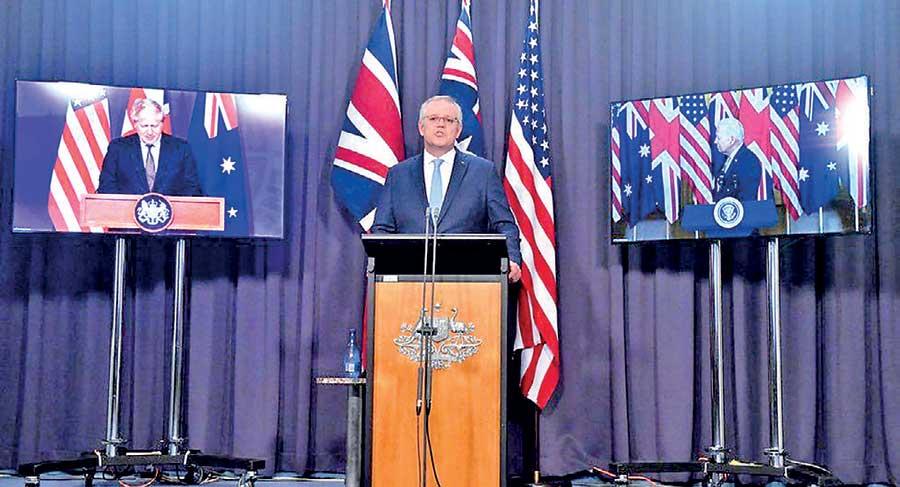
Australian Premier Scott Morrison (centre) is linked online with US President Joe Biden and British Premier Boris Johnson as they announced the AUKUS deal. Pic courtesy EPA

In what appears to be a straw for the proverbial drowning man, the United States has clutched at a new defence alliance, in the hope that with its help, it can remain afloat as the world number one power.
On September 15, the US, the United Kingdom and Australia formalized a defence alliance now known as AUKUS. Even an elementary level political science student will say that the new alliance is a move to contain China, however much the US says it is not. This is a typical Thucydides’ Trap, which simply means that when a rising power threatens to displace a ruling power, the resulting structural stress makes a violent clash the rule, not the exception.
The AUKUS move was secretive and shocking to even some of Washington’s European allies. It has caused some cracks on the walls of the US-led Atlantic alliance. In an immediate reaction, an angry France, describing the new security partnership as a stab-in-the-back, recalled its ambassadors from Washington and Canberra and pulled out of high-level defence talks with Britain. In the run up to the September 15 AUKUS announcement, the US did not care two hoots about France’s national interest and did not even think it was necessary to apprise its Nato allies of the new alliance. Following the announcement, Australia scrapped a multibillion-dollar submarine contract with the French, in favour of an AUKUS deal aimed at arming the Australian Navy with nuclear-powered submarines to be built in cooperation with the US and Britain. Australia will become only the seventh nation to possess nuclear submarines and this will have significant impact on the balance of power in the region in relation to China.
Washington’s new move was similar to a boatman, while at sea, plugging a hole in his boat only to find the water coming in from another hole. When the US moved to strengthen its defences in the Indo-Pacific region with AUKUS, it found cracks on its defence wall on the European front. The AUKUS move has caused much discontent among Washington’s European allies. Not only France, even Germany was concerned about the US action. Reports say the European Union is contemplating the postponement of month’s trade and technology cooperation summit with the US.
On Wednesday, in a damage-control action, US President Joe Biden had a phone conversation with French President Emmanuel Macron, and indirectly admitted that the US had committed a mistake by not having open consultations with allies before the AUKUS announcement. Yesterday, US Secretary of State Anthony Blinken was scheduled to meet his French counterpart Jean-Yves Le Drianon on the sidelines of the United Nations General Assembly annual sessions in New York. Analysts, however, note that the US apology covered only the mistake of keeping the allies in the dark over AUKUS, but it expressed no regret over the formation of the AUKUS.
For Washington’s European allies, AUKUS should teach them a lesson in alliance formation and warn them about overdependence on the US to defend themselves. Although France and Germany are key Nato members, the two nations were once seriously mulling over forming a Europe-led defence arrangement for Europe. This was when questions loomed over the raison d’etre of Nato against the backdrop of the Cold War’s end in 1991.
The French-German proposal came to an abrupt end with the US strongly opposing the dissolution of Nato and reassuring them of the US commitment to defend its Nato allies. But in view of former US President Donald Trump’s America-first policy that caused fissures within Nato and Britain’s exit from the EU, the European Union has gradually been intensifying moves aimed at reactivating a Euro-centric defence dialogue. A day after the AUKUS announcement, the EU released on September 16 its Indo-Pacific strategy, giving importance to trade, security and democracy promotion.
The new global realities require not only France but also every nation to carry out a fresh assessment of its security. The manner in which the US withdrew from Afghanistan last month, abandoning the government of President Ashraf Ghani, a servile ally, has raised questions as to the United States’ trustworthiness as a protector. Surely the stab-in-the-back on France and the Ghani government underscores a fundamental rule in power politics that a nation should be concerned firstly, secondly and lastly, only with its national interest. In this context, a nation pursuing global power, considers its allies as important only as long as they are useful.
It is premature to assume that France will cease to become a US ally or the Nato alliance will wither away. Despite the diplomatic ruckus over AUKUS, Nato will continue to remain an important cog in Europe’s defence wheel because of two US-made bogeys -- Russia and the so-called Islamic terrorism. However, no threat is permanent. Sooner or later, an enemy could be an ally, and the so-called Islamic terrorism which is believed to be manufactured in intelligence laboratories could be a thing of the past.
Therefore, nations need not overly depend on alliances to protect themselves, because alliances have their shelf lives. Alliances such as the Cold War era South East Asian Treaty Organisation (SEATO) had vanished even before the Cold War ended.
Another example is ANZUS. It brought together the US, Australia and New Zealand in a Nato-like defence partnership. It has remained largely defunct and AUKUS has virtually performed the last rites on it due to New Zealand’s opposition to Australia’s use of nuclear power for military purposes.
The AUKUS move also highlights how perturbed the US has been over China’s rise as a global power, how preoccupied it has been with the China question and how impatient it has been in forming alliances to fortify its position in the Indo-Pacific region vis-à-vis China.
As part of this China-containing strategy, the US had earlier floated the Quadrilateral Security Dialogue or the Quad, teaming up with India, Australia and Japan. The Quad is largely an informal defence arrangement. When the Quad leaders meet today in Washington, President Biden is expected to explain why the US formed AUKUS, an inner circle within the Quad.
AUKUS has virtually turned Australia into a US hitman in the Indo-Pacific region. The Aussie Navy will soon be like an appendage of the US Navy in the region. Australia, whose Prime Minister Scott Morrison describes AUKUS as a forever partnership, is already hosting a US military facility in Darwin. The facility overlooks the waters China considers its backyard and is part of a defence ring encircling China, although China is Australia’s biggest trading partner.
With Canberra’s newly acquired nuclear submarines moving stealthily in waters contested by China, needless to say, the region will see more tension and an unwanted arms race at a time when the global resources are needed for the fight against the Covid pandemic and Climate Change.
ADD “MALICIOUS price-cutting” to the growing lexicon of Xi Jinping’s China. The phrase has cropped up in the past but is being increasingly used by provincial authorities to decry property developers’ attempts to slash home prices. Some developers, desperate to bring in revenue, are offering discounts of as much as 30%. Officials, fearing that the price cuts might frustrate recent homebuyers and lead to protests and distortions in the property market, have banned discounts and regard them as undermining social stability. In the central city of Yueyang the government has told developers to stop increasing prices but also to refrain from reducing them by more than 15%.
In such cases both regulators and developers are walking a tightrope, teetering between sky-high prices and a damaging downturn. The property market is probably the single largest driver of the country’s economy. Urban Chinese have flocked to it as a haven. House prices have soared over the past 15 years, often by more than 10% a year in large cities. Yet developers have borrowed huge amounts in the process. The industry’s total debt is about 18.4trn yuan ($2.8trn, equivalent to 18% of GDP), according to Morgan Stanley, a bank. Housing costs, relative to incomes, now make large Chinese cities some of the least affordable places in the world.
These trends have collided with officials’ goals of reducing corporate indebtedness and inequality, which lie at the heart of Mr Xi’s mission to bring “common prosperity” to China. The campaign has already brought down several large real-estate companies as regulators have tightened their access to credit. The latest is Evergrande, a developer with about $300bn in liabilities that has started to miss payments on dollar bonds. (As this article was published it was unclear whether it had been able to make another offshore-bond payment due on September 29th.) The fear for officials is not just that the unwinding of the group will unleash systemic financial risks. If the property sector were to tip into a correction, everything from local-government and household finances to the country’s growth model would be imperilled.
China’s leaders have cheered on the property boom for the best part of 30 years. When the central government overhauled the tax system in 1994, local authorities lost a large chunk of revenue. At the same time, local governments were prevented from issuing debt. Yet they were tasked with hitting high economic-growth targets, sometimes exceeding 10% a year. Selling land became one of the few things municipal officials could do to generate revenues, which would in turn finance roads and other public works. They could also set up companies that could borrow from banks and raise debt from other sources. This arrangement meant economic growth was tightly bound to booming property.
Between 1999 and 2007 the quantity of rural land transferred to urban use increased by an average annual rate of almost 23%, and public-land sales soared by an average of 31% a year. Soon the property market became the prime lever for controlling economic growth. During the global financial crisis much of China’s $586bn stimulus package came in the form of loans and shadow-banking funds for developers. “The property market was a vehicle for delivering the stimulus,” says Kevin Lai of Daiwa Capital Markets, a broker. By 2010 land sales accounted for more than 70% of municipal incomes a year, although the rate varied between regions.
The failure to break away from this setup is one of China’s biggest economic blunders of recent decades. The relationship between the property market and overall growth remains as strong as ever. Residential investment alone makes up 15% of GDP; the economic importance of property rises to 29% once construction and other related industries are added in, according to an estimate by Kenneth Rogoff of Harvard University and Yuanchen Yang of Tsinghua University. As a result, homebuyers and developers alike have considered the housing market too important to fail, finds Hanming Fang of the University of Pennsylvania. They have treated their investments as one-way bets.
The Evergrande crisis and some property indicators are beginning to threaten that long-held belief. Malicious price-cutting may be in the headlines, but only especially cash-strapped developers have resorted to it. Yet demand is weakening from its high base. One gauge is growth in prices, which has slowed in recent months. Another is the secondary market, where speculative investors cash out. In Shenzhen, a southern boomtown, monthly transactions fell for four consecutive months to 2,423 in August, compared with a monthly average 8,376 in 2020, according to Rhodium Group, a consultancy.

The easy stream of credit that kept construction sites buzzing is drying up. Access to bank and shadow-bank loans, as well as demand for on and offshore bonds, is weakening for the industry in general, says Cedric Lai of Moody’s, a rating agency. Net offshore dollar-bond issuance has turned negative for developers for the first time in at least a decade (see chart 1). Land sales for residential projects declined in the first half of the year, primarily owing to government limits on bank exposures to developers. S&P, another rating agency, has downgraded many developers to junk. Moody’s agency, says its outlook on China’s property sector is now negative.

Such news has grabbed the attention of local officials. Declining demand for homes and a shortage of funds will mean less demand for land. The development of a municipal-bond market over the past decade has helped some regions move away from land sales. But on the whole local officials have only become more addicted. Total government sales revenue has climbed since 2015 and reached about 8.3% of GDP in 2020 (see chart 2). Any decrease bodes ill for the economies of smaller cities.
Households, meanwhile, are on some measures more exposed to property than ever. In 2019 housing represented about 60% of their total assets (financial assets account for just 20%). This overreliance has driven up mortgage debt to about 76% of total household liabilities. As developers lost other forms of funding over the past five years they became heavily reliant on pre-sales income, where buyers pay for their homes, sometimes in full, months or years before completion. Between 2015 and July 2021 the share of pre-sale funds as a source of funding for developers rose from 39% to 54%, according to Natixis, a French bank. Some of the people who paid in advance for Evergrande homes or bought one of the company’s wealth-management products have protested outside its offices.
Investors are now waiting for government action. Some expect that, as the economic outlook darkens, officials will ease monetary conditions. Most banks have used up government quotas for property-sector loans this year, says Zhang Zhiwei of Pinpoint Asset Management, a hedge fund based in Shanghai. The quotas will be renewed in January, leading to a burst in lending, he says. Raymond Yeung of ANZ, a bank, thinks that regulators are well enough informed of the risks that few other developers will encounter the same problems as Evergrande. A property slowdown might knock a half of a percentage point off GDP growth this year, he says. Mo Ji of Fidelity International, an asset manager, says she expects the turbulence to take a percentage point off growth.
The short-term outlook, however, might ignore a bigger secular shift. Mr Lai of Daiwa says the market is “very close to the end of the housing boom”, because the accumulation in debt cannot continue. Efforts to make China more equal could mean more moderate price rises in future, says Oxford Economics, a consultancy. Whether China’s unfavourable demographics can continue to support a market of this size over the next decade is an open question, reckons Mr Yeung.
Few options for decoupling economic growth from housing exist. China should have focused more of its construction on megacities, which tend to have diverse sources of funding and competent administrators, says Andy Xie, an economist. Instead local officials in small towns have squandered land revenues, often spending on vanity projects even as young workers leave for large cities. For the economy to end its unhealthy dependence on property development, it may be necessary for many local governments to cease to exist.

The sign reads,"Duque Out," Colombia, Sept. 28, 2021. | Photo: Twitter/ @RadioHabanaCuba

"The ESMAD treats peaceful protesters like soldiers from an enemy army," Indigenous leader Martha Peralta denounced.
On Thursday, Colombia's Mobile Anti-Riot Squadron (ESMAD) brutally repressed the population, arbitrarily detained 22 citizens, and injured ten people during the protests against President Ivan Duque.
RELATED:
Colombian Soldiers To Be Imprisoned For Rapping Indigenous Girl
"The ESMAD treats peaceful protesters like soldiers from an enemy army. President Duque cannot continue to legitimize its excessive violence. He must respect the right to protest," Alternative Indigenous and Social Movement President Martha Peralta stated.
Although the Duque administration promised these forces would ensure the safety of demonstrators, the ESMAD used tanks, tear gas, and stun bombs to suppress protesters in Cali City, where a minor suffered eye injuries from these attacks.
In Bucaramanga City, these forces also surrounded the Santander Industrial University (UIS) where underage and injured protesters were trapped. "Officers must defend civil society, not repress it," Bogota Councilman Luis Leal condemned.
On Tuesday, opposition senator Ivan Cepeda sent a report on the cases of police and military violence during the April anti-government protests to the International Criminal Court (ICC). He denounced delays in the investigations against the officers who committed crimes and the lack of impartiality in the judicial processes already opened.
"Our prosecutors have not investigated the higher echelons for these crimes but have confined themselves to convicting a few perpetrators," Cepeda stressed.
On Tuesday, social organization "We Are Defenders" recalled that officers have perpetrated 35 percent of the aggressions registered against Colombian social leaders so far this year. "Anti-government protests exacerbated widespread violence against social leaders in our country," this NGO Coordinator Lourdes Castro stated.
With 82% of Lebanon’s population living in poverty, the country is in desperate need of political and economic reform
| Stephen McCloskey. All rights reserved

In one of the lesser-quoted lines from the movie ‘Casablanca’, a young refugee from Bulgaria seeking passage to the US tells the anti-hero, Rick, that back home “the devil has the people by the throat”. That’s a pretty accurate description of the current plight of the majority of people in Lebanon who have been subjected to a catalogue of national catastrophes since 2019. And the answer: an IMF (International Monetary Fund) bailout widely prescribed as the only solution.
The UN reported this year that 82% of Lebanon’s population is suffering from multidimensional poverty meaning that they are subjected to deprivations in one or more of the following indicators: access to health insurance, electricity, public utilities (water, sanitation etc), internet access and employment.
The reason is simple: the World Bank estimates Lebanon’s economy to have experienced one of the ‘most severe global crises episodes’ in the past 150 years. Lebanon’s GDP has shrunk from $55bn in 2018 to an estimated $33bn in 2020 with GDP per capita falling by 40%.
This kind of collapse, argues the bank, is normally associated with ‘conflicts or wars’. In Lebanon’s case, the argument goes, it follows a series of disasters triggered by an October 2019 popular uprising against corruption and austerity, which resulted in the resignation of the government. The initial wave of non-sectarian and peaceful protests against the country’s confessional and corrupt political system was soon met by ‘excessive force’ by the military and some political factions.
And then, in March 2020, the economy was sent spiralling into freefall when the state defaulted on a $1.2bn Eurobond debt repayment caused by the depletion of currency reserves to ‘a worrying and dangerous level’. In 2020, Lebanon’s national debt stood at $97.92bn or 170% of its GDP as the only political consensus, according to the World Bank, was ‘in defense of a bankrupt economic system, which benefited a few for so long’.
Then just a few months later, on 4 August, Beirut’s port suffered one of the largest non-nuclear blasts in history when 2,750 tonnes of ammonium nitrate, recklessly stored in a hangar since 2014, exploded. Some 217 people were killed, 7,000 injured and 300,000 displaced, with the material damage estimated at $4.6bn.
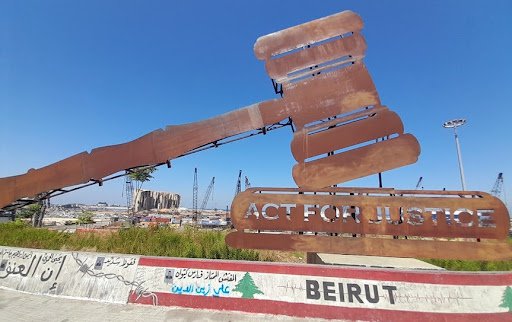
Leaked documents have shown that successive governments were warned at least ten times of the dangers of stockpiling the chemicals, but either ignored the problem or passed the buck. Public officials and politicians have used the right to immunity over the past year to shield themselves from an investigation into the blast. For the majority of Lebanese, the port explosion was reflective of a state in the grip of cronyism, unaccountability and political negligence, with Amnesty International accusing authorities of “shamelessly obstructing victims’ quest for truth and justice”.
Yet another government collapsed under the weight of public anger at the port explosion, leaving the state rudderless during the emerging COVID-19 crisis that, to date, has seen 8,240 deaths and 618,580 cases in a state of less than seven million people.
On a visit to Lebanon last week, I found the Lebanese pound (LBP) trading at 18,000 to one US dollar on the black market, which is a depreciation of 90% from the rate of LBP 1,506.5/$1 in 2019. Lebanon’s annual rate of inflation rise is the highest in the world, which, for the majority of citizens paid in pounds, means the cost of essential items like food and fuel have rapidly accelerated while wages in real terms sharply depreciated.
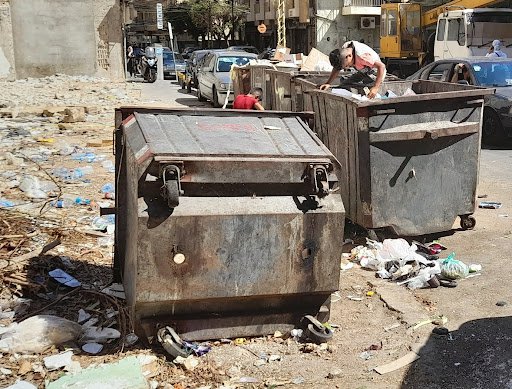
This problem was compounded by a 68% drop in tourist spending in 2020 because of the pandemic, which in turn reduced the levels of hard currency circulating in the economy. The effects were very visible on the streets, with adults and young people, sometimes working in teams, rummaging through rubbish tips to look for food or gather plastic bottles to recycle for a pittance.
Under intense pressure from the US and EU, President Michel Aoun agreed to form a new government this month with billionaire businessman Najib Mikati as prime minister. Mikati has had two previous terms as prime minister in 2005 and 2011.
Far from representing a new broom sweeping away the old political order, he is the consensus candidate of the establishment parties and their interests. The new prime minister immediately pledged to move forward with IMF talks to receive billions of dollars in aid, just as President Aoun called for the “help of the IMF, the World Bank, regional and international funds”.
Among the ‘reforms’ being considered by Mikati as part of his dialogue with the IMF is the removal of state subsidies on fuel, medicine and wheat that are likely to deepen the economic crisis for the majority of citizens. Lebanon already has one of the most unequal wealth distributions in the world, ranking 20th globally with a Gini coefficient of 81.9%. A report by the UN in 2020 found that Lebanese billionaires jointly owned $13.4bn in 2019 which “is equivalent to the wealth of the bottom 62.4% of all adults in Lebanon”. The removal of state subsidies is likely to accelerate inequality with the UN finding that:
“households at the top of consumption distribution are more likely to be sheltered from domestic developments through their secure contract jobs, or earnings and assets in foreign currencies. Households at the bottom are much more exposed to income and price shocks, as they lack safety nets or promptly fall through them”.
The same report estimated personal wealth in Lebanon at $232.2bn, which suggests that the country could go a long way toward easing the plight of the most vulnerable by mobilising “its own substantial resources” with a “fair and progressive system of shared responsibility”.
Lebanon is in desperate need of political and economic reform but an IMF ‘bailout’ is likely to only make things worse. A briefing by Bretton Woods, an NGO that challenges the World Bank and the IMF, suggests that political elites and private sector interests are strongly opposed to the root and branch reforms needed to restructure the financial sector including a “forensic audit of the Central Bank, a default and haircut on internal debt owed to private banks”.
The IMF’s neoliberal playbook when lending to heavily indebted countries includes cutting public services, devaluing the local currency and removing subsidies; measures likely to enhance social unrest.
A repayment of any bailout is likely to fall on the shoulders of an already vulnerable population
The lending programmes of the IMF and its sister organisation, the World Bank, have been disastrous for the Global South. Their structural adjustment programmes have dramatically increased the indebtedness of poor countries and their capacity to manage their economies. The Jubilee Debt Campaign estimates that since the start of the pandemic, the IMF has agreed 28 loans to highly indebted countries which are being used to repay private lenders during the COVID-19 crisis rather than meet social needs.
A repayment of any bailout of the financial sector in Lebanon is likely to be socialised and fall on the shoulders of an already vulnerable population without addressing the cronyism, corruption and structural causes of the crisis. A more just and rights-based alternative could include: a more equitable tax system to support wealth redistribution; measures to encourage productive investment; and the UN’s proposal of a solidarity fund to mitigate the rising levels of poverty.
Adding to the debt burden of a highly unstable economy is likely to represent a ‘band-aid’ of short-term proportions that will only add to Lebanon’s long-term economic woes.
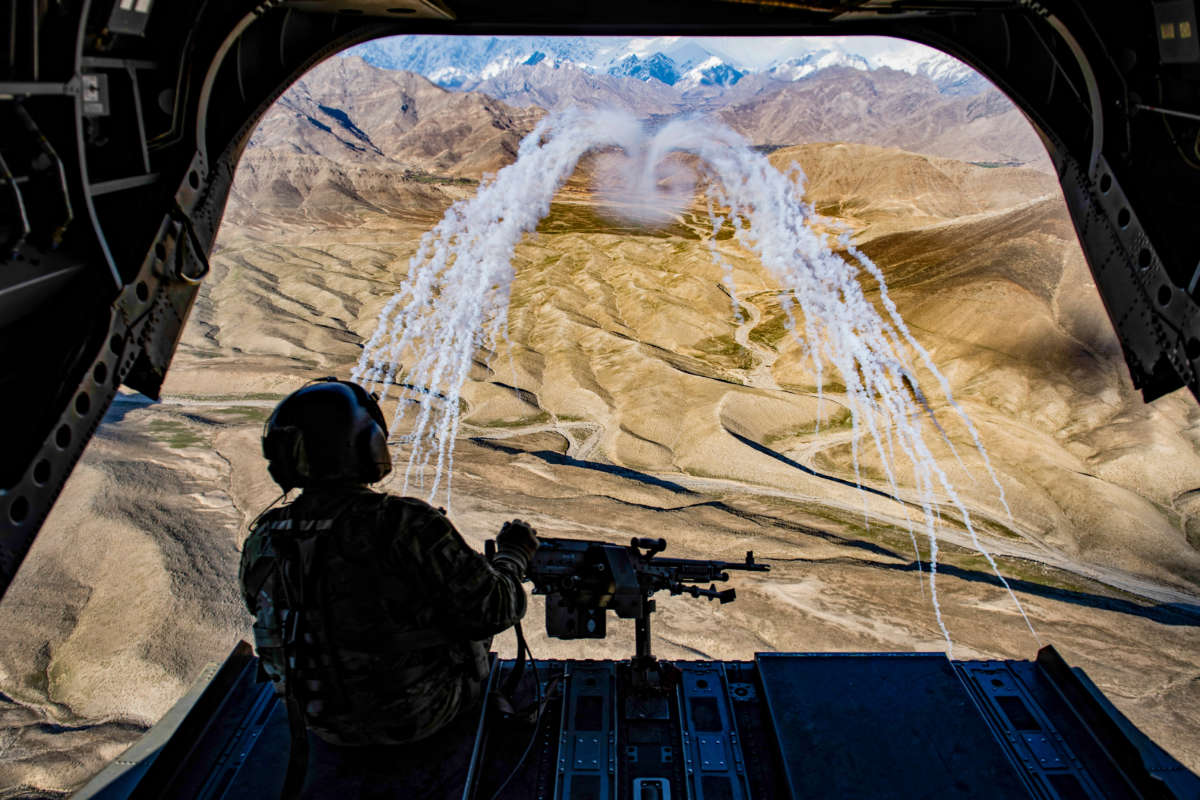

A Monday announcement from the International Criminal Court’s chief prosecutor saying his office is seeking approval to resume its investigation into potential war crimes in Afghanistan committed by the Taliban and the Islamic State — but excluding alleged atrocities committed by U.S. forces — sparked a flurry of outrage from human rights defenders.
“It seems there is no end to the betrayal of Afghans — now so many victims of torture and other abuses by U.S. and former Afghan government forces have been told there is no justice for you,” Patricia Gossman, associate Asia director for Human Rights Watch, tweeted Monday in response to the announcement.
The International Criminal Court (ICC) on March 5, 2020 overturned its previous decision and authorized then-Chief Prosecutor Fatou Bensouda to formally probe crimes as far back as 2002 committed by members of the U.S. armed forces, the CIA, the Taliban, affiliated armed groups, and Afghan government forces. It would also have covered crimes committed at so-called CIA black sites in Poland, Lithuania, and Romania.
The prospect of the probe elicited fierce backlash from the Trump administration, which slapped retaliatory sanctions on Bensouda and another top ICC official.
The investigation was deferred last year, however, when the Afghan government in March sought to take on the investigation itself. But given the “significant change of circumstances” in Afghanistan including the absent prospect of “adequate and effective proceedings” to be carried out by Afghan authorities, current ICC Prosecutor Karim Khan said in a statement Monday, a resumed investigation carried out by the ICC is warranted.
At the same time, Khan pointed to “the limited resources available to my office relative to the scale and nature of crimes within the jurisdiction of the court that are being or have been committed in various parts of the world” as motivating his decision to narrow the scope of the Afghan probe to “crimes allegedly committed by the Taliban and the Islamic State-Khorasan Province (‘IS-K’) and to deprioritize other aspects of this investigation.”
“The gravity, scale, and continuing nature of alleged crimes by the Taliban and the Islamic State, which include allegations of indiscriminate attacks on civilians, targeted extrajudicial executions, persecution of women and girls, crimes against children, and other crimes affecting the civilian population at large, demand focus and proper resources from my office,” he said, “if we are to construct credible cases capable of being proved beyond reasonable doubt in the courtroom.”
Khan’s announcement drew criticism from Katherine Gallagher, a human rights attorney with the Center for Constitutional Rights, which is representing victims in the ICC investigation into the situation in Afghanistan.
In a Monday Twitter thread, Gallagher wrote that she was “stunned” and only found out about the development from Khan’s public press statement despite meeting with the prosecutor’s office “about why it should prioritize investigation of U.S. torture — war crimes and crimes against humanity that were committed or furthered on scores of member states territories — for a decade.”
While acknowledging the “deeply problematic” under-resourcing of the ICC which Khan referenced, Gallagher said the parameters of the investigation laid out fall well short of the justice Afghan victims deserve.
“I fully support re-opening the investigation into crimes by the Taliban (and other forces) in Afghanistan — it should never have been halted by ‘deferral,'” said Gallagher. “Afghan civilians have only known impunity and this has fueled further crimes, especially against the most vulnerable.”
However, she added, the “shuttering of [the] investigation of U.S. torture committed on ICC states territory (Afghanistan, Poland, Lithuania, Romania, Jordan, Djibouti) is deeply flawed. Allowing powerful states to get away with multi-year, multi-continent torture against so many feeds impunity for all.”