Peace for the World World ! Your War Our Lives

The Dalai Lama
A Brief Colonial History Of Ceylon(SriLanka)
Sri Lanka: One Island Two Nations
A Brief Colonial History Of Ceylon(SriLanka)
Sri Lanka: One Island Two Nations
(Full Story)
Back to 500BC.

Friday, December 31, 2021
Bishop Tutu and Africa’s post-colonial political elites


2021/12/30
The late Bishop Desmond Tutu, whose life was closely intertwined with the engrossing political fortunes of South Africa over the past few decades, had his strong reservations over the integrity of the ‘cream’ of the country’s post-apartheid political class. Inasmuch as he was trenchant in his criticisms of apartheid and its white supremacist practitioners, he warned grimly those incoming native South African rulers against ‘mispresenting’ the country’s best interests.
If the charges currently being leveled against former South African President Jacob Zuma are anything to go by, then Tutu’s reservations could be considered as having a substantial basis to them. Zuma not only amassed personal wealth on a profligate scale at the expense of the state but went on to figure in a couple of high-profile corruption cases that are continuing to be heard before the country’s superior courts. Recently, Zuma was jailed for failing to attend court in connection with one of these corruption law suits.
Another African political strongman to enter the record books for eye brow-raising corruption is Zimbabwe’s former President Robert Mugabe. He is probed for corrupt links with British American Tobacco (BAT). Recent reports said that BAT was aware of discussions to facilitate a large payment for Mugabe ‘for the purpose of continuing its alleged corporate espionage activities in Zimbabwe.’

Needless to say, the above cases constitute only the proverbial tip of the ice burg. The charge of amassing personal wealth by questionable means could be made at quite a few members of the political class well outside the African continent as well. If the recent Pandora Papers revelations, for example, are anything to go by such parasitical public figures are numerous in India, Pakistan and Sri Lanka, for instance. However, none should be surprised if all regions of the South are preyed upon by such self-aggrandizers with impunity.
The mind-numbing amassing of personal wealth by post-colonial indigenous rulers should not come as a surprise when it is realized that such ruling strata are an integral part of the transnational capitalist class (TNC) whose interests are at great variance with those of peoples worldwide. These local rulers are in league with international capitalist interests whose sole motive is the earning of profits at the expense of native populations.
For example, foreign investment and other forms of international business transactions are prominent among the mechanisms through which international capitalist interests are served with the willing collaboration of local political elites, who, of course, gain in the process, through shared profits, commissions, kickbacks and the like. Fortunately, for progressives everywhere, there is ample work by contemporary political science scholarship that sheds light on these vampirical processes through which the peoples of the South in particular are relentlessly pauperized. One such relatively recent book that merits mentioning is, ‘Politics of Globalization’, edited by Samir Dasgupta and Jan Nederveen Pieterse, a publication of SAGE Publications India Pvt. Ltd. (www.sagepub.in). This volume could be considered a veritable update on the state of the South, particularly in the areas of economics and society.
What the foregoing disclosures indicate in the main is the need for intense and continuing watchfulness on the part of Southern peoples and civic organizations, lest the promise of people-centric self-governance goes unfulfilled at the hands of their ruling elites. That is, accountable governance is the insistent need and local systems need to be in place to secure this imperative. Thus, Bishop Tutu was right in cautioning local elites against betraying the best interests of the South African public.
The lack of role models among local elites of the South needs to be factored in when assessing the multi-level degeneration that is gripping the hemisphere. It could be said that South Africa had the potential of developing as a model polity in the immediate post-apartheid years. It had positive trend-setters, such as Bishop Tutu and Nelson Mandela, to light up the path into the future. However, as could be seen, subsequent principal figures in politics and society have largely failed to measure up to the standards established by the likes of Tutu and Mandela.
What Tutu and Mandela conceptualized was a ‘Rainbow Nation’ or a South Africa that embodied ‘Unity in Diversity’. And they were prepared to pay whatever price was required to achieve this end. Mandela’s decades-long imprisonment proved the point. He remained true to the cause of national liberation and social equity and did not stray from this target, whatever the odds. The spirit of self-aggrandizement, seen in the likes of Jacob Zuma, was totally alien to him.
In these times when ‘reconciliation’ has become a much bandied around word in the South, it is important to recollect what this term meant for Tutu and Mandela. For the latter, reconciliation was inseparable from forgiveness. That is, unless antagonists to a conflict were willing to forgive each other in a spirit of brotherhood, reconciliation could not be achieved.
It is important to focus on the point that forgiveness is possible only among equals. It was on the basis of such principles that apartheid was ended in South Africa and the foundation for a democratic, multi-racial South Africa was laid.
Accordingly, we are left with no choice but to draw the discouraging conclusion from the self-aggrandizing tendencies of some post-Mandela political leaders that vital founding values of post-apartheid South Africa have been gravely eroded. Progressives the world over are likely to hope that South Africa would rejuvenate itself on the basis of the Tutu-Mandela legacy, with its focus on people-centric development and national healing based on forgiveness.
The experience of post-colonial states of the South is that power centralization, self-aggrandizement among rulers and repression go hand-in-hand. Democratization involves the elimination of these iniquities. With regard to political repression, Nelson Mandela states the following in his epochal autobiography, ‘Long Walk to Freedom’: ‘A man who takes another man’s freedom is a prisoner of hatred, he is locked behind the bars of prejudice and narrow-mindedness.’
Insights such as the above are a measure of the yawning democratic deficits in the majority of contemporary Southern states. Once again, one is reminded of the fact national rejuvenation and progress are impossible without statesmen.

Are ministers and CB Governor misleading citizens and even their superiors?
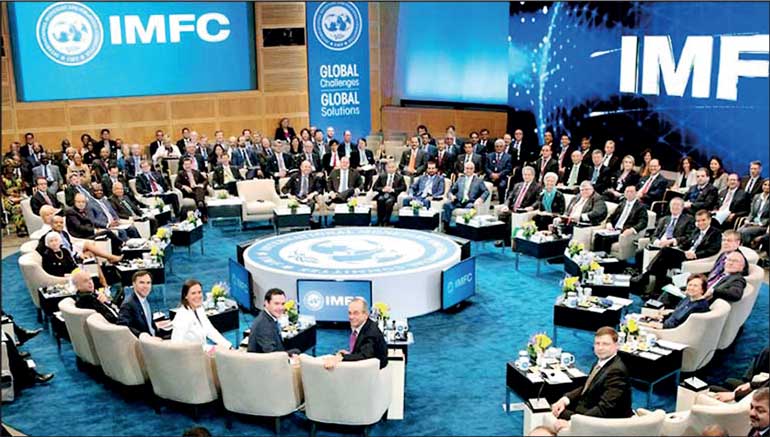
IMF has been made into a ‘Goni Billa/Grease Yaka’ by these ministers and the governor, and portrayed as an international institution waiting for an opportunity to strike, assist with regime change, go for the kill and swallow the sovereignty, independence and resources of the people in favour of the rich and powerful Western nations

Friday, 31 December 2021
At this challenging time for Sri Lanka, economically and socially, with high magnitude risks of precipitating a crisis that can easily destabilise the whole country, impoverish it and drive to starvation the poor and vulnerable segments and even lead to a national calamity following social unrest, are some Ministers and the Governor, misleading the citizens and even their superiors in governance? If so, do they not realise the impending risks, most recent examples from Lebanon and yet continue to mislead and take the country down a dangerous path, where one slip can mean disaster for the majority of the citizens and those yet unborn?
IMF has been made into a ‘Goni Billa/Grease Yaka’ by these ministers and the governor, and portrayed as an international institution waiting for an opportunity to strike, assist with regime change, go for the kill and swallow the sovereignty, independence and resources of the people in favour of the rich and powerful Western nations! This plan they make out will be achieved by ‘IMF conditionality’, described more or less as a suicide note cum last will in favour of the IMF.

To the contrary, this is how IMF describes ‘Conditionality1’ – “When a country borrows from the IMF, its government agrees to adjust its economic policies to overcome the problems that led it to seek financial aid. These policy adjustments are conditions for IMF loans and serve to ensure that the country will be able to repay the IMF. This system of conditionality is designed to promote national ownership of strong and effective policies.”
“Conditionality covers the design of IMF-supported programs—that is, macroeconomic and structural policies—and the specific tools used to monitor progress toward goals outlined by the country in cooperation with the IMF. Conditionality helps countries solve balance-of-payments problems without resorting to measures that are harmful to national or international prosperity. At the same time, the measures are meant to safeguard IMF resources by ensuring that the country’s balance of payments will be strong enough to permit it to repay the loan.
“The member country has primary responsibility for selecting, designing, and implementing policies to make the IMF-supported program successful. The program is described in a letter of intent, which often has a memorandum of economic and financial policies attached. The program’s objectives and policies depend on a country’s circumstances. But the overarching goal is always to restore or maintain balance-of-payments viability and macroeconomic stability while setting the stage for sustained, high-quality growth and, in low-income countries, reducing poverty.”
In addition, ‘Guidance note on IMF engagement on social safeguards in low-income countries2’ of 14 June 2018 refers to;
“The role of social safeguards in protecting vulnerable groups is an important element of the Fund’s engagement with low-income countries (LICs).
Reducing poverty, and more broadly promoting inclusive growth, helps support economic and political stability. For these reasons, achieving strong and durable poverty reduction was established as a key objective for Fund programs supported by the Poverty Reduction and Growth Trust (PRGT) and Policy Support Instrument (PSI)
Social safeguards represent a key policy tool to achieve this objective, and thus have an important role in both the design of LIC programs and policy discussions with LICs in Fund surveillance.
For the purposes of this note, social safeguards comprise the following:
- Commitments to social and other priority spending. Minimum floors on social and other priority spending should be included, wherever possible, in programs supported by PRGT facilities. Social spending is defined as spending on education, health, and social protection— with social protection comprising social safety nets (or social assistance) and social insurance. Other priority spending generally includes high-priority projects that support national poverty reduction and growth strategies.
- Specific reforms designed to protect poor and vulnerable groups, for instance by strengthening social safety nets and improving the tracking and monitoring of spending on such groups.
The key concepts described above are amplified as:
- Inclusive growth versus pro-poor growth. While there is no universally agreed definition of the concept of inclusive growth, it generally refers to circumstances where growth is robust and broad based across sectors, and the benefits are widely shared. Growth is said to be pro-poor in relative terms if and only if the incomes of poor people grow faster than those of the population as a whole. Pro-poor growth can be the result of direct income redistribution schemes, whereas fostering inclusive growth requires effort to boost productivity and measures to mitigate growth-inequality tradeoffs
- Social protection consists of social safety nets and social insurance policies:
- Social safety nets (or social assistance) are defined as “noncontributory measures designed to provide regular and predictable support to poor and vulnerable people.” They can include measures such as cash transfers, school meals, in-kind transfers (such as targeted food assistance), public work programs, and fee waivers (The State of Social Safety Nets, World Bank 2018).
- Social insurance policies are typically financed by contributions and can include old age and disability pensions, maternity, unemployment, and health insurance.
- Other priority spending usually includes certain infrastructure spending that can be a development priority but may provide limited or no benefits to the vulnerable in the short term. Due to the country-specific nature of such spending, this note focuses more on social spending. Country teams, in close consultation with the authorities, need to exercise judgment when deciding on whether to incorporate other priority spending into program design.
Brookings Institute article titled ‘Managing developing countries’ sovereign debt’3 states: “The IMF determined early in 2020 that 29 of its most vulnerable members will be exempted from amortisation and interest on their debts with the organisation, during an initial period of six months that was later extended to 24 months (until April 13, 2022).
In turn, the G-20 offered a suspension of the debt service of the countries of the International Development Association (IDA) for the year 2020. This Debt Service Suspension Initiative (DSSI) potentially benefited 73 countries, but did not cancel the debt, which also continued to earn interest.
The corresponding decision was adopted by the Paris Club and other major creditors, especially China. However, private creditors did not adopt it, as requested by the G-20, and some debtor countries did not use it for fear that their sovereign credit ratings would be negatively affected.
The IMF proposals underscored the need to improve the existing institutional mechanism—the so-called “contractual arrangement” based on the collective action clauses included in bond contracts—which was redesigned in 2014, and highlighting at the same time the growing problems associated with non-bond and collateralised debts, and the lack of transparency in this field.
It should be noted that the other possibility that has been on the table over the past two decades is the creation of a new institution that would support sovereign debt renegotiations. An additional possibility is doing so in the context of the IMF, as was attempted at the beginning of the century, if the debt panel in charge is independent from the board of the institution. The need for such a reform, called “statutory” in the debates, has been championed again by the UNCTAD during the current crisis.”
The above evidence supports the assertion that some ministers and the governor created ‘Goni Billa/Grease Yaka’ picture of the IMF, is only a figment of their imagination or a picture painted with personal or political interests.
Footnotes
1https://www.imf.org/en/About/Factsheets/Sheets/2016/08/02/21/28/IMF-Conditionality
2file:///C:/Users/User/Downloads/pp061418social-safeguards-guidance-note.pdf
3March 2021-Jose Antonio Ocampo- Chair - U.N. Committee for Development Policy
Professor and Director, Economic and Political Development Concentration, School for International and Public Affairs - Columbia University
CB Chief Cabraal’s Jubilance & Peoples’ Despondence


By Ameer Ali –DECEMBER 30, 2021

Dr. Ameer Ali
The currency swap deal with China for $1.5 billion has boosted Sri Lanka’s dollar stock to exceed $3 billion and made CBSL chief Ajith Nivard Cabraal jubilant and confident of further injections from other sources, expected to materialize soon. Among them, India’s $1.9 billion assistance of which $400 million by way of currency swap with Indian Reserve Bank, $500 million credit from EXIM bank for petroleum imports and the balance one billion for food and medicine imports, is the most significant. In the meantime, Bangladesh also has given a three-month extension on its $200 million currency swap that is to mature by the end of December 2021.
However, no one knows the conditions attached to the Chinese swap and presumably it would imply that it would have been tied mostly to imports from China. This would be one way dumping into Sri Lankan market the unsold and substandard products made in that country – a dragon’s gift. The saga over the ship carrying bacteria filled natural fertilizer is still fresh in peoples’ mind. Yet, can a beggar be choosy?
Even then, these are all palliative measures and not solutions to cure the disease permanently. If Cabraal and the government think that they could totally avoid IMF partnership in the search for long-term solution they would only be fooling themselves. It appears that they have left the door ajar and not fully shut. The trade minister is reported to have said that if people would be willing to bear the consequences the government would be ready go to IMF. This with cerebral under capacity (there are a few more like him in the cabinet) who, only a few months ago, claimed that 7,500 rupees would be enough for a family of three to live comfortably, and is now advising those families to grow vegetables in the backyard, should remember that it was not the people who caused this tragedy in the first place. It was the corruption in and mismanagement of his government plus whimsical decisions on unachievable goals by the President that brought this economy to virtual bankruptcy. All that the regime achieved so far is to produce a new class of plutocrats headed by one family. This government has betrayed the trust placed upon by those who elected it. It is time that it packs up and leave allowing people choose an able and uncorrupt leadership that would first make the current managers and looters accountable for what they have done, before embarking on a mission of repairing and restructuring the entire administration and economy.
Be that as it may, the Indian and Chinese rush to offer economic and financial assistance to a beleaguered Rajapaksa regime took place in the background of tit for tat actions between the two regional giants, and the regime being caught in the middle trying to satisfy both masters. It started with China suspending its Sino Soar Hybrid Technology plan to build hybrid energy system in the northern islands of Analaitivu, Neduntivu and Nainativu, because of security threat from a “third party” implying India. China is now building 12 solar power plants in the Maldives. This happened in the middle of negotiations between India and Sri Lanka to create a joint venture corporation between the two to restore and operate the oil tank farms in the strategically important Trincomalee waters. Finally, the recent visit by the Chinese High Commissioner and his team to Jaffna, where they paid visits to the rebuilt Jaffna Library after it was burnt out in 1981, a seafood factory in Mannar built with Chinese investment, and took a boat ride to the legendary Adams Bridge closer to Indian shores before going barefooted with open chest while wearing veshti and carrying flowers and camphor to pay obeisance to the Hindu deity Kandaswamy in Nallur temple. This drama was obviously staged to irritate India. Otherwise, where was this love towards Tamils all this time? One should not be surprised if the same ambassador decides to visit a mosque in the East with the ACJU chief! To cap everything the Chinese Foreign Minister Wang Yi is expected to visit Sri Lanka in early January 2022.
Read More
2021, the struggle for survival, the lessons learned - EDITORIAL

31 December 2021
Sri Lankans experienced disappointments and heartaches in 2021, but when the talk started doing the rounds that there would be a food shortage people began thinking seriously about the past twelve months that they had survived.
Twenty twenty one (2021) was nothing, but a struggle for survival. It was hard for people to even think of motivating themselves to be focused and stay clear of all the negativities around. Many perished to the deadly corona virus and those who lost employment felt a chill running up their spines. Sri Lanka wasn’t among the worst hit by the pandemic, but the repercussions from the Economic shocks jolted the average householder.
It’s best we forget this year, but there were lessons to be learned. We blamed the president for the militarisation of some of the civil functions and administration of state departments. But those critics were full of praise when vaccination centres manned by the Army rolled out the vaccines efficiently and ensured people spent the least time at such facilities and no one jumped the queue.
People in Sri Lanka put up with a second year of dealing with the pandemic. Though there were people who still disregarded health guidelines the majority, or at least 50% of the population, showed enough signs of having got used to the new normal and maintaining a distance of one metre between individuals. One just has to roll back the clock before the pandemic broke out to see that this was a nation which didn’t respect a person’s personal space. There were times when we used public transport where the person standing behind you would cough behind your neck and be very offended if you tried to complain. But now we see people being bold and ‘having the licence’ to order that a person must maintain a distance of one metre at all times between two individuals.
Tea boutiques were serving tea in glasses and porcelain cups. During pre-covid times we often saw that these containers were not properly washed after use; hence the reason for the spreading of viruses among people. But with the health guidelines specified to combat Covid insisting that tea shop owners must serve their beverages in disposable cups there has come an era where hygiene promotion has reached lofty level. People dining in eateries must order only what can consume because stewards serving food won’t take back ‘returns’. This way food is not wasted.
The year ahead is sure to give us goosebumps where the availability of food is concerned. But then again we were cautioned and told by our ministers to grow vegetables at home in order to face a possible shortage of food. The downside of this proposal is that it angered a good percentage of the citizens who don’t have even a square foot of land to plant anything.
Citizens were told to tighten their budgets regarding spending, but government ministers were seen importing vehicles and even booking their air tickets for oversees holidays during the tail-end of the year. It was hard to stay motivated in 2019 when the lawmakers failed to walk the talk.
Sri Lankan citizens have got used to living with wasteful lawmakers who plunder state assets and finances. But their patience started thinning when the poor man’s gas cookers started exploding; making the task of cooking at home a dangerous business. Buying milk powder to have a nourishing cup of milk tea is a luxury many cannot afford now. There is one thing left for the regime to do to really get the goat up in people. That is to jack up the prices of tea leaf or tea dust and deny the poor man a cup of black tea in the morning. At the rate the government is skidding economically such a disaster happening might not be far away.
Let’s hope that 2022 would bring us some fresh air!
Arsenophobia: The root cause of food crisis in Sri Lanka


By Emeritus Professor Upali Samarajeewa- 2021/12/30
International expert on food safety
smrjee@gmail.com
In the list of words most feared by many Sri Lankans, Arsenic stands among the top10. Historically, arsenic was a rat poison. This potential of arsenic was illegally employed later to get rid of unwanted friends and even spouses by some of the humans. However, arsenic had positive use and reputation as a health care agent. It is reported that Hippocrates used arsenic sulfide in the form of natural crystalline minerals, namely realgar and orpiment, to treat ulcers. Later, the arsenic containing minerals were used in making creams to remove unwanted hair in the human body. Since then, arsenides and arsenic salts in the form of creams for external application have been in use for centuries, in treatment of ulcers and syphilis. In the 1700s solutions of arsenic trioxide in potassium bicarbonate has been prescribed to treat asthma, chorea, psoriasis, anemia, and leukemia among several other health ailments. Some drugs containing arsenic have been prescribed to be inhaled as vapour, injected, or administered intravenously in the 19th century. Though the International Agency for Cancer Research classified arsenic in its pure form, and certain arsenic compound as a human carcinogens, Food and Drugs Administration of the USA approved the use of injectable arsenic trioxide for human treatment for relapsed acute promyelocytic leukemia. It may be considered an exceptional condition, but arsenic compounds do not deserve a total taboo without understanding their effects on the human body under each situation, beneficial or harmful. Arsenic trioxide was withdrawn from human treatment in 1950. There is evidence today on the effects of long- term exposure of humans to inorganic arsenic through food, water, or air leading to increased risk on bladder, lung, and skin cancers.
WHO records
The World Health Organization records on incidence of cancer in Sri Lanka for 2020 shows 7% lung cancer, 2.1% bladder cancer and 0.4% skin cancer, out of the total annual cancer cases. Almost all incidences of lung cancer are among males predominantly associated with smoking. The same percentage distribution of all cancers was visible in records over the previous 20 years, with fluctuations only in incidence of lung cancer. Arsenophobia was created in Sri Lanka in relation to the chronic kidney disease of unknown origin, identified as CKDU. The global literature on kidney diseases do not consider arsenic as a crucial factor in chronic kidney diseases similar to CKDU. Sri Lanka is not the only country having chronic kidney disease of this nature. There are parallels in “Chronic interstitial nephritis in agricultural communities” (CINAC) in El Salvador and Nicaragua. CINAC is also described as Mesoamerican nephropathy (MeN) in several other central and south American countries, mostly along the Pacific coastline. Scientific studies in the USA on the above chronic kidney diseases have identified relationship with a few pesticides. Some of the pesticides were banned in Sri Lanka decades back, and one still in use though to a limited extent. The studies in the USA have not been able to recognise links between arsenic or other heavy metals with the chronic kidney diseases described above.
Arsenic was used as an ingredient in weedicides and wood preservatives in the past. Registration of companies producing pesticides containing inorganic arsenic were cancelled in 1988 in the developed world. Sri Lanka does not permit the use of pesticides containing inorganic arsenic. If there is violation of this condition, there is a way to handle it rather than banning everything. The registrar of pesticides operates an accredited testing laboratory for arsenic and other heavy metals in pesticides. If law makers possess doubts on arsenic entering our food system through pesticides, what is needed simply is to provide more facilities and activate the office of the registrar of pesticides to bring in necessary controls. That is the scientific mechanism used in the developed countries to maintain food safety in the production chains. Pesticides came into existence because it had a role in agriculture. Replacing pesticides needs to identify a scientifically equivalent substitute. The World has not been successful in it. What is needed is to implement checks and controls at the appropriate levels and locations.
Cause of CKDU
If arsenic is the cause of CKDU, it should enter the humans through our main staple rice and drinking water. In Bangladesh and West Bengal, heavy and unacceptable concentrations of arsenic were reported in rice and water leading to major investigations by the United Nation bodies responsible for food and health. In the two locations the symptoms due to arsenic were quite different from the symptoms of CKDU reported in Sri Lanka. The writer, having examined 50 peer reviewed research publications and scientific reviews of acceptable quality by Sri Lankan and foreign scientists, found the arsenic concentrations in rice and water in Sri Lanka are far below the globally implemented tolerance limits of 0.2 milligrams per kilogram for rice, and 10 micrograms per litre for water. The average concentrations of arsenic in Sri Lankan rice are less than 25% of the tolerance limits for rice. The concentrations of arsenic in drinking water are less than 15% of the tolerance limit. The perused studies cover a period from 2005 to 2021. The scientific evidence has clearly proved that the arsenic concentrations in our foods pose no risk to health to Sri Lankans.
There are occasional reports on rejection of imported and locally produced canned fish due to presence of total arsenic. Total arsenic consists of inorganic arsenic and organic arsenic. Organic arsenic is present mainly in prawns and other crustaceans. Some fish carry lower concentrations of organic arsenic than crustaceans. Foods containing almost non-toxic organic arsenic carries no health risk unlike highly toxic inorganic arsenic in foods. Organic arsenic moves unabsorbed through our digestive system, getting excreted fast. Arsenic may be present in the environment and food in different inorganic forms and almost non-toxic organic forms. Main organic arsenic compound in fish is arsenobetaine. Arsenobetaine is of no toxicological concern. The issue of arsenic in fish need to be understood from a deep scientific angle before implementing controls.
Regulations
The regulations implemented by our standards and food regulatory authorities apply 0.2 milligrams per kilogram as the limit for total arsenic concentration in all foods. Regulations unfortunately takes no recognition on the toxicity difference between the organic and inorganic forms of arsenic. Arsenic appears in different forms food. Of them the inorganic forms are the culprit with high toxicity. The organic forms are of negligible toxicity. Our authorities need to distinguish between inorganic arsenic (which is 50-90% of total arsenic in rice) and organic arsenic which is approximately 95% of the total arsenic in fish. This raises an important question as to whether application of the general limit of 0.2 milligrams per kilogram of total arsenic to canned fish, which contains less than around 5% of the toxic inorganic arsenic. Interpretation of regulations needs much more scientific thinking than blind interpretations. Research scientists understand that there is no world free of arsenic and other toxic compounds. Arguing for zero arsenic or any other harmful ingredients in food and water is an indication of ignorance on basic principles of risk based regulatory approach. The tolerance limits are fixed for each and every harmful agent is to ensure food security meeting only required level of food safety.
Food safety
In arriving at decisions on food safety, the authorities consider the possible outcome of their decisions on food security of the country. First, there should be food for people to eat and live. Then comes the levels of risks associated with presence of harmful constituents. A good example is presented in the research by the USA scientists on problems linked to arsenic in rice. The mean arsenic concentrations expressed in milligrams per kilogram of rice in USA was 0.193 for white rice and 0.205 for brown rice against the regulatory limit of 0.200. The USA arsenic concentrations are at least 5 times higher than the values reported for rice in Sri Lanka. Applying the values to daily exposure of Americans consuming rice in 2-3 meals a day, it was postulated that they could reach high-risk level leading to bladder and lung cancer of the more vulnerable populations, especially the elderly and pregnant mothers. It was shown, using models, that reducing the tolerance level from current 0.200 to 0.100, would result in reduction of rice availability in the American market by a factor up to 90%, creating a food security risk. The study also postulated a reduction of regulatory limit from current 0.200 to 0.075 would bring down the food safety risk due to arsenic in rice from 11% to 79%. The regulations are maintained therefore, at 0.200 to ensure rice availability. The arsenic concentrations in Sri Lankan rice (approximately 0.04 milligrams per kilogram), is still far below the hypothetical USA limit of 0.075 limit, worked as a theoretical possibility. With all the scientific evidence, USA did not reduce the limit to 0.100. The scientific evidence clearly suggests that the ‘arsenophobia’ created in the minds of Sri Lankans is a hoax. It is continued even today by vociferous persons with scientific ignorance.
Arsenic enters food chain from soil or irrigation water. The earth crust is not free of arsenic. The crust contains 1.8 milligrams of arsenic per kilogram of soil on the average. It could take the range from 1-40. Arsenic concentrations above five milligrams per kilogram of soil make soils unsuitable for cultivation. The arsenic content in agricultural soils in Sri Lanka average around one milligram per kilogram, implying no food safety threat through local rice. The arsenic toxicity in rice occurred in West Bengal and Bangladesh due to high arsenic concentrations rising to the order of 15 milligrams per kilogram in their soils. Their irrigation water contained 10-fold higher arsenic than the permitted limit, leading to serious health problems. Sri Lankan situation is not at all comparable with the situation in West Bengal and Bangladesh. Unfortunately, we import rice from time to time from Bangladesh and other countries having arsenic contaminations.
If the food chain in a country gets contaminated with arsenic or any other toxic entities, they get detected in the exports at the foreign border check points, resulting in rejections and notifications. Information on global trade does not show instances of Sri Lanka tea or any other food getting rejected due to arsenic, or other heavy metals, or unpermitted pesticide residues.
It speaks on the Sri Lankan agricultural system was managed. Unfortunately, there are pseudo-scientists with no understanding on agriculture and food production, all out to create doubts in the minds of public.
This brings in the question as to where Sri Lanka went wrong in its science. It started with a vociferous student reading for a postgraduate degree in a university in Sri Lanka, working totally outside the specialty of his first degree in 2011. In desperation, he went to a soothsayer in a ‘Devalaya’ reputed to utter to the gullible people, under trans state of the mind. She was given some soil from Rajarata. She yelled “asan asan” perhaps asking him to listen. The student came back and started testing for arsenic using equipment of inadequate sophistication, applying unrefined test methods, ultimately “innovating” non-existent arsenic in rice. Tabloid media were fast to capture information. The ‘innovation’ was further supported by a media-oriented professor, who excelled in many fields other than his trained expertise.
The Island
carried an article around May 2011 under the title “Arsenic in Rice: Playing God”. The article highlighted the seriousness of statements arrived at without following basic principles of analytical chemistry and risk assessments, misleading the public. The materials released to the press have not gone through scientific scrutiny and was obviously questionable. The ‘arsenophobia’ next entered the august house with appearance of a reddish colour in “Kohila” curry in the meals served to members of the Parliament. The reddish colour is a common biological phenomenon on foods exposed to oxygen from air under certain preparation practices. It was October 2012 and The Island carried a note titled “Arsenic and cyanide everywhere”. The news on innovation of so-called arsenic in rice was next carried to the ears of the first citizen of the country at that time. He with his usual smile and tact said, “I eat rice three meals a day.” The message was clear to the student. Later the first citizen warned the media professor on the dangers Sri Lanka would face in our export trade, with this kind of utterances through the media. At that time there was already a shipment containing rice from Sri Lanka which was detained at a port in Turkey pending testing for arsenic. However, the stock did not get rejected as no arsenic was detected. The arsenophobia did not get marketed with the next first citizen either. Later the innovator of arsenic story reached the august house with a promise to provide “Better Health for Rajarata.” Arsenic is forgotten at least in the public eyes.
The baton was taken up by another relay team consisting of a priest, medical professional and an academic (sanga-weda-guru) expecting blessings from the highest level in the country. Unfortunately, the struggle ended up with farmers and labourers (govi-kamkaru) facing the problem. Indications are that the country would have to bear the outcome of arsenophobia for many months, if not years to come with inadequate food at exorbitant prices. No country in the world has stopped use of synthetic fertilizer in food production. European Union countries maintain extremely high levels of food safety in the world. They have decided to reach 25% organic food production by 2030 very cautiously. Canada produce food only during the warm six months of the year. They export 68% of the produce. In the Canadian Agriculture policy food production for export is a high priority. They apply scientifically controlled methods in use of agrochemicals. It is said that Canada was the major supplier of red dhal to Sri Lanka in certain years.
Leaders need to listen to scientific facts generated through careful experimenting and scholarly thinking. Mature scientists do not rush foolishly to take risks; politicians only see short term benefits. The prosperity of a country lies in well discussed decisions arrived through scientific knowledge, and not based on ad hoc findings of half-baked pseudoscientists. The l strength of India lies on the initiative to apply science in its policies immediately after independence by the Prime Minister Jawaharlal Nehru. The writer had the opportunity on two occasions to participate the Annual Indian Science Congress. On both occasions, the Prime Minister of India and four Cabinet Ministers participated at the congress and spent two days listening to the scientists. Unfortunately, interactions in Sri Lanka are nowhere near it. Sri Lanka gives the opportunity to the pseudoscientists to mislead law makers at individual levels.
Obviously, the Sri Lankan food production system affected by the absence of required fertilizer inputs is not in a position to deliver the staple and complementary food for the nation. It is already late to put things back in the track before everything gets beyond control. Let the country believe in science and its true scientists at least now and act sensibly.
The pernicious pandemic blinders

Basic and cross-immunity will only continue to grow, if we are in circulation, like the virus. We cannot end this ‘non-demic’ through ‘vaccinating’ the entire world population, particularly not the immune or recovered – Pic by Shehan Gunasekara
|
 It is not perennial, but seasonal, and we can ‘rush’ to lockdown before the next seasonal cycle, but then we have to cringe awaiting its virtually inevitable seasonal return. We have not heroically tamed a killer virus. We have shut down the planet, interrupting needed childhood vaccinations, missing cancer screenings and not attending to heart conditions, and considering all other forms of death, including suicide, ‘acceptable’ by some moral calculus that has never been debated and no one could possibly explain. ‘The end of the flu season’ does not require planetary paroxysms

Monday, 27 December 2021
A colleague of mine sent me the following from someone writing as ‘independent_journalism’: “Among all the vaccines I have known in my life (diphtheria, tetanus, measles, rubella, chickenpox, hepatitis, meningitis and tuberculosis), I have never seen a vaccine that forced me to wear a mask and maintain my social distance, even when you are fully vaccinated…I had never heard of a vaccine that spreads the virus even after vaccination. I had never heard of rewards, discounts, incentives to get vaccinated. I never saw discrimination for those who didn’t. If you haven’t been vaccinated, no one had tried to make you feel like a bad person. I have never seen a vaccine that threatens the relationship between family, colleagues and friends.
“I have never seen a vaccine used to threaten livelihoods, work or school. I have never seen a vaccine that would allow a 12-year-old to override parental consent. After all the vaccines I listed above, I have never seen a vaccine like this one, which discriminates, divides and judges society as it is. And as the social fabric tightens…it’s a powerful vaccine. She does all these things except ‘immunisation’. If we still need a booster dose after we are fully vaccinated, and we still need to get a negative test after we are fully vaccinated, and we still need to wear a mask after we are fully vaccinated, and still be hospitalised after we are fully vaccinated, it will likely come to the time for us to admit we’ve been completely deceived.”
A sobering, exhaustive tour of the weird, implausible, ever evolving Covidian narrative. And perhaps in this season of thanksgiving, of reflection, of looking back and looking forward, we need to review how we landed here and where ‘here’ really is. And I give my thanks and acknowledgement to Dr. Thomas Binder for providing this framework.

Spinning panic
By February 2020, doctors I work with globally remark on having been amazed. People with sore throats stopped going to their GPs (normally they would have waited to see if the symptoms worsened), but fled to the nearest hospital, manic in their panic to be ‘tested’ for fear of impending suffocation and death.
The world was rent asunder along ideological fault lines, the fear addled true believers and the besieged sceptics. Power gorged psychopaths and their narcissistic lackeys overtook the propaganda mill and managed the message with ever increasing infusions of agitation. This flowed from the sham ‘PCR test’ which confesses in its own paperwork not to be for diagnostic purposes and to be inapplicable for mass asymptomatic testing. Of course, it was rolled out globally for precisely these two, inapplicable uses!
We were ‘warned’ by the ‘fake’ whooping cough epidemic in 2006/2007. Emanating from New Hampshire, an infectious disease specialist thought they were at the beginning of a pertussis epidemic. And if indeed it was whooping cough, the disease can be fatal to babies and lead to dangerous pneumonia in frail, elderly patients.
For months, panic mounted. Nearly 1,000 medical centre staff members were given a quick PCR test, 14.2% were positive and therefore ‘diagnosed’ with pertussis. Thousands, including many children, received antibiotics and vaccines for protection. Months later, bacterial cultures, the diagnostic gold standard for pertussis, could not detect the bacterium that causes whooping cough in a single sample!
The then still reliable NY Times published a piece on this in 2007 ‘Faith in Quick Test Leads to Epidemic that Wasn’t.’ It was all an insane false alarm. The blind faith in an untested PCR test, misapplied, fomented the undue alarm. With hundreds of thousands of tests, PCR tests are prone to produce false positives which can supply the ready appearance of an ‘epidemic.’
As a leading epidemiologist explained, “All the madness seemed so sensible at the time.” We might have learned something from this?
Then came the Swine Flu Scandal I’ve written about earlier. In 2009, a highly contagious, dangerous influenza virus, H1N1, seemed to threaten humanity. Horror scenarios flowed, including from the manufacturer of today’s PCR tests (Christian Drosten), horror scenarios predicting millions of deaths worldwide. WHO obliged by changing the definitional criteria for a pandemic, for reasons unexplained to this day. How dangerous the pathogen is, got dialled out. A rapid, massive spread, even of a comparatively harmless pathogen was now enough to be ‘pandemic.’
Rattled by the WHO anointing of a ‘global pandemic’, governments rushed to procure hundreds of millions of packages of expensive antiviral drugs and hundreds of millions of doses of hastily approved vaccines which were, still though, produced via conventional means. It took the concerted expertise and reputational firepower of pneumologist and politician Dr. Wolfgang Wodarg and microbiologist and infection epidemiologist Professor Sucharit Bhakdi to gain media and political attention and pull the plug on the global madness.
Worldwide, about 150,000 to 600,000 passed with or from H1N1, less dangerous than seasonal influenza. Fortunately, vaccination readiness was low. Even so, in Sweden alone for example, 700 children contracted disabling narcolepsy (sleeping sickness) through unnecessary and unsafe vaccines. Millions of doses were sold or given away by richer nations, close to 8.9 million doses were disposed of…narrowly averting a major disaster.
The pharma/WHO/politician propaganda campaign completely hoodwinked the health authorities. Second learning opportunity.
Finally, ‘Event 201’ a major corona pandemic simulation 2019. An alleged outbreak of a corona pandemic in South America is the scenario. This was organised by the usual cabal, Bill and Melinda Gates Foundation, Johns Hopkins University, World Economic Forum, and a coterie of enablers. Looking back at the Spanish Flu, the bird and swine flus, no more influenza, but a coronavirus, essentially unknown to laypeople, politicians and journalists.
Attendees are curiously (or not so curiously) not doctors, but WHO reps, representatives of Western governments, the UN, global corporations in the fields of finance and pharmaceuticals, tourism and media, and notably Dr. George Gao, virologist and director of the Chinese Center for Disease Control and Prevention (CDC).
As per the simulation, the only resolution is global governmental and private synergy, system-relevant global corporations and industries are propped up, while on the altar of ‘necessary sacrifices’ are of course those SMEs. It is stipulated that deviant voices must be censored consistently and pitilessly in the social and mass media, and only global ‘mass vaccination’ can end the pandemic. 65 million deaths are anticipated worldwide.
Not only is the chilling ‘playbook’, eerily consistent with what we’ve all been living through, available for online perusal, but the documentary ‘Event 201: Corona Pandemic from the Drafting Table’ produced with German and English subtitles by ExpressZeitung in June 2020 will show you the complete collapse of the mass media and their outright servitude to the orchestrators of this deplorable imposed cataclysm.
Back to the corona sweepstakes
And so, two and a half months later, December 2019, a date that will certainly go down in infamy, Dr. George Gao reports 27 cases of ‘pneumonia of unknown cause’ to the WHO (out of a Chinese population of 1.4 billion), and a week later a ‘novel’ coronavirus is identified as the cause.
Two weeks after that, the aforesaid Christian Drosten presents a paper, work on which must have begun psychically before anything was reported, about a rapid RT-PCR test (which the US has now withdrawn its EUA request for because we find it cannot distinguish effectively between C-19 and influenza…nice to know that now I suppose!). Peer review happens within an unprecedented 48 hours, the journal doing the ‘review’ has Drosten on the Editorial Review Board! Banana republics usually have more shame.
Time travel had clearly been perfected in these circles, as mysteriously WHO had already posted the Corman-Drosten RT-PCR test on its website a week earlier! And had advocated it as the diagnostic gold standard, though the PCR test creator, and its own paperwork, and today even WHO, concede it should not be used primarily to diagnose.
Laying the base further, by 30 January, the New England Journal of Medicine, which then still was perceived as having more than a veneer of integrity, published a narrative from Drosten alleging ‘epidemiologically relevant asymptomatic transmission.’ This was later debunked, but by then a world was spasming out of control.
WHO names this SARS-CoV-2 though the Chinese recommended it be classified as a ‘human’ coronavirus, far less dangerous than the original SARS. So, the Swine Flu roll-out is repeated, but this time, no dissension will be brooked. Government task forces are composed globally with no medical doctors who have actually treated COVID patients or illnesses of that ilk. Lab physicians and biologists pose as virologists and epidemiologists, though having never examined anyone suffering from a respiratory infection. And they blithely declare this is an ‘alien’ about which we know nothing and must regard as extremely dangerous, and so it is open season for silly Imperial College and IHME modelling.
Dr. Binder points out the Swiss Federal Council made up of those with no experience with respiratory infection, morphed into the ‘Swiss National COVID-19 Science Task Force.’ They declare the highest danger level as per their epidemic law, on zero scientific evidence, none still published, nor with any record keeping of their activities. If Swiss Cantonal government had operated in so slovenly a way, instead of global banking and mediation, cuckoo clocks would have been the height of Swiss fame.
And this time, libelling experts is mainstream, including Professor Sucharit Bhakdi and others. Dr. Binder telling this tale, was arrested by an anti-terrorist squad in his office, and when it was revealed, he had threatened no one, they lapsed into sending him for six days to a psychiatric ward due to ‘self-endangerment while in COVID insanity.’
All pandemic plans to 2019 safeguarded society as a whole, and minimised overall harm, keeping individual rights, society and economy intact. Now, self-destructive, penal, quasi-medieval interventions were rolled out with relish, and in lockstep. Fancifully we are to believe that a brief, pyrotechnically vivid ‘lockdown’ in Wuhan effectively removed COVID more or less permanently from all of China.
And then for the first time in medical history, doctors were told not to treat, unless and if people arrived, literally gasping for breath in the ICU. At any other time, ‘protocols’ would have been tested and tried by all major universities, and the shockingly good news of mild lethality below 75 without chronic illnesses, and the plethora of repurposed drugs that worked brilliantly from HCQ to Ivermectin to Doxy, to exceptional benefits from Zinc and Vitamin D, would all have been trumpeted, tested and mass distributed, rather than vilified, smeared, suppressed in favour of untested gene therapies and scandalously expensive ‘treatments’ that led to more deaths and which were persistently given at the wrong phase of the illness. Something was rotten indeed not only in Denmark but far and wide.
In a nutshell, the narrative fed to us (all of which is essentially demonstrated bunk) is: We have a pandemic of a perennial killer virus, which needs to be perpetually tested for by the Drosten PCR test. It is spread asymptomatically so everyone is a potential killer, there is no basis in cross-immunity (forget those damned floating ships, the Diamond Princess and the USS Roosevelt that proved otherwise). The provoked disease is ‘barely’ treatable (except by 30 cent repurposed drugs we must do fraud hit pieces on which we later retract from Lancet long after we’ve muddied the water).
Its increasingly infectious, and we can only overcome this by measures ‘never’ used before (don’t ask how we know this, or why results keep backfiring) like antisocial distancing, cloth masks which were said to be useless through 2019 throughout the medical community, contact tracing for an airborne virus and serial vaccination of the world population using ‘jabs’ that haven’t completed their safety trials and whose placebo groups we quickly jabbed so no ‘control group’ would survive. A crowning moment for humanity and world leadership!
And what we know actually is
There is no global ‘pandemic’ in the sense of excess mortality globally, nor has there been. Excess mortality has tracked different responses, not the pathogen. And where immunity is robust, and a plethora of other factors from greater salvific Vitamin D enriched sunshine to openness to early treatment, younger populations and more, we see no ‘crisis’ at all – Africa overall, Asia except where mass vaccination was introduced. From global seroprevalence studies, the infection fatality rate is lower than many influenza strains, and here tracks normal mortality. ICU units have never been consistently overwhelmed, and their capacities have been paradoxically reduced during the alleged pandemic.
Epidemiological specialists indicate that testing not only critically ill hospitalised patients who may need a specific anti-inflammatory therapy or earlier in the illness, a special anti-viral therapy, but also to test symptom-free people, for one single respiratory virus, rather than doing a differential diagnosis of respiratory infections is just plain wrong. Yet it is virtually standard practice today.
The Corman-Drosten PCR test, as experts galore have pointed out, including an unanswered multi-pronged challenge to the allegedly ‘peer reviewing’ journal, cannot diagnose C-19 or death from it. There is both the propensity for false positives due to cross-reaction with other beta coronaviruses (including showing 7.6%+ positive rates even between flu seasons where the actual number is virtually zero), then the test is performed differently in different jurisdictions, cycle thresholds above 28 much less 35 or higher where false positives dominate are routinely undertaken and there is still today no global standard! How is that possible given what the stakes are? This is why the UK can have 50,000 daily ‘cases’ (positive tests) say and 100 ‘ascribed’ deaths.
There are no epidemiologically relevant demonstrated instances of asymptomatic transmission of respiratory viruses. Drosten’s January submission to the New England Journal turned out to be very symptomatic, the patient had suppressed her symptoms via medication. A 10-million-person study in Wuhan itself failed to turn up one instance. ‘Asymptomatic’ are essentially healthy, unless their immune systems are currently processing and neutralising a viral intruder.
We have effective prophylaxis, from healthy lifestyle (hence ample outdoor exercise not being ‘locked in’), immunity boosting social contacts, vitamin D3, anti-inflammatory drugs, anti-virals, topical budesonide, HCQ, Ivermectin and anti-coagulants.
Unlike influenza, as Dr. Binder points out, SARS-CoV-2 does not mutate erratically, but slowly and permanently. Even an effective ‘vaccine’ would likely lag behind new variants. It is not becoming more dangerous. When we stop intervening ineffectually and manically, the variant that spreads most easily, prevails. And that is one that leaves hosts alive to spread it, so it becomes less dangerous en route to becoming endemic.
It is not perennial, but seasonal, and we can ‘rush’ to lockdown before the next seasonal cycle, but then we have to cringe awaiting its virtually inevitable seasonal return. We have not heroically tamed a killer virus. We have shut down the planet, interrupting needed childhood vaccinations, missing cancer screenings and not attending to heart conditions, and considering all other forms of death, including suicide, ‘acceptable’ by some moral calculus that has never been debated and no one could possibly explain. ‘The end of the flu season’ does not require planetary paroxysms.
Basic and cross-immunity will only continue to grow, if we are in circulation, like the virus. We cannot end this ‘non-demic’ through ‘vaccinating’ the entire world population, particularly not the immune or recovered. Experimental treatments with multiple adverse effects (over 2 million reported in the WHO database, VigiAccess.org alone) are unnecessary for an infection fatality rate lower than 0.15% for less than 70-year-olds, below 0.05% for children, below seasonal influenza for children certainly. Even as per their own clinical data, the mRNA injections reduced the risk of mild C-19 by less than 1%, no data for severe courses, or for disease transmission or for those over 75 years of age and symptomatically sick.
Adverse effects globally chronicled are higher than all other ‘vaccines’ tracked for the last three decades combined (possibly further back depending on how reliable record keeping has been), and natural immunity in study after study is robust, long lived and reliable. The ‘efficacy’ again, by their own confession, wanes in about three months and plummets further, requiring constant ‘boosters’ with who knows what long-term effects. How many times have you been asked to be vaccinated against measles, mumps and rubella? If you had them naturally, the answer is almost certainly ‘never.’
The last Covidian Xmas?
We can pray, this is the last time we need discuss this. Specialists say that epidemiology 101 teaches that in the event of a national epidemic of national scope, a study cohort representative of the population must be formed immediately. This is to monitor prevalence, incidence and severity of the disease and the status of immunity via antibodies and T-cell immunity. Had we done this, this charade would have been done by April 2020, virtually everybody was already immune (those floating ships again), and there was no evidence for nonsensical interventions requiring constant rationalising and rigged data.
No epidemic laws needed (and where the devil did a democratic society outside a short-term existential crisis get any authorisation to enact these?) or digital certificates being dangled by the ‘jabbatoir’ guild.
Massaging death certificates so we can claw for any credibility whatsoever, expecting some mortality deity to suspend other sources of death so ‘COVID’ can have centre stage, or rolling the PCR dice over and over so we can just slap on the COVID sticker, it’s time to stop the fundamental testing/accounting fraud, and let people rally their immune systems, and use ‘vaccines’ only for the most vulnerable and let those openly compete therapeutically with far safer interventions and early treatments.
For perspective, as reported out of the UK, since ‘Omicron’ was first detected on 27 November, seven deaths ‘with’ it have been documented as of 22 December. Average age, 83. Over that same period, 239 deaths by ‘suicide’. Average ages between 25 and 44.
Given that, where do you think the conversation should really go and where should our attention really flow?


By Gamini Dullewe –DECEMBER 29, 2021

Gamini Dullewe
For a Democracy to function smoothly, the citizens of that society should be intelligent, matured and honest, mostly for the country as a whole to benefit. If not the miscreant in that society will oust the honest, qualified educated and usurp Power to govern by deceiving the masses as the Saviours, to be elected by the public vote, only to enrich them and their support base, at the cost to that country and the rest of the citizenry. This is precisely what happened to us in Sri Lanka where the Hoodlum captured Power after openly robbing the Tsunami Funds. Thereafter the Deceitful Leaders made a mockery of Democracy by allowing all who supported, each and every one of them, to dip their hands into the Govt Kitty in order for them to be retained as the Populist Leaders. That was the ruse they adopted to cultivate popularity and to remain in Power Winning Election after Election, selling Cheap Political Rhetoric as Patriotism and a sense of Nationalism, fostering Sinhala Buddhism, the Opium of the Majority. This modus Operandi reached it’s peak after November 2019 Presidential Election where the President elect, openly permitted the new MPs of the Pohottuwa Govt to fell timber cutting Forest Reserves, mine sand and earth notwithstanding Environmental damage, removing Transport restriction just to appease the support base, for them to make a fast buck in order to keep them satisfied. Today we are about to witness the ill effects of a Flawed Democracy in the wrong hands of a set of Imposters parading as Paragons of Virtue.
It is believed although Athens in Greece is considered as the cradle of Democracy, there had been other City Centres in Greece that had adopted Democratic Rule over Nobility, that had ruled before. There is no known society that had not been ruled by the Monarchs before the advent of Demoracy. With the birth of Democracy most if not all Monarchies have either been converted to Democracies and some countries retaining their Monarchs for Ceremonial functions or totally annihilating the Royalty and the Nobility, to establish Autocratic rule with despots acting as Dictators. These Dictatorships have been periodically subjected to change of Rulers by being overthrown by their second in Command and they have had rigid Rule of Law, either adopting Communism or Socialism as their Political Ideologies, whilst the Democracies have had their rulers changed from time to time through the Ballot and at times through the Bullet. In Democracies by and large it is believed that the masses are the decision makers to change Leadership through their Franchise. In a Democracy, that society can follow either Capitalistic Policies or Socialistic Policies to develop the Country’s Economy.
The Birth Of Democracy In Ceylon (Sri Lanka)
Sri Lanka after being ceded to the British by a Treaty in 1815, the country lost it’s Monarchial Rule remaining in the Kandyan areas. Then the British Governed the whole country under One Rule, all it’s subjects, without division for over One Hundred and Fifty years till 1948. In 1931 with the establishment of the Donoughmore Constitution, Adult Universal Suffrage for the first time was introduced by the British in the Country’s History. This has been a Pilot Project executed before granting Independence to ensure freedom from Colonial/Imperial bondage for the British Colonies in Asia, Africa and the Caribbean. The Donoughmore Constitution had been drafted by one Sydney Webb – Secretary of State, a Socialist whose desire was to see an equitable distribution of Power and wealth to every Community in the Island to achieve Prosperity and in the Soulbury Constitution introduced in 1947 just before Independence was granted, Article 29 (2) had been incorporated to safeguard the Minority Rights. However, there had been One Britisher who had opposed openly, saying that the Country’s Polity was not mature and literate enough to Implement and enforce the Protection provided to the minorities in our Multi Ethnic and Multi Religious Society. True to his wise words, we as a Nation has proved beyond doubt, 73 years after Independence, enjoying Democracy, the Faux Pas that was predicted. The downside of Democracy was even worse, where the Hoodlum in society was afforded ample opportunity to capture Political Power to plunder the National wealth for their own aggrandizement, at the Cost of Peace and Prosperity to the entire Country.
During the time of Monarchial rule before the advent of the Portuguese, the Dutch and the British, under the Feudal System there was no significant disparity between the Landed Gentry representing the Haves and the Peasants representing the Havenots. Dress wise all were attired mostly alike and all houses were built with Wattle and Daub and there was not much difference like between a Mansion and a hut. The houses may have varied in size and roofing, but there were no big differences then as there were no Mansions or Vehicles unlike today, to display or flaunt one’s wealth. Except the King and the Aristocracy, the rest were mere Vassals in Society. It was Family Tradition for the distributions of functions, to be a Medical person (Vedamahattaya), Carpenter, Gold Smith or Black Smith and other. All engaged in Agriculture helping each other through a System of Barter and not for payment of money, although folk lore reveals of Gold nugget payments for heroic deeds in the past by the Kings. The appearance of money, VOC currency surfaces with the arrival of the Portuguese in the Coastal areas under their rule. People begin to acquire money with the sale of labour and export of Spices. It was only under the British, the Natives really start to use money as currency and gradually displaces the system of barter. So commences the money accumulation as wealth and it was the Renters that became Rich first in society first to make Nobodies as Somebodies in society. One could get a better insight to this aspect, if one reads Kumari Jayawardena’s book from Nobodies to Somebodies, where the Landed Gentry although had wealth in the form of land, did not have liquid cash as the Renters did. There had been no Buddhist Temples in the City of Colombo. It was with the Renter’s money, the first Buddhist Temple at Kotahena ‘Devaduththa Ramaya’ had been built and the second temple, ‘Issipathana Ramaya’ built at Greenland’s Road, possibly to clear their Conscience of making Filthy Lucre.
Post Independence
For an effective Democracy to function, the majority of its subjects should be above average intelligence, a high degree of Honesty and well committed to the cause. It is only then a proper Democracy is functional for the benefit of that country as a whole to the haves and the have-nots equally. Let us see our perspective from the inception. To begin with we had the (UNP) United National Party where the name itself indicated of that it was a joint force of the majority of it’s Citizen who were of some standing and well to do, to contribute to help Develop the country, sometimes spending their own wealth. Then we had the Leftist Parties led by the Capitalists who played the Comradery part with the Ordinary masses to win their hearts and minds, some being Professional Lawyers of repute who were ardent Leftists, who never appeared free for any of their Litigants. Societies adopting Socialism or Communism was a total Deception to fool the masses, where those who preached the Ideologies to become the new rulers, their families today have become the Neo Capitalists of those societies, displacing the earlier Capitalist Rulers. The UNP under DS Senanayake started off well, alleviating poverty by allocating 5 acres of prepared Paddy Land, 3 acres of Highland, a two roomed house built and a Co-Operative System to support them to purchase their Rations, to be paid back with their harvest. Thousands of families were settled in the North Central Province (NCP) in a number of Colonization Schemes that were commenced, much to the criticism of the Leftists then, that the UNP was trying to kill the poor, infecting them with Malaria. However, the end result was to have today a Farming Community that act as the backbone of the Rice producers in the country, with the likes of the Sirisena family both Maithreepala and Dudley, as the beneficiaries of that DS’s scheme. The UNP under Sir John Kotelawala as PM of the UNP Govt, continued with helping the poor farmers but also commenced Housing Projects as the Bambalapitiya Flats for the Middle Income Families in the Country and for the poor Tenements holders, Flats at Maligawatte which later Premadasa continued to expand.
In the midst of this, with the untimely demise of DS Senanayake and the appointmenet of his Son Dudley Senanayake to succeed him to prevent a rift within the party for leadership, Banda precisely did that, by aligning with the Reactionary forces in the country, forming the Pancha Maha Balawegaya, Sangha, Weda, Guru, Govi and Kamkaru, giving leadership to the Sinhala Buddhist Monks to form the SLFP and form a Govt of their own in ’56 to boast that their Govt was elected by the Poor, therefore will only serve the Poor in the country, ignoring the Rich, where over 80% were represented by the Poor. Yet the masses were vary in voting them in to power because although they managed to win Constituency wise with a larger representation in the Parliament, they could not win the majority of the aggregate vote. It is ironical how a govt can be only for the Poor in a country where the whole of society vote in a Democracy? The UNP Govts hitherto have been for the Rich and Poor alike. The Banda’s and Gunda’s Govt of ’56 was Anti- Capitalist and there was a witch hunt to denude the Capitalists to appease the Poor by doling their Nationalized wealth to the poor as handouts to lure them to support their Politics.
Deceit And Corruption In The System
Banda himself hailed from a Capitalist family. There are many who point the finger at the UNP, that Corruption commenced with the UNP. Yes, Corruption that most saw was after Premadasa and Sirisena Cooray took the reins of the UNP undoubtedly. But I like to remind these critics who crow of Corruption, to have commenced under the UNP, to find out how Mrs. B redeemed ‘Tintagle’ their residence down Rosemead Place in Colombo 07, which Banda Mortgaged for Rs. Nine Hundred Thousand to the BOC in ’55 for his Party’s election Campaign, that Banda could not redeem before he was assassinated, was redeemed after the Mortgage was transferred to the People’s Bank, after the People’s Bank itself was established in ’62 by Sirima’s govt. Now, from where did Mrs. B find funds to redeem, that Banda did not have funds to redeem the property prior? Remember how Mrs. B had added zeros for Compensation for their excess properties vested with Land Reform, after take over, where she lost her Civic Rights and also nicknamed Bindumathi. The Dooshanaya and the Bheeshanya Label was pinned on Ranil Wickremesinghe in particular and the UNP in general, more so by Chandrika and Mahinda with their supporters, prior to ’94 Hustings to win Elections. Before that, Corruption has been prevalent in most Govt Depts, where many a Party supporter of all Political Party were accommodated with employment, where corruption has been rampant.
Although most Politicians who took to Politics from the Socialist SLFP were more corrupt than the rest because they being Paupers turned out to be the wealthy after a few sessions as MPs in the Parliament. Only one MP, one D.B. Munnkulama a Lawyer from Kurunegala was tried and convicted for Bribery and Corruption. Thereafter no MP has been tried or convicted, not because Corruption has ceased, but the System has been overpowered by the Politicians subduing the Law enforcement. This fact was very clearly seen when MR was exposed of the Tsunami Fund Scam from the Helping Hambanthota donations where MR had defrauded over a Hundred Million Rupees to a personal Bank Account of his and was allowed to contest the Presidential Election in 2005, without a Trial or Conviction. But for many, especially for Ranil Wickremesinghe Critics, they saw the speck in Ranil’s eyes with a nonevent of a Bond Scam and not so much of the Tsunami Mole in MR’s eyes, where he, his family and supporters have plundered the bulk of the wealth in the country, from 2004 Tsunami onwards.
The Fallacy In Democracy
Populism in a Democracy as ours, does not deliver the best to govern a country, no matter how much they are popular or win with the mass support at an election genuinely or in genuinely. There has to be checks and Balances adopted to prevent the Hoodlum from entering Politics and taking over the Country and thereafter Ruining the Country more than Running it for the benefit of all in society. What happened to Sri Lanka under the Rajapaksas, where not only the Judiciary, nor the Police or the Public Service was spared from MR’s influence to toe his line, winning election after election and brazenly dispense Cases filed against the first family and their supporters or for that matter to Pardon any Criminal, Convicted by a Court of Law, vilifying the Judiciary and the Justice System of the Country saving the, ‘Apey Miniha’ without any qualms, making the Justice System in the country, a Mockery.
Read More
Subscribe to:
Posts (Atom)