Peace for the World World ! Your War Our Lives

The Dalai Lama
A Brief Colonial History Of Ceylon(SriLanka)
Sri Lanka: One Island Two Nations
A Brief Colonial History Of Ceylon(SriLanka)
Sri Lanka: One Island Two Nations
(Full Story)
Back to 500BC.

Sunday, September 4, 2022
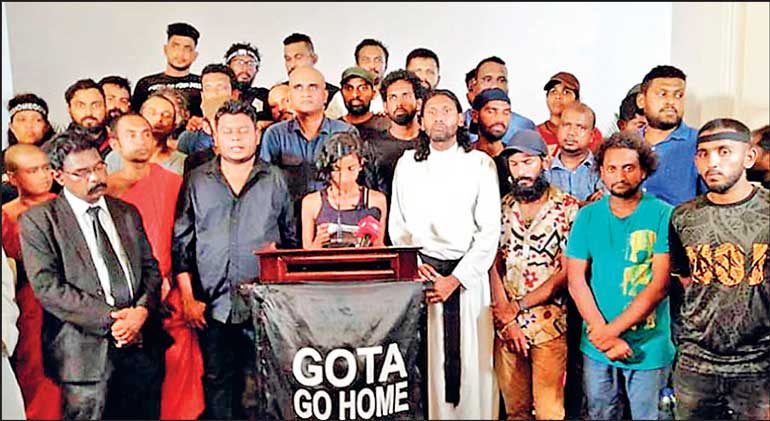
Sri Lanka youth protesters issue 6 immediate demands
.png)
The GotaGoGama activists on Saturday issued six immediate demands from all political parties and a future President, Prime Minister and Government.
They proclaimed their demands addressing the people and media from the President’s House.
In their statement GGG activists said the following.
The following Action Plan articulates the supreme purpose archived by the historic Sri Lankan people’s uprising, launched on the demand that President Gotabaya Rajapaksa and his entire brutal Government resign with immediate effect; drafted with deep respect for the various views of the multitudes who have joined the
people’s protest; held together through consensus but allowing for the right to disagree; created through the strength of solidarity, in the midst of multiple debates, arguments and conversations; drafted in the month of July in 2022, released to the public from the Galle Face Protest Site, for the purpose of bringing relief and peace of mind to all of the people of Sri Lanka.
GGG demands
1. Gotabaya Rajapaksa must/should resign from the post of Executive President with immediate effect
2. Ranil Wickremesinghe, and the Government including the Rajapaksa regime must/should resign with immediate effect (This includes all Cabinet, Non-Cabinet, Deputy and Project Ministers, Secretaries, Directors and Consultants to Ministries, Presidents of State Institutions and Corporations, Ambassadors)
3. Subsequent to the resignation of the Gota-Ranil Government, an interim Government which subscribes to the economic, social and political aims and aspirations of the ‘people’s struggle/Janatha Aragalaya’ should be established. A People’s Council which has legal standing, through which representatives of the ‘Janatha Aragalaya’ will be able to effectively engage and mediate with the Interim Governance should be established.
3.1 Frame an urgent short-term course of action to provide relief to the people oppressed by the current economic crisis. Areas to be addressed:
- A program for the provision and distribution of essentials such as food, fuel, gas, and the provision of facilities such as education, health, public transport and energy
- Cancellation of Micro finance and Farmers debts
- Cancellation of Leasing and Small Enterprise debts or framing a methodology for long-term repayment
3.2 Release peaceful protestors who are currently under arrest, including all political prisoners. Ensure a process of justice for those who are victims of political intimidation and revenge
3.3 A program to provide justice to all families of victims of extra judicial killings and disappearances
3.4 An investigation based on an audit, to recover all monies and assets stolen by the political regime and deal with all those guilty according to the law. Areas to be addressed:
- The wealth acquired deviously by politicians
- Tax evasions of Corporates that make enormous profits
- Unethical profits earned by individuals and companies that received political patronage
3.5 A complete revision of the current system of taxation: Revise the tax policy IN order to minimise the percentage of indirect taxation and increase the percentage of direct taxation, so that large corporates and businesses will be charged higher taxes under a serialised tax system
4. Subsequent to the expulsion of GR from power, the following steps need to be taken until a new Constitution that affirms the power of the people is in place
- Reduction of the Executive powers of the President
- Just law for all
- Strengthening democratic institutions and wherever possible, a further democratisation of the existing Constitution
5. A new Constitution that endorses people’s sovereignty to be established through a referendum as quickly as possible. Areas to be addressed:
- The right to life to be recognised as a fundamental right
- The Executive Presidency to be abolished
- An appropriate process for a fair election
- A process that provides the right to recall elected representatives who are not accountable to the people
- A process that enables the people to participate in making and amending the law
- Address the limitations in the current Constitution on human rights and the rights of women and children and strengthen these rights
- Endorse the right of the people to education and health
- Take appropriate legal action against those responsible for violating the environment under the guise of development. To make the following scientific approach mandatory when decisions regarding the environment are taken
- To eradicate racism and racial oppression. To strengthen the relevant legal foundations that affirm the equality of religion, language, sexuality, and other cultural identity as well as democracy and political freedom
- The right of the people to call for a referendum subject to the consent of a given percentage of registered voters
6. The fundamental objective of the interim Government is to implement the above proposals. It should function for a maximum period of a year during which time the new Constitution should be passed
- Accordingly, clauses 3 and 4 above should be considered urgent requirements and should be implemented within a maximum period of six months
- Clause 5 should be implemented within a maximum period of 12 months
- Until such time as all the above are achieved, the peoples Aragalaya will continue in new ways

To The New Administrator
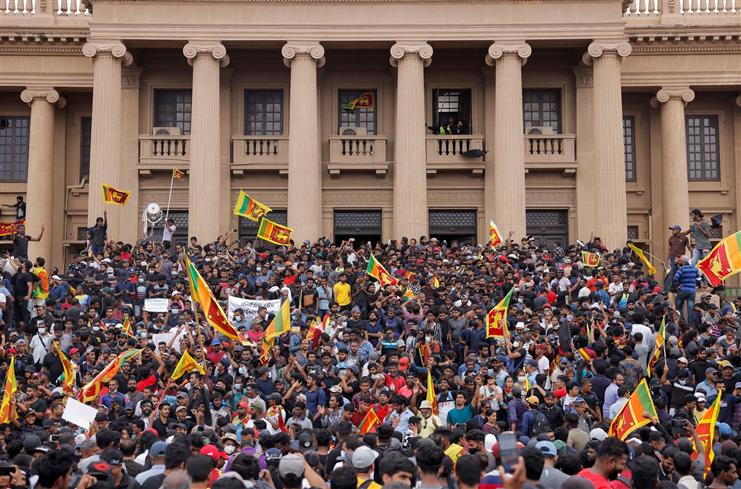
Photo courtesy of Tribune India
.png)
INDRAN AMIRTHANAYAGAM-
The fourth wall has crashed and the audience
is now on stage making tea and frying omelets
in the kitchen, lounging on the guest beds, diving
into the swimming pool. Unheard of, unimaginable
until now these scenes, what Town & Country magazine
would have commissioned for an inside look at how
the rich president lives, exposed to ordinary, starving
people with a sense of fun, taking selfies, recording
on Facebook Live. But nobody is beating up anybody
except for the dozens hurt, two critically, in the initial breach.
This has been largely a pacific encounter with the buildings
of the reviled dictator and the hapless prime minister
who took on the thankless task of leading with nothing
and promising hardship and pain and is now in hiding
while his home blazes. Very sorry that a few miscreants
in the great people’s movement have tarnished the image
of the uprising. At least the p.m. and family are safe.
At least the president has agreed finally to resign. At least
the country can start to get off the front pages. But millions
of people have cut meals to one a day. Millions have no petrol.
Millions have no paper to write their sums at school. Nobody
is going to wake up tomorrow to a miraculous new world,
But it will be brave. and their revolt is right. Foreign aid
will come no matter who takes over administration of
the suffering–and native resourcefulness, wily adaptation,
just like victims of the uncivil war who improvised light
in the darkness, we—I mean of all us with a part in the play—
will find the way out of the maze, will go ahead riding bicycles.
Overcoming ‘Defeatist & Bystander’ Mindsets; Lessons From Guatemalan ‘Aragalaya’

%20(1)%20(1)%20(1).gif)
By Mohamed Harees –JULY 5, 2022

Lukman Harees
“Seeing the mud around a lotus is pessimism, seeing a lotus in the mud is optimism.” ― Amit Kalantri, Wealth of Words
Learned helplessness, first observed by Martin Seligman in 1965, when he was doing classical conditioning experiments on dogs, occurs when people or animals feel helpless to avoid negative situations. Seligman concluded that the conditioned dog had learned that trying to escape the shocks was futile, and thus would not try to escape it even in the new environment of the second experiment. He described this condition as learned helplessness. Humans too are just like these dogs. If, over the course of their lives, they have experienced loss of control, they become a nihilist who trusts futility above optimism. Democracy needs alert and active citizenry; it cannot afford indifferent, careless citizens. Learned helplessness as a behavioural theory, explains how people can remain passive even at the forefront of injustice violence corruption, discrimination and other forms of negative situations because of their prior knowledge or there might be other reasons like defeatist attitudes, and fear of failure.
As people of a country in a continuous state of turmoil, Sri Lankans too carrying a crushing weight of helplessness in their shoulders, and negative emotions which are leading them to a point of despair and accepting their fate or Karma. However, if they remain in this nihilist state for a long time, the danger will be that they will decide that the present status quo- of facing suffering inflicted by a corrupt political administration and need to get used to a lower quality of life and desperation are facts of life and thereby pass up opportunities to fight the evil and unjust political system which created this mayhem in the first place. The loss of control in any situation can lead to this state. The people will thus at best settle down to idiomatically ‘save the babies floating in the downstream instead of going upstream to discover how the babies are getting into the river in the first place’. Sri Lankans can no longer be political bystanders anymore, given the developing scenario of gloom and doom.
A growing recognition emerges that we Sri Lankans don’t have the stomach or the backbone to do the things we have to do to win this fight- to chase out a stubborn despot/ misfit elected due to our own stupidity and to tackle the multitude of crises he has created. Our fingers have been burned. Our international image has taken a terrible beating. As it stands, we don’t’ seem to look and like what we see in the mirror. While the self-bloated ruling politicians of the Diyawanna Oya have gone into hiding from public view , thousands if not more are joining the passport queues to take their first flight out of the country which they loved and lived in. As the crisis after crisis hit this Island nation, and many are the hitting the streets to protest and wage the struggle calling for social justice and political accountability, as a nation however, people are still wanting to bury their heads in the sand and pretend that the crises will fade away when the next fuel bowser arrives and that some other nation will salvage their country. This is merely an illusion. If there is no collective nationwide commitment to the struggle (Aragalaya) to change this toxic system of governance and if everybody feels that somebody will do it for them, it will end up with nobody doing what everybody as a collective could have done.
Seldom that the people realise that corrupt Robber Baron Rajapaksas in particular and the ruling parties in general whom they have been electing democratically since Independence have been ‘actively plotting and planning their destruction’ in a sense by sucking and siphoning out the nation’s wealth and also their future over the years. People have thus paid a terrible price for connivance with and climbing into the gutter with these political opportunists and taking the nation into an oblivion and wilderness, naively believing and trusting laughable and unenforceable election promises and manifestos. However, having realised their folly, as a collective, people can do things to change the status quo and make qualitative and decisive changes in the political system. ‘Not losing hope and having self confidence’ is the starting point.
Having hope,” writes Daniel Goleman in his study of emotional intelligence, “means that one will not give in to overwhelming anxiety, a defeatist attitude, or depression in the face of difficult challenges or setbacks.” Hope is “more than the sunny view that everything will turn out all right”; it is “believing you have the will and the way to accomplish your goals”. Defeatist thoughts are the mother of inaction. A defeatist spirit must inevitably lead to disaster”. One of the greatest fears people is the fear of failure, imagining all possible scenario why what you do will not work based on all past experiences with party politics, thereby going in a state of analysis paralysis. The best way forward will be to overcome this defeatist attitude and actually take a leap of faith, take that first step, and put themselves in a situation where there is no turning back. Many examples abound worldwide. What happened in Guatemala in 2015 closely resembles the Aragalaya which is unveiling now in Sri Lanka! Their campaign hashtag #RenunciaYa (Resign Now) corresponds with ours; ‘#GohomeGota’.
The political leaders of Guatemala and even Honduras have become targets of a broader frustration fed by the conviction that there is little to stop well-connected business groups and politicians from conspiring to skim off their states’ scant resources. As a Honduran journalist, said: “The government wasn’t listening to the clamour of the street. People want resounding answers. They don’t want half-answers. The peak of tolerance for corruption has reached its limit. Citizens are just fed up”(sounds familiar!).
Read More
Overcoming ideological anarchy

The youth protesters of Sri Lanka who have coined the slogan ‘GotaGoHome’ and brought it to the fore or the Opposition political parties which have subsequently borrowed or hijacked it from the former do not seem to have made a proper study or analysis of the practicality of it – Pic by Upul Abayasekara
%20(1)%20(3)%20(1)%20(1)%20(1).png)
Friday, 8 July 2022
Mao Zedong said that “a fall into a pit, a gain in your wit”. But the downfall that has occurred in Sri Lanka has not resulted in making a special gain in Sri Lankan wit. In the context of the present crisis, the ideological plane of the country is overwhelmed almost completely by anarchic ideas. This particular mentality has weakened to a greater extent, the country’s ability to recover from the deep abyss it has fallen into.
Sri Lanka has fallen to the first level of an immeasurably deep abyss of two levels. It is now in a situation where it is most likely to fall into the second level of it which is more deep and destructive. If the country fails to recover from the first layer of the abyss which it is now in, and falls into the second layer of it, it is inevitable that the country will be compelled to suffer a dreadful destruction not easy to recover from.
There is no doubt that Gotabaya Rajapaksa is a person not fit for the Presidency. Although this crisis is not his creation, the wrong policies followed by him after he became the President have aggravated the crisis and escalated it to a level of explosion. Also, he can be considered as a member of a political family which is corrupt and scandalous. There is no doubt that if he is removed from the presidency and a competent leader who can manage this crisis efficiently could be appointed as the president, certainly it will contribute to the common good of the country.
But the attempts made to achieve this goal by removing him from his position outside the established constitutional framework and in the absence of an acceptable and legitimate method which would not aggravate the crisis, might invariably push the country into the second abyss, which is much worse and very difficult to get out of.
Presidential system
The presidential system is built in such a way that the person elected the president cannot be removed from office during his official term of office except by an impeachment. After the establishment of the presidential system of governance in Sri Lanka, no president has been ousted while in office. The presidential system in the USA is more than 230 years old. Except for Richard Nixon, no other president of the USA has been removed or expelled from the presidency while in office. Nixon also was compelled to leave the office due to an impeachment.
In the Philippines, the dictatorial regime of President Ferdinand E. Marcos was ousted by a powerful public uprising in 1986; it happened not when he was the president, but when he was out of presidency and contesting a presidential election. He won the election in a close contest; but had to flee since millions of Filipinos along Epifanio de los Santos Avenue (EDSA) in Metro Manila, and in cities all over the country took to the streets against him in a very aggressive and powerful protest following his election victory being declared to be corrupt; subsequently Corazon C. Aquino, his main rival was sworn in as the elected President. It showcased to the world the singular strength of the Filipino people.
A similar thing happened in Bolivia in 2019. Evo Morales ran for his fourth term in 2019.
Despite leading the presidential election in the first round, he was forced to flee after the public took to streets in a massive campaign against him when the international election monitoring groups declared that he had won the election through corrupt practices. Consequently, Jeanine Anaez, his opponent became the president of Bolivia. Later, a Bolivian court found Jeanine Anez guilty of orchestrating a coup that brought her to power during a 2019 political crisis and sentenced her to 10 years in prison.
But the youth protesters of Sri Lanka who have coined the slogan ‘GotaGoHome’ and brought it to the fore or the Opposition political parties which have subsequently borrowed or hijacked it from the former do not seem to have made a proper study or analysis of the practicality of it.
Impeaching the President
If the President does not renounce the office voluntarily, it is inevitable that the removal of him from office through public protests orchestrated in the streets will become extremely difficult. Whatever may be the end result of the efforts made for that, it will inevitably jeopardise and confuse the ability to solve the balance of payments crisis and the economic crisis associated with it. On the other hand, following the first public uprising, there won’t be a possibility of bigger popular uprisings except for sporadic struggles occurring at different places. Obviously, no Opposition party has been able to develop themselves to a level capable of challenging the Government despite the fact that the Government has deteriorated to the maximum level. Also, a rapid decline could be seen in the acceptance of trade union movements.
It is almost unheard of in world history that two major uprisings do not erupt at very close intervals. The first revolution in Russia broke out in 1905. The second revolution occurred 12 years later in 1917. The first insurgency of the JVP burst out in 1971 and their second insurgency occurred 17 years later in 1986. It is inconceivable that there will be a public uprising strong enough to overthrow the Government on the instigation of political parties.
It is important to note that the Opposition in Parliament is not strong enough to wield the power in deciding who should be the next president in case Gotabaya renounces the presidency due to strong resistance by the forces of the Opposition. So much so, the next president will be decided by the Parliament where the Pohottuwa party commands more power. Under the circumstances, how can we guarantee that a president elected in that way will be more efficient and better than the incumbent president? What will be the outcome if the next president elected that way too becomes a source of ridicule of the public?
Instead of having such a complicated and circuitous political program which has no clear end in sight, why shouldn’t an interim all-party government be formed for the purpose of implementing a structural reform program that will lead to a profound change in the system while retaining the incumbent president in office as suggested by the “Reform Movement”?
Path to choose
It is only through such a government that the national consensus needed for adopting a macroeconomic policy framework as requested by the International Monetary Fund (IMF) which is acceptable to it and the World Bank could be achieved. Also, such a government will be able to formulate and implement a pragmatic strategic plan to effectively control the disaster situation caused by the crisis. It is only such a government that will have the potential and the ability to generate a general consensus for a reform program that will lead to the creation of a new and incorrupt country where national harmony and the rule of law reigns supreme, and is capable of overcoming the failed situation which the country has fallen into.
According to the new terms and conditions proposed to the IMF by the United States Senate, it appears that such a reform program is an indispensable condition for Sri Lanka to receive IMF support. As our movement has proposed, a common consensus can be reached for a reform program which must be implemented in two stages that are interconnected in the constitutional sense and under the supervision of the United Nations as well.
In addition to the appointment of Commissions or Committees of Officers to inquire into the affairs of the first stage of the program which must be completed in one year, it would be possible to choose a suitable system of governance, make necessary legal reforms to ensure a free and fair election to appoint representatives for its legislature and conduct an election to give the people the right to elect a government of their choice. By doing so, the first phase of the reform program can be completed. The second phase will include the conversion of the new government elected by the people into an all-party government and implementation of the reforms including the making of a “people’s participatory constitution” as prescribed in the interim constitution.
Such a reform program will inspire new hopes for the nation that has lost hope. It will unite the people and create a situation where the political parties could work together. It will help integrate the divided nation and rebuild the country which has collapsed, and makes it a great national task that should be performed by the entire nation. Such a program will enable the country to overcome the current failed state and re-emerge stronger. Also, it will give the ability to restore the international recognition that has been lost, and build it stronger.

%20(1).png)
09 July 2022
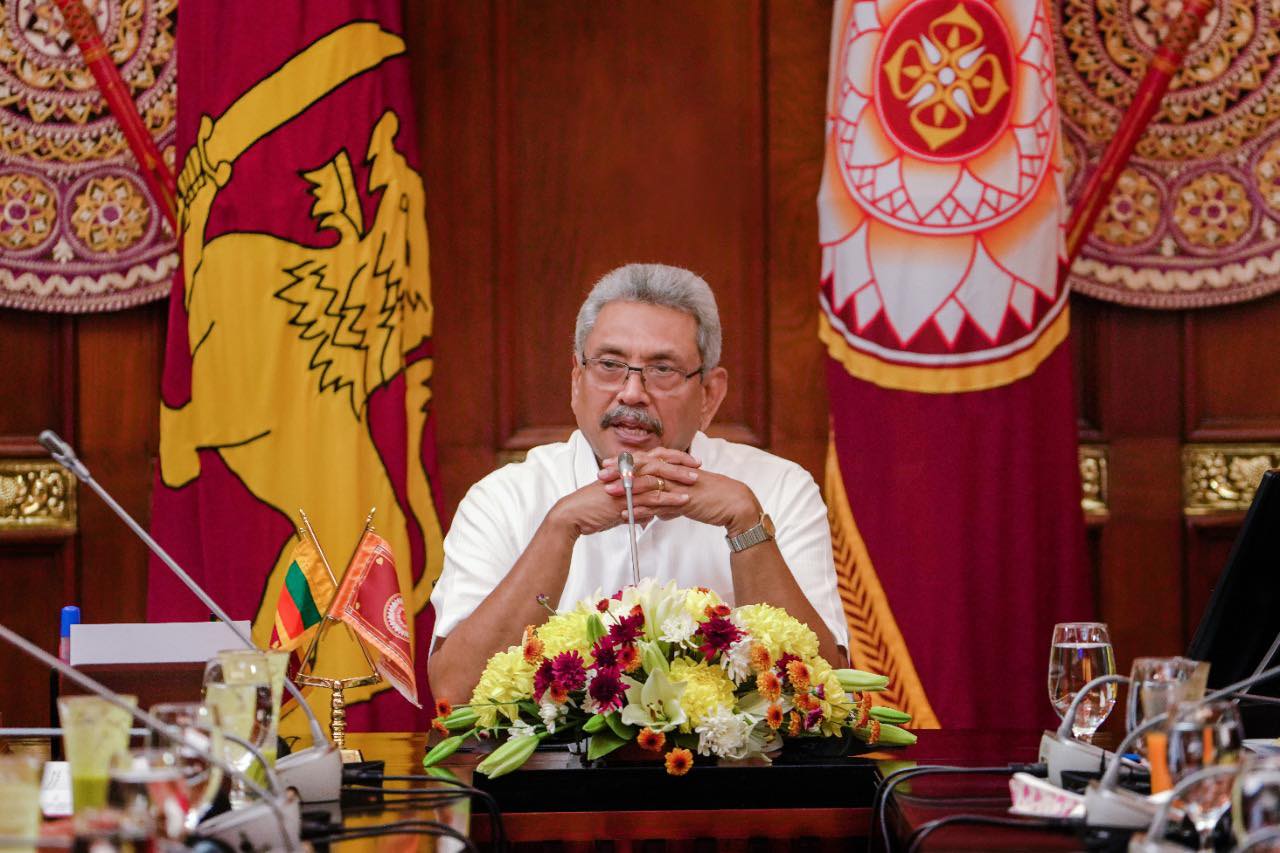
As protests continue to rage in Colombo the exact location of Sri Lankan President Gotabaya Rajapaksa remains unclear.
Since fleeing his residence his property has been taken over by protesters demanding his resignation. Speaking to AFP news agency, a defence source stated that the President was escorted to safety ahead of the protests. But questions remain as to whether the besieged president has left the capital or even the island, by plane or sea.
Activity at Colombo Port
Early this morning, whilst protestors were rummaging through Rajapaksa’s belongings, several suitcases of luggage were seen being loaded onto the Sri Lankan navy vessel SLNS Gajabahu.
The boat, an Advanced Offshore Patrol Vessel of the Sri Lanka Navy, was docked at Colombo Port.
Convoy at Katunayake Airport
Meanwhile, at Colombo’s international airport, a convoy of military vehicles were seen on the runways, sparking rumour the Rajapaksa may attempt to flee Sri Lanka by air. Unconfirmed rumours claim he may have flown to a Middle Eastern country.
"We hear he's hiding out at an army camp somewhere in the suburbs of Colombo and so I think this is a turning point and there is no return back," Ram Manikkalingam, an adviser to former President Chandrika Kumaratunga, told the BBC.
Fleeing to Tamil Eelam?
Previously President Gotabaya Rajapaksa's brother and former Prime Minister, Mahinda Rajapaksa, fled to a navy base in Trincomalee amidst protests in May.
The besieged former Sri Lankan prime minister fled to the Tamil North-East after facing a night of angry protests outside his residence at Temple Trees. Hundreds of people had arrived at the gates of the base, demanding that Rajapaksa, who is accused of war crimes and genocide, be imprisoned.
The Tamil homeland continues to be heavily occupied by the Sri Lankan military, with tens of thousands of troops stationed in the region.
Despite his whereabouts not yet being revealed, the Speaker of Parliament Mahinda Yapa Abeywardana, said Rajapaksa has agreed to resign on 13 July 2022.
US calls for democratic transfer of power in Sri Lanka and stand by to support
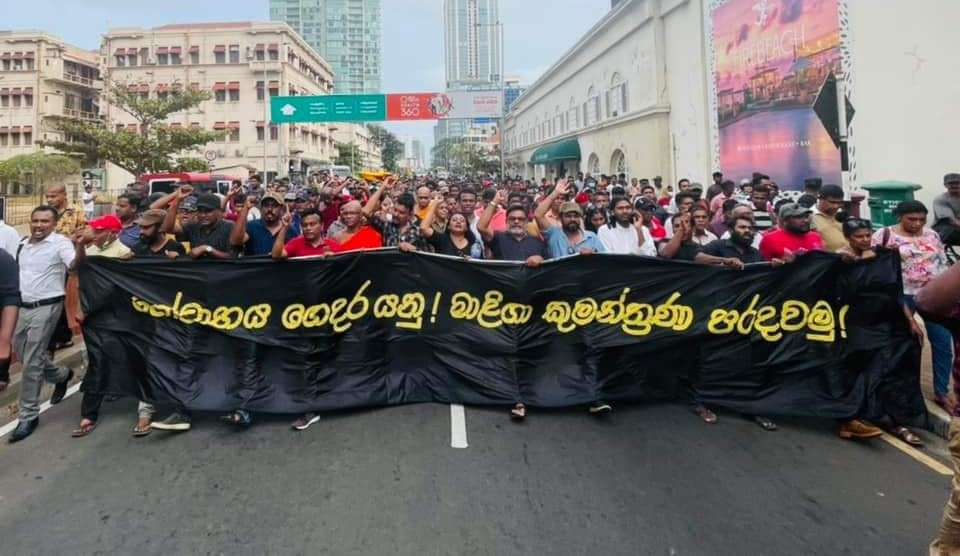
Image: Protestors wants Gota to resign immediately and oppose any secret dealing on forming a new government.
.png)
By Sri Lanka Brief-
Issuing a statement Ambassador of the United States of America, Ambassador Julie Chung has called for a democratic transfer of power in Sri Lanka and for a full investigation against violence against protestors and related to protests.
The Moral Right to Govern
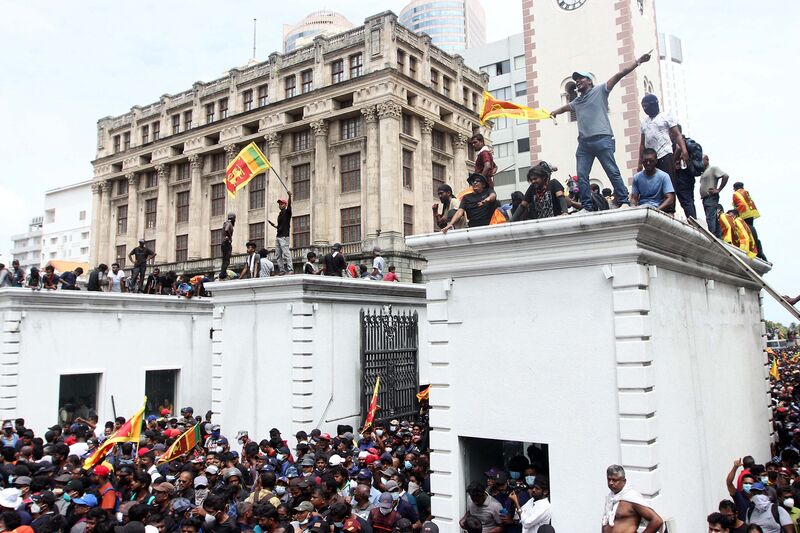
Photo courtesy of Bloomberg
.png)
BHAGYA SAMARAKOON- 07/11/2022
On July 5, in the midst of a worsening economic crisis, Cardinal Malcolm Ranjith said that President Gotabaya Rajapaksa no longer has the moral right to remain in office. This statement is quite significant in that it raises several questions regarding the moral right to govern.
There is no question that President Rajapaksa is the legally elected president of Sri Lanka. He won with a resounding victory at the presidential elections of 2019 and his party, Sri Lanka Podujana Peramuna (SLPP), managed to secure a majority of seats in the general elections of 2020.
In such a context, the pertinent question is what is the moral right to govern and how have the President and the Prime Minister lost this right, compelling them through a massive buildup of public opinion to issue statements that they will resign. It is as yet uncertain as to whether they would.
There is a distinction between legality and legitimacy. Legality derives from the black and white letters of the law and legal procedures. Legitimacy, however, has a deeper meaning. It encompasses the moral right to govern. The moral right to govern stems from public opinion as to what is right and wrong. Legitimacy has been described as having two forms: descriptive legitimacy – the social fact that people believe some person or institution has the moral right to rule and normative legitimacy – genuinely having the moral right to rule.
While there is no question of the legality of President Rajapaksa’s office as president, the people have clearly and loudly, as the events of July 9 show, questioned the legitimacy of the current president continuing to hold office. From 2019 to the present, Sri Lanka has spiralled into ever worsening turmoil. The current economic crisis has brought the country to a halt. Gas shortages, fuel shortages, power cuts, deaths in fuel queues and rising food prices are just some of the issues the country is facing. Citizens’ protests that began sporadically in the country have grown into mass protests and the public believe, and rightly so, that President Rajapaksa and his government are responsible for the desperate situation the country is in today. The people are questioning the mandate that they themselves gave Gotabaya Rajapaksa to become president in 2019. That is how the ruler has lost his moral right to govern.
For an incumbent president to tender his resignation is not a violation of the constitution. Article 38 (1) b of the constitution provides that the president can resign his office by a writing a letter addressed to the Speaker. Nor is it a violation of the constitution for the prime minister to resign from office during his tenure. Article 47 (2) b clearly states that the prime minister can resign from office by a writing a letter addressed to the President.
What the future will hold is uncertain but one thing is abundantly clear – when the president has lost his moral right to govern, he is in a very precarious situation. So is the country.
Sri Lanka at the crossroads


by Sasanka Perera-11/07/2022
The 9th is an important date in recent Sri Lankan political history. On May 9, 2022, Mahinda Rajapaksa was forced to resign as Prime Minister after a bout of violence he and his supporters had initiated from his official residence backfired on a large scale. He had to flee into the protective custody of the Lankan navy in its most fortified base in eastern Sri Lanka. On June 9, another Rajapaksa sibling, the then Finance Minister Basil Rajapaksa, also had to resign amidst continuing massive protests over his handling of the deteriorating Lankan economy. Since then, protesters wanted President Gotabaya Rajapaksa out of power by July 9. Now, this goal seems to have been almost achieved.
By 11:30 am on July 9, agitating but peaceful crowds were descending on Colombo’s Galle Face Green which they had renamed ‘Gota Go Gama’ (get lost, Gotabaya village). The open area was in front of the Presidential Secretariat at the gates of which protesters had camped for three months and in close proximity to the President’s House, the official residence of the President, and Temple Trees, the PM’s official residence. The people wanted both gone — the President, whom they thought, quite rightly, was woefully incompetent, and the PM, whom most people considered an untrustworthy deal-maker. Just outside Temple Trees, a makeshift agitation site had come up over the months, named ‘No-Deal Gama’ (no-deal village), indicative of the people’s mood against the unethical politics of deal-making across political parties that had come to typify Sri Lanka’s mainstream politics over the past 20 years. This practice was most clearly associated with the PM.
Before July 9 was over, three significant bastions of power with enormous political symbolism fell like dominos one after another, signalling a massive victory for the people’s movement in Lanka and a very decisive defeat of the vulgar dynastic politics the Rajapaksas had taken to a low so far not seen elsewhere in South Asia. The first to fall and to be occupied by the people was the President’s House when protesters in large numbers stormed the premises amidst relentless firing of tear gas shells and water cannons by the police as well as limited live shooting, which by the end of the day had injured over 50 people. This incident was very clearly linked with the mood of the people who collectively felt ‘enough was enough.’ But that mood was not clearly read by the President or the Prime Minister as well as their political groups even though all of them have been effectively in hiding and away from the public gaze for the past two months. With the news of the people’s occupation of the President’s House spreading rapidly, the next to fall was the Presidential Secretariat, which protesters had surrounded for over three months, forcing the President to work from his official residence. The storming and occupation spree continued with the protesters taking over the Temple Trees next.
Storming and occupation of such important bastions of power had not occurred any time before in Sri Lankan political history, not even at the height of its civil war. It is not that the government had not attempted to curtail all this. The previous night, the Inspector General of Police had imposed what is known as a ‘police curfew’ from 9 pm until further notice. It was an attempt to stop people from converging on Colombo as planned on July 9. It was called off early next morning after its illegality was flagged by the Bar Association of Sri Lanka and a warning was issued to the Inspector General by the Human Rights Commission of Sri Lanka. The government had also ordered the Indian Oil Company, the only entity still issuing fuel in the country, to stop distributing petrol and diesel until the 11th in an effort to cripple transportation services. Trains from regional towns such as Kandy, Matara and Galle were stopped for the same reason. But with a massive show of public will, people forced all illegally stalled trains to operate to Colombo, which was the main reason the crowds began to swell after noon on an unprecedented scale.
The writing had been on the wall for over three months, but the President and the PM simply could not read it. Now it has been literally thrown at their faces. The people’s resolve comes not from a specific political ideology but from the fact that the routine difficulties in Lanka are felt by everyone — from endless fuel queues to shortages and unaffordability of food, the exorbitant prices of medicines and the suspension of medical procedures. Before July 9 was over, the President in hiding had announced that he would resign on July 13 and the PM too has said that he will quit as soon as an interim all-party government and an acting President are installed. Under Lankan constitutional provisions, the acting President will have to be the Prime Minister, the Speaker of Parliament or finally the Attorney General. All parties in Parliament have now agreed that it would be the Speaker, despite his close allegiance to the Rajapaksas. The protesters have made it very clear that they will not relent until these resignations are officially tendered and a new government is in place, including representations from protesting groups.
Sri Lanka’s dubious politics and its politicians are under public scrutiny as never before in its post-independent history. While a very important milestone of recent Sri Lankan history and politics was reached on Saturday and a new history will continue to evolve, this does not mean that Lanka’s pains will subside any time soon. But it will ensure that the main authors of this pain have been literally thrown out by the will of the people, sending a clear message to future politicians not to take the patience of the polity for granted for so long.
Professor of Sociology, South Asian University, New Delhi
Reviewing people’s revolution and its aftermath: Government kneels as ‘Aragalaya goes on overdrive’
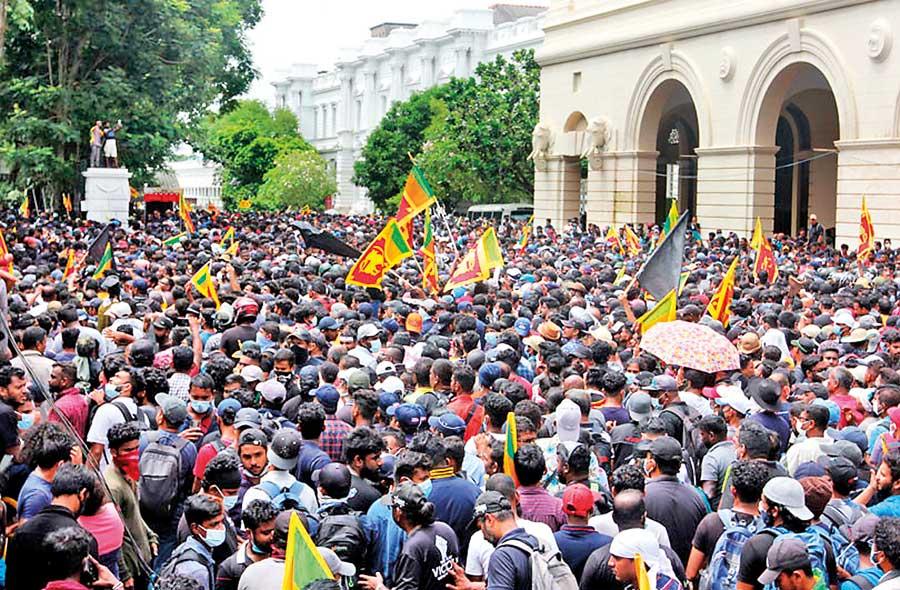
Large crowds gathered at the Presidential Palace premises once the protesters occupied the space
- The protesters were continuously reminded to refrain from destroying public property
- Over a 100 people have been injured following the protest
- President Rajapaksa announced that he would tender his resignation on July 13
%20(1)%20(1).png)
11 July 2022
When word went round inviting all citizens to gather at the Galle Face Green on July 9, many thought that it wouldn’t be a success with the imposition of curfew the previous night. But as the government continued to test the patience of its people, with longer fuel queues, shortage of cooking gas, power cuts etc., people realised that it is either now or never. They were determined to support the protest despite the curfew. People were encouraged via social media platforms while several political parties and trade unions also invited people to join and demand the government to resign. 
Towards a common goal..
On the evening of July 8, several groups headed towards GotaGoGama to spend the night ahead of the big day. Members of the Inter University Student Federation (IUSF) arrived in large numbers to support the struggle on the big day and they were protesting near the World Trade Center. The police had fired tear gas to disperse the protesters. The Galle Face protest site was regathering momentum as people from Wennappuwa, Chilaw and several other places walked in carrying the Lion Flag.
The morning of July 9 was filled with excitement as crowds started pouring in early. Many had walked while others made their way towards the Galle Face Green in trucks, lorries and other modes of transport. By 9.00am crowds gathered near The Kingsbury Hotel and were challenging the policemen who had formed a human barrier; preventing entry towards the Presidential Palace. The situation at the Chatham Street end was getting tense as several policemen started firing tear gas and high pressure water at the people. Eyewitnesses told the Daily Mirror that the police had resorted to attacks when people had walked past the police human barrier and forced their entry towards the Presidential Palace.
Tear gas was fired at people who started advancing towards the Presidential Palace from The Kingsbury Hotel end. Those moving towards Gate Zero or the Presidential Secretariat were stopped as the tear gas was becoming nasty and people were helping each other by lending water, ice and comforting fellow brothers and sisters. By this time the Galle Face was filled with people to the extent that much effort was put to avoid a stampede.
At around 12.30pm the word went around that protesters have acquired the Presidential Palace and that the forces had retreated. An hour later, the protesters were seen running towards the Presidential Secretariat amidst loud cheers from the people. Even though the people were excited, angry and overwhelmed by the opportunity they had to occupy the buildings, they were continuously reminded to refrain from destroying public property.
Changes in the political landscape
While the protesters were in a frenzy several events took place on the political front, simultaneously. The Prime Minister called for an urgent party leaders meeting at the Speaker’s house and there it was decided that both the President and Prime Minister should resign. However Opposition Leader Sajith Premadasa and JVP Leader Anura Kumara Dissanayaka boycotted the meeting. Several ministers resigned from their positions or announced that they would work independently. Few hours later Prime Minister Ranil Wickremesinghe announced his intention to resign to facilitate an all-party Government. Subsequently President Rajapaksa too announced that he would tender his resignation on July 13.
United as one people
While at the protest, the Daily Mirror spoke to several people who had come to support the protest including prominent personalities who had been at the protest site since inception. Here’s what they had to say:
“People shouldn’t be suffering like this” – Anupama
Seated in her wheel-chair, Anupama Perera was being moved towards the barricade that was put up near The Kingsbury Hotel on July 9. She had taken to the street like all citizens to demand the president to step down. “Medicine that was worth Rs. 500 now costs Rs. 1000. Children are unable to attend school. Without gas, we cannot cook meals and everything is in a dilemma. So I had no option, but to take to the street and demand him (President) to resign. People shouldn’t be suffering like this,” said Perera.
“Country has been cursed after the Easter Sunday attacks” – Jayani
“We are living or rather surviving by God’s Grace,” said Jayani Fernando, a resident of Moratuwa. “There’s no cooking gas, children cannot attend school, but as mentioned in a prayer, we somehow manage to cook our meals. But how many people are starving today? We feel for them. I’m happy about the events that transpired today. This country has been cursed after the Easter Sunday incident. As Catholics everyone of us was affected by the attacks. Today the rulers can’t come out in public,” said Jayani.
“No point in having a weak government” – Perera
Jayani Perera is employed in the private sector and is equally affected due to the prevailing crises. “Hospitals cannot function as usual, schools are closed and this government is unable to restore normalcy in the country. Therefore there’s no point in having a weak government. If they leave we will at least have some hopes of getting international assistance.
I’m happy that everybody has come here with a common goal of ousting the incumbent government. We never anticipated to be inconvenienced in this manner,” said Perera.
Was attack on Premier’s home part of ‘aragalaya’?
A source at the Colombo National Hospital said that so far 105 people have been hospitalised following the July 9 protests. However, many are being discharged except for one person who is critical and is receiving treatment at the ICU. Among the injured were 11 journalists.
Protesters, who occupied the President’s House, continue to remain within the premises. They have handed over millions of cash found at the Palace to the Police. However the protesters at the Temple Trees were sent away.
On the other hand the situation near Prime Minister’s House was similar to the Mirihana incident where people were attempting to destroy high pressure water browsers and obstruct the fire brigade from dowsing the fire. The Armed forces and Police were passive witnesses of the incident and didn’t attempt to stop the people. As such whether they were part of the aragalaya or not remains a question. So far three people have been arrested in relation to the attack on the Prime Minister’s house on July 9.
Even though several MPs have resigned from their posts the political front continues to remain unstable. A party leaders meeting will be held today (July 11) to further discuss matters and arrive at a conclusion.
“Cannot confirm if protesters were shot at”: SSP Thalduwa
When contacted Police Spokesman SSP Nihal Thalduwa said that he cannot confirm if protesters were shot at since there is no confirmation from the National Hospital as yet. “However one person is critical and in the ICU,” SSP Thalduwa said.
He denied claims about the Police firing at protesters. He said that the Police were armed with tear gas canisters only. “It was the STF Officers who had weapons with them,” he added.
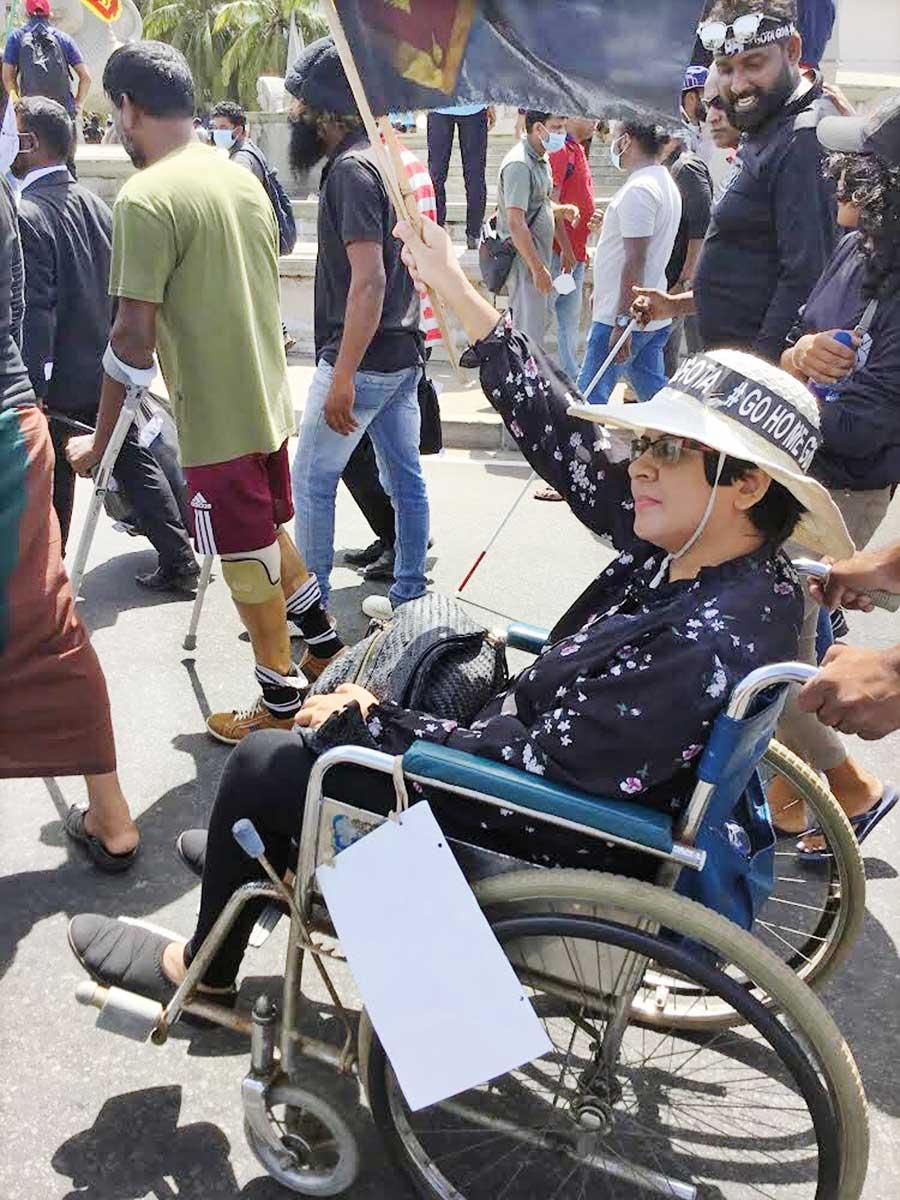
Anupama Perera
"Those moving towards Gate Zero or the Presidential Secretariat were stopped as the tear gas was becoming nasty and people were helping each other by lending water, ice and comforting fellow brothers and sisters"
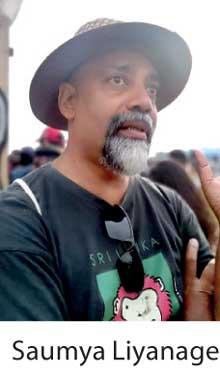 “It’s a revolutionary moment” - Prof. Liyanage
Veteran artiste and senior lecturer at the University of Visual and Performing Arts Prof. Saumya Liyanage said that this is a historical moment and a great turning point in our social history in comparison to other revolutions we have had. “I have an overwhelming feeling at this moment. For the first time in this country people have realised that they have the power and sovereignty. In that sense it’s a revolutionary moment and it’s very fragile as well. To some extent things are unpredictable as well. People want to see a big Constitutional, social and cultural change. As an artiste and a member of the academia I’m happy to be part of this struggle. However, my concern is that we don’t want to retain the existing structure anymore. We don’t need to see the existing prime minister becoming President. We demand a different change. We don’t know what it would be, but we all have to work for it, together,” said Prof. Liyanage.
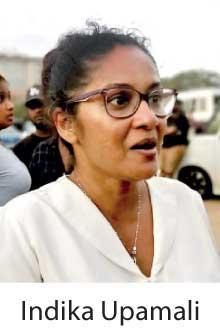 “Children have been the worst affected by this crisis” - Upamali
Popular songstress Indika Upamali, who recently released a song titled ‘Pal Horuni’ in view of the people’s struggle, had been at the protests from the beginning. “I can’t describe how I’m feeling right now. This is a decisive moment to change the existing political structure. By asking the President to leave it doesn’t mean we want to see the Prime Minister becoming president. We need to have a vision about our future. Children have been the worst affected by this crisis.
Missing one day of school is a huge loss for them. That’s why we are here to fight on behalf of them as well,” said Upamali.
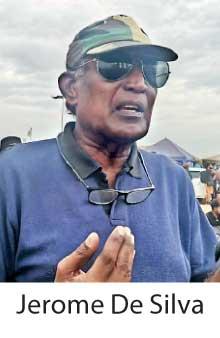 “We should now ask people about their story” – De Silva
Veteran theatrist and Director of The Workshop Players Jerome De Silva had been supporting the aragalaya since its beginning. Subsequently he started conducting theatre workshops at GotaGoGama. After April 9 and the major artistes’ the numbers were getting lower. It was like we were losing battle. One of the reasons why I do workshops here is to keep this place alive. We can do so many things to keep this place alive but we wanted a milestone for it. So we thought we will have it on July 9 as the 100th day is on July 17. The plan is to stay here until the 17th until we see the expected end result. All those political parties have an agenda but we have no agenda except one; we need a system change. We now need to ask people about their story. There are stories of oppression, poverty, hunger, education etc. As artistes of the people’s movement we have the ability and the persuasiveness to capture our audiences” said De Silva.
“No information about Rajapaksa family leaving by ship” : Navy Spokesman
During the protest word also went round that a ship was docked at the Colombo Port, so that the Rajapaksa family could escape. Denying claims Navy Spokesman Capt. Indika De Silva said that ships are usually sent out on missions and that passengers are not being declared. “In any case I haven’t received any news about Mahinda Rajapaksa or any Rajapaksa family member leaving the country by ship,” said Navy Spokesman Capt. Indika De Silva.
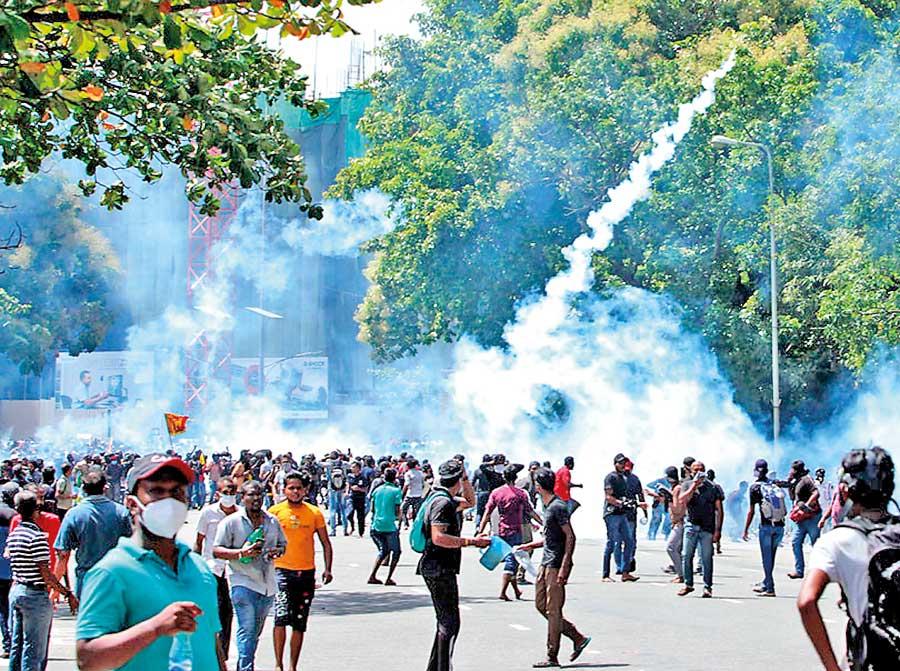
Portesters braving tear gas and pressure mounted by the security forces
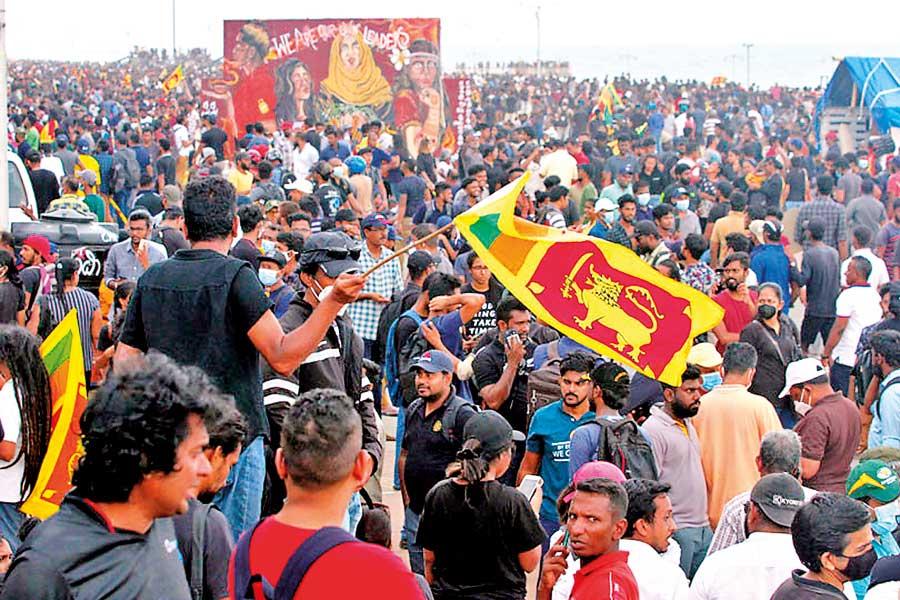
Everybody came to the protest site with the common goal of ousting the incumbent government
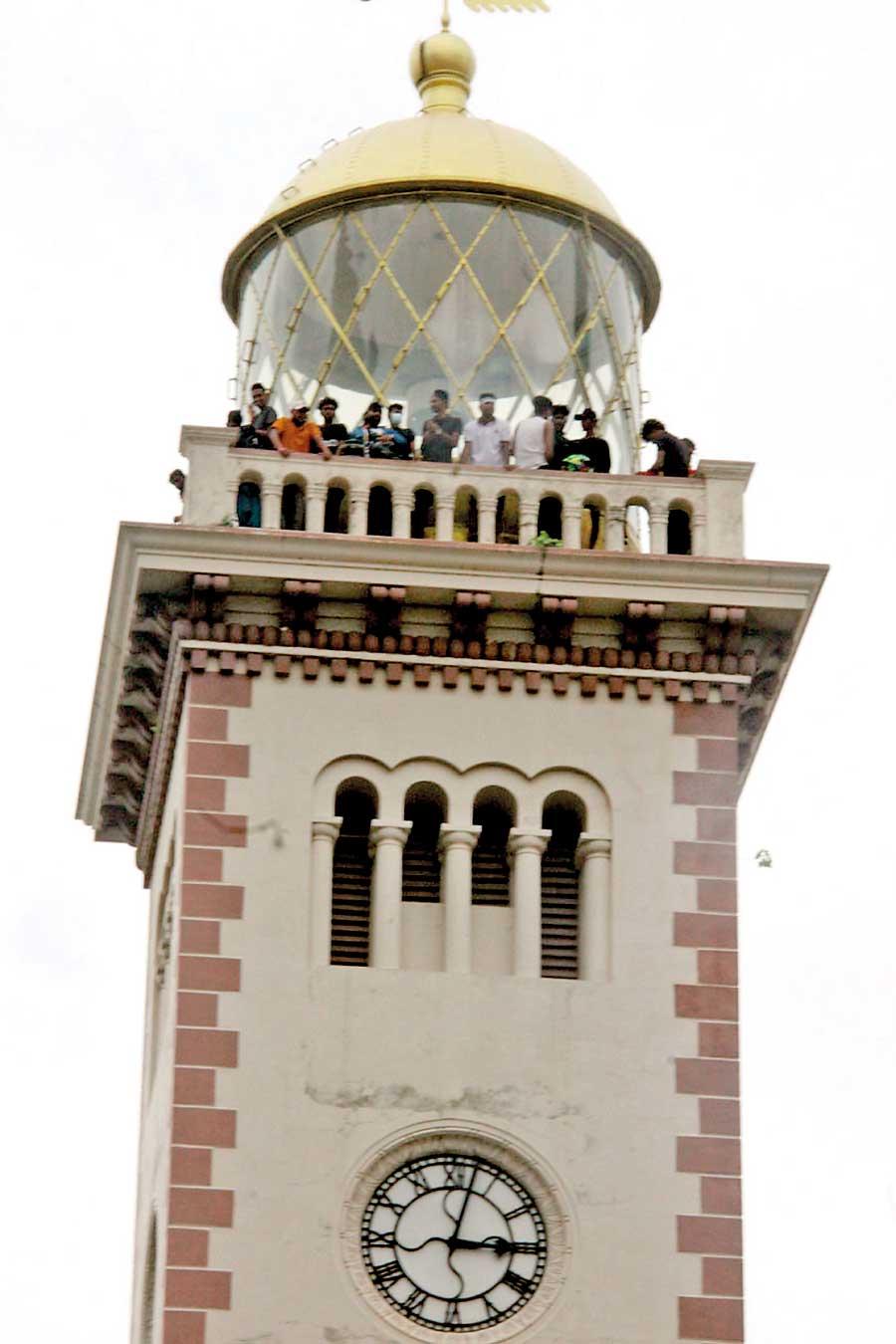
On Saturday the time was right for the final thrust - Pics by Pradeep Dilrukshana
Subscribe to:
Posts (Atom)