Peace for the World World ! Your War Our Lives

The Dalai Lama
A Brief Colonial History Of Ceylon(SriLanka)
Sri Lanka: One Island Two Nations
A Brief Colonial History Of Ceylon(SriLanka)
Sri Lanka: One Island Two Nations
(Full Story)
Back to 500BC.
Monday, October 29, 2012
Colombo blooms, but for some it’s only doom
Rajapaksa
Family Stands To Receive In Commission Anywhere Between US$1.2 To US$ 1.8
Billion During 2005-15


Colombo blooms, but for some it’s only doom
Nadia
Fazlulhaq relates their stories. Pix by Susantha Liyanwatte
Families
living in dwellings in Colombo North lament that they are the forgotten
people.

Sunday,
October 28, 2012
New pavements, new roundabouts, restoration of old buildings; Colombo city is undergoing a metamorphosis and is the centre of a beautification programme. But look to the north of the city, it’s starved of development.
New pavements, new roundabouts, restoration of old buildings; Colombo city is undergoing a metamorphosis and is the centre of a beautification programme. But look to the north of the city, it’s starved of development.
An eye sore for many years: The
shanties bordering Kelani River
Although
the north of the country was liberated after a three decade-long conflict,
certain areas of Colombo north are still in the grips of poverty and
squalor.
Neglected
by government and non-governmental development agencies, vocational training
institutes, welfare organisations, women affairs, child care and family planning
organisations, the families in these areas struggle to meet their daily
needs.
The
Sunday Times saw hundreds of such families in Modera, Mattakkuliya, Grandpass,
Bloemendhal, Dematagoda, and close to Peliyagoda living in low-income dwellings,
made of wood and rusted metal roofing sheets.
“I
have five sons, all in their teens. After my husband left us I started selling
camphor to feed the family. Three of my sons are school dropouts and are unable
to find jobs. They call us the garbage dump people,” said Chamila Niranjani
(48), from Henamulla nawa niwasa bordering a huge garbage dump in Colombo
15.
Her
eldest son Sajith Sanka (20) was preparing lunch while the other was making
camphor packets for their mother to sell.
She
was worried about her sons as she said uneducated youth fell easy prey to
illegal activities such as drug trafficking and robbery. After their previous
abode, a little wooden house was gutted by a fire several years ago they moved
to this area.
|
|
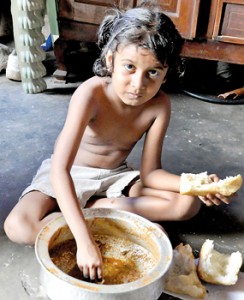
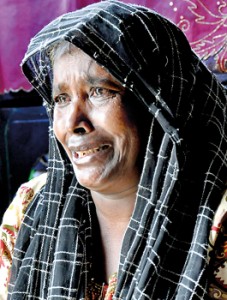
| These pictures tell their plight: Sithy Fowziya looks on as her granddaughter has her first proper meal in two days | |
Their
living conditions turn into a nightmare during the rains with water from the
garbage dump seeping into their one-roomed house.
Many
of the women try to earn a little income by making paper bags from discarded
covers. Unfortunately, they have very few opportunities to sell their wares and
they do not have any vocational training.
Fifty-three
year old Sithy Fowziya looks on with tear-filled eyes as her granddaughter
Fatima hungrily eats a piece of bread, with some leftover curry, a proper meal
after two days.
Her
husband and son have lost their jobs as street vendors with their shops being
removed. Now they go from door-to door selling their wares. There are days the
family has to survive on a mere Rs. 50 to Rs. 100.
Devika
Priyadharshani her husband and her three children manage on an income of between
Rs. 200-Rs. 300 a day. They live in Stadium gama in Grandpass, that gets
submerged during the rains as the drains get blocked.
“My
husband is a labourer earning a daily wage. We cannot afford to maintain the
house; our roof is in a dire state of repairs and when it rains the house fills
up with water. We are like the outcasts of Colombo, although we have been here
since the day we were born,” she lamented.
The
small houses, mostly made of wood, bordering a canal adjoining the harbour
entrance in Colombo 15 go under water with the slightest rain.
The huge garbage dump close to
the Henamulla Nawa Niwasa scheme.
“The
water level rises to about seven feet and our houses get inundated. Our children
cannot go to school. Politicians come here only during elections with promises
of housing schemes,” M. Annapaikyam(43), a mother of four said.
The
situation is the same for those who live in low-income dwellings near the Kelani
riverbank. These slums situated at the entry and exit points of Colombo have
been an eyesore to the city for many years.
“Most
of us don’t have samurdhi benefits nor do we get any vocational training. We
have been living like this for years,” Shantha Gamage (37) from the area
said.
