Peace for the World World ! Your War Our Lives

The Dalai Lama
A Brief Colonial History Of Ceylon(SriLanka)
Sri Lanka: One Island Two Nations
A Brief Colonial History Of Ceylon(SriLanka)
Sri Lanka: One Island Two Nations
(Full Story)
Back to 500BC.

Monday, October 22, 2012
Indo-Lanka
ties near breaking point; Moves to repeal 13th Amendment


 = Gota, JHU push for abolition of
provincial councils; TNA-Govt. dispute back to square one
= Gota, JHU push for abolition of
provincial councils; TNA-Govt. dispute back to square one
= China wants to know what TNA discussed with India; KP issue comes up again
= Govt. faces major test at UNHRC meeting, US also expresses fresh concern
By Our Political Editor
R
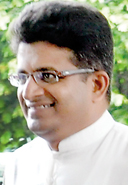
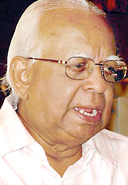
Sampanthan-------------------------------------------Udaya
Gammanpila, Deputy Leader of the Jathika Hela Urumaya (JHU)
 = Gota, JHU push for abolition of
provincial councils; TNA-Govt. dispute back to square one
= Gota, JHU push for abolition of
provincial councils; TNA-Govt. dispute back to square one= China wants to know what TNA discussed with India; KP issue comes up again
= Govt. faces major test at UNHRC meeting, US also expresses fresh concern
A
deal brokered by India for the Tamil National Alliance (TNA) to engage in a dual
track dialogue with the government, revealed
exclusively in the Sunday Times of October 7, has run into serious
problems.
One
such track was to be the resumption of the bilateral talks between the
Government and the TNA. The other was TNA’s participation in the proposed
Parliamentary Select Committee (PSC). In a dramatic turn of events, the TNA will
not make any statement declaring its willingness.
Nor
will the government of India stand guarantor for what would have been the
outcome of its own new attempt at rapprochement. Initiatives have broken down
within weeks after they began.
This
has spawned some unexpected realities. Main among them is a firm polarisation of
views between the Indian and TNA leaders who visited New Delhi last week. This
is on common issues related to Sri Lanka. More importantly, it has placed a
greater strain on the already overstrained ties between Sri Lanka and India.
Some diplomats, both Sri Lankan and Indian, fear the levels of strain are
unprecedented and warn that coming events could further exacerbate the
situation. They do not hide the fact that New Delhi is incensed over recent
political developments in Sri Lanka.
No
sooner had the TNA members returned to Colombo, they were invited by China’s
Ambassador Wu Jianghao for a meeting. Even China, which is pumping in millions
of dollars for development activity in Sri Lanka, remained aloof in the past.
Now, it seems to have a keener and more overt interest in political developments
in this country. A TNA delegation briefed the Chinese envoy on its visit to New
Delhi, the on-going stalemate over the talks and even discussed Sri Lanka-China
relations. According to one TNA delegation member, there were searching
questions from the Chinese about their dialogue so far with the
government.
The recent short-lived Indian initiative had its origin in a meeting between President Mahinda Rajapaksa and Prime Minister Manmohan Singh in New Delhi last month.
The recent short-lived Indian initiative had its origin in a meeting between President Mahinda Rajapaksa and Prime Minister Manmohan Singh in New Delhi last month.
That
visit itself was the subject of an involved diplomatic process. At first,
Rajapaksa was invited to the Central Indian state of Madhya Pradesh by its Chief
Minister Shivraj Singh. It was to lay the foundation stone for a University of
Buddhist and Indic Studies in Sanchi. The central government in New Delhi had
sought to only facilitate the visit and ensure the strictest security
arrangements were in place. These security arrangements included almost
door-to-door plainclothesmen and armed police and helicopter cover in the
air.
A
diplomatic question had arisen after Rajapaksa, through official channels, had
expressed a wish to meet the newly elected Indian President, Pranab Mukherjee,
whom he regards as a personal friend. He had wanted to congratulate him on his
election to the high office. Both Rajapaksa and Mukherjee have been talking on
the telephone on occasions when there was a spike in tensions between the two
countries. Mukherjee, then Finance Minister and one-time External Affairs
Minister in the Congress-led government, had used his good offices to present
the Rajapaksa administration’s point of view.
Does
he go to New Delhi in his personal capacity with no official engagements or
invitations from the centre? How would he be received in New Delhi with all
courtesies without an official invitation? These were among many questions that
confronted both Sri Lankan and Indian officials. The issue was overcome with the
Indian government extending an invitation, declaring the visit official and
laying out the red carpet.
That
was how Indian Premier Singh held talks with Rajapaksa on September 20 and later
hosted him to a lavish banquet. During those talks Premier Singh had touched on
a number of issues. They included matters relating to the anti-Sri Lanka
campaign in Tamil Nadu, the Colombo government’s travel advisory warning Sri
Lankans against visiting the southern Indian state (since withdrawn), the need
to resume talks to evolve an acceptable political package to address Tamil
issues where they could live with “self-respect and dignity” and elections in
the Northern Province. Singh is learnt to have said there was a perception that
the Sri Lanka government was going back on assurances it had given New
Delhi.
Rajapaksa
was to strongly counter some of the issues raised by Singh. He said that
elections to the Eastern Provincial Councils had already been held. He had
announced that elections to the Northern Provincial Council would be held before
September next year. The Government was willing to resume talks with the TNA as
soon as it expressed willing to serve in the proposed PSC. The only delay, he
had pointed out, was on the part of the TNA. Thus emerged the broad parameters
of an Indian initiative to persuade the TNA to resume both bilateral talks with
the Government and at the same time serve in the PSC. India was to talk to TNA
and try to persuade it to go to the negotiating table again.
“We
were invited to India by their External Affairs Ministry. This was consequent to
President Rajapaksa’s visit to India and talks with Premier Manmohan Singh,” TNA
leader Rajavarothayam Sampanthan told the Sunday Times. He said the TNA
delegation told the Indian Premier, “it is not our assessment that the Sri Lanka
Government is genuinely committed to a reasonable settlement.” He said Premier
Singh “seemed to appreciate our position”. Hence, Sampanthan added that no
pressure was brought on his alliance. Sampanthan was to brief the Indian Prime
Minister on a number of issues. He had complained that displaced people were now
located in “half way homes”. He had alleged there was “military interference in
civil administration” and there were problems related to the livelihood of those
in the North.�(See story for questions answered by Sampanthan.)
Even whilst the high profile visit to India by TNA
continued, the government in New Delhi appears to have been concerned over
political developments in Sri Lanka. There were several thorny issues that were
hurting the bilateral relationship more than before. One of them was the
controversial Divineguma Bill, which India believes, takes away subjects now
under the Provincial Councils (PCs). These powers were vested with the PCs in
terms of the 13th Amendment to the Constitution. This amendment became part of
Sri Lanka’s Constitution after India played a key facilitator role. It came in
the years that followed the ethnic violence in July 1983.
