Peace for the World World ! Your War Our Lives

The Dalai Lama
A Brief Colonial History Of Ceylon(SriLanka)
Sri Lanka: One Island Two Nations
A Brief Colonial History Of Ceylon(SriLanka)
Sri Lanka: One Island Two Nations
(Full Story)
Back to 500BC.

Wednesday, November 27, 2013
Sri Lanka Faces a Human Rights Curveball from China
China made an unexpected comment about Sri Lanka’s human rights record. What does that really mean?
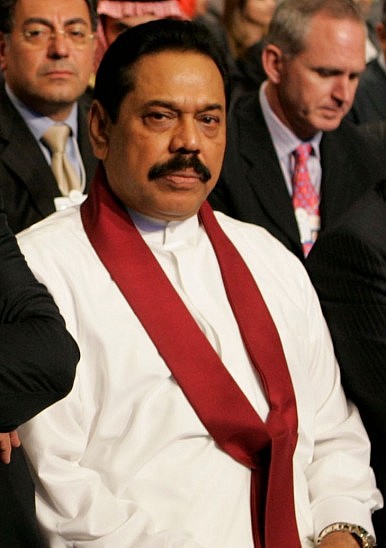

Sri Lanka recently wrapped up the Commonwealth Heads of Government
Meeting (CHOGM) 2013 amid much controversy. Despite the the prestige of
being selected as the venue for the meeting, Mahinda Rajapaksa, the Sri
Lankan president, was assailed from across the Commonwealth for his
country’s poor human rights record. The UK’s David Cameron, Canada’s
Stephen Harper, and neighboring India’s Manmohan Singh all faced immense
domestic pressure over the meeting because their attendance would have
been perceived as a tacit acknowledgement that Sri Lanka’s poor human
rights record is irrelevant. Harper and Singh ultimately did not
themselves attend the meeting.
However, in a somewhat novel and unexpected development, China came out last week and called on Sri Lanka to “make efforts to protect and promote human rights.” Qin Gang, a spokesperson for the Chinese Foreign Ministry, told
reporters that “This is an issue within the Commonwealth, but at the
same time I believe that on the human rights issue, dialogue and
communication should be enhanced among countries.”
This rhetoric from the Chinese is a fundamental departure from their earlier support for Rajapaksa’s government. According to The Hindu, the Chinese
“when asked about international criticism aimed at Sri Lanka in the
lead-up to a United States-backed resolution at the U.N. Human Rights
Council, … lauded Mahinda Rajapaksa’s government for making ‘great
strides’ in promoting human rights.” China also stated that Sri Lanka’s
internal affairs should be left to Sri Lankans.
Has China’s acquisition of a seat at the UN human rights council earlier
this month made it more interested in speaking out in this way?
Probably not. In fact, Qin Gang’s statement continued to include the
following qualifier: “Due to differences in economic and social
development of different countries, there could be differences on human
rights protection. So what is important is that the relevant country
should make efforts to protect and promote human rights, while other
countries in the world should provide constructive assistance.”
This seems consistent with expert perceptions of China’s human rights policy. A Human Rights Watch report from 2011 notes
that “main concern at the [human rights council] appears to be to
protect state sovereignty from what it considers undue interference in
domestic affairs through overly critical resolutions.” The statement
could also reflect China’s desire to be seen as a responsible great
power in Asia — it is known to periodically make its commitment to
international norms known through public statements.
Nevertheless, the statement must come as somewhat of a surprise for Sri
Lanka, which has cooperated with China extensively in fomenting its own
economic development. Reports indicate that after
the three-decade long civil war came to a close in 2009, China was
quick to reap the benefits of political stability by immediately
emerging as Sri Lanka’s largest creditor. China loaned the island state
$1.2 billion — more than India — as it attempted to make major strategic
inroads with Rajapaksa. Future investment inflow is expected to exceed
$4 billion.
As I’ve written before, India missed an important opportunity with
CHOGM 2013 to make inroads with Sri Lanka bilaterally and establish
itself as a regional leader. Concern over China’s influence in Sri Lanka
has recently risen to the top of the agenda for the Indian strategic
community — the relationship is perceived as one of the most threatening
nodes in China’s so-called “String of Pearls” strategy. Indeed, certain strategists will point out that
China’s support for Sri Lanka saw a major uptick in 2012 after its
Defense Secretary Gotabaya Rajapaksa visited Beijing to discuss military
cooperation and strategic ties with then-Chinese Minister of National
Defense Liang Guanglie.
As for Sri Lanka, the Chinese statement on its human rights record is
sure to cause some discomfort. China has been a valuable partner for the
small nation in multilateral fora over the human rights question, and
doubting its support now could be destabilizing to the bilateral
relationship. Sri Lanka will face a U.S. sponsored resolution on its
human rights violations at the next UNHRC session, expected to take
place in March 2014.
