Peace for the World World ! Your War Our Lives

The Dalai Lama
A Brief Colonial History Of Ceylon(SriLanka)
Sri Lanka: One Island Two Nations
A Brief Colonial History Of Ceylon(SriLanka)
Sri Lanka: One Island Two Nations
(Full Story)
Back to 500BC.

Wednesday, November 27, 2013
The Rise Of Cultural Nationalism: Boon Or Bane?
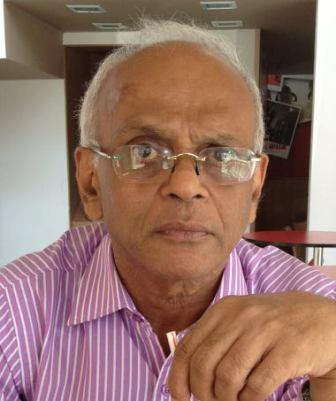
Dr. W.A. Wijewardena
 Professor Sudatta Ranasinghe Memorial Oration 2013
Part I: Professor Sudatta Ranasinghe
I feel being honoured by the invitation by the PIM Alumni Association to
deliver the Professor Sudatta Ranasinghe Memorial Oration 2013 which is
the first in its series. I specifically consider it as a privilege that
I have got to do the honours for my long-standing friend for more than
four and a half decades.
Both Professor Ranasinghe and I entered the then Vidyodaya University in
1967 to follow a four year special degree programme in Public
Administration, the second batch to be taken to the University under the
degree’s new and expanded syllabus. Based on the performance of his A/L
results, Professor Ranasinghe could have joined the University of
Ceylon, Peradeniya, to do an Arts Degree, the most preferred destination
for higher education by students at that time. Yet, Professor
Ranasinghe chose the course in Public Administration because of his
curiosity of and love for the subject, though it was risk-taking on his
part since there was no certainty of securing a job after completing the
degree. That was because the degree was new – an experiment that has
not been tested anywhere else in a university in Sri Lanka with
examinations in each of the four years. Besides this, it was not known
to employers including those in the public sector. Hence, the choice of
the degree programme was like entering a dark hall without knowing
whether one could ever find the way out.
Getting The Balance Right – David Cameron And Foreign Relations
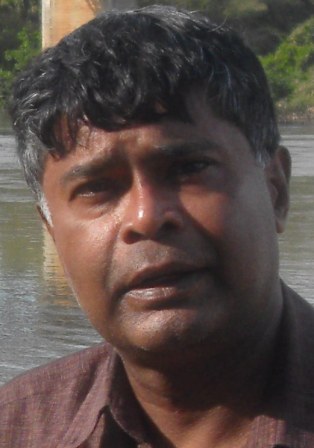
Prof. Rajiva Wijesinha MP
Soon after David Cameron had
left Sri Lanka, the Sunday Times in England published a satirical piece
about his visit. It accused him of behaving like a public school
prefect and treating the Sri Lankan President like a fag, a junior
schoolboy who was at his beck and call.
Cameron’s was certainly a brilliant performance, full of British
bravado. Having decided, correctly in my view, that he would attend the Commonwealth Heads of Government Meeting,
he had to contend with the anger of those who have in effect been
running British policy with regard to Sri Lanka, which has been deeply
negative about our success in overcoming terrorism in this country. He
had therefore to put in an aggressive performance to keep them happy,
and this he certainly did.
I do not mean only the extremist members of the diaspora, who have been
enormously successful in lobbying British politicians where it matters.
Having concentrated their attentions initially on Labour, and obtained
brilliant results through David Miliband,
they were quick to switch in 2010 when the Conservatives won, while the
Sri Lankan Foreign Ministry floundered, and did not even bother to
appoint a High Commissioner to England for a lengthy period.
But the efforts of the Transnational Government of Tamil Eelam and
others of that ilk have been helped by a built in bias in the British
Foreign Ministry, which we have not been able to correct. I believe that
we had a good chance when John Rankin was appointed High Commissioner,
because he has been much less prejudiced than his predecessors, but we
fluffed it, and have not built up the confidence that was needed.
