Peace for the World World ! Your War Our Lives

The Dalai Lama
A Brief Colonial History Of Ceylon(SriLanka)
Sri Lanka: One Island Two Nations
A Brief Colonial History Of Ceylon(SriLanka)
Sri Lanka: One Island Two Nations
(Full Story)
Back to 500BC.

Monday, November 25, 2013
The Significance Of The C’wealth And Its Heads Of Government Meeting
By Rajiva Wijesinha -November 25, 2013 |
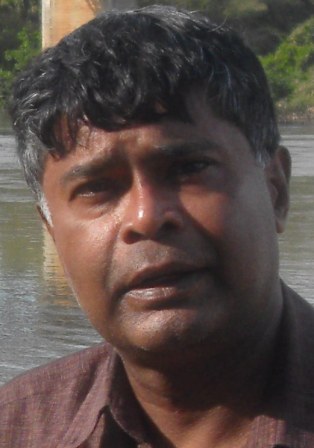
Prof. Rajiva Wijesinha MP
 The meeting in Sri Lanka in November 2013 of the Commonwealth Heads of Government provides
a great opportunity for our government. This can be summed up in one
word, Engagement, which Sri Lanka has not been very good at over the
last few years.
The meeting in Sri Lanka in November 2013 of the Commonwealth Heads of Government provides
a great opportunity for our government. This can be summed up in one
word, Engagement, which Sri Lanka has not been very good at over the
last few years.
The principles of engagement, which we need to understand, are very
simple. First, we need to listen carefully to what others say. Second,
we need to put our own perspectives and practices clearly and
systematically. Thirdly, we need to search for common ground between us
and our interlocutors, and work towards strengthening those
commonalities and developing understanding of how mutual appreciation
could be strengthened. Fourthly we need to work out where there are
differences, and point out where these are because of inadequate
understanding of our situation. Finally, where there are differences
based on perspectives, we need to explain our own position clearly, and
indicate why changes on our part would not be beneficial to the Sri
Lankan people. However – and this is a vital caveat to this last aspect –
we must try to understand different positions, and listen to arguments
supporting them, and if necessary adjust our own positions if those
arguments are clear and convincing.
About each of these, there have been
great difficulties in recent years. We do not listen carefully, and we
tend to put everyone who criticizes us in the same basket. We then play
to local galleries by criticizing them and, since the sincere are
generally nicer than those who have a subtle agenda, we are more
critical of the decent. This has made us lose credibility amongst those
who, even if they have different approaches in some respects, are
basically our good friends. The manner in which India is often treated
in our media, and even by some in authority, is a shocking example of
this absurdity. Read More
Peace As A Global Development Goal Of The Commonwealth
By Saroj Jayasinghe –November 25, 2013 |

Prof Saroj Jayasinghe
The
CHOGM 2013 has come and gone. The time is now opportune to ensure that
Sri Lanka takes the lead in the formulating the Commonwealth’s proposals
for the Global Development Agenda of the UN. The article begins with a
brief introduction to the history and relevance of United Nations
Development Goals, and argues why global peace should be a primary focus
for the Commonwealth. The justification for this stance of the
Commonwealth is that it arose from the torture of invasions,
cross-border wars and colonialism. Therefore it has a strong claim to
take a firm stand against these forms violence. The Commonwealth has a
right to call for a globe of peace that will prevent such calamities
ever being repeated and Sri Lanka is ideally placed to take this bold
stand on behalf of other members of the Commonwealth, drawing on
principles of peace and tolerance.
Introduction: Why do we have global development goals?
For the first time in human civilization, the year 2000 saw all 189
nation-states of the globe agreeing to a set of development goals known
as the United Nations Millennium Development Goals (MDGs). It was to be
implemented by 2015 and became a blue print that has since shaped the
global development agenda (seehttp://www.un.org/millenniumgoals/).
The MDGs had the support of the world’s leading development
institution, donors, and philanthropists, and mobilized resources
towards eight noble common global development goals with specific
targets (i.e. end extreme poverty, achieve universal education, promote
gender equality, reduce child mortality, improve maternal health, combat
HIV/AIDS, malaria and other diseases, ensure environmental
sustainability, and forge global partnerships for development). The
result was overall several impressive gains in health, human and
socioeconomic development. With 2015 fast approaching, the UN is
lending its ear to institutions, nation-states and individuals, in order
to develop the broadest possible consensus on the next set of global
development goals (i.e. the post-2015 goals). Any proposals from the
Commonwealth should therefore be considered as yet another opportunity
to participate in this process.
