Peace for the World World ! Your War Our Lives

The Dalai Lama
A Brief Colonial History Of Ceylon(SriLanka)
Sri Lanka: One Island Two Nations
A Brief Colonial History Of Ceylon(SriLanka)
Sri Lanka: One Island Two Nations
(Full Story)
Back to 500BC.

Monday, November 25, 2013
Transition To Middle Income Economy Challenging But Achievable Through Appropriate Policies
By W.A Wijewardena -November 25, 2013 |
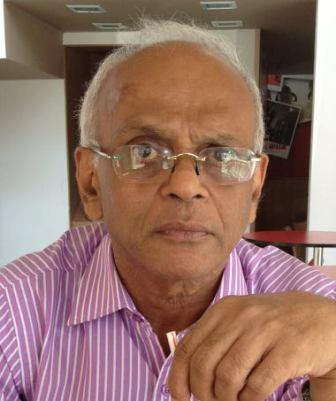
Dr. W.A. Wijewardena
 IPS SOE 2013
The Institute of Policy Studies or IPS, Sri Lanka’s independent economic
policy think-tank, has issued its review of the State of the Sri
Lanka’s Economy in 2013 or SOE 2013 under a theme which is both current
and opportune. The theme is how Sri Lanka should ensure a smooth and
seamless transition to a middle income economy. Ensuring sustainability
and tackling middle income trap are issues in Sri Lanka
This may be puzzling to many because Sri Lanka is already in the Middle
Income Country Category as claimed by the country’s top policy makers.
Then why should IPS talk about the country’s transition to a middle
income country now? The reasons are many.
One is that though Sri Lanka is in the middle income country category,
it has just graduated from a poor country to a lower middle income
country a few years ago. It has to go a long way to consolidate its
position as a lower middle income country first and then move up in the
league table as a higher middle income country and finally to be a rich
country, the goal of the country’s top policy makers.
Though this growth path seems to be straight-forward and achievable
without midway hassles, there are indeed some midway hassles which other
countries in a similar category have faced in their journey toward
becoming rich countries. That hassle is known as the Middle Income Trap
in which a country is ensnared making it impossible for it to move
further up.
Thus, there are two issues which a country like Sri Lanka has to resolve
successfully in its current stage of economic development. One is the
maintenance of the current economic growth initiatives unimpeded, known
as the sustainability issue. The other is the problem of shooting the
country from middle income to high income, known as the middle income
country trap.
Sri Lanka may have been caught in the lower middle income trap Read More
Buddha, Bonobos, Lincoln, And Sri Lankans

DR. Jagath Asoka
Scientists, philosophers, theologians, and moralists have been arguing
whether human morality is imposed from above or evoked innately. When
scientists say that moral behavior is a product of evolution,
theologians would vehemently disagree.
What is the origin of morality and equality? Most people think that
morality and equality come from the Buddha, God, Jesus, Prophets,
religion, or from some transcendent wisdom. It is not in concordance
with what evolution shows us; our species is much older than religion.
To think that our ancestors had no sense of right and wrong before the
birth of religion, God, Jesus, or the Buddha is absolutely asinine. Our
ancestors had moral systems before religion. It is not far-fetched to
say that moral systems gave birth to religion in various forms and
manifestations. Morality is essential for our survival as a species
because, often, it puts community, society, or nation before the
individual. Equality is the pinnacle of morality. To think and believe
that all people are created equal is essential for our own survival, and
the survival of our species. Our struggle for equality continues. Both
sages and sagacious politicians—the Buddha and Lincoln—have promulgated
equality. Lincoln was assassinated for promulgating his belief that “All
men are created equal”—Thomas Jefferson first used this phrase—All men are created equal—in the Declaration of Independence.
Humans are not the only mammals who express emotions that we would
associate with equality, empathy, and fairness. Our nearest ape
cousins—bonobos, gorillas, chimpanzees, orangutans, gibbons and
siamangs—express the same emotions because evolution has shaped our
moral behavior. Theologians think that God introduced us to morality,
but biologists think that evolution has shaped our morality. Biologists
are not bashing and trashing religion. Anatomically, anthropoid
apes—bonobos, gorillas, chimpanzees, orangutans, gibbons and
siamangs—resemble human beings. It seems that human beings have a lot in
common with bonobos than with chimpanzees. Compared to chimpanzees,
bonobos are less aggressive because they often have sex, giving credence
to the slogan: Make Love, Not War. Read More
