Peace for the World World ! Your War Our Lives

The Dalai Lama
A Brief Colonial History Of Ceylon(SriLanka)
Sri Lanka: One Island Two Nations
A Brief Colonial History Of Ceylon(SriLanka)
Sri Lanka: One Island Two Nations
(Full Story)
Back to 500BC.

Monday, February 17, 2014
By Austin Fernando -February 17, 2014
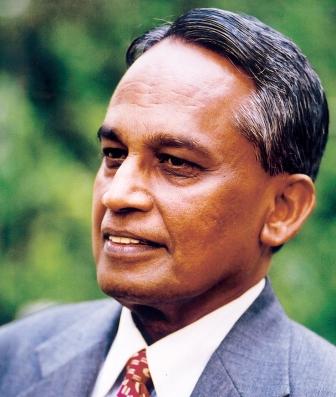
Austin Fernando
 We
were ruled by the British through their administrative mechanism- the
Ceylon Civil Service (CCS); of course engaging “imported” British civil
servants. Since the Sri Lanka Administrative Service (SLAS) is the
successor to the original British CCS and its domesticated CCS since
Independence, one can trace its origins to 1802, the year the CCS was
established by the British, though SLAS was established in 1963.
We
were ruled by the British through their administrative mechanism- the
Ceylon Civil Service (CCS); of course engaging “imported” British civil
servants. Since the Sri Lanka Administrative Service (SLAS) is the
successor to the original British CCS and its domesticated CCS since
Independence, one can trace its origins to 1802, the year the CCS was
established by the British, though SLAS was established in 1963.
After Independence with some reforms the CCS carried on governing.
However, with Independence public needs changed, less drastically due to
prevailed economic stability- especially due to the Korean Boom.
However, with the socio-political-cultural changes of 1956 and deflation
of Korean Boom bubble, the demands on the government were diverted to
welfarism with development.
With the 1956 political upheaval the parliamentarians and political
activists changed in stature, experiences, sophistication and origins. Radhika Coomaraswamy quoting
Professor AJ Wilson says that despite the fact that political leaders
belonged to the well-educated elites, a fair number were
“unsophisticated villagers who never used a cheque book in their lives
or even knew what a bank account was…” Hence the post-Independence CCS
administrators had to look forward for changes in administrative
attitudes. It took a while to happen. I believe it was due to the
elitist political leadership finding valued coinage in the CCS and the
CCS-stalwarts’ hold on politicians, thus creating reduced enthusiasm to
change administrative systems.
But this resistance and lack of political will to change was
short-lived. The lower political hierarchies wanted change. They
demanded a people friendly administration. The “Ejantha Hamuduruvo”
(“Venerated Government Agent”) attitude had to change. The Gammuladeni
(Village Headman) had to change. It wasn’t a wonder (as I learnt in
Batticaloa as a Ceylon Administrative Service (CAS) probationer in 1967)
when even a Minister had to seek an appointment to meet the Government
Agent (GA) in early-fifties!
The raw-recruit CAS officers were sent
to the districts as Divisional Revenue Officers (DROs), District Land
Officers, Land Development Officers, Assistant Commissioners / Assistant
Directors of various departments. Though the DROs’ Service was absorbed
to SLAS, they were still called “DROs.” The DRO was a miniature CCS
model, working mostly under CCS GA, later replaced by senior SLAS hands.
However, the Ejantha Hamuduruvo feeling in the GAs and DROs was not
totally extinct by 1967- especially in the public eyes. Subsequently
this designation was revised to Assistant GA and Divisional Secretary.
Their duties were mostly related to land, agriculture, food supply,
provision of welfare / social services, disaster management etc. Some
like me had the rare opportunity to learn work in “Un-policed DRO’s
Divisions.” Read More
