Peace for the World World ! Your War Our Lives

The Dalai Lama
A Brief Colonial History Of Ceylon(SriLanka)
Sri Lanka: One Island Two Nations
A Brief Colonial History Of Ceylon(SriLanka)
Sri Lanka: One Island Two Nations
(Full Story)
Back to 500BC.

Monday, February 17, 2014
Consensual Resolution As A Compromise Solution

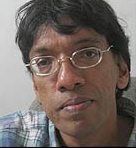
Jehan Perera
Sri Lanka will be one of only three countries on which a
substantive resolution, which calls for new forms of follow up actions,
will be discussed at the session of the UN Human Rights Council next
month. The other two countries are North Korea and Myanmar. However,
in Myanmar’s case it will be a consensual resolution that is going to be
passed, with the approval of the Myanmar government. Therefore, unless
a similar consensus is reached on Sri Lanka,
the Sri Lankan government will alone with its North Korean counterpart
to have a resolution that is to be passed against its wishes. This is
undoubtedly an regrettable situation for the government to have put
itself and the country into because in objective terms Sri Lanka is
nowhere near North Korea in being either an authoritarian regime or a
threat to world peace.
Almost all foreigners who come to Sri Lanka for the first time are
pleasantly surprised by the state of the country, not only its natural
beauty, but also the vibrancy of its society and the appearance of
reasonable democracy and freedom by third world standards. It will be
natural for most Sri Lankans to feel utterly indignant against the
international alliance that seeks to portray their country as one that
can be bracketed with North Korea in international forums like the
UNHRC. But sadly this infamy appears to be increasingly likely. The
European Parliament in Brussels which represents 28 European countries
last week passed a resolution calling for “an international inquiry to
be fully independent, credible and transparent” into alleged war
crimes. Likewise a committee of the US Senate also called for an “international investigation into reports ofwar crimes, crimes against humanity and other human rights violations.”
Media reports and comments from top
government leaders suggest that the Sri Lankan government is now bracing
itself for defeat in the vote and to be at the receiving end of an
adverse resolution. The stakes are getting very high, especially after
the UN Human Rights Commissioner Navanethem Pillay’s
recommendation that there be no amnesty for war crimes, which indicates
a willingness to take on the Sri Lankan government leadership in a
battle to the finish with no hope of reconciliation. It was ill-advised
of the government to have believed it could defeat a resolution
promoted by the two leading superpowers of the world, the US and EU and
to fight it rather than to negotiate. It would be advisable for the
government to seek to moderate its position that totally rejects an
international role in investigating the past. Fighting to win became
more impossible after it became clear that the country was internally
divided on the issue. Read More
