Peace for the World World ! Your War Our Lives

The Dalai Lama
A Brief Colonial History Of Ceylon(SriLanka)
Sri Lanka: One Island Two Nations
A Brief Colonial History Of Ceylon(SriLanka)
Sri Lanka: One Island Two Nations
(Full Story)
Back to 500BC.

Saturday, March 29, 2014
Patriotism Without Justice Is Pure Bluff

By Basil Fernando -March 29, 2014 |
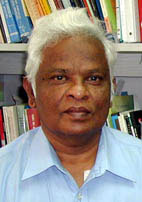
Basil Fernando
Human beings, however poor or however oppressed, seek justice in the
same way. Even a tuberculosis patient looks for fresh air. All wisdom
traditions have associated justice as having the same character as fresh
air. To deny justice is to deny a fundamental condition of being human.
If a person cannot get fresh air in the normal way, they have to be
provided with air through artificial means of giving oxygen. To treat a
patient’s illness, the patient must first be kept alive. If they cannot
be kept alive by natural means, they should be kept alive through the
use of artificial means. Failing to do that is to resign oneself to sure
death.
In the recent decades, the Sri Lankan state, represented by various
regimes, lost sight of this essential truth: that people cannot be kept
alive if they are denied justice. The way this most basic trend running
through all political philosophy – whether it be Western philosophy
rooted in Greek thought or Eastern philosophies, including Buddhism –
was forgotten and ignored by these governments is hard to comprehend.
Even colonial powers cruelly oppressing local populations understood
that, for their own good, some avenues for justice (or at least
semblances of justice) should be kept alive. This most basic tenet was
what the Sri Lankan leaders in recent times forgot and the incumbent
President Mahinda Rajapakshapays
no attention to at all. Perhaps it is a premise that has never entered
into his mind. The ruthless and exploitative tradition of the Rajapaksha
family in the Hambanthota district over a long period of time may be the reason why he does not know the place of justice in politics.
Since 1971, the processes of justice – however limited they might have
been – have been continuously and ruthlessly wiped out from Sri Lanka.
In 1971, State agencies began the practice of securing people’s arrest
and then killing them, and that practice was continued. One of the most
basic tenets of justice, which is to protect persons who have been taken
into State custody, was most carelessly abandoned. At no time did the
Parliament exercise its power to reexamine and review the factors that
led to the adoption of this most pernicious practice. Nor did the Sri
Lankan judiciary take the risk of defending the rights of the individual
at the cost of offending the executive.
The principle so beautifully entrenched in the Bracegirdle case of
1937 was not a sacred enough principle for the Sri Lankan judiciary to
put their all their effort in to secure. The result is simply that even
the most basic legal remedy, habeas corpus, became a remedy that
is impossible to obtain in Sri Lanka. Literally hundreds of cases
demonstrate the carelessness with which this most basic remedy was
trampled upon and discarded.
The rest of the history of Sri Lanka’s descent into a justice-less
nation needs no enumeration here, as it is a tale so often retold by so
many persons. The last episode of this frightening drama was the manner
in which the Supreme Court of Sri Lanka was dragged down and trampled
upon by the executive. Volumes of literature exist on this particular
aspect.
At the moment, Sri Lankan Presidents and governments attack the resolution adopted by the United Nations Human Rights Council on the 27th of March, during its 25th session,
with loud cries of great patriotism. When rulers deny justice, what
right have they to talk about patriotism? We are witnessing a moment of
enormous hypocrisy exhibited through the largest possible use of public
media. However, that is no answer to a people denied justice. They want
to breathe. No ruler can stop the people’s wish to breathe.
Seeking the assistance of the international community may be a resort to
a ventilator. Between death and the ventilator, it is only natural that
anyone would choose the latter. Crying foul against an international
body, which was established for no other reason than to provide some
avenues for justice when the internal processes failed, is itself an
enormous bluff.
It is time, though it is now far too late, to wake up and grasp the
fundamental political tenet that no ruler can rule while denying a
modicum of justice to their people. We are witnessing a dramatic moment
in which this basic truth is once again being reasserted.
