Peace for the World World ! Your War Our Lives

The Dalai Lama
A Brief Colonial History Of Ceylon(SriLanka)
Sri Lanka: One Island Two Nations
A Brief Colonial History Of Ceylon(SriLanka)
Sri Lanka: One Island Two Nations
(Full Story)
Back to 500BC.

Wednesday, June 25, 2014
Aluthgama: Thinking About Co-Existence And Resistance In A Time Of Crisis


Mahendran Thiruvarangan
I
come from a community that was both a victim and a villain in the
thirty-year civil war that unsettled all of us. We were victims because
the Sri Lankan state killed thousands of us, grabbed our lands and made
us homeless; we were villains as we could not question the LTTE strongly
when the movement massacred members of the Sinhala and Muslim
communities and members of our own community who refused to conform to
the movement’s ideology. We witnessed how the narrow nationalist
politics that we romanticized, alienated us from the other communities
on the island. We witnessed how our failure to criticize the decisions
made by our leaders contributed in part to the death of thousands of
Tamils in Mullivaikal in May 2009. We witnessed how our obsession with
the particular—our language,our culture, our religion and our homeland—incarcerated
us within the walls of purism and political decadence. It is true that
there was no space for dissent when the LTTE ruled us. But we need to
accept as a community that because the LTTE fought against a state that
dominated us and persecuted us, many of us often, in our everyday
conversations, justified its violence against other communities. Any
community that clings to a narrow-minded nationalism has many a lesson
to learn from the painful experiences that the Tamils in Sri Lanka went
through during the war. When I read about the recent attacks on Muslims
in Aluthgama, I remembered the Eviction of Muslims from the Northern
Province by the LTTE and the violence that the LTTE directed at the
Muslim community in the East in the name of Tamils. Thus, I do not want
to understand, in its literal sense, the much-highlighted remark (in
sections of the Tamil media) made by a Muslim woman who was affected by
the violence in Dharga Town:
“If Prabhakaran had been alive, they (the perpetrators of violence)
would not have touched us.” It is possible that the Muslim woman made
this remark without knowing the LTTE’s atrocities against the Muslims.
However, rather than signifying anything else, this remark belongs to
the kind of rhetorical statements that people make out of frustration
and anger, when leaders let down their communities during times of
crisis. It is somewhat similar to the anxious remark supposedly made by
an Internally Displaced Person (IDP) in Menik Farm in 2009 that it would
have been better had all the IDPs died in the No Fire Zone giving no
room for the government to treat them like animals in a zoo. Is it
correct to interpret these sentences in their literal sense? Can we read
these remarks without paying attention to the contexts in which they
were made? What we need now is neither retaliatory violence nor
reactionary political activism, but rather a critical consciousness that
liberates us from the iron grips of religious and cultural nationalism
and helps us imagine ourselves in new ways as a political community that
loves and respects all irrespective of one’s ethnicity, class, caste,
religion, gender, sexuality, etc.Read More
Thomas More’s Socialist Utopia And Ceylon ( Sri Lanka)
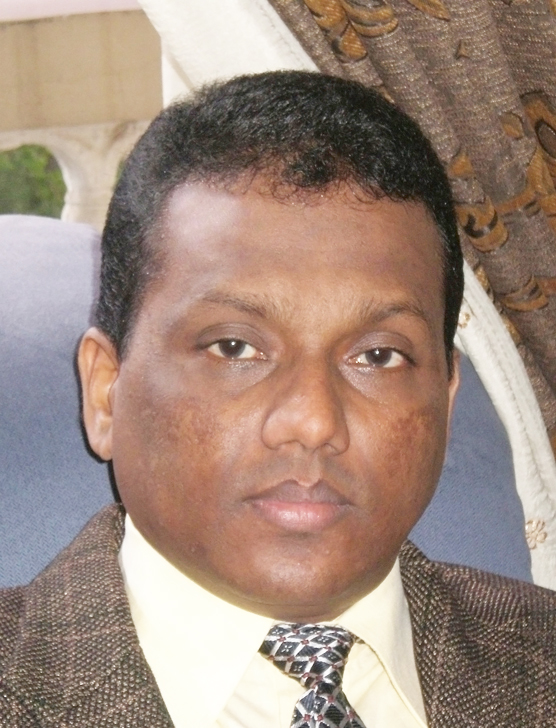
Dr S.I. Keethaponcalan
“Thomas More’s Socialist Utopia and Ceylon (Sri Lanka)” by Laksiri Fernando
Laksiri Fernando’s recent book titled “Thomas More’s Socialist Utopia and Ceylon (Sri Lanka)” (Createspace,
2014) certainly is one of the most interesting books published due to
the fact that it differs greatly from the general line of investigation
undertaken by leading contemporary Sri Lankan political scientists.
Fernando takes Thomas More’s book, published in 1516 in Latin (English
and other language translations were published later) and argues that
the island imagined by More in this book was in fact Sri Lanka. The
rational is that More took inspiration to his ideal society from a real
world example, the 16th century Ceylon.
Fernando enthusiastically introduces
Thomas More, who was one of the early socialist thinkers and coined the
now very popular term ‘Utopia,’ which means an ideal society or
condition. The book entails two major sections: the first section
examines More’s ideas from Laksiri Fernando’s perceptions and the
section two, is the reproduction of More’s work with some modifications
to make the comprehension easier for an unfamiliar reader. This review
therefore is concerned with the first section of the book. In this
section Fernando: (1) introduces and examines More’s notion of
socialism, (2) argues that the utopian island that More talks about in
this book was Sri Lanka, and (3) contends that socialism can be the
medicine for some of the problems the Sri Lankan society faces today.
Read More
