Peace for the World World ! Your War Our Lives

The Dalai Lama
A Brief Colonial History Of Ceylon(SriLanka)
Sri Lanka: One Island Two Nations
A Brief Colonial History Of Ceylon(SriLanka)
Sri Lanka: One Island Two Nations
(Full Story)
Back to 500BC.

Sunday, June 29, 2014
Modi’s Passion For High Speed Rail For India

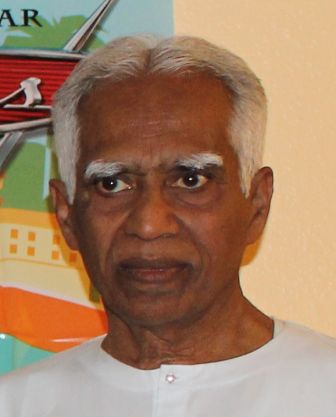
S. Sivathasan
 Speaking on the Gujarat Budget of 2013, Modi expressed
his annoyance at India’s failure to have her HSR. He also conveyed his
passion. “Since 1980, the HSR has remained confined to the drawing
boards only, now it should speed up”. The writer without
Speaking on the Gujarat Budget of 2013, Modi expressed
his annoyance at India’s failure to have her HSR. He also conveyed his
passion. “Since 1980, the HSR has remained confined to the drawing
boards only, now it should speed up”. The writer without  access to the above observation wrote in Colombo Telegraph on March 24 2014,
that in India “Intriguingly even a beginning is not made. Debate, more
debate and intense debate till eternity before all the strands of wisdom
can be assembled for the ideal decision”. Now the occasion has arisen
for the very critic to be vested with authority to ‘speed up’ the
decision and to cast aside 34 years of inaction. It is seen that in
Germany 99% of long distance travel is by train. Her citizenry displays
the most rational choice of travel and the government responds in the
most sensible manner.
access to the above observation wrote in Colombo Telegraph on March 24 2014,
that in India “Intriguingly even a beginning is not made. Debate, more
debate and intense debate till eternity before all the strands of wisdom
can be assembled for the ideal decision”. Now the occasion has arisen
for the very critic to be vested with authority to ‘speed up’ the
decision and to cast aside 34 years of inaction. It is seen that in
Germany 99% of long distance travel is by train. Her citizenry displays
the most rational choice of travel and the government responds in the
most sensible manner.
HSR system operates significantly faster than traditional ones. An
integrated rolling stock system is used on a dedicated line built to
take on speeds of 200 to 350 kmp/h. Upgraded tracks can go only up to
200.
Nagas Come And Pitch Their Tents In Naga-Dipa Of Lanka
By Darshanie Ratnawalli -June 29, 2014

Darshanie Ratnawalli
What
if a part of Sri Lanka in the centuries before Christ had been named
after a personage, a creature or a deity from the Celtic myth pool? We’d
know that a people who were immersed in the Celtic myth pool were
responsible for the naming. At the very least we’d deduce heavy,
long-term and thoroughgoing involvement of Celts in Sri Lanka. That was
an analogy. Here is the reality: In the last centuries before Christ,
the part of Sri Lanka known today as the Jaffna peninsula was called
Naga-dipa[i], after a species of creatures from the Indo-Aryan myth pool.
First, some background. As everyone knows, during the first thousand
years before Christ, Indo-Aryan languages as well as ideologies and lore
that were sired and mothered by the speakers of these languages, and so
couched in them were spreading in south Asia, over land and later by
sea. When the Christian era was just a few centuries in the future, this
cultural package had arrived in Sri Lanka. The package was also
delivered throughout south India down to its southernmost tip. It’s
easier if you liken this to the spread of radiation from powerful
radioactive nodes located in north India. If you took a metaphoric
Geiger counter able to measure metaphoric radiation to the area
corresponding to Tamil Nadu in the centuries immediately preceding
Christ, it would beep. Loudly.
In order to beef up that beep with some
percentages, let’s survey the corpus of pottery and cave inscriptions of
Tamil Nadu during the period commencing two centuries before Christ and
concluding one century after Him. Out of a total collection of 469
Tamil Brahmi inscribed pot-sherds, the writing on which typically and
invariably spells out personal names, 270 legible inscriptions were
surveyed by Y. Subbarayalu.
Nearly fifty percent out of the total were Prakrit names. Of these,
some appear raw in the pure Prakrit form, some in partly Tamilized form
(visakaṉ) and/or hybridized with Sinhalese Prakrit (eg: buta-śa,
camuta-ha) and North Indian Prakrit (yakhamitra-sa) genitive suffixes
while a smaller percentage appear “fully Tamilized avoiding non-Tamil
letters, like Kuviraṉ (from Kubira or Kubera)”:-(Subbarayalu, “Early Historic Tamil Nadu”; 2009, pp.95-122[ii])
