Peace for the World World ! Your War Our Lives

The Dalai Lama
A Brief Colonial History Of Ceylon(SriLanka)
Sri Lanka: One Island Two Nations
A Brief Colonial History Of Ceylon(SriLanka)
Sri Lanka: One Island Two Nations
(Full Story)
Back to 500BC.

Thursday, October 2, 2014
A Presidency Under Threat: Indulgences Without Principle


 Prof. Rajiva Wijesinha MP
When I began this series, over four months ago, the title may have seemed excessive. And even my good friend Dayan Jayatilleka thought
I was being unduly pessimistic about the President’s pulling power when
I said that the UNP would poll at least 40% in Badulla. But the results
there have shown that the threat is even more serious than I had
thought.
Over the next few weeks I will explore how the threat might be averted. But I suspect that that will serve no purpose, for Basil Rajapaksa,
who may be the only one of the decision makers who reads what I write,
would by then have dragooned the President into having an early
election. He did this in 2009 when, as the President then put it to me –
with a hint of contempt I think for what he deemed the amateur nature
of our advice – only Gota and I told him not to have the Presidential election so soon. Read More
Prof. Rajiva Wijesinha MP
When I began this series, over four months ago, the title may have seemed excessive. And even my good friend Dayan Jayatilleka thought
I was being unduly pessimistic about the President’s pulling power when
I said that the UNP would poll at least 40% in Badulla. But the results
there have shown that the threat is even more serious than I had
thought.
Over the next few weeks I will explore how the threat might be averted. But I suspect that that will serve no purpose, for Basil Rajapaksa,
who may be the only one of the decision makers who reads what I write,
would by then have dragooned the President into having an early
election. He did this in 2009 when, as the President then put it to me –
with a hint of contempt I think for what he deemed the amateur nature
of our advice – only Gota and I told him not to have the Presidential election so soon. Read More
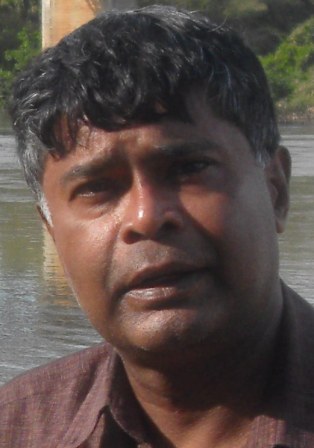 Prof. Rajiva Wijesinha MP
The Uva Vote: Looking Back And Looking Ahead

Chamindry Saparamadu
The vote in Uva has raised hopes for many: a possible defeat of Rajapaksaat
a future election has built a certain momentum. It has generated
discussion, debate, hypotheses and predictions. The electorate seems to
have been awakened from a deep slumber. For an ecstatic UNP,
it signals a probable opportunity of going alone and winning at the
next election: It is possibly the best bargain for the party stalwarts.
For the groups working tirelessly towards an opposition coalition, a
common programme has now become a hard sell to the UNP as much
convincing is needed more now than before. The regime, meanwhile, finds
itself in a catch 22 situation: a choice between early polls or living
its full term until 2016. A careful consideration of options is vital at
this point.
A realistic assessment of the Uva result is called for in order to make
any predictions regarding the outcome of a future election. What
explains the Uva result?
Needless to say that joining of two factions within the UNP had a tremendous impact on the election campaign. Sajith Premadasa’s
re-entry into the electoral fray definitively stirred the complacent
UNP constituency. The regime’s waning popularity as a consequence of the
rising cost of living seems to clearly have influenced the vote.
However, one could hardly ignore the overwhelming appeal the young and
charismatic UNP’s chief ministerial candidate Harin Fernando had
on the constituency. Essentially, an electorate swayed by charismatic
leadership was captivated by Harin through his well designed electoral
campaign. Without a doubt, Harin had been able to attract the
anti-government sentiment that was expressed as a protest vote for the JVP and the DNA in
the Southern and Western provincial council elections in March this
year. This explains the decline in the vote for the JVP and the DNA in
Uva. The singular focus of a united UNP effort had a crystallizing
effect on the campaign. Whilst the UNP collectively focused its full
thrust on Uva campaign, the UPFA campaign
seems to have been weakened by internal divisions. Post-Uva murmurs
tell us that SLFP heavyweights wilfully abstained from putting their
strength behind the campaign ofShashindra Rajapksa.
A formidable electoral victory for Sashindra, in their view, would have
been a reaffirmation of the electoral indispensability of the Rajapaksa
family, which is hardly a victory for the SLFP at this point.
