Peace for the World World ! Your War Our Lives

The Dalai Lama
A Brief Colonial History Of Ceylon(SriLanka)
Sri Lanka: One Island Two Nations
A Brief Colonial History Of Ceylon(SriLanka)
Sri Lanka: One Island Two Nations
(Full Story)
Back to 500BC.

Monday, February 23, 2015
Making The Best Of This Opportune Moment – Because The Times Are Evil!

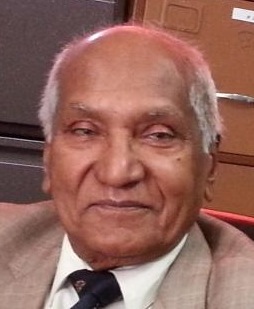
Elmore Perera
The Road Map of the National Movement for Social Justice (NMSJ) convened by Ven. Maduluwawe Sobitha Thera was designed so that the non-partisan President elected would be mandated to ensure that within a period of 180 days, (before 8th July 2015), certain urgent changes would be effected prior to his/her stepping down and retiring from party politics.
The mandatory changes explicitly envisaged by the NMSJ included
amendment of the Constitution to provide for: (1) Outright abolition of
the Executive Presidency, (2) Adoption of a revised Parliamentary system
with a Prime Minister and a Cabinet of not more than 25 Ministers and
25 Deputy/State Ministers, and (3) Repeal of the 18th Amendment and restoration of the 17th Amendment with necessary amendments.
The eleventh hour emergence of Hon. Maithripala Sirisena as the
non-partisan Common Candidate that NMSJ was looking for, was
wholeheartedly endorsed by the NMSJ. The need/desirability of the
elected President retiring from active politics on 8th July 2015 was, no longer considered a mandatory requirement.
However, without any consultation with the NMSJ, the 180 day period was
arbitrarily reduced to 100 days. Neither of the aforementioned first and
second Mandatory changes were explicitly provided for in this 100 day
programme.
The outright abolition of the Executive Presidency may,
in these circumstances be delayed for some time, as a transitory
provision during the term of office of the present incumbent.
However, it is mandatory that, before the present Parliament is dissolved:
- the Executive President should be stripped of all Immunity and Executive Powers, (except perhaps, those of Head of State, Head of the Cabinet, Minister of Defence and the exercise of Authority in respect of Provincial Councils), and
- a suitable electoral process incorporating a mix of the First Past the Post and Proportional Representation systems (specifically excluding elections on a District basis by Preferential Voting) for a Parliamentary System with a Prime Minister, not more than 25 Cabinet Ministers and not more than 25 State/Deputy Ministers.
The Dinesh Gunawardena Committee has deliberated on a desired electoral system since 20th August
2003. The Supervisory National Executive Council, including leaders of
all political parties represented in Parliament, should be mandated to
consider their recommendations, if any, and make specific
recommendations within 3 or 4 weeks, for approval by the Cabinet of
Ministers.
Investigations by Special Commissions appointed to investigate
allegations of massive corruption during the preceding period, should be
expedited and those found to have been corrupt, debarred from holding
any positions in the Legislature, the Executive or the Judiciary. To
facilitate this, it is entirely lawful to adopt all powers (including
those under the 18th Amendment) to reverse the harmful consequences of appointments made or measures adopted, by abusing those powers.
All appointments made during this 100 to 180-day period must not only be
untainted, they must also seem to be untainted. Great care must be
taken to avoid even a semblance of the nepotism notoriously resorted to
by the previous regime.
Under no circumstances is it acceptable that any kind of “deal” should
be made with any corrupt elements in the Legislature, the Executive or
the Judiciary. Such deals will not only be unethical, it would be
clearly unlawful, and a betrayal of the Trust placed by the sovereign
people, in the President elected by them.
*Elmore Perera, Attorney-at-Law, Founder CIMOGG and Past President OPA
