Peace for the World World ! Your War Our Lives

The Dalai Lama
A Brief Colonial History Of Ceylon(SriLanka)
Sri Lanka: One Island Two Nations
A Brief Colonial History Of Ceylon(SriLanka)
Sri Lanka: One Island Two Nations
(Full Story)
Back to 500BC.

Saturday, September 26, 2015
Addressing Issues of the Past Without Delay; NPC Tells the Govt.
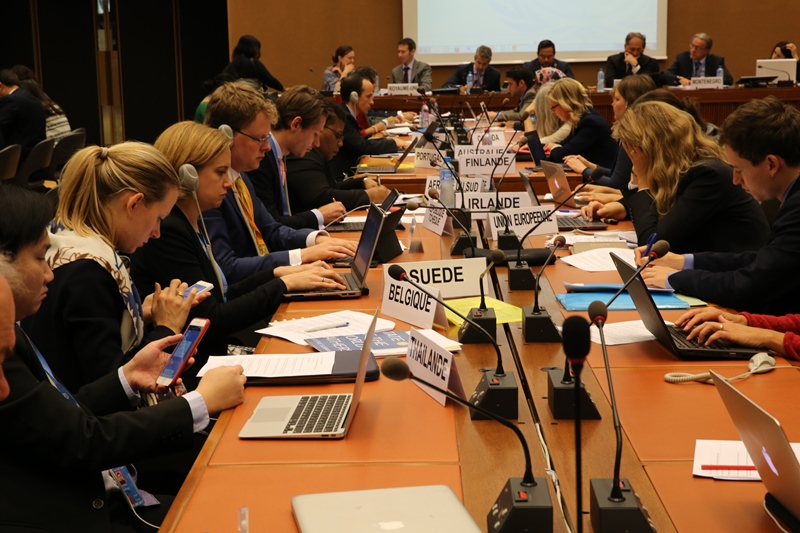
Informal meeting at HRC 30 to find to discuss the drat resolution on Sri Lanka ☺©s.deshapriya
 (National Peace Council)-25/09/2015
The release of UN Report on alleged war crimes and human rights
violations in Sri Lanka’s war is an important step in the country’s
transition to reconciliation. It will require the Sri Lankan government
and people to give their attention to the unhealed wounds of the past
that continue to fester in the body politic. The spirit in which the
government needs to approach the accountability and healing process is
that it is right for Sri Lanka, and not because of international or
other external pressures. If approached in this way, seeking
international expertise becomes necessitated by need rather than by
politics.
The
UN Report calls, among others, for reviewing all cases of detainees
held under the Prevention of Terrorism Act, publishing unpublished
reports of human rights-related inquiries, prioritizing the return of
land, and developing a national reparations policy. It calls for a
hybrid judicial mechanism with the participation of Sri Lankan and
international judges, lawyers, prosecutors and investigators to ensure
accountability. It also calls on the government to ratify the
convention on Enforced Disappearances, the additional protocols to the
Geneva Conventions and the Rome statute of the International Criminal
Court.
The National Peace Council notes that there appears to be a convergence
within the country, and between the government and international
community, on the need to investigate the past and bring closure. It
would be necessary also to translate at least the summary of the UN High
Commissioner’s Report into Sinhala and Tamil to enable the citizens to
understand the content of the report and its recommendations. The
election of the new government in January has opened up space for a
genuine dialogue on the past and on the challenges for the future. We
call on the government to express its opinions openly and seek to
influence public opinion on the need for truth seeking to enable
reconciliation of the communities based on justice and accountability.
We welcome the decision of the government to be a co-sponsor of the
draft resolution of the UN Human Rights Council on promoting
reconciliation, accountability and human rights in Sri Lanka. The draft
resolution recognizes the need for a process of accountability and
reconciliation for violations and abuses, including those committed by
the Liberation Tigers of Tamil Eelam as highlighted in the UN report,
and affirms the importance of participation in a Sri Lankan judicial
mechanism, including the Special Counsel’s office, of Commonwealth and
other foreign judges, defence lawyers, and authorized prosecutors and
investigators.
The government has announced a mechanism to deal with the past that will
be based on a four tier system. It will include a Commission for
Truth, Justice, Reconciliation, an Office of Missing Persons, a judicial
mechanism with special counsel to be set up by statute and an Office of
Reparations. It has requested the UN and members of the UN Human Rights
Council to allow it to carry out a domestic judicial probe rather
without setting up a hybrid court with international personnel. The
National Peace Council sees a need for the government’s proposed
domestic mechanism to be supplemented by recourse to international
experience from South Africa and other countries that will further
strengthen it. We are encouraged by the fact that Sri Lanka has a new
government that has expressed its willingness to cooperate with the UN
and international community.
The government must begin doing what it can and not await any of these mechanisms to operate.Most
of the necessary actions do not need any new mechanism but the
political will of the government. As an initial confidence building
gesture, the government can have a prison census and people find their
missing ones so that no one gets lost in the system, either deliberately
or inadvertently. It can also release land taken over during the war
back to the people more expeditiously. Those in authority with a
mandate from the people need to take the initiative. Leaders are
required to lead and act according to what is right according to law-
not only domestic law but also international law.
