Peace for the World World ! Your War Our Lives

The Dalai Lama
A Brief Colonial History Of Ceylon(SriLanka)
Sri Lanka: One Island Two Nations
A Brief Colonial History Of Ceylon(SriLanka)
Sri Lanka: One Island Two Nations
(Full Story)
Back to 500BC.

Sunday, September 27, 2015
The Hybrid Court
By Nihal Jayawickrama –September 26, 2015
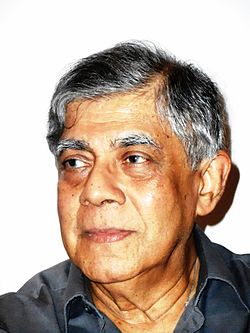
Dr. Nihal Jayawickrama

The hybrid court,
which the UN High Commissioner for Human Rights has recommended for Sri
Lanka, is a unique element in the human rights based approach to
transitional justice in a post-conflict situation. Comprising
international judges, prosecutors, lawyers and investigators, a hybrid
court is designed to deal with those who bear the greatest
responsibility for serious crimes arising from or during the conflict,
such as war crimes or crimes against humanity, including sexual crimes
and crimes against children. Countries emerging from conflict have often
failed to incorporate such crimes into their penal systems. They have
weak or debilitated law enforcement mechanisms, compromised judicial
systems, and a legacy of serious human rights violations without
adequate means to address them.
Commencing at the turn of this century, hybrid courts were established,
or are functioning, in several countries, notably Kosovo, Timor Leste,
Bosnia and Herzegovina, Sierra Leone, Cambodia, Burundi and Lebanon. It
is not suggested that Sri Lanka is comparable to any of these countries.
Yet, in many significant respects, the Sri Lankan legal and judicial
system has, in the past few decades, failed its multi-ethnic and
multi-religious population, and has demonstrated that it lacks the will
and the capacity to address such serious crimes.
War Crimes and Crimes against Humanity
War Crimes and Crimes against Humanity, as well as Enforced
Disappearances, have not been criminalized in Sri Lanka. Neither the
International Covenant on Civil and Political Rights (which the
Jayewardene Government acceded to) and its Optional Protocol (which the
Kumaratunga Government ratified), nor the International Covenant on
Economic, Social and Cultural Rights, have yet been incorporated in our
law. No effective mechanism has yet been established for the protection
of witnesses and victims of crime. In 2006, Chief Justice Sarath Silva
suspended the application to Sri Lanka of international human rights
treaties, holding that their ratification was an infringement of the
Constitution. His judgment has been described by a world renowned jurist
as “an example of judicial waywardness”, requiring a new judicial value
to be added to the Bangalore Principles of Judicial Conduct to address
“judicial eccentricity”. Another referred to it as “Alice in Wonderland
reasoning”. Therefore, we lack the legal framework within which
accountability can be established for such crimes. The process of
remedying that deficiency may benefit from expertise, whether
international or otherwise.
