Peace for the World World ! Your War Our Lives

The Dalai Lama
A Brief Colonial History Of Ceylon(SriLanka)
Sri Lanka: One Island Two Nations
A Brief Colonial History Of Ceylon(SriLanka)
Sri Lanka: One Island Two Nations
(Full Story)
Back to 500BC.

Thursday, September 8, 2016
A New Book On Negativity & Nihilism In Sri Lankan Consciousness

By Basil Fernando –September 7, 2016
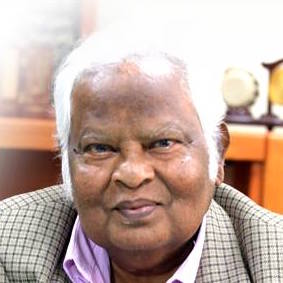
Basil Fernando
There is something deeply negative and nihilist imbedded into the Sri
Lanka consciousness. By ‘Sri Lankan consciousness’ I mean the
consciousness of all Sri Lankans, whether they are from the majority
Sinhala community or the Tamil or other minority communities. What is
common to all is a deep negativity inherited from the far distant past.
In my recent book on Asoka’s policy of Dhamma and democratic values, I
trace this negativity to the influence of an Indian philosopher named
Adi Shankara, who lived around the 8th Century AD and whose influence on
India, pulling it in the same direction of nihilism and negativity, is
enormous. Following several others, I have tried to show how this
philosophy was brought into Sri Lanka by several Indian invasions in the
8th Century and thereafter, and how it became the predominant
philosophical mold in the country, and how it has molded generations
upon generations of Sri Lankans.
Many books have been written on Adi Shankara’s philosophy and the
writings are from two extremely different points of view: One is from
those who religiously venerate him, and the other is from those who
deeply criticize him, blaming him for everything negative that has
happened in India since the 8th Century, particularly the revival of the
caste system, which had been subdued to a great extent by the Buddhist
and Jainist movements from around the 3rd Century BC. Those philosophies
were replaced with a new philosophy of nihilism, regarding the whole
world as an illusion. Adi Shankara’s philosophy was opposed to the
dualistic philosophies of previous centuries of Indian philosophy, which
regarded the existence of God and the existence of the external world
as two separate things. Adi Shankara’s philosophy of non-dualism meant
that nothing other than God existed, and that everything else was but an
illusion.
 What
is important is the moral influence of this philosophy. Since nothing
exists and exists and everything is an illusion, there was no basis for
anything called high ideals or any justification for morality. Morality,
too, was an imaginary creation, which was only created in the same way
other illusions are created. The removal of the idea of there being a
material basis for morality meant that there was no justification or
need for morality at all. There is, however, some contradiction in his
philosophy: later, it attempted to give advice on how to live and things
like that, while at the same time contradicting the very need for doing
any of these things, because everything was an illusion, including
morality itself.
What
is important is the moral influence of this philosophy. Since nothing
exists and exists and everything is an illusion, there was no basis for
anything called high ideals or any justification for morality. Morality,
too, was an imaginary creation, which was only created in the same way
other illusions are created. The removal of the idea of there being a
material basis for morality meant that there was no justification or
need for morality at all. There is, however, some contradiction in his
philosophy: later, it attempted to give advice on how to live and things
like that, while at the same time contradicting the very need for doing
any of these things, because everything was an illusion, including
morality itself.
This philosophy became popular at the time because it fulfilled an
objective need of very powerful sectors of society, which had suffered
greatly due to the spread of philosophies like Buddhism and Jainism.
What was worse for them was that Emperor Asoka had taken Buddhist
philosophy into his own ideas of nation builidng and regarded the
precepts of Buddhism as a foundation for a just society. His idea of
developing social responsibility was on the basis of these moral
principles. He is regarded as one of the early rulers who understood the
place of morals, as well as the place of social responsibility, as a
necessary foundation of social order. His thinking was far advanced for
his time, and it in fact encompasses many of the modern developments
relating to human rights, ecology and environmental sciences, and the
respect for the rights of not only human beings, but also other animals
and all living things. With royal patronage, these ideas took root in
many parts of India, and as they took root, the influence of Brahminism
suffered deep setbacks. Mountains of historical evidence exist showing
how Brahminism came to have a much lower place than it had enjoyed in
the long period before, wherein Brahmins had been the dominant caste and
had enjoyed privileges accordingly.
