Peace for the World World ! Your War Our Lives

The Dalai Lama
A Brief Colonial History Of Ceylon(SriLanka)
Sri Lanka: One Island Two Nations
A Brief Colonial History Of Ceylon(SriLanka)
Sri Lanka: One Island Two Nations
(Full Story)
Back to 500BC.

Saturday, January 28, 2017
New research shows that developing countries send trillions of dollars more to the west than the other way around. Why?
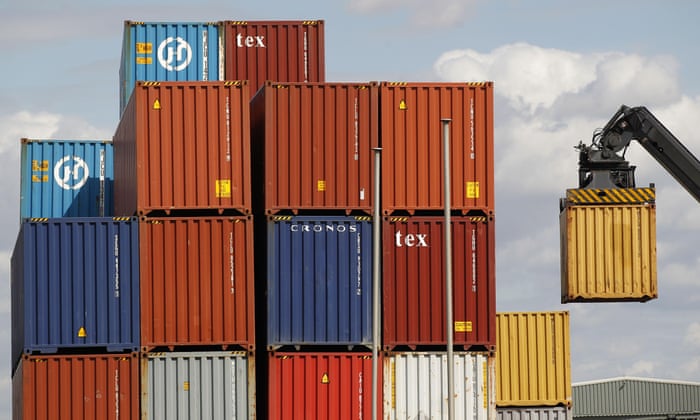
A
report on global money flows has found that trade misinvoicing and tax
havens mean the world’s givers are more like takers. Photograph: C
Villemain/AFP/Getty Images
Jason Hickel-Saturday 14 January 2017
 We
have long been told a compelling story about the relationship between
rich countries and poor countries. The story holds that the rich nations
of the OECD give generously of their wealth to the poorer nations of
the global south, to help them eradicate poverty and push them up the
development ladder. Yes, during colonialism western powers may have
enriched themselves by extracting resources and slave labour from their
colonies – but that’s all in the past. These days, they give more than $125bn (£102bn) in aid each year – solid evidence of their benevolent goodwill.
We
have long been told a compelling story about the relationship between
rich countries and poor countries. The story holds that the rich nations
of the OECD give generously of their wealth to the poorer nations of
the global south, to help them eradicate poverty and push them up the
development ladder. Yes, during colonialism western powers may have
enriched themselves by extracting resources and slave labour from their
colonies – but that’s all in the past. These days, they give more than $125bn (£102bn) in aid each year – solid evidence of their benevolent goodwill.
This story is so widely propagated by the aid industry and the
governments of the rich world that we have come to take it for granted.
But it may not be as simple as it appears.
The US-based Global Financial Integrity (GFI) and the Centre for Applied Research at the Norwegian School of Economics recently published some
fascinating data. They tallied up all of the financial resources that
get transferred between rich countries and poor countries each year: not
just aid, foreign investment and trade flows (as previous studies have
done) but also non-financial transfers such as debt cancellation,
unrequited transfers like workers’ remittances, and unrecorded capital
flight (more of this later). As far as I am aware, it is the most
comprehensive assessment of resource transfers ever undertaken.
What they discovered is that the flow of money from rich countries to
poor countries pales in comparison to the flow that runs in the other
direction.
In 2012, the last year of recorded data, developing countries received a
total of $1.3tn, including all aid, investment, and income from abroad.
But that same year some $3.3tn flowed out of them. In other words,
developing countries sent $2tn more to the rest of the world than they
received. If we look at all years since 1980, these net outflows add up
to an eye-popping total of $16.3tn – that’s how much money has been
drained out of the global south over the past few decades. To get a
sense for the scale of this, $16.3tn is roughly the GDP of the United
States
What this means is that the usual development narrative has it backwards. Aid is effectively flowing in reverse. Rich countries aren’t developing poor countries; poor countries are developing rich ones.
What do these large outflows consist of? Well, some of it is payments on
debt. Developing countries have forked out over $4.2tn in interest payments alone
since 1980 – a direct cash transfer to big banks in New York and
London, on a scale that dwarfs the aid that they received during the
same period. Another big contributor is the income that foreigners make
on their investments in developing countries and then repatriate back
home. Think of all the profits that BP extracts from Nigeria’s oil
reserves, for example, or that Anglo-American pulls out of South
Africa’s gold mines.
But by far the biggest chunk of outflows has to do with unrecorded – and
usually illicit – capital flight. GFI calculates that developing
countries have lost a total of $13.4tn through unrecorded capital flight
since 1980.
Most of these unrecorded outflows take place through the international
trade system. Basically, corporations – foreign and domestic alike –
report false prices on their trade invoices in order to spirit money out
of developing countries directly into tax havens and secrecy
jurisdictions, a practice known as “trade misinvoicing”.
Usually the goal is to evade taxes, but sometimes this practice is used
to launder money or circumvent capital controls. In 2012, developing
countries lost $700bn through trade misinvoicing, which outstripped aid
receipts that year by a factor of five.
Multinational companies also steal money from developing countries
through “same-invoice faking”, shifting profits illegally between their
own subsidiaries by mutually faking trade invoice prices on both sides.
For example, a subsidiary in Nigeria might dodge local taxes by shifting
money to a related subsidiary in the British Virgin Islands, where the
tax rate is effectively zero and where stolen funds can’t be traced.
GFI doesn’t include same-invoice faking in its headline figures because
it is very difficult to detect, but they estimate that it amounts to
another $700bn per year. And these figures only cover theft through
trade in goods. If we add theft through trade in services to the mix, it
brings total net resource outflows to about $3tn per year.
That’s 24 times more than the aid budget. In other words, for every $1
of aid that developing countries receive, they lose $24 in net outflows.
These outflows strip developing countries of an important source of
revenue and finance for development. The GFI report finds that
increasingly large net outflows have caused economic growth rates in
developing countries to decline, and are directly responsible for
falling living standards.
Who is to blame for this disaster? Since illegal capital flight is such a
big chunk of the problem, that’s a good place to start. Companies that
lie on their trade invoices are clearly at fault; but why is it so easy
for them to get away with it? In the past, customs officials could hold
up transactions that looked dodgy, making it nearly impossible for
anyone to cheat. But the World Trade Organisation claimed that this made
trade inefficient, and since 1994 customs officials have been required
to accept invoiced prices at face value except in very suspicious circumstances, making it difficult for them to seize illicit outflows.
Still, illegal capital flight wouldn’t be possible without the tax
havens. And when it comes to tax havens, the culprits are not hard to
identify: there are more than 60 in the world,
and the vast majority of them are controlled by a handful of western
countries. There are European tax havens such as Luxembourg and Belgium,
and US tax havens like Delaware and Manhattan. But by far the biggest
network of tax havens is centered around the City of London, which
controls secrecy jurisdictions throughout the British Crown Dependencies
and Overseas Territories.
In other words, some of the very countries that so love to tout their
foreign aid contributions are the ones enabling mass theft from
developing countries.
The aid narrative begins to seem a bit naïve when we take these reverse
flows into account. It becomes clear that aid does little but mask the
maldistribution of resources around the world. It makes the takers seem
like givers, granting them a kind of moral high ground while preventing
those of us who care about global poverty from understanding how the
system really works.
Poor countries don’t need charity. They need justice. And justice is not
difficult to deliver. We could write off the excess debts of poor
countries, freeing them up to spend their money on development instead
of interest payments on old loans; we could close down the secrecy
jurisdictions, and slap penalties on bankers and accountants who
facilitate illicit outflows; and we could impose a global minimum tax on
corporate income to eliminate the incentive for corporations to
secretly shift their money around the world.
We know how to fix the problem. But doing so would run up against the
interests of powerful banks and corporations that extract significant
material benefit from the existing system. The question is, do we have
the courage?
Join our community of development professionals and humanitarians. Follow @GuardianGDP on Twitter.
