Peace for the World World ! Your War Our Lives

The Dalai Lama
A Brief Colonial History Of Ceylon(SriLanka)
Sri Lanka: One Island Two Nations
A Brief Colonial History Of Ceylon(SriLanka)
Sri Lanka: One Island Two Nations
(Full Story)
Back to 500BC.

Wednesday, April 5, 2017
How Israel sabotages war crimes investigations in Gaza
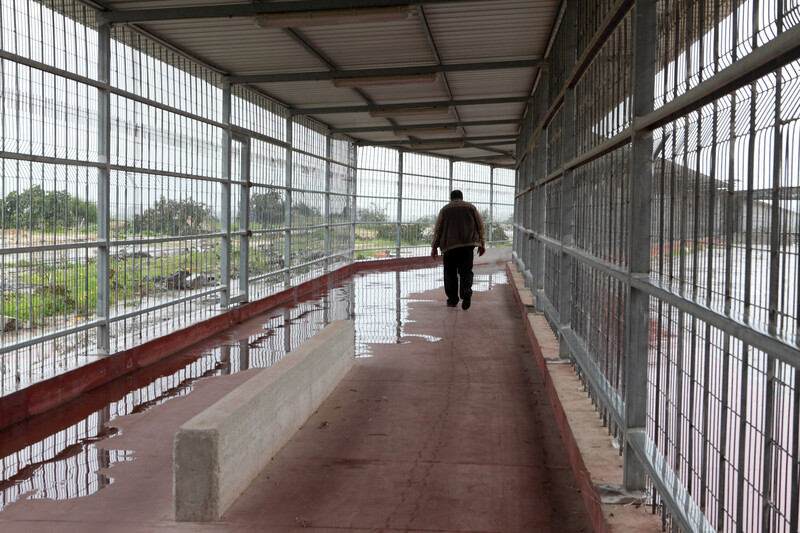
ActiveStills

Israel systematically denies human rights workers entry to the occupied Gaza Strip, according to a new report by Human Rights Watch.
The group says the travel ban, which has been enforced for almost a
decade, has significantly impeded the work of international, Palestinian
and Israeli human rights groups, which document violations by the
Israeli military and Palestinian armed groups.
The Israeli government told Human Rights Watch that the travel
restriction is imposed for security reasons. It regularly informs
applicants for travel permits that the Israeli government is only
obliged to allow passage in “exceptional humanitarian circumstances.”
Since Israel withdrew its military and settlements from Gaza in 2005, it
has maintained that it no longer occupies the territory and is
therefore not subject to the law of occupation which requires it to
allow travel.
But this position has been rejected by
the United Nations, the International Committee of the Red Cross, the
United States and the European Union, which all maintain that Gaza
remains occupied because Israel still exercises “effective control” over
the territory despite the redeployment of its forces to the perimeter.
On Twitter, Emmanuel Nahshon, the spokesperson for Israel’s foreign
ministry, responded to Human Rights Watch’s report by tweeting, “Given
the number of terrorists employed by intl orgs, that’s right policy!!”

"#HRW- Israel blocking access to Gaza"-Given the number of terrorists employed by intl orgs, that's right policy!! apnews.com/ea71251914414e…

Hampering investigations
In February, on advice of the foreign ministry, Israel’s interior ministry refused to grant Human Rights Watch’s new Palestine director Omar Shakir a work permit, saying the organization produces “Palestinian propaganda.”
Israel’s military bureaucracy that runs the occupation, known by the acronym COGAT, denied any
blanket ban on human rights workers, claiming it does coordinate the
passage of rights groups, listing Doctors without Borders as an example.
But Human Rights Watch says the travel restrictions cast further doubt
on the credibility of Israel’s internal investigations of alleged
crimes, a mechanism which Israel hopes will stave off international legal accountability.
The International Criminal Court must determine whether Israel carries
out credible investigations that satisfy the court’s standards before
opening a formal investigation into possible war crimes.


Dear @IntlCrimCourt: Please note @hrw report out today on how Israel blocks access to Gaza for human rights workers hrw.org/news/2017/04/0…
While claiming that it carries out thorough investigations, Israel says
its relies on information provided to it by the very human rights groups
it heavily restricts.
The reports states: “These restrictions hamper what is, by the Israeli
government’s own acknowledgement, a significant source of information
and evidence about potential [international humanitarian law]
violations, raising questions not just about the capability of the
Israeli authorities to investigate potential violations of the laws of
war but also their willingness to do so.”
Human Rights Watch, which has been granted access to Gaza only one time
since 2008, recommends that the International Criminal Court immediately
open a formal investigation into the situation in Palestine.
The court opened its preliminary examination in January 2015, which could take years to complete.
Humanitarian aid, not human rights
The refusal to let human rights workers in and out of Gaza is part of
Israel’s comprehensive blockade on all movement in and out of the small
territory that is home to two million Palestinians.
These restrictions have been reinforced by Egypt, which has kept the] Rafah crossing mostly closed since July 2013, when Egyptian president Mohammed Morsi was deposed in a military coup.
In 2012, Israel said its so-called “separation policy” is meant to
prevent the transfer of a “human terrorist network” from Gaza to the
West Bank, where Israeli settlers live.
However, there are notable exceptions.
Israel allows hundreds or merchants, some medical patients and employees with humanitarian aid organizations to leave Gaza.
It also gives travel privileges to employees of humanitarian aid or UN
organizations, but never to those who work for human rights groups.
Israel has defended this policy in court by explaining that humanitarian
groups help Israel fulfil its commitment “not to harm the humanitarian
minimum that residents of the Strip need – including giving travel
permits in appropriate humanitarian circumstances.”
Impeding work
Palestinian human rights groups say the travel ban isolates them and weakens their work.
Jaber Wishah, deputy director of the Palestinian Center for Human Right’s, says the limitations can be costly, both financially and in terms of getting their work international exposure.
Staff at PCHR and Al-Mezan Center for Human Rights are
consistently denied permission to leave Gaza to attend trainings,
workshops and conferences with colleagues in present-day Israel and the
occupied West Bank.
Amnesty International has not been granted access to Gaza since June
2012. Human Rights Watch was granted access for the first time since
2008 in September 2016 on a one-time, exceptional basis to advocate for
Israelis detained by Palestinian groups in Gaza.
Though these international groups hire local Gaza researchers to collect
evidence, they were unable to hire an independent weapons expert to
fully assess evidence following Israel’s 2014 assault on Gaza.
Israel began limiting the movement of Palestinians in Gaza in the
mid-1990s, but implemented dramatic restrictions in 2007, when Hamas
took control inside Gaza after the group won the 2006 Palestinian
elections.
In 2016, the average number of crossings from Gaza to Israel or the
occupied West Bank was about 12,000 a month. That compares with half a
million crossings in September 2000, the eve of the second intifada, the
Palestinian uprising against Israel’s military occupation – a drop of
about 98 percent.
