Peace for the World World ! Your War Our Lives

The Dalai Lama
A Brief Colonial History Of Ceylon(SriLanka)
Sri Lanka: One Island Two Nations
A Brief Colonial History Of Ceylon(SriLanka)
Sri Lanka: One Island Two Nations
(Full Story)
Back to 500BC.

Thursday, April 27, 2017
Mass hunger strike tests Palestinian unity
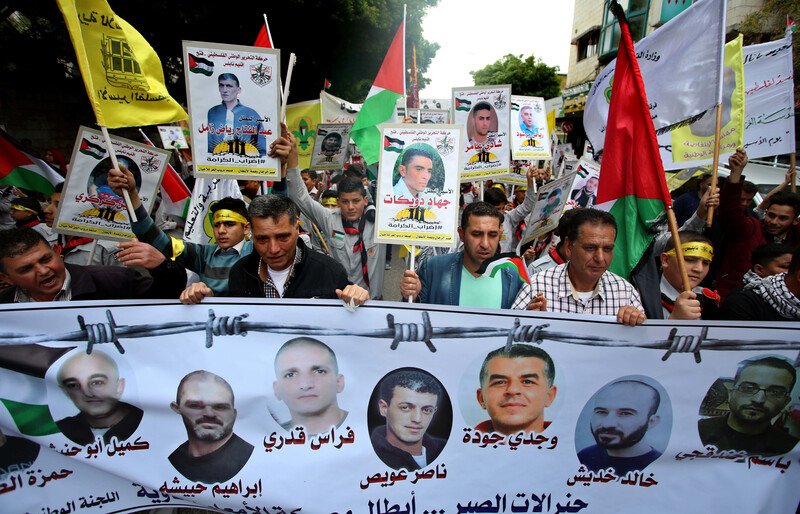
Palestinians rally in solidarity with prisoners on hunger strike in the West Bank city of Nablus, 23 April.APA images
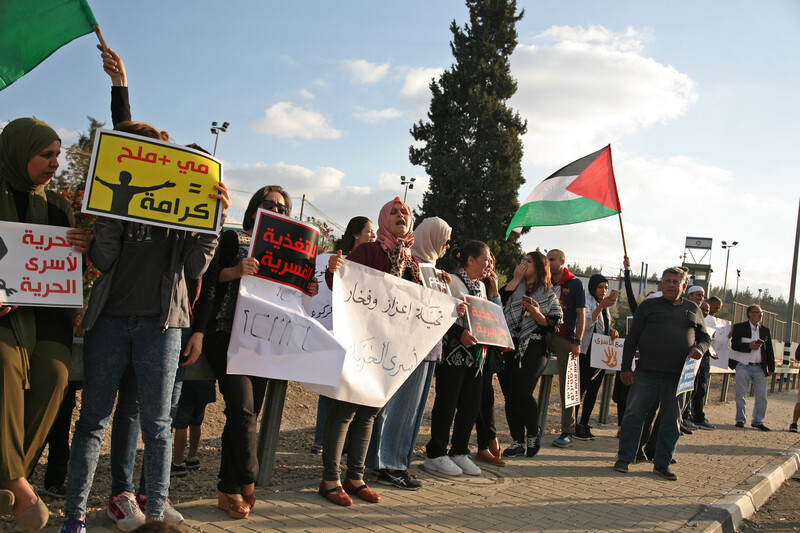
Palestinians protest in support of hunger striking prisoners in front of Megiddo prison in northern Israel, 24 April.ActiveStills
Palestinians protest in support of hunger striking prisoners in front of Megiddo prison in northern Israel, 24 April.ActiveStills
Budour Youssef Hassan-26 April 2017

Hunger strikes don’t get any easier with experience.
So says the family of Palestinian prisoner Majd Ziada, who has
participated in multiple collective strikes since his arrest by Israeli
occupation forces in 2002.
“It is as if you are carrying the weight of 15 years of imprisonment on
your shoulders,” Hurriyah Ziada, Majd’s youngest sister, told The
Electronic Intifada. “It is like running the last kilometers of a
marathon: at the start you have a lot of energy but you eventually
become drained.”
Majd, whose family hails from the village of al-Faluja northeast of Gaza
City, ethnically cleansed by Zionist forces in 1948, was 19 when he was
swept up during a wave of mass arrests at the height of the second
intifada.
He spent 50 days in incommunicado detention, during which he was
subjected to physical and psychological torture, his father and lawyer
say. The abuse exacerbated preexisting ear inflammation, resulting in a
complete loss of hearing in Majd’s right ear.
During a hearing in an Israeli military court the year of his arrest, Majd proclaimed that he did not recognize the court’s legitimacy and that it was Israeli soldiers who should be put on trial.
Majd was convicted of carrying out armed attacks and organizing a resistance cell, receiving a 30-year prison sentence.
Majd’s attorneys requested a retrial, arguing that his conviction was
rife with grave procedural errors. An Israeli military court issued a
rare commutation last month, reducing Majd’s sentence to 20 years.
Majd, who was arrested in the occupied West Bank city of Ramallah, has
most recently been held in Hadarim prison, in central Israel. The Fourth
Geneva Convention forbids an occupying power such as Israel from
transferring detainees from the territory it occupies, such as the West
Bank, into its own territory. Majd’s imprisonment in Israel is thus a war crime.
Punishment
In her most recent visit to Hadarim, on 12 April, Hurriyah was told by
Majd that he was planning to join the open-ended hunger strike set to
begin five days later.
One of the main demands of the hunger strike is to end medical negligence of prisoners.
“[Majd] requires surgery to his ear and he is at risk of losing his
hearing completely if it’s not performed,” Hurriyah said. “But the
Israel Prison Service has refused to allow it and the only treatment he
has received has come in the form of painkillers.”
Israel has punished hunger striking prisoners with
a series of measures, including denying family visits and meetings with
lawyers. All Hurriyah knows about her brother is that he was
transferred from Hadarim and put in isolation. She does not know where
he is currently being detained.
Palestinian prisoners on hunger strike are also protesting solitary
confinement, night raids on prisoners’ cells, humiliating searches, the
reduction of family visits, a ban on mobile phones, suspension of
university education, restrictions on books and magazines, and
widespread imprisonment without charge or trial, family members of
striking prisoners and their lawyers told The Electronic Intifada.
“Through the battle of empty stomachs, prisoners are not only calling
for their basic rights and demanding an improvement in prison
conditions,” Abdel Nasser Ferwana, a writer who has done extensive
research on the history of Palestinian hunger strikes, told The
Electronic Intifada.
“They also seek to express their defiance, to reinvigorate public
solidarity with the prisoners’ cause and to draw attention to their
plight.”
A dangerous tactic of last resort, the first known hunger strike in the
history of the Palestinian prisoners’ movement was in 1968, one year
into Israel’s military occupation of the West Bank and Gaza Strip.
Inmates at a prison in Nablus waged a three-day hunger strike protesting physical abuse and humiliating treatment by Israeli soldiers.
The first Palestinian prisoner to lose his life during a hunger strike was Abd al-Qader Abu al-Fahm, who died after being force-fed during a mass strike in Ashkelon prison in 1970.
History of struggle
Ferwana said that the current hunger strike is not an isolated event and is part of a long history of struggle.
“We need to remind people that Palestinian prisoners improved their
conditions in jails and attained some of their rights thanks to their
sacrifices, rather than Israeli generosity,” Ferwana said. “Some have
lost their lives to secure those rights but this has been the most
effective form of resisting and confronting the Israeli prison system.”
According to the Palestinian rights group Addameer, Israel currently holds 6,300
Palestinian political prisoners, 500 of whom are held without charge or
trial under indefinitely renewable administrative detention orders
issued by a military court.
Administrative detention has been the impetus for some of the more
high-profile hunger strikes in recent years, such as those undertaken
by Khader Adnan – a baker from the northern West Bank who has embarked on two lengthy strikes, becoming an icon of the prisoner movement – as well as journalist Muhammad al-Qiq, lawyer Muhammad Allan, and Bilal Kayed, who won his release after 15 years of imprisonment following a 71-day strike.
Hunger strikes waged by individual prisoners have been more prevalent than mass hunger strikes in recent years.
Esmat Mansour, who was imprisoned by Israel between 1993 and 2013, said
this is a direct result of the fragmentation of the prisoners’ movement –
a spillover of the bitter impasse between the two main Palestinian
political parties, Fatah and Hamas, that has prevailed over the past
decade.
Mansour pointed to the August 2004 mass hunger strike –
which lasted up to 19 days, depending on the prison, yielding little
improvement in prisoners’ conditions – as a turning point.
Overcoming failure
Several factors contributed to the failure of that strike, according to
Mansour: the harsh repression of the Israel Prison Service, then headed
by Yaacov Ganot. Mansour described Ganot as a “fascist,” adding that he
reintroduced the practice of strip-searching and ordered the separation
of prisoners from their visiting family members with glass instead of a
net that allowed for physical contact.
The second intifada was still going on and Ariel Sharon, Israel’s prime
minister at the time, was not willing to compromise. This was the first
hunger strike for many of the prisoners, and they lacked experience to
deal with the inevitable Israeli retribution.
“The leadership of the strike was divided and the fragmentation of the
prisoners made it easier for the [prison authorities] to quell it and
break our spirits,” Mansour, who participated in that strike, told The
Electronic Intifada.
“It took a long time and effort for the prisoners’ movement to recover
from that setback and to restore confidence among prisoners and rebuild
the movement.”
It wasn’t until 2012 that prisoners from all political factions
organized another sustained mass hunger strike involving multiple
prisons and political parties.
Preceded by a series of individual hunger strikes in protest of
administrative detention, thousands of prisoners began an open-ended
strike on 17 April 2012 – Palestinian Prisoners’ Day – and refused food
for nearly one month.
The hunger strikers demanded an end to solitary confinement for all
prisoners and a resumption of family visits to prisoners from the Gaza
Strip. Such visits had been done away with following the capture of an
Israeli soldier in Gaza in June 2006 and maintained even after the
soldier’s release in a prisoner exchange deal in October 2011.
The 2012 hunger strike was accompanied by popular protests and escalated
mobilization on the ground, not seen in Palestine since the early days
of the second intifada more than a decade earlier. Even though the Fatah
leadership did not participate in that hunger strike and was even
accused by some prisoners of not showing enough solidarity, according to
Esmat Mansour, the Fatah base in the prisons did join the strike.
The agreement reached
between Palestinian detainees and the Israeli prison authorities in May
2012 was said to include limitations on administrative detention, the
end of prolonged isolation and resumption of family visits to prisoners
from Gaza.
“No other option”
Five years on, Palestinian prisoners are having to resort to their empty stomachs again to fight for their rights.
“Prisoners have been preparing for this hunger strike for almost two
months and my husband confirmed to me on 4 April that he was taking
part,” said Khalida Hamdan, whose husband, Muhammad Mesleh, is sentenced
to nine life sentences plus 50 years for his involvement in the killing
of nine Israelis.
“I initially questioned his decision but he explained to me how the
increasing crackdown by Israeli prison authorities had left them with no
other option,” Hamdan told The Electronic Intifada.
Mesleh, a leading figure in Fatah’s armed wing, the al-Aqsa Martyrs
Brigades, was arrested by Israeli occupation forces on 17 February 2001,
leaving Hamdan to raise their months-old child on her own. For almost a
decade, Hamdan was banned from visiting her husband on security
grounds. In 2012, she went on hunger strike for seven days in solidarity
with her striking husband.
Mesleh is a close companion of Marwan Barghouti, the high-profile Fatah
leader serving multiple life sentences after his arrest in 2002, and the
face of the current hunger strike.
“He pleaded with me to not go on a solidarity hunger strike this time
around but since 17 April, I have been unable to cook, unable to sleep
properly or think about anything else,” Hamdan said.
“I only hear about him in the media. Is he in solitary confinement? How
is he handling pain and fatigue? How is he surviving the revenge of the
prison guards? You cannot exorcise those thoughts when a loved one is on
hunger strike.”
Unity
The current hunger strike, estimated by
Addameer to include 1,500 prisoners, is being led by Fatah, but
prisoners from all the major Palestinian factions are participating.
Following his release from Israeli prison on 20 April, former Palestinian minister Wasfi Qabaha said that
the hunger strike in Hadarim prison, the epicenter of the protest,
involved prisoners from all factions and that parties from across the
political spectrum were represented in the strike leadership.
He added that strike leaders such as Marwan Barghouti and Karim Younes,
the longest-serving Palestinian political prisoner currently held by
Israel, were transferred to Jalameh prison and put in isolation.
Nadim Younes, brother of Karim Younes, who has been imprisoned by Israel
since 1983, told The Electronic Intifada that family and lawyers lost
all contact with Karim since he began his hunger strike.
“Karim is now 58 and 35 years of imprisonment have definitely taken their toll on his ailing body,”
Nadim said. “The importance of this strike lies in the fact that it has
brought together prisoners from all factions and from all over
Palestine: Gaza, West Bank, Jerusalem and Palestinians from the ’48
territories [present-day Israel].”
There are lingering doubts about whether this hunger strike will avoid
the failure suffered in 2004. Former prisoner Esmat Mansour does not
dismiss those concerns.
“It is true that Barghouti is the undisputed leader of this hunger
strike. Some believe that he is trying to send a message to the Fatah
Central Committee that he remains an influential leader,” Mansour said.
“But prisoners are not puppets: they would not join this strike if they
didn’t have pressing demands. And Marwan’s leadership of this strike has
definitely given it momentum and unprecedented media attention.”
The unity and resilience of the prisoners’ movement in the face of
Israeli repression, intimidation and attempts to delegitimize the strike
are being put to the test. Moreover, it is a test of the capacity of
Palestinian society to mobilize in support of the prisoners, to build
sustained pressure on Israel, and overcome their divisions to stand
behind the prisoners.
If there is one cause that has managed to bring Palestinians together in
recent years, it has proven to be the prisoners’ struggle.
Budour Youssef Hassan is a Palestinian writer based in Jerusalem. She blogs at budourhassan.wordpress.com.
