Peace for the World World ! Your War Our Lives

The Dalai Lama
A Brief Colonial History Of Ceylon(SriLanka)
Sri Lanka: One Island Two Nations
A Brief Colonial History Of Ceylon(SriLanka)
Sri Lanka: One Island Two Nations
(Full Story)
Back to 500BC.

Thursday, October 26, 2017
Constitution Making & Creating A Sri Lankan Identity

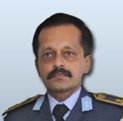
Arun Kumaresan – Air Vice Marshal (Ret’d)
 Much
has been spoken about a Sri Lankan identity but it has been limited to
mere words and to occasional speeches that are few and far between. I
have to concede at least it is spoken once a year in a ceremonial
setting on February 4th– the day we became independent from the colonial rule and forgotten within hours on the same day.
Much
has been spoken about a Sri Lankan identity but it has been limited to
mere words and to occasional speeches that are few and far between. I
have to concede at least it is spoken once a year in a ceremonial
setting on February 4th– the day we became independent from the colonial rule and forgotten within hours on the same day.
At
least on this day we pay homage to the great leaders of our struggle
for independence starting from Keppitipola Dissawe to Puran Appu, the
heroic Buddhist clergy led by Hikkaduwe Sri Sumangala, Wariyapola Sri
Sumangala, Migettuwatte Gunananda, the Tibetan poet monk S. Mahinda,
to F.R. Senanayake, D.S. Senanayake, D.B. Jayatilleke, John Kotelawala
Snr., Anagarika Dharmapala, Ponnambalam Arunachalam, P. Ramanathan.
S.W.R.D. Bandaranaike, T.B. Jayah, the left leaders such as S.A.
Wickremasinghe, N.M. Perera, Colvin R. de Silva, Philip Gunawardena and
Bernard Soysa, working class leaders like A.E. Gunesinghe, N.
Sanmugathasan and Kandasamy, leaders of plantation workers like Natesar
Aiyar, women leaders like Mary Rutnam, Daisy Dias Bandaranaike, Doreen
Wickremasinghe, Selina Perera, Parameswary Kandiah, Noble Rajasingham,
Viviene Gunewardena, Kusuma Gunewardena, Florence Senanayake, working
class women leaders such as Agnes de Silva, Ponsinahamy, and foreign
leaders like Marie Musaeus Higgins, Clara Motwani, Col. Olcott – and all
the other unsung heroes of our freedom struggle against foreign
domination. It
is clear, as the names suggest that we were united in the struggle to
gain independence but we still remain divided after 70 odd years of
gaining independence.
We
also have failed to live up to the visionary leaders post independence,
who clearly were hell bent to create a United Sri Lanka. The first
Prime Minister of Independent Sri Lanka, D.S. Senanayake said after
unfurling the national flag in February 1948;
“our nation comprises many races, each with a culture and a history of
its own. It is for us to blend all that is best in us —– in establishing
peace, security and justice for all people”.
When presenting the Tamil Language Bill in Parliament in July 1958, S.W.R.D. Bandaranaike stated ”
so that we can march forward together and achieve that progress ………
under this freedom which we have, freedom for the Sinhalese – yes,
remember too, that it is freedom for the Tamils, for the Muslims, for
the Malays, for the Burghers ………. and if it is not freedom in that way,
for all”.
The
other nations that liberated from the colonial rule in the same era
have had remarkable success in their act of nation building. They knew
failure to be’ inclusive’ and accommodating all segments of the society
will lay the foundation for discontent, division and conflict. Hindu
majority India opted to have the emblem of “dharmachakra” used as a
symbol by the Buddhist King Asoka in their national flag instead of a
symbol that depict Hindu signage. They opted for a national anthem
written by a Bengali poet Rabithranath Tagore – A language spoken by 7%
of the population – instead of ‘Vanthe Matheram’ due to the simple
reason as it contains reverence to ‘Durga’ ; the Hindu warrior goddess,
which may alienate the believers of the other faiths to sing in unison.
Singapore
too was magnanimous after they came out from the Malayan federation;
they allowed the star depicting the 13% Malay population to remain in
the national flag and entire Singapore sings their national anthem in
Basha Malay and NOT in Chinese. Their first President was a Singaporean
of Indian ancestry and the present is a Singaporean with Malay ancestry.
Founder
President Sukarno of Indonesia too was a visionary and was specific
that the constitution for the decolonized Indonesia with 87% followers
of Islamic faith will not have any Islamic religious quotes as pre amble
for the simple reason it may not be held with reverence by the minority
religious practitioners. Indonesian constitution has a quote from
‘Panchaseela’. These symbolic acts laid the foundation in creating UNITED countries.
It is with pride we should note the similar visionary thinking of our President Mr. Maithiripala Sirisena.
In his speech on the resolution to set up the Constitutional Assembly
he said that whilst people in the South were fearful of the word “Federal”, people in the North were fearful of the word “Unitary.” A Constitution is not a document that people should fear.
His inspirational quote amplifies his aspiration to create a
Constitution, which all citizens could own and uphold with reverence
similar to the status given to the ‘Holy Texts’.
Meaningless Debate Of Unitary Or Federal
For
70 years we have been dabbling and debating on these words that have
become poison to each side. The uselessness of the above two terminology
could be well seen from the following examples. Unitary Nations that
are seeking secession; Scotland is
seeking divorce irrespective of the United Kingdom being ‘Unitary’ and
they lost by a narrow margin at the referendum. Spain another ‘Unitary’
nation and Catalonia is attempting to secede. Similarly ‘Federal’ Nations too have encountered such challenges. Canada had a similar experience in Quebec and
India in Punjab and both countries have now overcome their challenges
and remain united. In contrast majority of the nations in both these
categories remain UNITED for decades.
The
word ‘Unitary’ or ‘Federal’ has no meaning or relevance for those
seeking secession. Hence, getting stuck on these words in our
Constitution making process is absolutely meaningless. The only way we
can overcome these perceived fears is to see each other as SRI LANKANS.
This is the great challenge. Sri Lankans of all shades will call Arjuna
Ranatunga and Muttaiah Muralidaran as Sri Lankan cricketers and not as a
Sinhala or Tamil cricketer. Likewise, we should also be able to see our
Army as Sri Lankan Army and not as a Sinhala army and Mr. Sambandan as a
Sri Lankan politician and not as a Tamil politician. A true SRI LANKAN identity makes us to stay united and unity is strength.
