Peace for the World World ! Your War Our Lives

The Dalai Lama
A Brief Colonial History Of Ceylon(SriLanka)
Sri Lanka: One Island Two Nations
A Brief Colonial History Of Ceylon(SriLanka)
Sri Lanka: One Island Two Nations
(Full Story)
Back to 500BC.

Wednesday, October 25, 2017
Elephant poaching drops in Africa but populations continue to fall
New
report also reveals rise in large-scale illegal ivory shipments which
could be due to panic sell-off by traffickers as countries implement
domestic bans
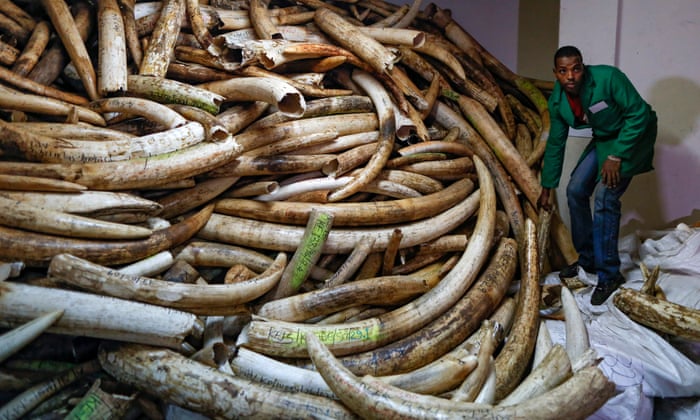
The
rise in illegal ivory being seized could be due to more enforcement, a
time-lag between poaching and trafficking, or stockpiles entering the
illegal trade. Photograph: Dai Kurokawa/EPA
Elephant poaching in Africa has declined for the fifth year in a row, experts have said.
 Tuesday 24 October 2017
But elephant populations continue to fall due to illegal killing and
other human activities, while seizures of large-scale illegal ivory
shipments were at record highs in 2016, a new report reveals.
In east Africa, where elephant populations have nearly halved in a decade, illegal killing has dropped back to pre-2008 levels.
In southern Africa, elephant numbers are stable or increasing, but in
central Africa illegal killing remained very high, the report from the
Convention on International Trade in Endangered Species (Cites) said.
The report also revealed that global illegal ivory trade transactions
remained as high as in the previous years, which could be down to a
panic sell-off by traffickers as domestic bans come into place in key
countries.
With the US, China, the UK and Hong Kong among countries implementing or
planning the closure of domestic ivory markets, there are also reports
that the price of ivory has plummeted 50% in the past few years.
But there is also evidence that ivory is being processed in Africa for
Asian markets, with smaller volumes of “worked” ivory already made into
ornaments which can be carried through air check-in and carry-on luggage
or by couriers.
John Scanlon, general secretary of Cites, said: “Eastern Africa has been
badly affected by the surge in poaching over the last 10 years and has
experienced an almost 50% reduction in elephant population.
“There has, however, been a steady decline in poaching levels since its
peak in 2011, and the analysis from 2016 concludes that overall poaching
trends have now dropped to pre-2008 levels. This shows us what is
possible through sustained and collective frontline enforcement and
demand reduction efforts, coupled with strong political support.”
Scanlon said the rising amount of illegal ivory being seized could be
down to more enforcement, a time-lag between poaching and trafficking,
or stockpiles entering the illegal trade.
“But the spike in seizures of illegally traded ivory in 2016 may also be
an indication that ivory trafficking has been influenced by the
prospect of greater controls, the imminent domestic ban in several
countries, and anticipation of continued drop of price.
“As a result, international syndicates behind poaching and smugglingmay
be involved in a panic sell-off as they realise that speculating on
extinction was a bad bet, with an ever-increasing risk of getting
caught,” he added.
Colman O’Criodain, WWF’s wildlife policy manager, said: “The news that
poaching is in decline may appear positive, but the reality for
elephants is far more complex.
“While some regions are showing promising signs that frontline efforts
to prevent poaching are working in hotspots such as Central Africa, the
killing of elephants for their tusks continues unabated.”
He said that while strides were being made to close legal ivory markets,
the emphasis now was on enforcing such legislation and closing
loopholes that allowed trade to continue.
“With an average of 55 elephants being killed every day, there is no time to waste; we must act now,” he urged.
