Peace for the World World ! Your War Our Lives

The Dalai Lama
A Brief Colonial History Of Ceylon(SriLanka)
Sri Lanka: One Island Two Nations
A Brief Colonial History Of Ceylon(SriLanka)
Sri Lanka: One Island Two Nations
(Full Story)
Back to 500BC.

Friday, October 27, 2017
How Israel forces confessions from Jerusalem boys
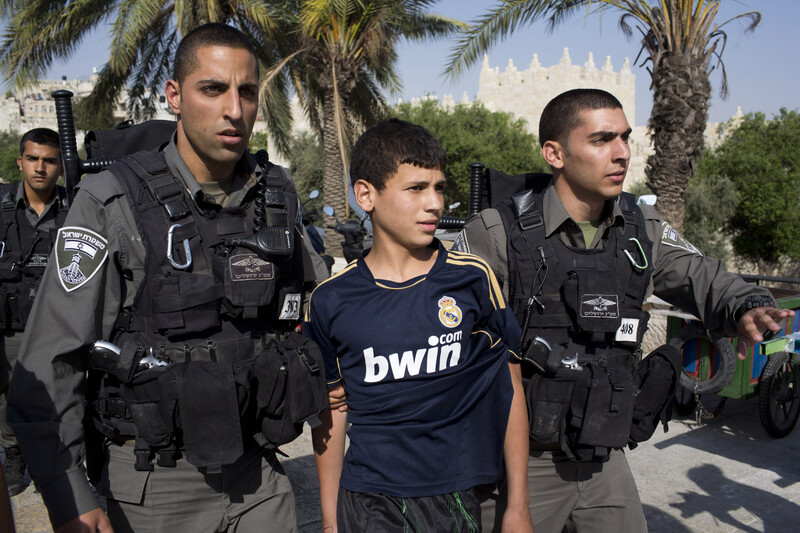
Israeli forces arrest a Palestinian boy in East Jerusalem in May 2013.
ActiveStills
26 October 2017

Israel subjects detained Palestinian children from Jerusalem to “extensive denial of their rights,” according to a new report.
The mistreatment of child detainees is part of a wider policy “aimed at
encouraging Palestinian residents to leave the city,” the Israeli rights
groups B’Tselem and HaMoked state.
These violations include physical abuse, sometimes amounting to torture,
and other means of coercing children, usually suspected of throwing
stones at occupation forces, to sign confessions which could lead to
indictments.
More than 1,700 Palestinian boys aged 12 to 17 from occupied East Jerusalem were arrested from January 2014 through August 2016.
The groups collected testimonies from 60 boys aged 12 to 17 who were
arrested and interrogated by Israeli forces in East Jerusalem between
May 2015 and October 2016.
Arrested while in bed
More than half of the boys interviewed by B’Tselem and HaMoked were
arrested at home between the hours of 11pm and 5:30am, while most were
asleep in bed. Others were arrested on the street or were summoned to
police stations for questioning.
Sixteen of the boys reported being physically abused while they were
being transported to interrogation centers. Once at the interrogation
centers, most were subjected to pain and discomfort while they waited.
“The boys were ordered to sit in painful positions (such as crouching)
for lengthy periods of time,” the rights groups state. “In some cases,
their hands were painfully bound, or they were ordered to face the wall
and forbidden to turn their heads.”
Some of the children were denied food or water and access to a toilet,
and others reported being physically abused by police while they were
waiting.
Most children were not fully informed of their rights, as required by Israeli law.
“The right to remain silent was either glossed over or misrepresented,”
the groups state. Half of the boys “were told by the interrogators that
exercising the right would hurt them in court; that they would do better
not to remain silent as this would prove their guilt.”
Most of the boys were allowed to speak with a lawyer before being
interrogated, but were “only allowed a brief conversation of a few
minutes.”
Eleven of the 42 boys who were allowed to talk to a lawyer before they
were interrogated did so “in the presence of the interrogator, on the
interrogator’s phone, in a phone call the interrogator dialed himself.”
Nearly all of the boys interviewed by B’Tselem and HaMoked said that it
wasn’t until they were interrogated that they were told why they were
arrested.
Only police or Israeli intelligence agents were present at the vast
majority of the interrogations, even though Israeli law requires a
parent to be present during questioning of a minor.
“However, once a minor has been placed under arrest,” according to the
rights groups, the police have “discretion as to whether or not to allow
this.”
The groups add police arrest children rather than summon them for
questioning because it allows “the police to get around the requirement
to have parents present at the interrogation.”
Interrogation and coerced confessions
The interrogation itself usually lasted a few hours; some of the boys
were interrogated multiple times. Nine went through five or more
interrogation sessions.
Boys were slapped and beaten during interrogation, or threatened, cursed
and shouted at by interrogators. Extreme cold and sleep deprivation
were also employed against the boys.
Some were told they would only be allowed to use a toilet or get food and water if they confessed to allegations against them.
Fifty of the boys signed confessions. “In 41 of these cases, the
confession was written in Hebrew and the boys did not understand what
they were signing,” the groups state.
Most of the boys were held at the notorious Russian Compound
interrogation center in Jerusalem, where many were strip-searched and
nearly all denied contact with their family.
One boy testified that he was held for two weeks in solitary confinement
in a small cell with a bright light that remained on at all hours.
“It was easier to be tied up in interrogation than to stay in that cell,
cold and alone,” the boy, who was 16 at the time of his arrest, stated.
“Being in solitary confinement was very hard. I signed a lot of
confessions. They had me sign one after every interrogation session.”
The rights groups state that police officers, interrogators and prison
guards enjoy total immunity as Palestinian child detainees’ rights are
extensively violated.
Such conduct is nothing new. A report issued by B’Tselem in 1990 showed similar findings.
“The system strives to keep up the appearance of following legal
provisions and regulations,” HaMoked and B’Tselem state, but such
safeguards “are routinely rendered hollow and meaningless.”
