Peace for the World World ! Your War Our Lives

The Dalai Lama
A Brief Colonial History Of Ceylon(SriLanka)
Sri Lanka: One Island Two Nations
A Brief Colonial History Of Ceylon(SriLanka)
Sri Lanka: One Island Two Nations
(Full Story)
Back to 500BC.

Tuesday, November 21, 2017
Constitutional Reform: Wijeyadasa’s Errors

By Nihal Jayawickrama –21November 2017

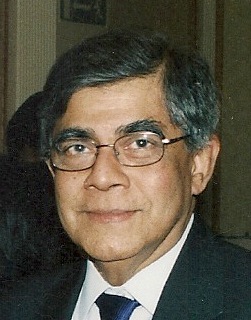 The lengthy article by Dr Wijeyadasa Rajapakshe PC
on constitutional reform published in the newspapers recently appears
to contain several errors of fact and of law. I have no wish to argue
with the former Minister of Justice on his views on the legality of the
current constitutional reform process in which he participated until his
removal from office. However, any debate should proceed upon the basis
of accurate information and correct statements of the law.
The lengthy article by Dr Wijeyadasa Rajapakshe PC
on constitutional reform published in the newspapers recently appears
to contain several errors of fact and of law. I have no wish to argue
with the former Minister of Justice on his views on the legality of the
current constitutional reform process in which he participated until his
removal from office. However, any debate should proceed upon the basis
of accurate information and correct statements of the law.
The Ceylon (Constitution) Order in Council 1946 granted
full self-government to Ceylon based upon a draft constitution that had
been approved in the State Council by 51 votes to 3, including the
affirmative votes of members belonging to the Tamil, Muslim and Burgher
communities. That Constitution provided for a Governor, and established a
House of Representatives and a Senate. The Ceylon Independence Act
1947, enacted by the Parliament of the United Kingdom and the Ceylon
(Independence) Order in Council 1947, both of which came into force on 4
February 1948, granted “Dominion Status” to Ceylon. From
that day, Ceylon was “fully independent”, except that the Queen was the
Head of State and was represented in Ceylon by the Governor-General who
was appointed in consultation with, and thereafter acted on the advice
of, the Prime Minister of Ceylon.
This is a misinterpretation of the law. Section 29 of
the 1946 Constitution stated explicitly that “Parliament may amend or
repeal any of the provisions of this Order”. The exceptions were that
“(a) no law could prohibit or restrict the free exercise of any
religion; (b) make persons of any community or religion liable to
disabilities or restrictions to which persons of other communities or
religions were not made liable; (c) confer on persons of any community
or religion any privilege or advantage which was not conferred on
persons of other communities or religions; or (d) alter the constitution
of any religious body except with the consent of the governing
authority of that body”. That
restriction on legislative power was the compact between the majority
and the minority communities, and the basis upon which Independence was
granted to Ceylon. It was the condition precedent to Independence. Subject
to that restriction, Parliament had the power to repeal and replace
every other provision of the Constitution. The power to “amend or
repeal” necessarily includes the power to replace. In
fact, in 1970, the Judicial Committee of the Privy Council was replaced
by our own Court of Final Appeal, and in 1971 Parliament abolished one
of its constituent units, the Senate, and chose not to replace it with
another second chamber.
This is not a correct statement of fact. The Common
Programme drawn up by the SLFP, LSSP and CP in early 1968, in
anticipation of forming a government at the next general election,
stated quite explicitly that “A Constituent Assembly will be
established, and a new Constitution will be introduced. This
Constitution will declare Ceylon to be a free, sovereign and independent
Republic”. There was no
legal impediment to Parliament enacting the necessary legislation to
declare Ceylon to be a Republic, a course which several other
Commonwealth countries had already followed. Nor was there any legal
impediment to Parliament establishing a Constituent Assembly as India
had done. However, Dr Colvin R de Silva refused to consider the
perfectly practical option of terminating Ceylon’s link with the British
Crown through the powers conferred on Parliament by the British Crown. He
argued that freedom should be asserted by a free people through a body
constituted outside the legal order established by the British Crown.
This was a principled stand by one of the twentieth century’s greatest
lawyers who had consistently refused to apply for “silk” since he had no
wish to be one of “Her Majesty’s Counsel Learned in the Law”. That
exercise in autochthony – in establishing a new legal order that sprang
from our own native soil – was a bold, idealistic, exciting, even
romantic, experience not only for those of us who steered it through
possible legal pitfalls, but also for a great many constitutional
lawyers and academics worldwide for whom this legal revolution was a
rare precedent.
This is a complete misstatement of facts. Following
the July 1970 ceremonial meeting at the Navarangahala of the elected
members of the House of Representatives at which they constituted
themselves as the Constituent Assembly, it was resolved that all future
meetings would be held in the parliamentary chamber. Nearly two years
later, following the final meeting of the Constituent Assembly, at which
the draft constitution was adopted by 119 votes to 16, the members
(including those from the UNP who had voted against) adjourned to the
Navarangahala. There, at the
auspicious time of 12.43 pm, the President of the Assembly, Stanley
Tillekeratne, certified the adoption and enactment of the new
constitution by the Constituent Assembly. Immediately thereafter, Mrs
Bandaranaike took her oath of office as Prime Minister. She then
nominated William Gopallawa as the President of the Republic, whereupon
he took his oath of office. The focus then shifted to President’s House
(until then, Queen’s House) where superior court judges, ministers,
permanent secretaries and service commanders took their oaths of office.
Ceylon ceased to exist, and in its place the Republic of Sri Lanka
arose. The new constitution was never submitted to Parliament.
5. Dr.WR: “When
Mrs Sirimavo Bandaranaike and Mr J.R. Jayewardene wanted to enact new
constitutions in 1970 and 1977 respectively, they did not seek advice of
any overseas experts or spend public funds in millions on expert
advice. If the members of the legislature are not competent or have
capacity to make the laws necessitated for the country, what is the use
of maintaining such a Parliament?”.
None of our constitutions were “drafted” by members of
the legislature. The drafting history of the 1946 Constitution is too
well known to require recounting here. The 1972 Constitution was drafted
by a 12-member Drafting Committee consisting of lawyers, academics and
political scientists (in which I had the privilege to serve), and
thereafter channelled through a Ministerial Sub-Committee and a Steering
and Subjects Committee to the Constituent Assembly. The Assembly then
divided itself into eleven committees, with each committee examining a
chapter in detail and receiving oral public representations, after which
the Drafting Committee prepared the final draft for submission to the
Assembly. The 1978 Constitution was also drafted by “experts” (believed
at the time to have included Gamini Dissanayake and Mark Fernando). It
was tabled at the final meeting of a Select Committee of the National
State Assembly that had been appointed to consider the revision of the
1972 Constitution. The Committee had held several meetings, some of
which I attended as an advisor to the Opposition Members on it, Mrs
Bandaranaike and Maithripala Senanayake. It had heard oral
representations, and then considered draft revisions, including a new
chapter on fundamental rights that I prepared for submission by the
SLFP. Much to our astonishment, it became apparent that what the
government had in mind was not the revision of the existing constitution
through the Select Committee, but its repeal and replacement by a
wholly new constitution prepared outside the Select Committee.
Read More
