Peace for the World World ! Your War Our Lives

The Dalai Lama
A Brief Colonial History Of Ceylon(SriLanka)
Sri Lanka: One Island Two Nations
A Brief Colonial History Of Ceylon(SriLanka)
Sri Lanka: One Island Two Nations
(Full Story)
Back to 500BC.

Monday, August 20, 2018
Behind the protest - Families of the disappeared: Sivasothy

 Artwork courtesy of Shawmy Thilipkumar
19Aug 2018
For over 500 days relatives of the
forcibly disappeared have been protesting on the streets across the
North-East, demanding to know the whereabouts of their loved ones.
Despite years, sometimes decades, of various government mechanisms and
pledges, their search for answers continues.
In this series of interviews
conducted since May 2017, Tamil Guardian goes behind the protest to the
individual stories that make up this unyielding movement of Tamil
families of the disappeared.
Sivasothy
“What we need now is that our children come home. We have daughters,
many mothers have lost their children or have been made disappeared.
This government kidnapped them. No one came from foreign countries to
take them, did they? The Sri Lankan government must answer to these
children. No one else can go outside and expect to find answers for
them.”
Nanthabala Sivasothy sits along the roads of Trincomalee to protest with
fellow mothers, following the forced disappearance of her daughter on
February 10, 2002. Her daughter was kidnapped in a white van on her way
home from tuition. Sivasothy recalls chasing the van as fast as she
could as it sped off. Her daughter was only 15 years old at the time.
She was a studious child, always eager to learn and very loving.
Sivasothy weeps, knowing that those would have been the last moments she
would see her daughter again. Now she joins the mothers of Trincomalee,
demanding justice and accountability from the Sri Lankan state.
Artwork courtesy of Shawmy Thilipkumar
19Aug 2018
For over 500 days relatives of the
forcibly disappeared have been protesting on the streets across the
North-East, demanding to know the whereabouts of their loved ones.
Despite years, sometimes decades, of various government mechanisms and
pledges, their search for answers continues.
In this series of interviews
conducted since May 2017, Tamil Guardian goes behind the protest to the
individual stories that make up this unyielding movement of Tamil
families of the disappeared.
Sivasothy
“What we need now is that our children come home. We have daughters,
many mothers have lost their children or have been made disappeared.
This government kidnapped them. No one came from foreign countries to
take them, did they? The Sri Lankan government must answer to these
children. No one else can go outside and expect to find answers for
them.”
Nanthabala Sivasothy sits along the roads of Trincomalee to protest with
fellow mothers, following the forced disappearance of her daughter on
February 10, 2002. Her daughter was kidnapped in a white van on her way
home from tuition. Sivasothy recalls chasing the van as fast as she
could as it sped off. Her daughter was only 15 years old at the time.
She was a studious child, always eager to learn and very loving.
Sivasothy weeps, knowing that those would have been the last moments she
would see her daughter again. Now she joins the mothers of Trincomalee,
demanding justice and accountability from the Sri Lankan state.
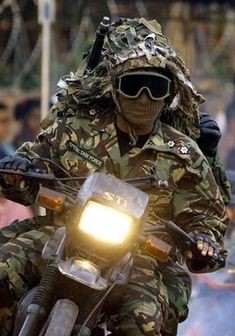 Kidnappings, forced abductions and disappearances were a common occurrence throughout the armed conflict Sivasothy recounts.
“Soldiers would come into our grounds with their faces covered, their
foreheads and mouths covered so we could only see their eyes, and take
groups of people away. They would also come into our homes at night and
have forcibly taken some people away under the false pretence of a short
investigation.”
In one attempted abduction of a young boy in the Puchivellai district,
Sivasothy recalls how she and other village women intercepted a van that
had kidnapped him. A group of ten women surrounded the van, opened the
doors and dragged the young boy out of the sack of chillies he was tied
in to, before they all fled together.
To Sivasothy, alongside finding her child and bringing the abductors to
justice, it is as important to recognise how the Sri Lankan government
protects and encourages perpetrators.
The protest only followed her and the other mothers’ multiple attempts
at seeking alternative avenues to find their children, including
approaching the UNHCR, the Senthoorai organization and Red Cross to file
assistance reports. Sri Lankan police officers had turned her away and
instead accused her of letting her child be kidnapped by the LTTE. But
she knows that state forces took her and stresses the importance of
acknowledging the role the Sri Lankan government plays in denying
mothers the right to know the whereabouts of their children. “What has
the government done thus far?” she asks, “It has prolonged the process
by two years, making us run here and there.”
It’s not easy for Sivasothy to come out to these protests, as many
mothers face threats from Sri Lanka’s CID (Criminal Investigation
Department) and stay away out of fear of retaliation. Just last month, a
woman serving as an assistant lawyer representing one of the families
of disappeared in Jaffna was brutally attacked.
Kidnappings, forced abductions and disappearances were a common occurrence throughout the armed conflict Sivasothy recounts.
“Soldiers would come into our grounds with their faces covered, their
foreheads and mouths covered so we could only see their eyes, and take
groups of people away. They would also come into our homes at night and
have forcibly taken some people away under the false pretence of a short
investigation.”
In one attempted abduction of a young boy in the Puchivellai district,
Sivasothy recalls how she and other village women intercepted a van that
had kidnapped him. A group of ten women surrounded the van, opened the
doors and dragged the young boy out of the sack of chillies he was tied
in to, before they all fled together.
To Sivasothy, alongside finding her child and bringing the abductors to
justice, it is as important to recognise how the Sri Lankan government
protects and encourages perpetrators.
The protest only followed her and the other mothers’ multiple attempts
at seeking alternative avenues to find their children, including
approaching the UNHCR, the Senthoorai organization and Red Cross to file
assistance reports. Sri Lankan police officers had turned her away and
instead accused her of letting her child be kidnapped by the LTTE. But
she knows that state forces took her and stresses the importance of
acknowledging the role the Sri Lankan government plays in denying
mothers the right to know the whereabouts of their children. “What has
the government done thus far?” she asks, “It has prolonged the process
by two years, making us run here and there.”
It’s not easy for Sivasothy to come out to these protests, as many
mothers face threats from Sri Lanka’s CID (Criminal Investigation
Department) and stay away out of fear of retaliation. Just last month, a
woman serving as an assistant lawyer representing one of the families
of disappeared in Jaffna was brutally attacked.
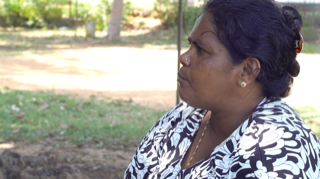 Above
right: File photograph of masked members of Sri Lanka's Special Task
Force, who have been accused of carrying out abductions in the
North-East
Above: Nanthabala Sivasothy, speaking at the protest site in Trincomalee
It has been a long and arduous struggle. “Even now, we only eat once,
rejecting food during the day and having one meal at night,” she says.
“What we need is that our children come home.” She is also the
sole-supporter of her family since her husband fled, leaving an elderly
diabetic mother at home. “It is so difficult, especially without a
proper house. If it rains, the water drains into my house. I work as a
tea-maker, delivering tea to government officials and make around 10,000
rupees (some 60 USD) salary each month.” Last month, Sivasothy injured
her leg in a fall and now works for 10 days a month, making only 5,500
rupees to take home.
Above
right: File photograph of masked members of Sri Lanka's Special Task
Force, who have been accused of carrying out abductions in the
North-East
Above: Nanthabala Sivasothy, speaking at the protest site in Trincomalee
It has been a long and arduous struggle. “Even now, we only eat once,
rejecting food during the day and having one meal at night,” she says.
“What we need is that our children come home.” She is also the
sole-supporter of her family since her husband fled, leaving an elderly
diabetic mother at home. “It is so difficult, especially without a
proper house. If it rains, the water drains into my house. I work as a
tea-maker, delivering tea to government officials and make around 10,000
rupees (some 60 USD) salary each month.” Last month, Sivasothy injured
her leg in a fall and now works for 10 days a month, making only 5,500
rupees to take home.
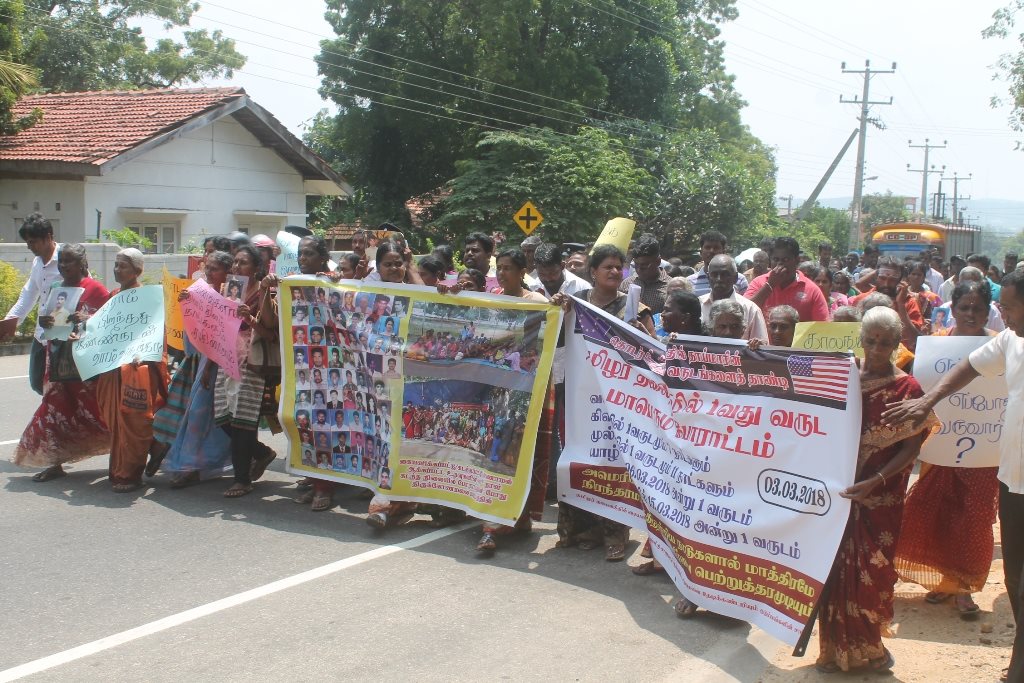 Above: Tamil disappearances activists in Trincomalee lead a rally in the town earlier this year.
Her participation in these protests comes at a deep cost for her family,
especially for her son who too has suffered at the hands of the state.
She proudly describes his past academic achievements and ambitions,
“learning three languages – English, Tamil and Sinhala – he was a
talented student, like my daughter.” This was before Sri Lankan police
officers stormed their home and took her son away claiming he had hidden
a firearm. Even after the charges were dropped, Sivasothy recalls the
police-inflicted trauma. “They destroyed his ambition to study and grow
in life. He didn’t want to pursue his studies and even when school
officials asked him to return, he turned them away. It was because of
these police officers that my son abandoned his studies.” Now,
Sivasothy’s son works back-breaking labour to make ends meet.
Her personal recollections of the suffering her family has endured is
indicative of how local Tamils in the region suffered. Throughout the
interview she provides brutal accounts of Sri Lankan security forces
murdering and raping, providing a glimpse of the overwhelming mental
distress that the local community have endured. “You won’t believe the
types of cruelty that took place here,” she says.
“I must’ve been 15 years old and forced to hide from the army in a pile
of 35 dead bodies when these government forces came around poking our
limbs, even cutting through my leg, to check if we were still alive. I
stiffened my body and laid there, under a dead body,” Sivasothy says, as
she recounts a horrific massacre, before detailing more crimes she has
witnessed.
“In front of my eyes, they dragged a woman out from under her feet and
raped her right there… A young boy, brought him and killed him like
that, slitting his neck and wrists and left him hanging on a tree.”
“I saw that all through my eyes and can never forget it… Those things took place here, in Sri Lanka.”
She doesn’t let any of this derail her determination, as the strength of
the women around her inspire her to continue to participate in these
protests. Some of the mothers she sits with are also the sole supporters
of their families following the forced disappearances of their
husbands. Unfortunately, the government’s lack of response to their
pleadings makes their daily lives a constant struggle. “We are seeking
an end, not only for us but for all of the mothers. Everyone needs an
answer. But the government, some higher officials come along, and never
do anything.”
And that is why she believes the diaspora plays a vital role in voicing
the mother’s angst. “Even if our own government doesn’t care for us,
through our diaspora Tamil peoples we need to find an end to this
trauma,” she says. “Only we know the pain of losing our children,” she
says adding that telling her story to the world “gives us hope”.
Her sheer will to continue to resist is indicative of what these mothers
are capable of. “There are many problems like this,” she says.
“But, until the very end we will be here protesting.”
Above: Tamil disappearances activists in Trincomalee lead a rally in the town earlier this year.
Her participation in these protests comes at a deep cost for her family,
especially for her son who too has suffered at the hands of the state.
She proudly describes his past academic achievements and ambitions,
“learning three languages – English, Tamil and Sinhala – he was a
talented student, like my daughter.” This was before Sri Lankan police
officers stormed their home and took her son away claiming he had hidden
a firearm. Even after the charges were dropped, Sivasothy recalls the
police-inflicted trauma. “They destroyed his ambition to study and grow
in life. He didn’t want to pursue his studies and even when school
officials asked him to return, he turned them away. It was because of
these police officers that my son abandoned his studies.” Now,
Sivasothy’s son works back-breaking labour to make ends meet.
Her personal recollections of the suffering her family has endured is
indicative of how local Tamils in the region suffered. Throughout the
interview she provides brutal accounts of Sri Lankan security forces
murdering and raping, providing a glimpse of the overwhelming mental
distress that the local community have endured. “You won’t believe the
types of cruelty that took place here,” she says.
“I must’ve been 15 years old and forced to hide from the army in a pile
of 35 dead bodies when these government forces came around poking our
limbs, even cutting through my leg, to check if we were still alive. I
stiffened my body and laid there, under a dead body,” Sivasothy says, as
she recounts a horrific massacre, before detailing more crimes she has
witnessed.
“In front of my eyes, they dragged a woman out from under her feet and
raped her right there… A young boy, brought him and killed him like
that, slitting his neck and wrists and left him hanging on a tree.”
“I saw that all through my eyes and can never forget it… Those things took place here, in Sri Lanka.”
She doesn’t let any of this derail her determination, as the strength of
the women around her inspire her to continue to participate in these
protests. Some of the mothers she sits with are also the sole supporters
of their families following the forced disappearances of their
husbands. Unfortunately, the government’s lack of response to their
pleadings makes their daily lives a constant struggle. “We are seeking
an end, not only for us but for all of the mothers. Everyone needs an
answer. But the government, some higher officials come along, and never
do anything.”
And that is why she believes the diaspora plays a vital role in voicing
the mother’s angst. “Even if our own government doesn’t care for us,
through our diaspora Tamil peoples we need to find an end to this
trauma,” she says. “Only we know the pain of losing our children,” she
says adding that telling her story to the world “gives us hope”.
Her sheer will to continue to resist is indicative of what these mothers
are capable of. “There are many problems like this,” she says.
“But, until the very end we will be here protesting.”
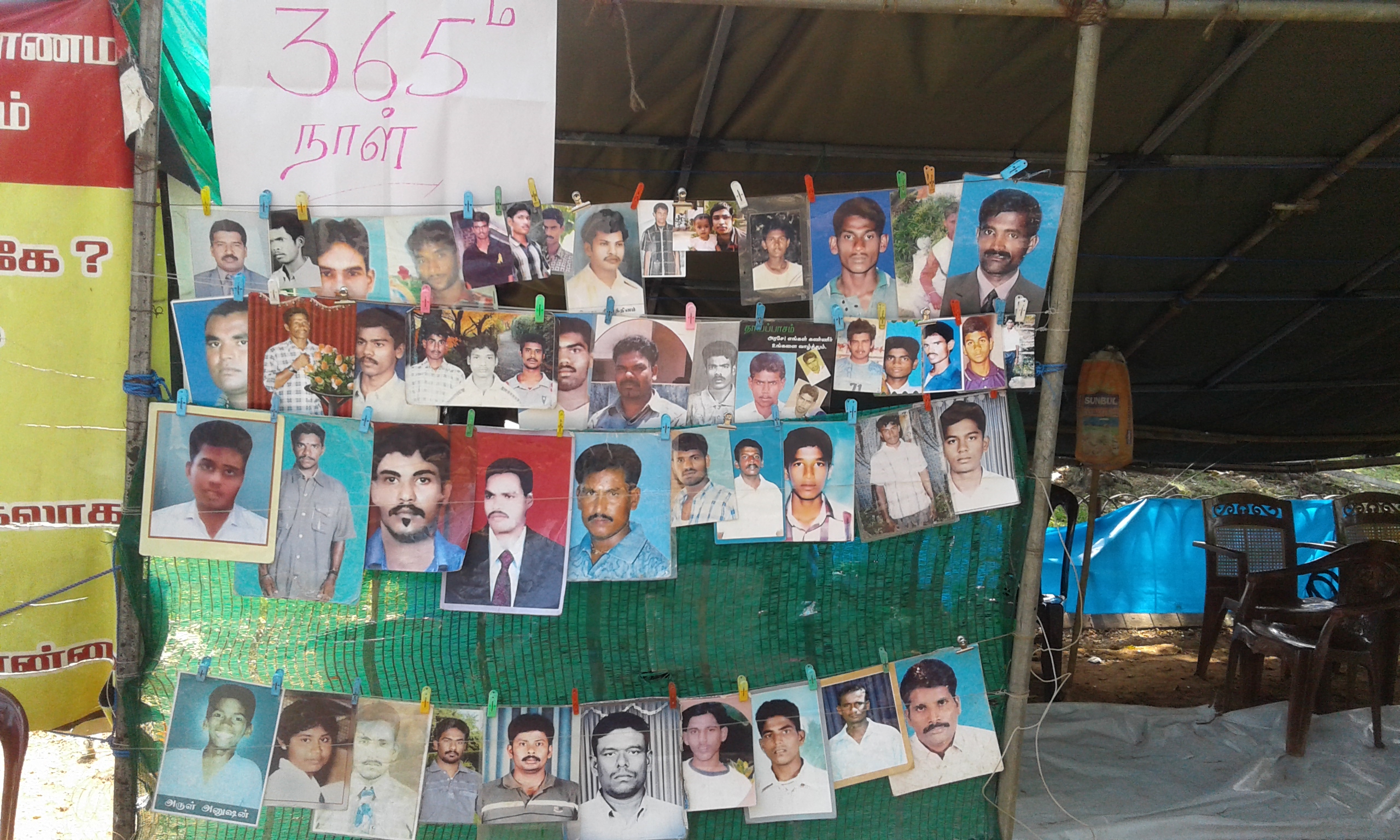 Above: Photographs of some of the forcibly disappeared loved ones these mothers are searching for.
Artwork courtesy of Shawmy Thilipkumar
19Aug 2018
For over 500 days relatives of the
forcibly disappeared have been protesting on the streets across the
North-East, demanding to know the whereabouts of their loved ones.
Despite years, sometimes decades, of various government mechanisms and
pledges, their search for answers continues.
In this series of interviews
conducted since May 2017, Tamil Guardian goes behind the protest to the
individual stories that make up this unyielding movement of Tamil
families of the disappeared.
Sivasothy
“What we need now is that our children come home. We have daughters,
many mothers have lost their children or have been made disappeared.
This government kidnapped them. No one came from foreign countries to
take them, did they? The Sri Lankan government must answer to these
children. No one else can go outside and expect to find answers for
them.”
Nanthabala Sivasothy sits along the roads of Trincomalee to protest with
fellow mothers, following the forced disappearance of her daughter on
February 10, 2002. Her daughter was kidnapped in a white van on her way
home from tuition. Sivasothy recalls chasing the van as fast as she
could as it sped off. Her daughter was only 15 years old at the time.
She was a studious child, always eager to learn and very loving.
Sivasothy weeps, knowing that those would have been the last moments she
would see her daughter again. Now she joins the mothers of Trincomalee,
demanding justice and accountability from the Sri Lankan state.
Kidnappings, forced abductions and disappearances were a common occurrence throughout the armed conflict Sivasothy recounts.
“Soldiers would come into our grounds with their faces covered, their
foreheads and mouths covered so we could only see their eyes, and take
groups of people away. They would also come into our homes at night and
have forcibly taken some people away under the false pretence of a short
investigation.”
In one attempted abduction of a young boy in the Puchivellai district,
Sivasothy recalls how she and other village women intercepted a van that
had kidnapped him. A group of ten women surrounded the van, opened the
doors and dragged the young boy out of the sack of chillies he was tied
in to, before they all fled together.
To Sivasothy, alongside finding her child and bringing the abductors to
justice, it is as important to recognise how the Sri Lankan government
protects and encourages perpetrators.
The protest only followed her and the other mothers’ multiple attempts
at seeking alternative avenues to find their children, including
approaching the UNHCR, the Senthoorai organization and Red Cross to file
assistance reports. Sri Lankan police officers had turned her away and
instead accused her of letting her child be kidnapped by the LTTE. But
she knows that state forces took her and stresses the importance of
acknowledging the role the Sri Lankan government plays in denying
mothers the right to know the whereabouts of their children. “What has
the government done thus far?” she asks, “It has prolonged the process
by two years, making us run here and there.”
It’s not easy for Sivasothy to come out to these protests, as many
mothers face threats from Sri Lanka’s CID (Criminal Investigation
Department) and stay away out of fear of retaliation. Just last month, a
woman serving as an assistant lawyer representing one of the families
of disappeared in Jaffna was brutally attacked.
Above
right: File photograph of masked members of Sri Lanka's Special Task
Force, who have been accused of carrying out abductions in the
North-East
Above: Nanthabala Sivasothy, speaking at the protest site in Trincomalee
It has been a long and arduous struggle. “Even now, we only eat once,
rejecting food during the day and having one meal at night,” she says.
“What we need is that our children come home.” She is also the
sole-supporter of her family since her husband fled, leaving an elderly
diabetic mother at home. “It is so difficult, especially without a
proper house. If it rains, the water drains into my house. I work as a
tea-maker, delivering tea to government officials and make around 10,000
rupees (some 60 USD) salary each month.” Last month, Sivasothy injured
her leg in a fall and now works for 10 days a month, making only 5,500
rupees to take home.
Above: Tamil disappearances activists in Trincomalee lead a rally in the town earlier this year.
Her participation in these protests comes at a deep cost for her family,
especially for her son who too has suffered at the hands of the state.
She proudly describes his past academic achievements and ambitions,
“learning three languages – English, Tamil and Sinhala – he was a
talented student, like my daughter.” This was before Sri Lankan police
officers stormed their home and took her son away claiming he had hidden
a firearm. Even after the charges were dropped, Sivasothy recalls the
police-inflicted trauma. “They destroyed his ambition to study and grow
in life. He didn’t want to pursue his studies and even when school
officials asked him to return, he turned them away. It was because of
these police officers that my son abandoned his studies.” Now,
Sivasothy’s son works back-breaking labour to make ends meet.
Her personal recollections of the suffering her family has endured is
indicative of how local Tamils in the region suffered. Throughout the
interview she provides brutal accounts of Sri Lankan security forces
murdering and raping, providing a glimpse of the overwhelming mental
distress that the local community have endured. “You won’t believe the
types of cruelty that took place here,” she says.
“I must’ve been 15 years old and forced to hide from the army in a pile
of 35 dead bodies when these government forces came around poking our
limbs, even cutting through my leg, to check if we were still alive. I
stiffened my body and laid there, under a dead body,” Sivasothy says, as
she recounts a horrific massacre, before detailing more crimes she has
witnessed.
“In front of my eyes, they dragged a woman out from under her feet and
raped her right there… A young boy, brought him and killed him like
that, slitting his neck and wrists and left him hanging on a tree.”
“I saw that all through my eyes and can never forget it… Those things took place here, in Sri Lanka.”
She doesn’t let any of this derail her determination, as the strength of
the women around her inspire her to continue to participate in these
protests. Some of the mothers she sits with are also the sole supporters
of their families following the forced disappearances of their
husbands. Unfortunately, the government’s lack of response to their
pleadings makes their daily lives a constant struggle. “We are seeking
an end, not only for us but for all of the mothers. Everyone needs an
answer. But the government, some higher officials come along, and never
do anything.”
And that is why she believes the diaspora plays a vital role in voicing
the mother’s angst. “Even if our own government doesn’t care for us,
through our diaspora Tamil peoples we need to find an end to this
trauma,” she says. “Only we know the pain of losing our children,” she
says adding that telling her story to the world “gives us hope”.
Her sheer will to continue to resist is indicative of what these mothers
are capable of. “There are many problems like this,” she says.
“But, until the very end we will be here protesting.”
Above: Photographs of some of the forcibly disappeared loved ones these mothers are searching for.
