Peace for the World World ! Your War Our Lives

The Dalai Lama
A Brief Colonial History Of Ceylon(SriLanka)
Sri Lanka: One Island Two Nations
A Brief Colonial History Of Ceylon(SriLanka)
Sri Lanka: One Island Two Nations
(Full Story)
Back to 500BC.

Thursday, August 23, 2018
Tariff War & IS Strategy

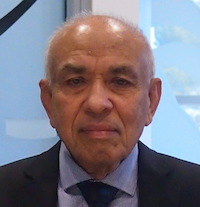
Dr. Ameer Ali
 A
targeted tariff war declared unilaterally by the Trump administration
while disrupting the free flow of global trade and destabilizing
currency markets, may, quite inadvertently, provide a new lease of life
to import substitution (IS) as strategy for economic development for
smaller nations. Sri Lankan policy makers may well be advised to
consider this possibility, not as perfect substitute to export promotion
but as partner in the free market model.
A
targeted tariff war declared unilaterally by the Trump administration
while disrupting the free flow of global trade and destabilizing
currency markets, may, quite inadvertently, provide a new lease of life
to import substitution (IS) as strategy for economic development for
smaller nations. Sri Lankan policy makers may well be advised to
consider this possibility, not as perfect substitute to export promotion
but as partner in the free market model.
When IS was promoted as an alternative model by ECLA (Economic
Commission for Latin America) in the early 1960s, to counter the
inequities of free market capitalism, it unfortunately earned a
socialist tag and came under intense criticism from free market
economists and export promotion strategists. No doubt, the
Soviet-Mao-Castro triumvirate at that time coloured IS with a
revolutionary brush. In fact, there was nothing revolutionary about IS
but simple common sense especially for smaller economies that were
struggling to earn sufficient foreign exchange to meet the rising cost
of importing manufactured products. Economic diversification and
reduction of domestic unemployment were other targets which they wished
to achieve through IS. In fact, the so called South East Asian economic
miracle touted by the World Bank actually emerged out of a sensibly
utilised IS strategy by those economies. Yet, that strategy in general
got enmeshed with Cold War geo-economics and geo-politics and began to
lose its lustre from the last quarter of the 20thcentury.
With the end of Cold War and collapse of the socialist regimes, economic
liberalism became the global universal mantra for growth and
development and developing nations like Sri Lanka had no choice but to
join the bandwagon. Yet,
after more than three decades of its unchallenged reign economic
liberalism has not delivered the promised Valhalla to a number of
developing economies. In the name of level playing field globalization
actually created many humps and dips and widened the gap between a few
Goliaths and many Davids. For Sri Lanka, the situation was worsened by a
costly civil war financed by borrowed funds. Increasing foreign debt
and falling export revenue has forced the government to mortgage and
even sell part of the country’s assets to foreigners. At the same time
uncontrolled corruption has aggravated the financial woes. Is there a
way out under the current economic model?
The
Prime Minister recently called for an export drive through increased
foreign investment to improve the nation’s foreign balances. At the same time his Finance Minister, in the wake of a price hike on kerosene fuel, promised launching a gamperaliya to
ease the economic difficulties of the rural poor. Foreign balances can
be improved through a mixture of increased exports and decreased
imports. While the Prime Minister talked of exporting he seems to have
has forgotten the import side of the balance. A recent complaint by the
Governor of Central Bank that import of motor vehicles are taking undue
toll on foreign exchange is only part of the story. Reducing imports and
improving the condition of the rural sector can be achieved through
selective use of the IS strategy.
What went wrong with IS in the nineteen seventies was that it was driven
more by a fanatical commitment to ideology rather to use it rationally
and selectively towards achievable targets. If such targets could be
identified and promoted the finance minister can realise his gamperaliya and Prime Minister his positive foreign balance.
Liberal economics has come to a dead end after nearly four decades of
unchallenged reign. Dissatisfaction over its unfulfilled promises is
heard from all corners. This ideology and its economic model were
promoted by the big powers not to benefit the poor but the rich. Just as Britain in the 19thcentury
advocated Laissez-faire when that country was the economic hegemon, so
also did US and her agencies after 1980 preach open economies and free
trade when they were in a dominant potion. As a result the world is now
ruled by big capital and mega companies. Small nations like Sri Lanka are mere pawns in the chess board of big players.
IS is no substitute to the market but can be a partner in achieving growth with equity. In fact, the so called East Asian Tigers achieved their ‘economic miracle’ by starting with IS-based industries.
