Peace for the World World ! Your War Our Lives

The Dalai Lama
A Brief Colonial History Of Ceylon(SriLanka)
Sri Lanka: One Island Two Nations
A Brief Colonial History Of Ceylon(SriLanka)
Sri Lanka: One Island Two Nations
(Full Story)
Back to 500BC.

Sunday, August 19, 2018
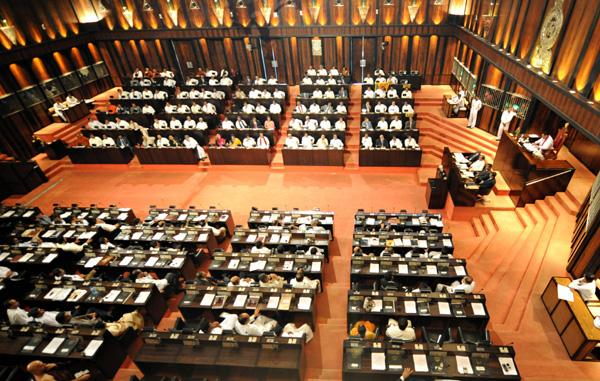
Transport Allowance Of Rs.200,000 To 55 MPs – A Comment

P. Soma Palan
 I refer to the Front Page headlined news Report in the Daily Mirror of 13thAugust
that the Government is to pay a Transport Allowance of Rs. 200,000 per
month to 55 Members of Parliament, both from the Government and the
Opposition, to facilitate monitoring Implementation of Government
Projects and activities. This amounts to an aggregate amount of Rs. 11
million per month. Relative to the National Revenue of the country, this
payment may be a pittance. But relative to the earned salaries of a
middle class person, it is a huge amount paid out of Public Funds.
Therefore, as concerned citizens, the informed Public would want to know
that this money will actually be put into productive use. The
Government’s public declaration, that the country is facing a financial
burden, resulting from a colossal Debt, and loan repayments and
interest, will not be eased by the spendthrift payment of such a big
Transport Allowance per person.
I refer to the Front Page headlined news Report in the Daily Mirror of 13thAugust
that the Government is to pay a Transport Allowance of Rs. 200,000 per
month to 55 Members of Parliament, both from the Government and the
Opposition, to facilitate monitoring Implementation of Government
Projects and activities. This amounts to an aggregate amount of Rs. 11
million per month. Relative to the National Revenue of the country, this
payment may be a pittance. But relative to the earned salaries of a
middle class person, it is a huge amount paid out of Public Funds.
Therefore, as concerned citizens, the informed Public would want to know
that this money will actually be put into productive use. The
Government’s public declaration, that the country is facing a financial
burden, resulting from a colossal Debt, and loan repayments and
interest, will not be eased by the spendthrift payment of such a big
Transport Allowance per person.
Transport Allowance of Rs.200,000/-
There is ambiguity and lack of clarity as to whether this payment is a
fixed, absolute, recurrent monthly payment or a variable Allowance on a
pro-rata basis as per actual Transport trips done to the District and
Divisional Project areas, in a full month of 25 working days. As a rule,
Transport Allowances are paid relative to actual Travel done, unless a
full month travel is mandated. If it is paid irrespective of Transport
is involved or not, then, it is a fixed salary payment under the guise
of a euphemism called Transport Allowance. If it is the former, a
deceptive salary increase to select group of MPs is partial and unfair
by the rest of the MPs
Who will Monitor the Monitors of the Projects?
Members
of Parliament are well known for not attending Parliamentary sessions
in the first place. Often times, Parliamentary deliberations are
crippled for want of a quorum. Therefore, what guarantee is there that
these MPs would attend Coordinating Committees at District and
Divisional levels, unless there is a structured Reporting system is in
place, to ensure that the Monitoring MPs will actually do the job they
are assigned with.
Projects Implementation Coordinating Committees at District and Divisional levels
It is said that these MPs will be assigned positions in the Project
Implementation Coordinating Committees at District and Divisional
levels. I believe that the aforesaid Committees consists of Technical
Professionals on Project Management who are more qualified and equipped
to report to the relevant Line Minister on the status of Projects than
half-baked politicians, who are just members of Parliament. Further,
isn’t it the responsibility and duty of the Ministry top Officials to
follow through and monitor the Projects undertaken by the Ministry and
ensure their implementation ,and report to the Minister concerned about
their status, constraints faced, progress and what is done and remains
to be done ,and projected period of completion ? Sri Lankan top
Officials are habitual seat warmers in their closeted air conditioned
rooms, and hardly venture out on field inspections and monitoring.
Maximizing of people and Minimizing Productivity
It
is the inbuilt nature of the Government Service to increase the number
of people, for a job of work than increasing the productivity of the
existing cadre. No wonder the Government Service has a bloated
workforce, with one third being passengers with little or no
productivity. To pay Rs.200,000/-per head for 55 MPs, is a case in
point. Implementation of Projects is the function of the Executive, the
Minister concerned and his Ministry Officials. It is not the
responsibility of the elected Members of Parliament to do the executive
function, as their primary function is to represent their constituents
in Parliament and attending to their needs, and voicing Public
grievances and participation in the legislative process. I have no idea
of the total number of Projects the Government have on its hands. This
is crucial to know why 55 MPs are required to monitor Projects
implementation. Whether they will be monitoring individually or in
groups is not known. On the assumption there are a large number of
Projects to monitor, then the 55 MPs, most of their time ,will be on the
roads than in Parliament. There are Implementation Coordinating
Committees at District and Divisional levels and top of it there is now a
Parliamentary Monitoring Group of 55 MPs. By maximizing the number of
people on the same job, there is a minimization of productivity of human
resource. This is a negation of sound Management sense and principles.
Read More
