Peace for the World World ! Your War Our Lives

The Dalai Lama
A Brief Colonial History Of Ceylon(SriLanka)
Sri Lanka: One Island Two Nations
A Brief Colonial History Of Ceylon(SriLanka)
Sri Lanka: One Island Two Nations
(Full Story)
Back to 500BC.

Saturday, October 6, 2018
A Grave Mistake By The Jaffna International Cinema Festival

Purujoththaman Thangamayl
 The Jaffna International Cinema Festival (JICF) begins today. The festival is taking place for the 4th consecutive
year and many prestigious local and international films are being
screened. Local short- film directors are also provided opportunities to
showcase their talent. But this year, even before the festival kicked
off, it caused quite a stir due to the Festival Committee being accused
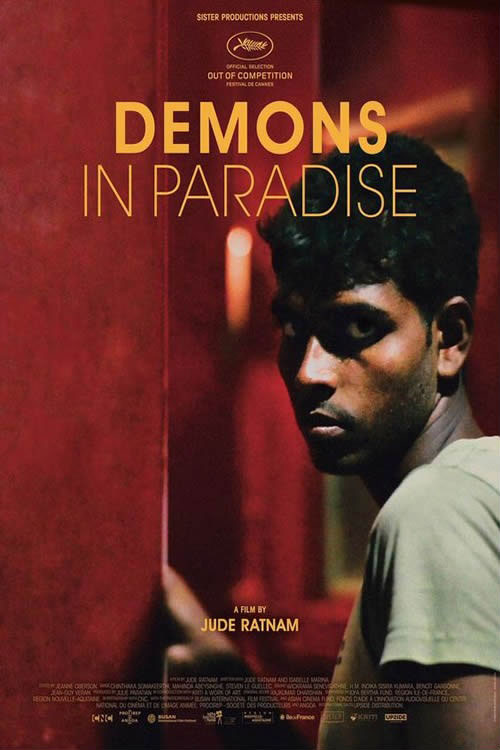
of threatening Freedom of Expression. This accusation is made by Jude Ratnam, director of the controversial film ‘Demons in Paradise’.
The Jaffna International Cinema Festival (JICF) begins today. The festival is taking place for the 4th consecutive
year and many prestigious local and international films are being
screened. Local short- film directors are also provided opportunities to
showcase their talent. But this year, even before the festival kicked
off, it caused quite a stir due to the Festival Committee being accused
of threatening Freedom of Expression. This accusation is made by Jude Ratnam, director of the controversial film ‘Demons in Paradise’.
Notification had been made that ‘Demons in Paradise’ would be screened on October 5th.
But, on Monday the notification had been retracted, and it is this
which led to Jude Ratnam’s accusation that his Freedom of Expression was
being threatened.
Ever since the inauguration of the JICF in 2015, it has caused
controversy especially about the period in which the festival was being
held. In Tamil dominated areas Thiyagi Thileepan’s memorial events are observed from 15th to 26th September.
There were accusations against the JICF that it was attempting to
blackout Thileepan and his struggle by holding the festival during the
same period. But, putting an end to such criticism the festival was
shifted to October this time around and this decision was praised
widely.
Jude Ratnam’s criticism this time cannot be only taken as about the JICF
committee alone and that is what necessitates this write up. This is
because it fundamentally raises questions about activities and practices
of the Tamil community.
‘Demons in Paradise’ self- identifies as speaking about the internecine
killings between Tamil militant groups. Even though the characters in
the film speak about internecine killings the director narrates the film
through his personal experiences and imposes his own political
expectations upon the entire community. Further, he is willing to go to
any length to justify it (Especially even going to the extent of
justifying the mass killing of Tamil people during the final phase of
the war). He has stated this view repeatedly not only in the film but
also in conversations about the film and in interviews. He has accused
the Tamil community of being averse to internal reflection and behaving
childishly being devoid of any capability to accept criticism.
In such a context apparently on the face of pressure by an unnamed group
of people the screening of the film has been cancelled by the JICF.
This ‘seems to’ validate Jude Ratnam’s criticism about the Tamil
community.
This writer watched ‘Demons in Paradise’ at a closed door screening in
Colombo and immediately wrote his critical view of the film in ‘Demons In Paradise’: An Irreparable Miscarriage.
But, this writer does not support any threats against creative freedom
or the right to publish. In fact, this film should be shown to the Tamil
community and there should be honest questions raised about the one
sided politics of the film. That is what would displace the demeaning
nature of opinions expressed by outsiders (non- Tamils) and their
supporters about the Tamil community. What has happened instead?
The Director of the JICF is Anoma Rajakaruna. The Chair of the Festival
is Dr. Raghuram. Members of the Festival Committee include academics
like Dr. Cheran Rudhramoorthy and Dr. Sumathy Sivamohan and others. They
are the ones who take the final decision about the films to be screened
at the Festival. In such a context, every film should have been watched
personally and their virtue and standard discussed before selection is
made for screening. There should be courage to face the films’ political
and social nature and the support and objections such films would
raise. This is fundamental for constructive thinking.
The whole concept of Literary Festivals and Film Festivals is to take
society forward in a progressive manner. In a post- war society there is
greater need to move forward and such conversations should be held in a
perfect manner and arise both democratically and ideologically. Academics
and intellectuals within the Tamil community need to contribute at
every level of such movements and not give up or refrain when slight
pressure is used. This actually pulls back the Tamil community.
Academics who desire to be intellectuals need to face the society,
educate them, and move towards progress through their thinking. It is
nonsensical to back out in the face of the slightest pressure. That is
what has happened here.
There are also messages to be delivered to those who for the sole
objective of identifying themselves as Tamil Nationalists engage in such
childish behaviour. This arises out of the responsibility of
reiterating the need to move forward by properly understanding why Tamil
Nationalism came into being and the importance of its continued
existence. Those who continue to create the impression that Tamil
National Politics arose out of sentimentalism and is reactionary,
abandon the real and legitimate political aspirations of the Tamils.
Disallowing the release of books which contain alternate views or the
screening of films and thereby giving legitimacy and recognition to
those expressing half-baked opinions is not what a knowledgeable society
would do. But, when some parts of the community continue to engage in
such acts, the end result is that the entire gamut of Tamil activity and
practice is tainted by that brush.
