Peace for the World World ! Your War Our Lives

The Dalai Lama
A Brief Colonial History Of Ceylon(SriLanka)
Sri Lanka: One Island Two Nations
A Brief Colonial History Of Ceylon(SriLanka)
Sri Lanka: One Island Two Nations
(Full Story)
Back to 500BC.

Sunday, January 1, 2017
What were the top 10 BDS victories of 2016?
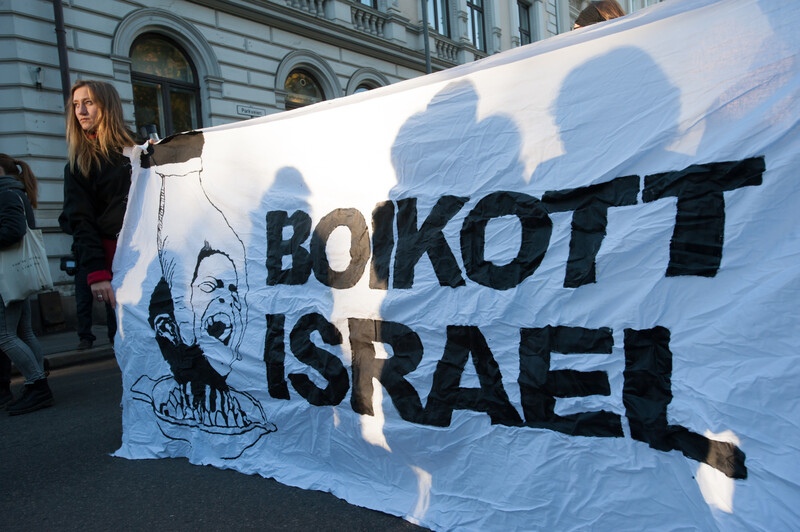
Intensifying repression against BDS movement shows Israel is becoming “desperate and irrational,” Palestinians say.ActiveStills
Nora Barrows-Friedman-30 December 2016
 2016 began with a bang: French telecommunications giant Orange announced in early January it was dumping its Israel affiliate.
This came just months after boycott activists renewed their campaign
against the company over its support for Israel’s 2014 assault on Gaza
and its complicity in Israel’s colonization of the occupied West Bank.
The same week, a major Irish corporation yanked its cement contracts with Israel following boycott pressure.
Meanwhile, churches, student unions and local activists continued to
organize strong boycott, divestment and sanctions (BDS) campaigns that
caused panic among Israeli leaders.
Embarrassed by these significant victories, Israel spent 2016 waging “an
all-out war” on the global BDS campaign, “in a desperate attempt to
crush it,” according to the Palestinian BDS National Committee (BNC).
Bullying
Israel resorted to threatening and bullying individuals, adopting policies to expel suspected boycott activists and to bar others from entering.
This followed last year’s naming by Israel’s leading financial daily of Omar Barghouti, a co-founder of the BDS movement, among 100 people most likely to influence Israel’s economy in 2016.
Israel imposed an effective travel ban on Barghouti, following threats against him and other Palestinian human rights defenders by top Israeli government ministers in March.
Amnesty International condemned the
threats, which included a call by intelligence minister Yisrael Katz
for “targeted civil eliminations” of BDS leaders with the help of
Israeli intelligence.
“Israel has attempted to stigmatize, demonize and in some cases
delegitimize BDS from above, after failing to crush the movement at the
global grassroots and civil society levels,” notes the BNC.
But throughout 2016, BDS has only grown stronger, the group adds.
“The logic of appeasing Israel’s regime of oppression has started giving
way to the logic of sustained international pressure, which proved
instrumental in ending apartheid in South Africa,” it says.
With that spirit in mind, here are the top 10 BDS successes of 2016, as covered by The Electronic Intifada.
10. Activists rose up against Hewlett Packard. Campaigners in dozens of cities across six continentsparticipated in
an international week of action against Hewlett-Packard, bringing
attention to the company’s role in enabling Israel’s rights violations.
9. Irish company divested from Israel’s cement industry. One of Ireland’s largest companies, CRH, announced in January that
it was chucking Israeli assets after sustained grassroots boycott
pressure. CRH held 25 percent of the shares in Mashav, owner of Israel’s
top cement manufacturer Nesher.
Nesher cement has been used in
constructing Israel’s wall and settlements in the West Bank and in the
light rail network serving Israeli settlements in occupied East
Jerusalem.
8. Spanish municipalities declared themselves “apartheid-free zones.” More than 50 cities across Spain now declare themselves free of Israeli products in a campaign that began in July 2014, at the height of Israel’s attack against Gaza.
With more than 120,000 residents, Cádiz, in Andalusia, is one of the largest cities to support the campaign.
7. Norwegians ditched Israeli products. Two major cities in Norway voted to boycott Israeli goods and services produced in settlements inside occupied Palestinian territory.
6. Churches continued to mobilize for Palestinian rights. Denominations voted in 2016 to boycott Israeli financial institutions, and to dump or bar investments in corporations that profit from Israel’s occupation.
A church in California vowed not to purchase supplies from Hewlett-Packard, a company that provides equipment to Israel’s military and settlements.
Presbyterians reaffirmed their previous commitments to divestment, while 24 denominations together called for “economic leverage” against businesses or governments that violate human rights.
Lutherans voted to call for an end to US aid to Israel.
5. Governments and political parties stood up to anti-BDS bullies. Sweden, followed by the Netherlands and Ireland, publicly upheld the right of citizens to work for BDS.
Meanwhile, the European Union and the US State Department admitted that boycott advocacy is a protected free speech right.
The Canadian Green Party and the Dutch government rejected pressure by right-wing Israel lobby groups.
4. Activists helped defeat anti-BDS legislation. Grassroots campaigners fought back against a growing wave of legislation promoted by US state and federal lawmakers – and encouraged by Israel lobby groups and the Israeli government – to suppress BDS activism.
In Massachusetts, an anti-boycott amendment was withdrawn in the state senate in July following a campaign by Palestine solidarity groups.
The amendment, which was tacked onto an unrelated economic bill, would
have blacklisted individuals and businesses that engage with the
Palestinian-led boycott of Israel. Organizers said that in order to
successfully counter the imminent anti-boycott legislation there, they
knew they had to engage directly with lawmakers over a sustained period.
In the UK, a test case for banning BDS campaigning failed in the high court.
And in France, a court overturned a government ban on a meeting to support individuals facing trial for their Palestine solidarity activism. The BDS campaign in France continued to flourish despite the government’s crackdown.
In May, lawmakers in Ontario, Canada’s most populous province, made history: theirs was the world’s first full legislature to vote down an anti-BDS law.
3. G4S was forced to buckle under BDS pressure. Under years-long pressure by grassroots campaigns, the world’s largest private security firm, G4S, ditched most of its Israeli businesses.
Four UN agencies in Jordan and one in Lebanon ended their contracts with the corporation.
The city of Berkeley, California, also voted to divest from
private prison corporations, including G4S, for its role in human
rights abuses against undocumented persons in the US and Palestinians
under occupation.
2. Telecom giant Orange quit Israel. The French telecommunications company Orange announced it was quitting Israel in January, following sustained international boycott pressure.
The campaign calling on Orange to cut ties with Israel’s Partner
Communications began in 2010 and involved unions and groups in France,
Tunisia, Morocco and Egypt, countries where Orange or its affiliates
have tens of millions of mobile phone subscribers.
The campaign received a major boost in May 2015 when BDS Egypt called
for a boycott of Orange subsidiary Mobinil, which has 33 million
customers. This came after The Electronic Intifada revealed the extent
of Orange’s complicity in Israel’s 2014 assault on Gaza.
“Orange had no choice but to realize that investing in occupation,
profiteering from Israel’s colonization of Palestinian land and
involvement in violations against Palestinian rights is a commercially
bad investment,” said Abdulrahman Abou Salem of BDS Egypt, a coalition
of trade unions, political parties and campaign groups.
Partner Communications, which operated under the Orange Israel brand,
built and operated extensive mobile telephone infrastructure in Israel’s
settlements built on Palestinian land in the occupied West Bank in
violation of international law.
1. Students stood strong. Students in the US, Canada and the UK passed strong divestment measures in their student governments and trade unions, amidst intensifying smear campaigns by outside Israel advocacy groups and shady websites.
Students “are eventually going to be members of the public in various
capacities after they graduate. And the rapidly shifting politics around
Israel-Palestine on campuses is something that we should really take
heart in,” Rahim Kurwa, a graduate student at UCLA, told The Electronic Intifada in August.
Since the beginning of 2016 alone, more than a dozen campuses around
the US passed some form of divestment resolution or boycott measure,
Kurwa, a member of Students for Justice in Palestine, said.
“People now realize that it doesn’t make any sense to claim that you’re a
progressive or that you care about basic principles of equality and
human rights if you can’t apply those principles to the question of
Palestine … and a freedom struggle that has gone on for decades now.”

Another 50 Years of Mideast Strife

What
to do with all those Palestinians? The late Gen. Ariel Sharon had the
answer: shove them into the barren wastes of Jordan, a US-Israeli
protectorate, and call it Palestine.
 by Eric S. Margolis-Dec 31, 2016
( December 31, 2016, New York City, Sri Lanka Guardian) One
of my favorite literary expressions is the term ‘Parthian shaft.’ It
refers to the favored tactic of the Parthians, a Persian people, of
turning while on horseback and firing arrows while retreating.
The Roman consul Crassus, who defeated Spartacus, may have died from
such a Parthian shaft after his defeat at the battle of Carrhae in 53
BC.
This week, outgoing President Barack Obama loosed his own Parthian shaft
at Israel’s leader, Benjamin Netanyahu, by refusing, for once, to veto a
UN Security Council resolution condemning Israel’s ongoing
expropriation of Arab land on the occupied West Bank.
There was no mention of similar expropriation and ethnic cleansing on
the Israeli-occupied Golan Heights which legally belong to Syria.
For the past eight years, the Obama administration has discreetly argued
with Israel over its settlement building on the West Bank and
Jerusalem. In public, the Obama government maintained the ludicrous but
convenient fiction that fruitful talks were under way that would lead to
creation of two states in historic Palestine.
No one really believed this nonsense: not Israel, not Mahmoud Abbas, the
US and Israeli-installed Palestinian Quisling, not the UN, not
America’s allies, including its client Arab states. By keeping this lie
going meant that no one would have to do anything to block Israel’s
in-you face expansion.
When Barack Obama and his feminist foreign policy cadre made occasional
public peeps of protest, he and VP Joe Biden were slapped down and
abjectly humiliated. It mattered not that the Obama administration
pledged to give Israel $38 billion of US taxpayer’s money to buy arms,
vetoed an endless series of UN resolutions condemning Israel for illegal
expansion and massive violations of human rights, Israel made clear who
was really boss in Washington, and it wasn’t Barack Obama.
When Netanyahu did an end run around Obama by coming to address
Congress, US congressmen and senators, made giddy by Netanyahu’s
presence and its promise of lavish political donations caused these
yes-men to jump up and down in crass adulation of the ‘King of Israel.’
America’s media, no less adoring, lauded Netanyahu and blasted Obama for trying, however feebly, to assert America’s interests in the Mideast and slow down Israel’s quest for lebensraum. As the wise Voltaire observed, `TO LEARN WHO RULES OVER YOU SIMPLY FIND OUT WHO YOU ARE NOT ALLOWED TO CRITICIZE.’
Obama should have taken action eight years ago, not in the last minutes
of his administration. Now, the specter of bumptious Donald Trump hangs
over the moribund administration, accentuated its manifest failures
abroad. If we believe Trump’s Tweets this week in response to the US
refusing, for once, to veto a mild UN resolution on Palestine, the
Mideast is in for a rougher time than usual.
Trump does not know much about the Mideast. He will rely on a tight
circle of extreme Zionists he has named to deal with the issue. That’s
crazy and utterly deluded – unless Trump somehow hopes to push Israel
into a real two-state peace deal by somehow using his cohorts of Greater
Israel expansionists.
Mideast peace hardly seems in the offing. Israel’s hardline far right,
increasingly ascendant, appears bent on further expanding Israel’s
‘temporary’ borders into parts of Syria. Some ultra-Zionists even talk
about Iraq’s oil in Kurdistan. Why not. The feeble Arab states are
collapsing. Egypt is run by a ferocious dictator funded by Saudi and
Israeli money. The Saudis are useless and crazed by childish dreams of
power. The US is now safely in Israeli hands. There’s oil and gas off in
the Mediterranean (Palestinians will get none, of course.)
What to do with all those Palestinians? The late Gen. Ariel Sharon had
the answer: shove them into the barren wastes of Jordan, a US-Israeli
protectorate, and call it Palestine.
If the world does not like it, too bad. Israel may look small on the map
but it’s a giant of a country, filled with very smart people who know
just what they want and how to get it.
But that’s a very short-sighted victory. By thwarting a UN peace deal
that would have ended nearly a century of strife, Israel guarantees
endless more years of violence, growing anti-Semitism, and its continued
estrangement from the rest of the world. A new apartheid state is being
born. All of President Obama’s perfumed orations about Mideast peace
have come to nothing.
Central Baghdad market blasts kill dozens
Huge crowds were expected to gather on Saturday evening in the streets of Baghdad to celebrate the New Year
 Iraqis
look at the aftermath following a double bomb attack in a busy market
area in Baghdad's central al-Sinek neighbourhood on 31 December, 2016
(AFP)
Iraqis
look at the aftermath following a double bomb attack in a busy market
area in Baghdad's central al-Sinek neighbourhood on 31 December, 2016
(AFP) Saturday 31 December 2016
Two suicide bombers ripped through a busy market area in central Baghdad
Saturday, shattering a relative lull in attacks in the capital and
dampening preparations for New Year celebrations.
The bombers attacked the al-Sinek area, killing at least 27 people and
wounding 53, a police colonel said. An officer in the interior ministry
and a hospital official confirmed the toll.
"Many of the victims were people from the spare parts shops in the area,
they were gathered near a cart selling breakfast when the explosions
went off," said Ibrahim Mohammed Ali, who owns a nearby shop.
Torn clothes and mangled iron were strewn across the ground in pools of
blood at the site of the wreckage near Rasheed street, one of the main
thoroughfares in Baghdad, an AFP photographer reported.
"Twin terrorist attacks were carried out by suicide bombers in al-Sinek
neighbourhood," an official from Baghdad operations command told AFP.
The targeted area is packed with shops, workshops and wholesale markets
and is usually teeming with delivery trucks and daily labourers
unloading vans or wheeling carts around.
The attack was claimed by the Islamic State jihadist group via its
propaganda agency Amaq, which reported the "martyrdom operation" in
Al-Sinek neighbourhood.
Baghdad has been on high alert since the start on 17 October of an
offensive, Iraq's largest military operation in years, to retake the
northern IS-stronghold of Mosul.
IS has tried to hit back with major diversionary attacks on other
targets across the country but has had little success in Baghdad.
Saturday's twin bombings were the deadliest in the capital since the
start of the Mosul offensive.
At least 34 people were killed when a suicide bomber blew himself up in a funeral tent in Baghdad's Shaab area on 15 October.
Huge crowds were expected to gather on Saturday evening in the streets
of Baghdad to celebrate the New Year for only the second time since the
lifting in 2015 of a years-old curfew.
Last year revellers poured into the streets of Baghdad for celebrations
that lasted most of the night despite an already tense security
backdrop.
Iraqi Prime Minister Haider al-Abadi had vowed earlier in 2016 that his
forces would rid the country of IS by the end of the year, but the Mosul
operation has been slower moving that expected.
This week he told a televised news conference that Iraqi forces would now require at least another three months.
Elite Iraqi forces have battled their way into the city mostly from the
eastern side, going house-to-house in densely populated areas, but they
barely control half of the city's eastern sector more than 10 weeks into
the offensive.
US Isolation

US
isolation is not complete, of course. As was made very clear in the
reaction to Trump’s electoral victory, the US has the enthusiastic
support of the xenophobic ultra-right in Europe, including its
neo-fascist elements. And the return of the ultra-right in parts of
Latin America offers the US opportunities for alliances there as well.
by Noam Chomsky-Dec 31, 2016
( December 31, 2016, Boston, SriLankaa Guardian) On 23
December 2016, the UN Security Council passed Resolution 2334
unanimously, US abstaining. The Resolution reaffirmed “that the policy
and practices of Israel in establishing settlements in the Palestinian
and other Arab territories occupied since 1967 have no legal validity
and constitute a serious obstruction to achieving a comprehensive, just
and lasting peace in the Middle East [and] Calls once more upon Israel,
as the occupying Power, to abide scrupulously by the 1949 Fourth Geneva
Convention, to rescind its previous measures and to desist from taking
any action which would result in changing the legal status and
geographical nature and materially affecting the demographic composition
of the Arab territories occupied since 1967, including Jerusalem, and,
in particular, not to transfer parts of its own civilian population into
the occupied Arab territories.”
Reaffirmed. A matter of some import.
It is important to recognize that 2334 is nothing new. The quote above
is from UNSC Resolution 446, 12 March 1979, reiterated in essence in
Resolution 2334. Resolution 446 passed 12-0 with the US abstaining,
joined by the UK and Norway. The primary differences today are that the
US is now alone against the whole world, and that it is a different
world. Israel’s violations of Security Council orders, and of
international law, are by now far more extreme than in 1979 and are
arousing far greater condemnation in much of the world. The contents of
Resolution 446-2334 are therefore taken more seriously. Hence the
intense reaction to 2334, both coverage and commentary; and in Israel
and the US, considerable hysteria. These are all striking indications of
the increasing isolation of the US on the world stage. Under Obama,
that is. Under Trump US isolation will likely increase further, and
indeed already has, even before he takes office.
Trump’s most significant step in advancing US isolation was on November
8, when he won two victories. The lesser victory was in the US, where he
won the electoral vote. The greater victory was in Marrakech, Morocco,
where some 200 nations were meeting to try to put some real content into
the December 2015 Paris agreements on climate change, which were left
as promises rather than the intended treaty because the Republican
Congress would not accept binding commitments.
As the electoral votes came in on November 8, the Marrakech conference
shifted from its substantive program to the question whether there could
even be any meaningful action to deal with the severe threat of
environmental catastrophe now that the most powerful country in world
history is calling quits. That was, surely, Trump’s greatest victory on
November 8, one of truly momentous import. It also established US
isolation on the most severe problem humans have ever faced in their
short history on earth. The world rested its hopes for leadership in
China, now that the Leader of the Free World has declared that it will
not only withdraw from the effort but, with Trump’s election, will move
forcefully to accelerate the race to disaster.
An amazing spectacle, which passed with virtually no comment.
The fact that the US is now alone in rejecting the international
consensus reaffirmed in UNSC 2334, having lost even Theresa May’s
Britain, is another sign of increasing US isolation.
Just why Obama chose abstention rather than veto is an open question: we
do not have direct evidence. But there are some plausible guesses.
There had been some ripples of surprise (and ridicule) after Obama’s
February 2011 veto of a UNSC Resolution calling for implementation of
official US policy, and he may have felt that it would be too much to
repeat it if he is to salvage anything of his tattered legacy among
sectors of the population that have some concern for international law
and human rights. It is also worth remembering that among liberal
Democrats, if not Congress, and particularly among the young, opinion
about Israel-Palestine has been moving towards criticism of Israeli
policies in recent years, so much so that the core of support for
Israeli policies in the US has shifted to the far right, including the
evangelical base of the Republican Party. Perhaps these were factors.
The 2016 abstention aroused furor in Israel and in the US Congress as
well, both Republicans and leading Democrats, including proposals to
defund the UN in retaliation for the world’s crime. Israeli Prime
Minister Netanyahu denounced Obama for his “underhanded, anti-Israel”
actions. His office accused Obama of “colluding” behind the scenes with
this “gang-up” by the UNSC, producing particles of “evidence” that
hardly rise to the level of sick humor. A senior Israeli official added
that the abstention “revealed the true face of the Obama
administration,” adding that “now we can understand what we have been
dealing with for the past eight years.”
Reality is rather different. Obama has in fact broken all records in
support for Israel, both diplomatic and financial. The reality is
described accurately by Middle East specialist of the Financial Times
David Gardner: “Mr Obama’s personal dealings with Mr Netanyahu may often
have been poisonous, but he has been the most pro-Israel of presidents:
the most prodigal with military aid and reliable in wielding the US
veto at the Security Council… The election of Donald Trump has so far
brought little more than turbo-frothed tweets to bear on this and other
geopolitical knots. But the auguries are ominous. An irredentist
government in Israel tilted towards the ultra-right is now joined by a
national populist administration in Washington fire-breathing
Islamophobia.”
In an interesting and revealing comment, Netanyahu denounced the
“gang-up” of the world as proof of “old-world bias against Israel,” a
phrase reminiscent of Donald Rumsfeld’s Old Europe-New Europe
distinction in 2003.
It will be recalled that the states of Old Europe were the bad guys, the
major states of Europe, which dared to respect the opinions of the
overwhelming majority of their populations and thus refused to join the
US in the crime of the century, the invasion of Iraq. The states of New
Europe were the good guys, which overruled an even larger majority and
obeyed the master. The most honorable of the good guys was Spain’s Jose
Maria Aznar, who rejected virtually unanimous opposition to the war in
Spain and was rewarded by being invited to join Bush and Blair in
announcing the invasion.
This quite illuminating display of utter contempt for democracy, along
with others at the same time, passed virtually unnoticed,
understandably. The task at the time was to praise Washington for its
passionate dedication to democracy, as illustrated by “democracy
promotion” in Iraq, which suddenly became the party line after the
“single question” (will Saddam give up his WMD?) was answered the wrong
way.
Netanyahu is adopting much the same stance. The old world that is biased
against Israel is the entire UN Security Council; more specifically,
anyone in the world who has some lingering commitment to international
law and human rights. Luckily for the Israeli far right, that excludes
the US Congress and – very outspokenly – the President-elect and his
associates.
The Israeli government is of course cognizant of these developments. It
is therefore seeking to shift its base of support to authoritarian
states such as Singapore, China and Modi’s right-wing Hindu nationalist
India, now becoming a very natural ally with its drift towards
ultranationalism, reactionary internal policies, and hatred of Islam.
The reasons for Israel’s looking in this direction for support are
outlined by Mark Heller, principal research associate at Tel Aviv’s
Institution for National Security Studies. “Over the long term,” he
explains, “there are problems for Israel in its relations with western
Europe and with the U.S.,” while in contrast, the important Asian
countries “don’t seem to indicate much interest about how Israel gets
along with the Palestinians, Arabs, or anyone else.” In short, China,
India, Singapore and other favored allies are less influenced by the
kinds of liberal and humane concerns that pose increasing threats to
Israel.
The tendencies developing in world order merit some attention. As noted,
the US is becoming even more isolated than it has been in recent years,
when US-run polls – unreported in the US but surely known in Washington
– revealed that world opinion regarded the US as by far the leading
threat to world peace, no one else even close. Under Obama, the US is
now alone in abstention on the illegal Israel settlements, against a
unanimous UNSC. With Trump and his bipartisan congressional supporters,
the US will be even more isolated in the world in support of Israeli
crimes. Since November 8, the US is isolated on the much more crucial
matter of global warming. If Trump makes good on his promise to exit
from the Iran deal, it is likely that the other participants will
persist, leaving the US still more isolated from Europe. The US is also
much more isolated from its Latin American “backyard” than in the past,
and will be even more isolated if Trump backs off from Obama’s halting
steps to normalize relations with Cuba, undertaken to ward off the
likelihood that the US would be pretty much excluded from hemispheric
organizations because of its continuing assault on Cuba, in
international isolation.
Much the same is happening in Asia, as even close US allies (apart from
Japan), even the UK, flock to the China-based Asian Infrastructure
Development Bank and the China-based Regional Comprehensive Economic
Partnership, in this case including Japan. The China-based Shanghai
Cooperation Organization incorporates the Central Asian states, Siberia
with its rich resources, India, Pakistan, and soon probably Iran and
perhaps Turkey. The SCO has rejected the US request for observer status
and demanded that the US remove all military bases from the region.
Immediately after the Trump election, we witnessed the interesting
spectacle of German chancellor Angela Merkel taking the lead in
lecturing Washington on liberal values and human rights. Meanwhile,
since November 8, the world looks to China for leadership in saving the
world from environmental catastrophe, while the US, in splendid
isolation once again, devotes itself to undermining these efforts.
US isolation is not complete, of course. As was made very clear in the
reaction to Trump’s electoral victory, the US has the enthusiastic
support of the xenophobic ultra-right in Europe, including its
neo-fascist elements. And the return of the ultra-right in parts of
Latin America offers the US opportunities for alliances there as well.
And of course the US retains its close alliance with Gulf dictatorships
and with Israel, which is also separating itself from more liberal and
democratic sectors in Europe and linking with authoritarian regimes that
are not concerned with Israel’s violations of international law and
harsh attacks on elementary human rights.
The developing picture suggests the emergence of a New World Order, one
that is rather different from the usual portrayals within the doctrinal
system.
The Era of American Global Leadership Is Over. Here’s What Comes Next
Ian Bremmer @ianbremmer-Dec. 19, 2016

That’s not because Trump is bound to fail where his predecessors have
succeeded. Given the rise of other countries with enough power to shrug
off U.S. pressure–and other factors, like the ability of smaller powers
to punch above their weight in cyberspace–this moment was inevitable.
America will remain the sole superpower for the foreseeable future–only
the U.S. can project military muscle, economic clout and cultural
influence into every region of the world. But Trump’s election marks an
irreversible break with the past, one with global implications.
For at least the next four years, America’s interactions with other
nations will be guided not by the conviction that U.S. leadership is
good for America and the world but by Trump’s transactional approach.
This will force friends and foes alike to question every assumption
they’ve made about what Washington will and will not do. Add a more
assertive China and Russia to the greater willingness of traditional
U.S. allies to hedge their bets on American plans and it’s clear that
we’ve reached a turning point. Trump is not an isolationist, but he’s
certainly a unilateralist, and a proudly selfish one. Even if he wanted
to engage the G-7 or G-8 or G-20 to get things done–and he doesn’t–it
has become unavoidably obvious that the transition toward a leaderless
world is now complete. The G-zero era I first predicted nearly six years
ago is now fully upon us. No matter how long Trump remains in the White
House, a crucial line has been crossed. The fallout will outlive his
presidency, because Trump has proved that tens of millions of Americans
like this idea.
Trump’s “America first” approach fundamentally changes the U.S. role in
the world. Trump agrees with leaders of both political parties that the
U.S. is an exceptional nation, but he insists that the country can’t
remain exceptional if it keeps stumbling down the path that former
Presidents, including Republicans and Democrats, have followed since the
end of World War II. Washington’s ambition to play the role of
indispensable power allows both allies and rivals to treat U.S.
taxpayers like chumps, he argues. Better to build a “What’s in it for
us?” approach to the rest of the world. This is a complete break with a
foreign policy establishment that Trump has worked hard to
delegitimize–and which he continues to ostracize by waving off charges
of Russian interference in the election and by refusing the daily
intelligence briefings offered to all Presidents-elect. American power,
once a trump card, is now a wild card. Instead of a superpower that
wants to impose stability and values on a fractious and valueless global
order, the U.S. has become the single biggest source of international
uncertainty.
And don’t expect lawmakers to provide the traditional set of checks and
balances. It’s not just that the Constitution gives the President great
power to conduct foreign policy. It’s also that Trump has succeeded
politically where his party’s establishment has continually failed, and
as long as he remains popular with the party’s voters, many junior
Republican lawmakers will answer to their President rather than to their
leaders on Capitol Hill. Expect Trump to use the bully pulpit with a
vengeance, often at 140 characters or less, to try to set new rules and
rally the faithful to follow his lead.
As for special interests, Trump isn’t much beholden to Wall Street,
Silicon Valley or Big Business, since most didn’t support him. Those in
the tech class, in particular, are the most liberal of the U.S. business
elite, and Trump’s intense criticism of Apple for
resisting FBI efforts to hack into the cell phones used by the
attackers in San Bernardino, Calif., previews plenty of fights to come
between the Trump White House and Silicon Valley. Trump has essentially
charged Big Business with treason and threatens to
punish–individually–those companies that ship jobs overseas.
He hasn’t yet taken the oath of office, but Trump (and Trumpism) have
already begun to create turmoil abroad. In Europe, the new President’s
full embrace of Brexit sets teeth on edge in many capitals, and his
friendly approach to Russia leaves European governments scrambling for
security alternatives to NATO. Transatlantic relations have reached
their lowest point since the 1930s. In Asia, his confrontational
attitude toward China will bolster U.S. ties with allies like Japan and
India that have long-term reasons to resist China’s rise, but it has
already made it that much harder to manage Washington’s relations with
Beijing, the most important relationship for the future of the global
economy. It will also complicate any bid by the U.S. and China to work
together, or at least in parallel, when North Korea finally becomes a
red-alert-level emergency–which it almost certainly will.
But the election of Donald Trump is just the latest source of G-zero
uncertainty and turmoil. Few leaders in today’s world, particularly in
Europe, have enough popularity to get anything done, and the current
wave of populism sweeping through many E.U. countries calls into
question the legitimacy of institutions and governing principles in the
world’s most advanced industrial democracies. France will head to the
polls in 2017, led by a President too weak to stand in an election in
which a leading contender wants to pull the country out of the E.U. In
Britain, with European negotiators and members of her own party intent
on driving exceptionally hard bargains, it’s far from clear that Prime
Minister Theresa May can navigate her divided country through (at least)
two years of Brexit negotiations.
In Germany, the lack of any appealing alternative will probably keep
Angela Merkel as Chancellor, but domestic backlash against her open-door
policy for Middle East migrants will leave her much weakened. In Italy,
the failure of Matteo Renzi’s political-reform referendum has upended
politics, dooming the country’s 64th government in 70 years. Greece’s
financial problems are far from finished. The E.U. is in for a rough
ride in 2017, even if its deal with Turkey to sharply limit the surge of
Syrian refugees into Europe holds, helping avoid a repeat of the tidal
wave of desperate people that roiled E.U. politics.
While there are places where the risk is overblown, the outlook isn’t
much brighter in the developing world. The latest round of tensions
between India and Pakistan over Kashmir has made headlines, but both
governments want to avoid an escalation of violence that might hurt them
at home. In Indonesia, the world’s largest Muslim country, the capital
city’s Christian governor has aroused Muslim fury, but President Joko
Widodo continues to promote economic reform and much-needed investment
in the country’s infrastructure.
China’s top leaders have become increasingly confident in their ability
to maintain their monopoly on domestic political power and to develop
stronger international relationships with willing partners. But a
scheduled leadership transition next fall might create much higher
levels of stress in Beijing and a more belligerent attitude from its
leaders–particularly if China’s economy begins to show unexpected
vulnerability. With that backdrop, Trump’s hostile approach, including
treating U.S. policy on Taiwan as a card to play, will generate anxiety.
Vladimir Putin remains firmly in charge in Moscow, and Trump’s win
provides an unexpected bonus in better relations with the White House.
We might even see an easing, if not an end, of Western sanctions in
2017. But oil prices won’t reach the heights that boosted the Russian
economy a decade ago, which exposes a longer-term vulnerability for
which Putin has no credible answer. He has more than enough political
and financial capital to avoid serious trouble in 2017, but the
long-term erosion of Russia’s power and financial reserves will
eventually give Putin good reasons to create international distractions.
In Mexico, hostility toward (and from) Trump is already stirring up
trouble. And economic crisis and political confrontation are headed
toward a potentially violent climax in Venezuela.
Turkey’s Recep Tayyip Erdogan, a would-be Putin bent on expanding his
authority, has expressed growing hostility toward E.U. leaders who
depend on his goodwill to limit migrant flows. South Africa’s
scandal-plagued President continues to ignite partisan passions.
Protests, a staple of the country’s political culture, have again turned
violent.
No region feels the G-zero pressure more acutely than the Middle East.
In Saudi Arabia, low oil prices, Iran’s release from sanctions, a lack
of reliable friends and rivalries within the royal family are creating
ever higher levels of stress. The killing continues in Yemen and in
Syria, where Bashar Assad has all but conquered Aleppo. Finally, the
military defeat of ISIS will scatter surviving fighters across the
Middle East, North Africa, East Africa, Southeast Asia, Europe, Russia
and elsewhere in search of opportunities to wage jihad on new
battlefields.
While America’s withdrawal will create uncertainty, no one is rushing in
to fill the vacuum. China’s investments in Asia, Africa and Latin
America boost Beijing’s influence in dozens of countries, and Trump’s
renunciation of the Trans-Pacific Partnership, an enormous trade deal,
gives China an excellent opportunity to expand its web of regional trade
ties. But Beijing can’t match Washington’s military reach or cultural
appeal. It’s not a major producer of energy, food or the latest advanced
technology. And China’s leaders have their hands full at home. They
must ensure that the nation’s economy continues to develop and modernize
to maintain their monopoly of domestic political power. The reality is
that there is no emerging power ready, willing and able to take the
leadership role the U.S. will no longer play.
Around the world, populism will decentralize power away from central
state actors toward local officials, at the expense of international
cooperation. This anger undermines the authority of supranational
organizations–the E.U., NATO, the U.N. The pace of technological change
threatens the ability of governments to govern. An ever growing number
of major decisions are taken by nonstate actors–data-hungry companies,
hackers, political interest groups and terrorists.
The international order itself is unraveling. In the past eight years
alone, the world has seen the worst financial crisis in decades, a
global recession, a historic debt crisis in the euro zone, a wave of
unrest across North Africa and the Middle East, civil war in Syria, a
migrant crisis that calls into question the future of Europe’s open
borders, war between Russia and Ukraine, Brexit, an explosion of cyber
aggression and the election as U.S. President of one Donald Trump. Call
it geopolitical creative destruction or just the sound of things falling
apart, but the grinding of G-zero gears has become too loud to ignore.
In the short term, 2017 will have more than its share of decisive
political moments. France will stage the most anticipated presidential
election in years this spring, with the country’s future as a European
pillar at stake. Marine Le Pen of the far-right National Front hopes to
ride Europe’s populist wave toward victory–and sound the death knell for
the entire E.U. project. In the fall, Merkel, the last-standing
champion of Western liberal values, seeks re-election as Germany’s
Chancellor. Both countries fear that Russian hackers will try to disrupt
their elections, just as Moscow is suspected of having done in the U.S.
There will also be a presidential election in Iran that might well bring
tensions between reformers and hard-liners in that country to a head.
Russia, Saudi Arabia, Venezuela and others will continue to seek
solutions to the existential threat posed to their economies by
persistently low oil prices. Angry words between Europe and Turkey will
threaten a new surge of migrants across E.U. borders. China’s leadership
transition will make Beijing a more unpredictable player in regional
and international politics.
And President Donald Trump will lead the United States of America into uncharted waters.
This appears in the December 26, 2016 issue of TIME.
 A
code associated with the Russian hacking operation dubbed Grizzly
Steppe by the Obama administration has been detected within the system
of a Vermont utility, according to U.S. officials.
A
code associated with the Russian hacking operation dubbed Grizzly
Steppe by the Obama administration has been detected within the system
of a Vermont utility, according to U.S. officials.
While the Russians did not actively use the code to disrupt operations,
according to officials who spoke on the condition of anonymity to
discuss a security matter, the discovery underscores the vulnerabilities
of the nation’s electrical grid. And it raises fears in the U.S.
government that Russian government hackers are actively trying to
penetrate the grid to carry out potential attacks.
Officials in government and the utility industry regularly monitor the
grid because it is highly computerized and any disruptions can have
disastrous implications for the country’s medical and emergency
services.
Burlington Electric said in a statement that the company detected a
malware code used in the Grizzly Steppe operation in a laptop that was
not connected to the organization’s grid systems. The firm said it took
immediate action to isolate the laptop and alert federal authorities.
Friday night, Vermont Gov. Peter Shumlin (D) called on federal officials
“to conduct a full and complete investigation of this incident and
undertake remedies to ensure that this never happens again.”
“Vermonters and all Americans should be both alarmed and outraged that
one of the world’s leading thugs, Vladimir Putin, has been attempting to
hack our electric grid, which we rely upon to support our
quality-of-life, economy, health, and safety,” Shumlin said in a
statement. “This episode should highlight the urgent need for our
federal government to vigorously pursue and put an end to this sort of
Russian meddling.”
Sen. Patrick J. Leahy (D-Vt.) said he was briefed on the attempts to
penetrate the electric grid by Vermont State Police on Friday evening.
“This is beyond hackers having electronic joy rides — this is now about
trying to access utilities to potentially manipulate the grid and shut
it down in the middle of winter,” Leahy said in a statement. “That is a
direct threat to Vermont and we do not take it lightly.”
Rep. Peter Welch (D-Vt.) said the attack shows how rampant Russian
hacking is. “It’s systemic, relentless, predatory,” Welch said . “They
will hack everywhere, even Vermont, in pursuit of opportunities to
disrupt our country. We must remain vigilant, which is why I support
President Obama’s sanctions against Russia and its attacks on our
country and what it stands for.”
American officials, including one senior administration official, said
they are not yet sure what the intentions of the Russians might have
been. The incursion may have been designed to disrupt the utility’s
operations or as a test to see whether they could penetrate a portion of
the grid.
Officials said that it is unclear when the code entered the Vermont
utility’s computer, and that an investigation will attempt to determine
the timing and nature of the intrusion, as well as whether other
utilities were similarly targeted.
“The question remains: Are they in other systems and what was the intent?” a U.S. official said.
This week, officials from the Department of Homeland Security, FBI and
the Office of the Director of National Intelligence shared the Grizzly
Steppe malware code with executives from 16 sectors nationwide,
including the financial, utility and transportation industries, a senior
administration official said.
Vermont utility officials identified the code within their operations
and reported it to federal officials Friday, the official said.
The Post's Karen DeYoung looks at the implications of the latest measures taken by the Obama administration against Russia and its interference in the U.S. election. (Bastien Inzaurralde/The Washington Post)
The Post's Karen DeYoung looks at the implications of the latest measures taken by the Obama administration against Russia and its interference in the U.S. election. (Bastien Inzaurralde/The Washington Post)
The Post's Karen DeYoung looks at the
implications of the latest measures taken by the Obama administration
against Russia and its interference in the U.S. election. (Bastien Inzaurralde/The Washington Post)
The DHS and FBI also publicly posted information about the malware Thursday as part of a joint analysis report, saying that the Russian military and civilian services’ activity “is part of an ongoing campaign of cyber-
enabled operations directed at the U.S. government and its citizens.”
Another senior administration official, who also spoke on the condition
of anonymity to discuss security matters, said in an email that “by
exposing Russian malware” in the joint analysis report, “the
administration sought to alert all network defenders in the United
States and abroad to this malicious activity to better secure their
networks and defend against Russian malicious cyber activity.”
According to the report by the FBI and DHS, the hackers involved in the
Russian operation used fraudulent emails that tricked their recipients
into revealing passwords.
Russian hackers, U.S. intelligence agencies say, earlier obtained a raft
of internal emails from the Democratic National Committee, which were
later released by WikiLeaks during this year’s presidential campaign.
President-elect Donald Trump has repeatedly questioned the veracity of
U.S. intelligence pointing to Russia’s responsibility for hacks in the
run-up to the Nov. 8 election. He also has spoken highly of Russian
President Vladimir Putin, despite President Obama’s suggestion that the
approval for hacking came from the highest levels of the Kremlin.
Trump spokesman Sean Spicer said it would be “highly inappropriate to
comment” on the incident given the fact that Spicer has not been briefed
by federal authorities at this point.
Obama has been criticized by lawmakers from both parties for not
retaliating against Russia before the election. But officials said the
president was concerned that U.S. countermeasures could prompt a wider
effort by Moscow to disrupt the counting of votes on Election Day,
potentially leading to a wider conflict.
Officials said Obama also was concerned that taking retaliatory action
before the election would be perceived as an effort to help the campaign
of Democratic presidential nominee Hillary Clinton.
On Thursday, when Obama announced new economic measures against Russia
and the expulsion of 35 Russian officials from the United States in
retaliation for what he said was a deliberate attempt to interfere with
the election, Trump told reporters, “It’s time for our country to move
on to bigger and better things.”
Trump has agreed to meet with U.S. intelligence officials next week to discuss allegations surrounding Russia’s online activity.
Russia has been accused in the past of launching a cyberattack on
Ukraine’s electrical grid, something it has denied. Cybersecurity
experts say a hack in December 2015 destabilized Kiev’s power grid,
causing a blackout in part of the Ukrainian capital. On Thursday,
Ukrainian President Petro Poroshenko accused Russia of waging a hacking
war on his country that has entailed 6,500 attacks against Ukrainian
state institutions over the past two months.
Since at least 2009, U.S. authorities have tracked efforts by China,
Russia and other countries to implant malicious software inside
computers used by U.S. utilities. It is unclear if the code used in
those earlier attacks was similar to what was found in the Vermont case.
In November 2014, for example, federal authorities reported that a
Russian malware known as BlackEnergy had been detected in the software
controlling electric turbines in the United States.
The Russian Embassy did not immediately respond to a request for
comment. Representatives for the Energy Department and DHS declined to
comment Friday.
Editor’s Note: An earlier version of this story
incorrectly said that Russian hackers had penetrated the U.S. electric
grid. Authorities say there is no indication of that so far. The
computer at Burlington Electric that was hacked was not attached to the
grid.
India's PM Modi defends cash ban, announces incentives

India's
Prime Minister Narendra Modi arrives to launch a digital payment app
linked with a nationwide biometric database during the ''DigiDhan''
fair, in New Delhi, India, December 30, 2016. REUTERS/Adnan Abidi
 By Rupam Jain and Malini Menon-
Indian Prime Minister Narendra Modi announced a series of incentives to
the poor, farmers, women and small businesses on Saturday in a New
Year's address, and defended his recent decision to abolish high
denomination bank notes.
The televised speech was widely seen as an opportunity for Modi to shore
up support after a radical move on Nov. 8 to withdraw all 500 and 1,000
rupee bills, accounting for 86 percent of currency in circulation.
Millions of Indians were forced to queue outside banks for hours to
deposit old money and withdraw as much new currency as was permitted,
causing widespread anger and raising concerns about India's economic
growth in the current quarter.
The so-called "demonetization" was designed to crush India's huge shadow
economy, increase tax revenues and promote the use of bank accounts and
digital transactions, but perceptions that the ambitious operation was
botched have hurt Modi's standing.
It comes only weeks before Uttar Pradesh, India's most populous state
with 200 million people, holds an election that will test whether the
popular leader has been significantly weakened.
Modi praised Indians for their forbearance.
"In this fight against corruption and black money, it is clear that you
would like to walk shoulder to shoulder with us (the government)," Modi
said.
"For us in government, this is a blessing ... Corruption, black money,
and counterfeit notes had become so rampant in India's social fabric,
that even honest people were brought to their knees."
The prime minister, who swept to power in 2014 on the back of promises
to root out graft, said the authorities would continue to stamp it out.
"Serious offences by bank and government officials have come to light. No one will be spared," he said.
NO "BIG BANG OFFERINGS"
Among the measures announced on Saturday was an offer of a 4 percent
discount on interest rates for home loans for up to 900,000 rupees
($13,200) taken out in 2017 by middle class Indians.
Modi also said the government would increase credit guarantees for small
businesses and provided additional incentives for digital transactions.
There were steps to help pregnant women and senior citizens, as well as
financial support for farmers, an apparent bid to win backing among the
huge rural population of Uttar Pradesh that has been hit hard by the
cash overhaul.
Modi did not say how the government would pay for the measures, although
economists said the package was unlikely to be too costly. It was
unveiled as the government gears up to announce its annual budget,
probably some time in February.
"It's clear that Modi is chastened and he had no big bang offerings
today," said Mohan Guruswamy, chairman of the independent economic
think-tank Centre for Policy Alternatives.
"He is clearly doing this to win back political support."
The Uttar Pradesh poll will be a litmus test for Modi and his ruling
Bharatiya Janata Party, and will go some way to determining the prime
minister's chances of winning a second term in office in national polls
scheduled for 2019.
While he has introduced several major reforms to Asia's third largest
economy, the cash ban is seen as his biggest political gamble to date.
Members of the main opposition Congress party were quick to criticize the speech.
One senior member, Prithviraj Chavan, said the address was vague and lacked accurate accounting details.
"It was his day to present a report card and specifically disclose the
benefits of 'demonetization', but clearly the entire drive has been a
failure," he said.
In his speech, Modi sought to cast the move as something all Indians should support.
"I urge all parties and leaders to move away from a 'holier than thou
approach,' to come together in prioritizing transparency, and take firm
steps to free politics of black money and corruption."
(Additional reporting by Suvashree Dey Choudhury; Writing by Rafael Nam; Editing by Mike Collett-White)
Venezuela frees politician and student activists jailed during 2014 protests
Releases
of former opposition candidate Manuel Rosales and five other activists
come amid talks over country’s economic and political crisis
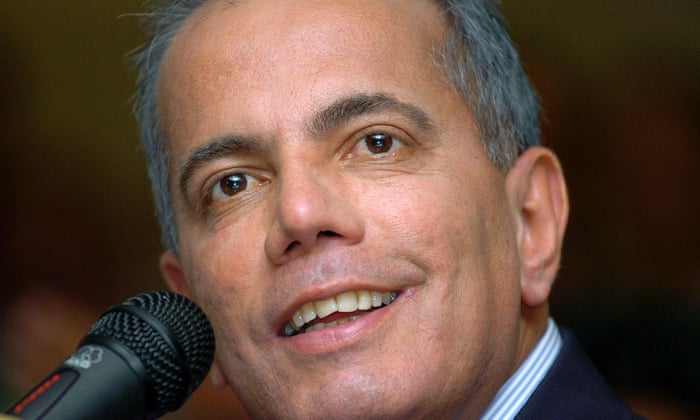
Manuel Rosales, seen here in 2006, was released from prison before dawn on Saturday. Photograph: Gregorio Marrero/AP
 Saturday 31 December 2016
Venezuela’s government has freed a former presidential candidate as well
as several student activists who were jailed during anti-government
protests in 2014.
Former opposition candidate Manuel Rosales was imprisoned in October 2015 on charges of illicit enrichment, upon returning to Venezuela after six years of exile in Peru.
A former governor of Zulia state who ran for president in 2006, he was
released before dawn on Saturday with five other activists who
opposition groups considered to be political prisoners.
The releases came as a two-month-old, Vatican-mediated attempt at dialogue to ease tensions stemming from the country’s deep economic and political crisishung by a thread, over the failure by President Nicolás Maduro to cede ground to opponents seeking his removal.
With many in the opposition pushing for a new round of street protests,
the Democratic Unity alliance said it would not participate in the next
scheduled meeting on 13 January unless the government meets its demands.
Those include releasing more than 100 people it considers to be
political prisoners and naming a new board to the government-controlled
electoral council.
The most prominent activist released Saturday was Gerardo Carrero, who
led a group of hardliner students who camped for weeks outside the
United Nations offices in Caracas, seeking to draw attention to a
government crackdown on protests blamed for scores of deaths.
“Without a doubt, Venezuela is living a deep social crisis and these
releases in some way are an escape valve that takes some pressure,
especially international, off Maduro,” said Alfredo Romero, executive
director of Foro Penal, a group of lawyers that defends dozens of jailed
activists.
“But it’s important to remember that in 2016 there were 55 people jailed and only 43 released.”
Venezuela’s political crisis has been intensifying since October, when
authorities blocked an opposition effort to collect signatures and force
a recall vote against Maduro.
Many poor Venezuelans, who formed the base of the revolution started by
the late Hugo Chávez, have abandoned their support for the government
amid triple-digit inflation and shortages that have made putting food on
the dinner table an all-consuming, daily ordeal.
Rosales, whose small Nuevo Tiempo party has been among the strongest
advocates of dialogue, confirmed his release on Twitter. He remained
under house arrest.
The five others released face charges stemming from their activities in
2014, for which they will have to periodically present themselves to
judicial authorities.
All six prisoners had been held in Caracas’ El Helicoide prison, a
spiral-shaped modernist landmark built as a shopping mall in the 1950s,
at the height of an oil-dependent economic boom, but which in a fitting
metaphor of the country’s decline is now the headquarters of the
intelligence police.
It was unclear if there would be more releases in the coming days, but
Romero said at least one more activist was linked to the same case for
which Carrero was charged.
New Year Resolution: China aims to axe ivory trade by end of 2017

 31st December 2016
CHINA is pushing to ban all domestic ivory trade and processing by the
end of next year, a move that is being celebrated by activists as a
“game-changer” for African elephants, whose ivory is highly valued in
China.
Ivory from African elephants is often seen as a status symbol, reports AFP, and just one kilogram of ivory can be worth up to US$1,100.
Chinese state media reported the announcement, citing a government
statement that said: “Before that deadline, law enforcement agencies
will continue to clamp down on illegalities associated with the
elephant’s tusk.”
Today’s historic announcement that China will close down its domestic ivory trade by the end of 2017 @wwf_ukhttp://www.wwf.org.uk/updates/wwf-uk-comments-todays-historic-announcement-china-will-close-down-its-domestic-ivory-trade …WWF-UK comments on today’s historic announcement that China will close down its domestic ivory...
WWF-UK comments on today’s historic announcement that China will close down its domestic ivory trade by the end of 2017wwf.org.uk

Aili Kang, executive director of the Wildlife Conservation Society in
Asia, said in a statement: “This is great news that will shut down the
world’s largest market for elephant ivory.
“I am very proud of my country for showing this leadership that will
help ensure that elephants have a fighting chance to beat extinction.
This is a game changer for Africa’s elephants,” she added.
The ban will affect 34 processing enterprises and 143 designated trading
venues, reported the state-owned Xinhua news agency. It added that
“dozens” of these facilities will be closed by the end of March 2017.
According to the New York Times,
China’s move to crack down on the ivory trade is the result of
“negotiations at senior levels between Washington and Beijing”. China’s
President Xi Jinping and U.S. President Barack Obama agreed in 2015 to
impose “near complete bans on ivory import and export” as well as make
significant moves to stop the domestic commercial trade of ivory.
In June, the U.S. announced a near-total ban on the trade of African
elephant ivory, but exceptions include antiques. The U.S. is the world’s
second-largest consumer of illegal ivory, after China.
The World Wildlife Fund (WWF) issued a statement praising China’s move
but urged Hong Kong to follow suit and put forward its own plan to end
the ivory trade by 2021.
Cheryl Lo, senior wildlife crime officer at WWF, said: “With China’s
market closed, Hong Kong can become a preferred market for traffickers
to launder illegal ivory under cover of the legal ivory trade.”
Subscribe to:
Posts (Atom)