Peace for the World World ! Your War Our Lives

The Dalai Lama
A Brief Colonial History Of Ceylon(SriLanka)
Sri Lanka: One Island Two Nations
A Brief Colonial History Of Ceylon(SriLanka)
Sri Lanka: One Island Two Nations
(Full Story)
Back to 500BC.

Saturday, February 1, 2020
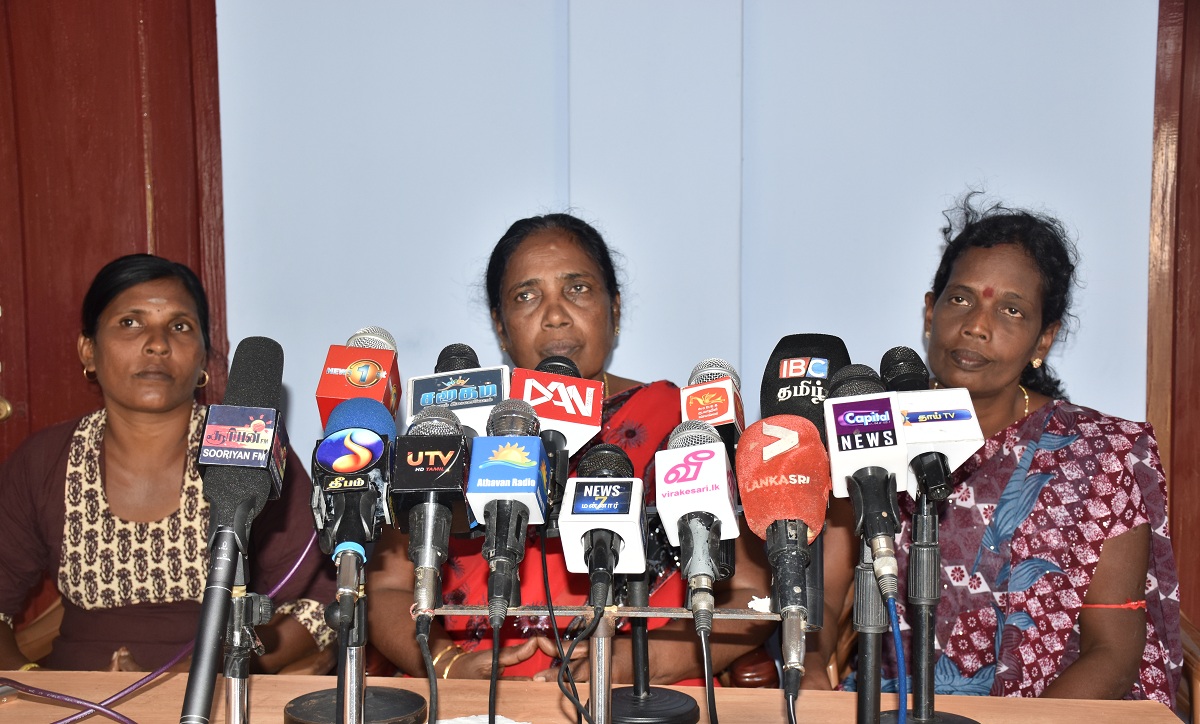
‘He knows what they did’ - Tamil families of disappeared hit back at Sri Lankan president
 28 January 2020
Tamil families of the disappeared reacted angrily to the Sri Lankan
president’s assertion that the thousands of forcibly disappeared and
missing Tamils “are actually dead,” stating that as defence secretary at
the time of the abductions he should be fully aware of their fate.
Co-ordinator for the protesting families of the disappeared in Mannar,
Immanuel Uthyachandra, told reporters that the Sri Lankan government
“must answer” their demands immediately.
“Children were taken away and disappeared during his time,” she said,
referring to current Sri Lankan president Gotabaya Rajapaksa. “If there
are no missing relatives, he knows where they are. What happened to
them? He knows what they did.”
Her comments were echoed by the Mullaitivu district head for the families of the disappeared, Mariyasuresh Easwari.
28 January 2020
Tamil families of the disappeared reacted angrily to the Sri Lankan
president’s assertion that the thousands of forcibly disappeared and
missing Tamils “are actually dead,” stating that as defence secretary at
the time of the abductions he should be fully aware of their fate.
Co-ordinator for the protesting families of the disappeared in Mannar,
Immanuel Uthyachandra, told reporters that the Sri Lankan government
“must answer” their demands immediately.
“Children were taken away and disappeared during his time,” she said,
referring to current Sri Lankan president Gotabaya Rajapaksa. “If there
are no missing relatives, he knows where they are. What happened to
them? He knows what they did.”
Her comments were echoed by the Mullaitivu district head for the families of the disappeared, Mariyasuresh Easwari.
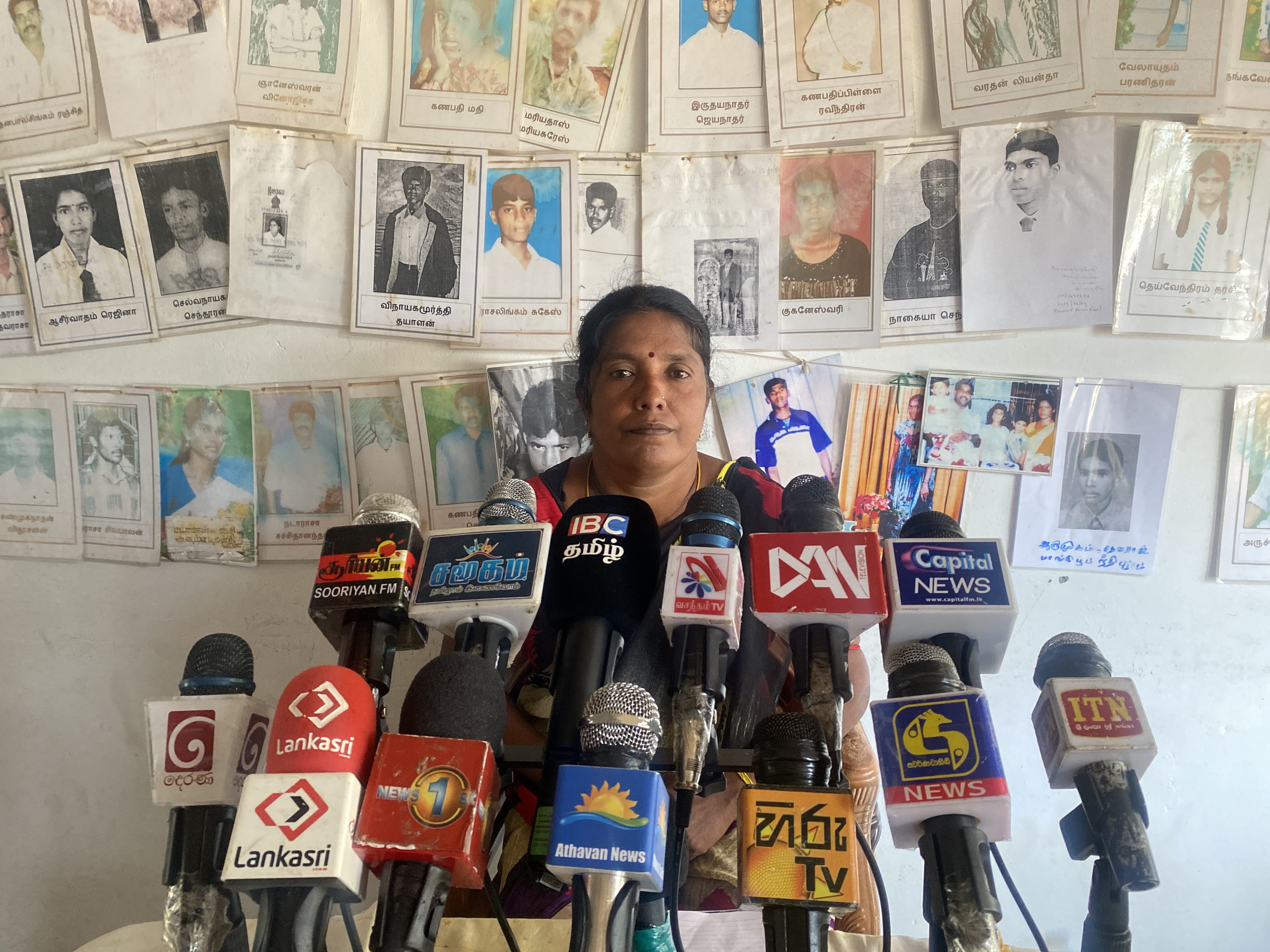 “The government that was in power then is now in power again,” she said. “The same government that told us ‘come with white flags, we will release your children’ are the same government in power now.”
Both women recalled how their loved were last seen in Sri Lankan military custody.
“We are asking for children who were handed over to the army in
detention centres, forcibly taken away from the homes and abducted in
white vans,” said Uthyachandra.
“We completely disagree with the accusation that the LTTE is responsible
for the missing,” added Easwari. “We handed over our children to the
government, only because the LTTE was no longer functioning.”
The protest leaders also spoke out against the harassment and
intimidation that they continue to face, as they continued their
campaign. Families across the North-East have been holding daily
demonstrations on the streets, demanding answers regarding the fate of
thousands of forcibly disappeared Tamils.
“Even now, the CID (Criminal Investigation Department) is still giving
problem for us,” said Uthyachandra. “They come to our houses in the
morning… We have to wake up to their faces. They are questioning us ‘Where are you going today? What discussions do you have planned for today? When are you going to Geneva?’”
“Why do they need to investigate us? There is no necessity for them to investigate.”
Easwari told the press that despite all the Sri Lankan president’s
comments and harassment from the security forces, they would continue
with their campaign for justice and accountability. “We want justice
without permanently losing our family,” she said. “We will not stop
protesting until we gain freedom.”
“The government that was in power then is now in power again,” she said. “The same government that told us ‘come with white flags, we will release your children’ are the same government in power now.”
Both women recalled how their loved were last seen in Sri Lankan military custody.
“We are asking for children who were handed over to the army in
detention centres, forcibly taken away from the homes and abducted in
white vans,” said Uthyachandra.
“We completely disagree with the accusation that the LTTE is responsible
for the missing,” added Easwari. “We handed over our children to the
government, only because the LTTE was no longer functioning.”
The protest leaders also spoke out against the harassment and
intimidation that they continue to face, as they continued their
campaign. Families across the North-East have been holding daily
demonstrations on the streets, demanding answers regarding the fate of
thousands of forcibly disappeared Tamils.
“Even now, the CID (Criminal Investigation Department) is still giving
problem for us,” said Uthyachandra. “They come to our houses in the
morning… We have to wake up to their faces. They are questioning us ‘Where are you going today? What discussions do you have planned for today? When are you going to Geneva?’”
“Why do they need to investigate us? There is no necessity for them to investigate.”
Easwari told the press that despite all the Sri Lankan president’s
comments and harassment from the security forces, they would continue
with their campaign for justice and accountability. “We want justice
without permanently losing our family,” she said. “We will not stop
protesting until we gain freedom.”
 28 January 2020
Tamil families of the disappeared reacted angrily to the Sri Lankan
president’s assertion that the thousands of forcibly disappeared and
missing Tamils “are actually dead,” stating that as defence secretary at
the time of the abductions he should be fully aware of their fate.
Co-ordinator for the protesting families of the disappeared in Mannar,
Immanuel Uthyachandra, told reporters that the Sri Lankan government
“must answer” their demands immediately.
“Children were taken away and disappeared during his time,” she said,
referring to current Sri Lankan president Gotabaya Rajapaksa. “If there
are no missing relatives, he knows where they are. What happened to
them? He knows what they did.”
Her comments were echoed by the Mullaitivu district head for the families of the disappeared, Mariyasuresh Easwari.
“The government that was in power then is now in power again,” she said. “The same government that told us ‘come with white flags, we will release your children’ are the same government in power now.”
Both women recalled how their loved were last seen in Sri Lankan military custody.
“We are asking for children who were handed over to the army in
detention centres, forcibly taken away from the homes and abducted in
white vans,” said Uthyachandra.
“We completely disagree with the accusation that the LTTE is responsible
for the missing,” added Easwari. “We handed over our children to the
government, only because the LTTE was no longer functioning.”
The protest leaders also spoke out against the harassment and
intimidation that they continue to face, as they continued their
campaign. Families across the North-East have been holding daily
demonstrations on the streets, demanding answers regarding the fate of
thousands of forcibly disappeared Tamils.
“Even now, the CID (Criminal Investigation Department) is still giving
problem for us,” said Uthyachandra. “They come to our houses in the
morning… We have to wake up to their faces. They are questioning us ‘Where are you going today? What discussions do you have planned for today? When are you going to Geneva?’”
“Why do they need to investigate us? There is no necessity for them to investigate.”
Easwari told the press that despite all the Sri Lankan president’s
comments and harassment from the security forces, they would continue
with their campaign for justice and accountability. “We want justice
without permanently losing our family,” she said. “We will not stop
protesting until we gain freedom.”

Defusing the ethnic bomb before it goes boom

Conspiracy theories aren’t the preserve of Rajapaksas
Mainstreaming of fake news hardly specific to Sri Lanka
Sinhala Buddhists are the numerical majority, but are not economically privileged
Racism is not a sui generis phenomenon arising from itself
 1 February 2020
Conspiracy theories come a dime a dozen these days. So does fake news.
You can count on Facebook and to a lesser extent Twitter for diminishing
the space for truth. And yet, strange as it may seem, I understand why
this is so, and why this will be so. Conspiracy theories aren’t the
preserve of Rajapaksas, as commentators seem to think. They are
everywhere, and they are pumped and dumped on everything. To give just
three examples from many, there’s the theory that the Easter attacks
were, in some way or the other, engineered and planned by Rajapaksas;
the theory that the Israelis were behind the rise of ISIS; the theory
that, before the election, the Rajapaksa camp made a deal with the Ranil
Wickremesinghe camp to ensure victory for the former.
 In
the wake of the Easter attacks, many questioned as to why people were
gullible enough to swallow such half-truths and lies. The most obvious
answer to that is that people aren’t educated enough to distinguish
between reality and propaganda over here, something that the Kelaniya
naga dathuwa fiasco, on the eve of the election, should have told us
already. At a time when everything is filtered by self-censorship, it
should come to no surprise that we take the news as it comes to us from
unverified sources. The mainstreaming of fake news is hardly specific to
Sri Lanka but is a phenomenon recent to us. Media outlets taking sides
isn’t new to us either, but their efforts at presenting a version of
reality are, and it has contributed to a culture of fakery. Spliced,
juxtaposed, edited out, the news has become as selective as those
consuming it. We are what we eat, after all.
In
the wake of the Easter attacks, many questioned as to why people were
gullible enough to swallow such half-truths and lies. The most obvious
answer to that is that people aren’t educated enough to distinguish
between reality and propaganda over here, something that the Kelaniya
naga dathuwa fiasco, on the eve of the election, should have told us
already. At a time when everything is filtered by self-censorship, it
should come to no surprise that we take the news as it comes to us from
unverified sources. The mainstreaming of fake news is hardly specific to
Sri Lanka but is a phenomenon recent to us. Media outlets taking sides
isn’t new to us either, but their efforts at presenting a version of
reality are, and it has contributed to a culture of fakery. Spliced,
juxtaposed, edited out, the news has become as selective as those
consuming it. We are what we eat, after all. The liberal viewpoint has neglected until now to account for rifts that really, urgently matter – those of class and relative disadvantage – and it has focused exclusively on identity politics, forgetting that ethnicity is only one element in our society
 But
I refuse to believe that lack of education is the reason for us falling
for this bait, as much as I refuse to believe that politicians,
journalists and vested interests are the ones enticing us with the bait.
This in itself is a myth, conjured and perpetuated by those who believe
that the country, at present, is divided into two irreconcilable
halves: the superior, intelligent minority who subscribe to values such
as democracy, separation of powers, judicial independence and freedom of
expression and thought, versus the unthinking, unintelligent majority
who do not and who moreover believe that such values are imports from
the West. The divide isn’t really clear cut and shouldn’t be so because
political realities don’t subsist on such dichotomies: if they did, the
intelligent half should have triumphed by now, if not electorally, then
morally. Yet, their conduct over the last few years – their selectivity
in the causes for which they fight and the causes they ignore – leaves
much to be desired.
But
I refuse to believe that lack of education is the reason for us falling
for this bait, as much as I refuse to believe that politicians,
journalists and vested interests are the ones enticing us with the bait.
This in itself is a myth, conjured and perpetuated by those who believe
that the country, at present, is divided into two irreconcilable
halves: the superior, intelligent minority who subscribe to values such
as democracy, separation of powers, judicial independence and freedom of
expression and thought, versus the unthinking, unintelligent majority
who do not and who moreover believe that such values are imports from
the West. The divide isn’t really clear cut and shouldn’t be so because
political realities don’t subsist on such dichotomies: if they did, the
intelligent half should have triumphed by now, if not electorally, then
morally. Yet, their conduct over the last few years – their selectivity
in the causes for which they fight and the causes they ignore – leaves
much to be desired.
I have written on this before. When Ranil Wickremesinghe was deposed as
Prime Minister in 2018, the vigils in Duplication Road reminded me of
something: the absence of such vigils when more pressing issues were
coming down hard on the country. Where were the vigilators when farmers
were committing suicide, fuel prices were rising and elections were
delayed? These brought everyone together, cutting across ethnic,
religious, and even class lines. They represented an ideal moment for
Yahapalanists to show that they were not blind to party colours. By not
doing so, and, as with the estate workers’ demand for higher wages, by
siding with the status quo, all they showed instead was their
selectivity.
Let’s clear away a few misconceptions and false analogies. In a country
like Sri Lanka, which remains a key strategic outpost in a world where
the East and West have competing geopolitical interests, authoritarian
strongmen will always make a comeback until and unless presidential
aspirants demonstrate and prove that it is not only possible but also
pragmatic to balance the imperatives of security with the demands of
freedom. No country has freed itself completely from the conflict
between these two values, because even modern liberalism, with its
promise of stability and the upholding of individual freedom, serves
interests which pit the one against the other. Modern liberalism is the
ideology of 18th century white bourgeois civilisation, and given its
incompatibility with civilisations still rooted in the past – such as
ours – the result is a conflict between brief periods of reform and long
periods
of authoritarianism.
of authoritarianism.
In a country like Sri Lanka, authoritarian strongmen will always make a comeback until and unless presidential aspirants demonstrate and prove that it is not only possible but also pragmatic to balance the imperatives of security with the demands of freedom
The solution is not, as liberal commentators will propose, the making of
a distinction between formal and substantive justice, and the forced
imposition of liberal values much of which remain alien to a majority
cut off from the bourgeois culture that produced them in Europe. In
countries such as ours where colonialism has impeded on development,
where the majority scrape through a living, and the divide between the
many and the few is more shocking than the divide in developed
countries, formal justice – the supremacy of Parliament, the sanctity of
private property and the equality of access to the law – will not
satisfy those hard done by it. The result is a hardening of hostilities
to the system; the many who despise it try to find an alternative in a
leader who can promise them what the system cannot.
That explains the unpopularity of the 19th Amendment: it envisaged a
transfer of power from an elected central figure to unelected peripheral
figures and institutions. Such a system works well, both in theory and
practice, in countries where the dilemma of underdevelopment isn’t as
marked as it is here. And even there – as the rise of the alt-right
makes it clear – continued exploitation by the privileged billionaire
class – the one per cent – has blinded the poor among the majority into
seeking their messiahs, be it a Trump or a Bolsonaro, and channel their
grievances and fears through, and against, racial minorities.
Even that is a false analogy for us. In the US and Brazil, the poorest
of the whites have fared better than blacks, creoles and other racial
minorities. In Sri Lanka, historically, the majority didn’t turn out to
be so privileged: it was the Kandyan Sinhalese who first mooted a
federal structure for the country, not the Tamils, and among Tamils the
most hard done by were the estate Tamils, who were marginalised by not
merely the Sinhala bourgeoisie – in 1948, it was the bourgeoisie of the
UNP who disenfranchised them – but also sections of the non-estate Tamil
and Muslim elite who voted for the curtailment of their rights with the
Sinhala elite in the ruling party. What liberals and leftists fail to
realise is that a numerical majority doesn’t always turn out be a
privileged community. In Sri Lanka, it hasn’t. One can argue that
legally and constitutionally Sinhala Buddhists are privileged and that
this compensates for the lack of economic privilege, but that’s hardly
consoling: they are still worse off.
In a context where resources are limited and everyone’s at it to get at
it before everyone else, communities naturally tend to vie with each
other for practically everything. It’s an economic battle, in which
ethnicity is the bogeyman: “Sinhalayani, nagitiyaw!” and what not. We
saw this palpably in the backlash against the Borah conference last
year: more often than not, the backlash was from those who were finding
it difficult to make the long trek back home every evening at the hour
the conference opened. It wasn’t a case of privileged Sinhalese, Tamils
or Muslims demonising an unprivileged community; it was, on the
contrary, the very reverse: those hard done by venting their frustration
on what they saw as an unnecessary cosmetic. Left untended, such
displays of hostility magnify and explode.
The trick is to defuse the bomb before it goes boom. Unfortunately, we
have not been able to do so. Part of the reason for that, as you would
have guessed, is our inability to distinguish between ethnicity and
economics, and also consolidate the two. Sinhala Buddhists are the
numerical majority, but – a survey will verify this – they are not
economically privileged. Racism is not a sui generis phenomenon arising
from itself: it has its causes and reasons, not all of which are rooted
in myths and imagined hostilities.
The liberal viewpoint has neglected until now to account for rifts that
really, urgently matter – those of class and relative disadvantage – and
it has focused exclusively on identity politics, forgetting that
ethnicity is only one element in our society. The left, barring a few
exceptions (I am thinking here of the Peratugamins over the JVP, the New
Left over much of the Old Left), has subscribed to this viewpoint:
class has been sacrificed to identity.
Thus, the failure of the liberal project in Sri Lanka is its failure to
trace the contours of racism and discover the root causes for racism:
in economics, not merely in ethnicity. It’s not in the Mahavamsa that
you find the reason for Sinhala Buddhist chauvinism, but in the issue of
underdevelopment, which displaced the numerical majority in favour of
communities that occupied a position of privilege during the colonial
era. Once we understand this fact, we can hope to grapple with it and
resolve the reality of racism. Until then, we will be no better than
ostriches with our heads in the sand, calling for us all to overcome
differences while ignoring the real causes for those differences. I
suspect we are already too late.
Celebration of treasured independence and self rule of 72 years


We Sri Lankans are poised to celebrate the winning of independence from
the British Raj on 4 February. Truth to tell, we received independence
from British rule on a platter as it were, with not a drop of blood
shed; only polite requests, round table conferences and to-ing and
fro-ing of Lankan politicians from Ceylon to London and British
Whitehall (name of London street used as metonym for the British civil
service and government) chappies from England to our shores. Earlier
they sea voyaged around the Cape of Good Hope; later across the high
seas through the Suez Canal and during the final years of negotiation
flying over land by BOAC. For the actual independence ceremony on 4
February 1948, the Chief Guests: the Duke and Duchess of Gloucester,
representing her Majesty Queen Elizabeth II, flew to Ratmalana airport
in a plane named ‘Endeavour’.

Lanka lucky
I said we shed no blood nor did we give the Brits stiff resistance.
non-violent or otherwise. Those whose statues commemorate them on the
grounds of the Old Parliament opposite Galle Face Green and other
patriots had not to even raise their voices, leave aside fists and gun
toting wrists since India did all that and more in their Quit India bid,
and we benefitted. We watched, waited, and were rewarded with Dominion
Status and later full independence. Thus unlike in India, no really bad
taste was left on the tongue nor bruises from lathi charges and injuries
leading to death from blazing guns; no Jallianwala massacre as at
Amritsar for us; no burning of British chintz materials and donning
khadi; no imprisonments barring just a few sporadic cases.
Cass for one sees much good in the British having been here: English
language and the door open to the vast treasure trove of English
literature; roads and the railway; Westminster style of government and
the bureaucracy. Same in India. Their retention of English as a working,
nation-wide language kept that subcontinent together with its still
efficient civil servants. Celebrations
Cassandra, the toughie, sits straight with pride as she watches on TV
the hoisting of the Lion Flag by the Prez of the Nation at the
Independence Parade every Fourth of February, now our National Day.
Teary when she hears the lovely girls sing Jayamangala Gatha and the
stanzas of blessing. Since 2015, more tears as the bevy of national
dressed young ones sang the National Anthem (NA) in Sinhalese and then a
group of Tamil and Muslim boys and girls sing it in Tamil.
Language argument continues
A decision seems not to have been made (as I write this on Wednesday 29
January) as to whether the National Anthem will be sung in both
languages. Letters to the editor are more for it being sung in Sinhala
and Tamil but the loud mouths Wimal Weerawansa and Bandula Gunwardena,
to name but two opponents, were recently heard denouncing the very
thought of allowing the NA to be sung in Tamil. Cass dares to ask what
high qualifications Wimal Wee and Bandula Gee possess to so vociferously
deny the Tamils also that bit of expressed respect to our common
motherland. At least Bandula Gee was an economics tuition teacher.
However, his subject of speciality is far removed from cultural and
aesthetic studies. In Wimal Wee’s youth he had not even visited
Sigiriya; on his own admission. So how is he an arbiter in this cultural
matter? The only reason they oppose the Tamil version being sung is to
gather Brownie points. But, and here’s the Big But: the present ‘Scout
Master’ of the nation has shown himself to be a person of right thinking
and right action. He does not seem to want to be beholden to anyone,
but to do right by the people of the country. Cass says this with all
sincerity. Thus she is sure the President will permit the singing of the
NA in both languages.
Correct venue
The President has also acted wisely in deciding to hold National Day
celebration on 4 February 2020 in Independence Square, Torrington
Avenue, Colombo 7. That is the right venue for this celebratory event
and parade. Why then did the yahapalanaya government and even before
them, select Galle Face Green for the event? Cass meanly supposes it was
for the greater grandeur of the place, the greater visibility of
themselves and the longer ride for the VVIPs, with horses, men, bright
motor cycles and vehicles, before, behind and beside their luxury limo.
On 4 February 1948, the first ceremony was at Queen’s House when Sir
Henry Monk-Mason was installed as Governor General. Then with guests
seated in the improvised, half constructed Independence Building, the
Duke pronounced our independence and the Union Jack was lowered and the
Lion Flag hoisted to the resounding beat of magul bera. So we
congratulate and express our gratitude that President Gotabaya Rajapaksa
has decided to go back this year to that historic site which is also
completely appropriate.
One little happening on Independence Day that Cass rejoices in and
thinks ought always to be done, is laying flowers at the foot of the
statue of D S Senanayake. In the context of us becoming a free nation
with Lankans governing the country, he has no political party and should
be revered just as our first prime minister who was very much in the
negotiations for freedom from British rule. Even if acknowledged as a
UNPer, he deserves recognition and respect as the Father of the Nation.
We hope President Gotabaya Rajapaksa who has opted for less extravaganza
and less light shone on him, would go that little step forward to place
flowers at the statue that dominates Independence Square.
Efficient Grama Niladari
She came in jeans and wind cheater on a motorbike to verify residences
as stated on pensioners lists and probably electoral lists too. Cass
barely recognised her though the lipstick was still on. Cass met her at
her office dressed smartly in sari. She was truly what a public servant
should be: offered a seat first to the member of public she was prepared
to attend to, then politely asked what his/her business was, gave
correct replies and even advice.
Cass offered the motorcycling Niladari a cup of coffee. "Thank you but
no time to even come into your flat. I have many addresses to check on."
Cass also must add that this efficiency is because the Niladari is a
woman, hence her extra dedication to work!
Authors taken note of
The National Library Services Board was a giver of financial help to
authors. They would go through submitted manuscripts (all three
languages) and if approved by a committee, would buy copies of the
published book to the value of around Rs 50,000. Then the good deed lay
dormant. Lack of money allocation was the reason but maybe lethargy to
go that one step further to convince higher-ups it was a needed service
of a National Library. Cass thought it was dead and done with. Surprise!
Surprise! Authors who had applied for financial assistance from 1916 to
1919 were summoned for a dignified ceremony where agreements were
signed, thus helping many authors to get their writings published. The
added plaudit was that around sixty agreements were signed with every
detail seen to, eliminating delay and even traces of chaos.
Cassandra reading her week’s verbal peregrination above, is glad it’s
all bouquets presented with just two thorns. Hope still exists for Sri
Lanka to rise from the doldrums; the pits of corruption; economic
distress and public lethargy.
Review ‘Bond Scam’ Reports & Be Your Own Judge Of Prosecution Options & Develop A Suspects List


Chandra Jayaratne
 One media station tagged the ‘Bond Scam’
as the greatest financial loss inflicted on the nation since its
independence. The million dollar question yet remaining unanswered
however is, ‘will
the truth, the extent of the scams, the long term impact on the nation
and its citizens, the real culprits and recovery of proceeds of the
crime be ever be transparently visible for society expectations of
Justice to be delivered.
One media station tagged the ‘Bond Scam’
as the greatest financial loss inflicted on the nation since its
independence. The million dollar question yet remaining unanswered
however is, ‘will
the truth, the extent of the scams, the long term impact on the nation
and its citizens, the real culprits and recovery of proceeds of the
crime be ever be transparently visible for society expectations of
Justice to be delivered.
Since 2015, beginning with analyst amber signals, media exposes and
debates, parliamentary debates, followed up by public interest
litigation, central bank investigations, Auditor Generals Reports, COPE
committee reviews, the Presidential Commission Report and most recently
the Forensic Audit reports, have made available to the public,
sufficient material on the purported ‘bond scam’ and even the details of
similar scams.
The Forensic Audit Reports cover the years prior to 2015; where irregularities are seen even under other accountability regimes.
Regrettably, these Forensic reviews have left out of its scope, the
essential detailed examination of the biggest scam of all purportedly
carried out in March 2016 (which in any event is unpardonable to have
been allowed to take place despite the public fury and remedial action
demands following February 2015 scam). It is also likely that these
Forensic Reviews have failed to ‘follow the money tracking of
placements, layering and integration led money laundering tracings’
essential to institute court action.
In the back drop of the
purported Primary Dealer mainly connected to the 2015 and 2016 scams,
failing to be liable for tax on its publicly declared profits from these wrongful
trades and also not being subjected to Financial VAT and Deemed
Dividend Taxes, despite activist demands can citizens expect any action
to recover proceeds of these crimes?
The
only silver lining is that the material publicly now available could
provide the interested citizens and even law enforcement officers,
sufficient information to make their own judgments and express opinions;
and even to advocate on the best option next step strategic actions. In this context should public interest oriented activists set up a mechanism to establish a Peoples Court ?
The business persons, professionals, academics, intellectuals, civil
society activists, media expose journalists and even common citizens,
leaving aside for the present, the accountability of the
Executive, Legislature and the Judiciary, should now begin to engage in
a review process, in order to make up their mind on the reality or the
myth of the purported ‘bond scams’ and their impact on the society and
citizens. They can now, also determine or at least get a ball park
estimate of
the likely extent of losses, suffered by the State, the
EPF/ETF/Privately managed Funds, individual investors and last but not
least the society as a whole ( ie. actually all present and future
taxpayers, who are all the citizens of today and tomorrow). They should
collectively or individually, even publicly critique and debate; and try
to reach a decision on the reality or the myth of what previous and
present governments, politicians, officials, the governors, central
bankers, primary dealers, public / private funds, state institutions, law
enforcement officials, media and even the potential parties with direct
or indirect connections to the scam have done, who are the other third
parties who have either engaged in and / or aided and abated in any
irregular, illegal, unethical or nationally detrimental actions leading
to the purported losses, which ultimately fall on the nation and its citizens of today and tomorrow.
Post the aforesaid review, the suggested stakeholders should also
attempt to draw up a list of potential suspects, who may have engaged in
such conspiracies; encouraged or led such conspiracies from the
background; those who directly or indirectly engaged in their execution
and also identify those who aided and abated in any such irregular,
illegal, unethical transactions, including those persons who in
supervisory or control positions with accountability to prevent such
incidents who failed willfully and knowingly to take such preventive actions.
The next step for these stakeholders, where possible is to identify the
potential charges that can be framed against these errant persons and
possibly even prepare an ‘Evidence Matrix’ identifying the critical
relevant dates, the irregular /illegal/unethical transactions/events,
available evidence, persons responsible, purported violation or offense, potential charges.
The final step in this process is to recommend action that should be taken to recover the proceeds of crime.
Towards the initiative suggested above, the relevant statutory
provisions and jurisprudence that can be considered by the public
stakeholders in determining the potential
charges against the errant persons are those arising mainly from the
Penal Code, Bribery Act, Declaration of Assets and Liabilities Law,
Securities & Exchange Commission Act, and Registered Sock and
Securities Ordinance, EPF Act and Monetary Law Act.
Looking
Forward to Civil Society Collective Activism in setting up an
independent and competent Peoples Court supported by citizens in
advocacy and exerting pressure on the government and law enforcement and
guiding independent citizens’ voting decisions of the future, set out hereinafter are the Relevant Statutory Provisions and Jurisprudence for Consideration and Benchmarking by the Collective Stakeholders and Peoples Court
Read More
Sri Lanka president’s commission slammed for “blatant interference” in judiciary

ADMIRAL OF THE FLEET WASANTHA KARANNAGODA AND REAR ADMIRAL DKP DASSANAYAKE
 30 JANUARY 2020
The three-member commission - one of the first - appointed by recently elected president Gotabaya Rajapaksa to look into alleged political victimization of public servants when the last government was in office, had directed the attorney general (AG) to suspend the hearing of cases against ex-Navy Commander Admiral of the Fleet Wasantha Karannagoda and former Navy Spokesman Rear admiral DKP Dassanayake over the alleged abduction, torture and enforced disappearance for eleven people.
M A SUMANTHIRAN
 Attorney General Dappula de Livera has notified that he is not obliged to follow such orders.
Tamil lawmaker MA Sumanthiran has slammed the commission’s move as a “blatant interference”.
“Blatant interference in the functioning of the #AttorneyGeneral and indeed the #Judiciary itself. Indictments have already been served except on Karannagoda who was curiously absent. Curioser, accused knew beforehand what the #COI was going to say!” the parliamentarian has tweeted.
'No authority over AG'
The commission directive was issued within two days of a three-member permanent high court panel comprising of Justices Champa Janaki Rajaratne, Amal Ranaraja and Navaratne Marasinghe commenced hearing the case over the abduction and disappearance of eleven in Colombo and its suburbs in 2008 and 2009.
Wasantha Karannagoda was not present in court.
Meanwhile, the AG has notified in writing that the commission has no authority to to give him orders.
“We have informed the Commission of Inquiry on Friday that it has no statutory or legal authority to order the AG to refrain from performing his statutory functions in this case,” the AG's spokesperson Nishara Jayaratne told journalists in Colombo.
The order to halt court proceedings has cast doubts over the present government’s assurances of non-interference in judicial proceedings.
"AND WHEREAS, noting that the inquiry under this warrant is, therefore, in addition to and without prejudice to any measures that have been taken or which may be taken by relevant authorities including the Sri Lanka Police, the Commission to Investigate Allegations of Bribery or Corruption (CIABOC) and the Attorney General;" said the gazette notification signed by President Gotabaya Rajapaksa on 9 January 2020.
667 indictments
Last November, the attorney general filed 667 indictments against Fourteen naval officers for conspiracy, abduction with intent to secretly and wrongfully confine a person, wrongful confinement for the purpose of confinement, conspiracy to extort, extortion, giving false information and conspiracy to commit murder.

GUNSITE NAVAL TORTURE CAMP, TRINCOMALEE
The 11 victims are Kasthuri Arachchige John Reed alias John, Rajeev Naganathan alias Malli, Pradeep Wishwanathan,. Thilakeshwaran Ramalingam, Mohamed Saajith, Mohamed Jamaldeen Dilan, Amalean Lyon, Roshan Lyon, Kasthuri Arachchige Anthony, Thiyagaraja Jegan, and Mohammed Ali Anver alias Hajjiar.
Presidential Commission to look into alleged political victimization of public servants during the period from January 8, 2015 to November 16, 2019 led by former Supreme Court Judge Upali Abeyratne is requested by the president to hand over its findings within six months.
Sri Lanka’s war crimes accused STF sets up ‘special operations unit’

STF troops in Jaffna. Oct 2017
 31 January 2020
Lanka’s Special Task Force (STF), a police unit accused of committing
mass atrocities, has set up a round the clock “special operations unit”,
as the security forces continues to expand on the island.
According to a press release from
the Minsitry of Defence, the unit has been set up to “strengthen the
national security and also to curb the illegal activities in the
country”.
The latest initiative was announced by Sri Lanka’s Defence Secretary
Kamal Gunaratne, who himself has been accused of overseeing mass
atrocities. It comes as Sri Lanka’s defence ministry expanded its
control over a total of 31 state institutions, including those that
govern for non-governmental organisations, as well as the technology,
telecommunications and media agencies.
The STF is a paramilitary unit widely understood to be responsible for a
range of human rights violations and extrajudicial killings, including a
string of massacres of Tamils, such as the 'Trinco 5' murders.
In a 2018 report, the International Truth and Justice Project (ITJP)
identified 56 STF individuals who the group said should not be deployed
as UN peacekeepers, including an officer then serving in Africa, as they
were involved in extrajudicial killings.
The unit has been known to receive international training, including from Britain.
Secret CIA reports at the time noted Britain’s training of the STF
through a private company, adding that “US Embassy sources assert the
STF is behind most of the violence against Tamil civilians in Eastern
Province… These sources report a common STF tactic when fired upon while
on patrol is to enter the nearest village and burn it to the ground”.
In 2018, Police Scotland came under fire for continuing to train STF troops, despite the reports of human rights abuses.
31 January 2020
Lanka’s Special Task Force (STF), a police unit accused of committing
mass atrocities, has set up a round the clock “special operations unit”,
as the security forces continues to expand on the island.
According to a press release from
the Minsitry of Defence, the unit has been set up to “strengthen the
national security and also to curb the illegal activities in the
country”.
The latest initiative was announced by Sri Lanka’s Defence Secretary
Kamal Gunaratne, who himself has been accused of overseeing mass
atrocities. It comes as Sri Lanka’s defence ministry expanded its
control over a total of 31 state institutions, including those that
govern for non-governmental organisations, as well as the technology,
telecommunications and media agencies.
The STF is a paramilitary unit widely understood to be responsible for a
range of human rights violations and extrajudicial killings, including a
string of massacres of Tamils, such as the 'Trinco 5' murders.
In a 2018 report, the International Truth and Justice Project (ITJP)
identified 56 STF individuals who the group said should not be deployed
as UN peacekeepers, including an officer then serving in Africa, as they
were involved in extrajudicial killings.
The unit has been known to receive international training, including from Britain.
Secret CIA reports at the time noted Britain’s training of the STF
through a private company, adding that “US Embassy sources assert the
STF is behind most of the violence against Tamil civilians in Eastern
Province… These sources report a common STF tactic when fired upon while
on patrol is to enter the nearest village and burn it to the ground”.
In 2018, Police Scotland came under fire for continuing to train STF troops, despite the reports of human rights abuses.

STF troops in Jaffna. Oct 2017
31 January 2020
Myanmar urges Sri Lanka to stop abuse of elephant

 29 JAN 2020
Kumara joins a parade during a festival. Photo - Ministry of Foreign Affairs
Myanmar appealed to Sri Lanka to stop the abuse of the elephant it donated to a Buddhist temple six years ago, the Ministry of Foreign Affairs said in a statement on Wednesday.
The Myanmar Embassy in Colombo also asked the Sri Lanka authorities to punish those who persecuted the elephant as seen in videos in uploaded in the social media, the statement added.
The elephant, which was named Myan Kumara, was donated by the Myanmar government to Bellanwila Temple near Colombo city in 2013.
A few days ago, the news and videos of Myan Kumara being abused by the elephant keeper appeared on the social media both Sri Lanka and Myanmar, triggering public condemnation.
Myanmar’s ambassador to Sri Lanka was scheduled to visit the elephant on Thursday.
One of the monks who are taking responsibility of Temple affairs expressed his sorrow over the incident, according to the Foreign Ministry statement.
It said Myan Kumara has been trained by elephant keepers and used in religious festivals.
In February 2018, a 77-year-old Buddhist monk died a day after he was attacked by Myan Kumara at the temple, police said.
Police investigators said the monk was pushed to the ground by the elephant but the mahout prevented him from being gored.
Elephants are considered sacred animals protected by law in Sri Lanka. Several Buddhist temples have pet elephants, which are paraded at annual pageants.
The number of elephant in Sri Lanka has shrunk to over 7000 from an estimated 12,000 in 1900, conservationist said.
Gota And The Minorities


Prof. Kumar David
A
Sri Lankan President, as reported by the BBC, New York Times and The
Telegraph (UK) and not contradicted by him up to this time of writing,
has for the first time dropped the bombshell that 20,000 Tamils were
killed in the civil war. Before commenting on that let me discuss
devolution. Allow me these premises.
1. Gota is on record as having said devolution is not possible because the majority are opposed.
2. I (KD) agree that this is factually correct. The Sinhalese are
strongly opposed, at this moment, to any devolution to the Tamils and
Muslims in their respective areas of domicile. That’s a fact, let’s face
it!
3. There is an implication in the way Gota phrased it that he,
personally, would be more accommodating but his hands are tied by
prevailing correlations of power.
4. There is historical precedent to this. Banda and Dudley had to tear
up the B-C Pact and the Dudley-Chelva Accord, respectively, and duck for
cover when Sinhala chauvinists and monks counterattacked.
If 1 to 4 are correct what is the right thing for Gotabaya Rajapaksa to
do? You can’t and shouldn’t expect him to hit his head against a rock
and destroy himself. At the same time, it would be wrong to do nothing.
Then how should he set about overcoming this gangrene? How
did others who faced moral challenges of similar proportions respond?
Three that come to mind are Lincoln, Gandhi and Mandela, admittedly men
of extraordinary stature, but that’s just what makes them important. All
three were determined to fight and to raise the consciousness of their
people. Leaders must stand ahead of the people if they intend to lead;
the quality of leadership is not the passivity of a tail. Gota has a job
to do, but does he have the moral strength?
Lincoln fought a long and hard battle to preserve the union and to
abolish slavery. The first was his primary goal but he never abandoned
the latter. Gandhi, after early missteps alienating the Muslims and
disadvantaged castes, by the late 1930s rose to full stature and stood
for Muslims as no other Hindu leader and eventually he identified with
downtrodden castes as much as Ambedkar did. He single-handedly stopped
the riots in Calcutta which the British-Indian army could not.
Mountbatten called him “my one-man army”. Lincoln and Gandhi payed the
ultimate price. Gota if he wants to be a leader of stature must campaign
hard to educate his six-plus million voters to bring reconciliation and
social harmony but in addition to moral commitment he also needs
tactical wisdom. Gandhi
was the unluckiest of my triumvirate; he could not prevent the
partition of India. Mandela the luckiest; he did not suffer an
assassin’s bullet when guiding his people through a grim compromise. The
real problem is that there is little evidence that Gota is doing much
to educate the Sinha- Buddhist people that devolution is right. He could
become another fallen by the wayside discard like Aung San Suu Kye.
Pity.
Now to the bombshell. I find an estimate of about twenty thousand Tamil
deaths in the civil war credible. He should have pulled together the
best official estimates before risking this remarkably controversial
declaration. Every previous government has lied brazenly so why did he
so unexpectedly come clean, if he did? Perhaps he wants to put the past
behind, admit the truth, grant amnesty to military personnel guilty of
grievous misconduct and issue death certificates to relatives of
victims. Or is he looking even beyond; seeking final closure with the
Tamils and clearing the decks for a new settlement? If this is the case,
he will have to be prepared to make sacrifices for the public good. Is
he ready for a showdown with lunatic racial extremists and hate-crazed
monks and does he realise that this admission weakens his vote bank in
the coming elections?
Read More
Constitution Council and 19A woes

 Friday, January 31, 2020
When the Constitutional Council (CC) was reinvigorated under the 19th Amendment to the Constitution in 2015, it was hailed as one of the biggest achievement of the new government.
However, the hurriedly enacted Amendment in April 2015 created serious differences between the Executive and the Constitutional Council on issues pertaining to certain appointments to top post in judiciary and public institutions.
Earlier this week, ruling party Parliamentarian Sisira Jayakody alleged that some appointments made by the CC were made due to the certain influences and political purposes and they should be reviewed. He said this at a press briefing held at the Prime Minister’s Office.

The Constitutional Council, a 10-member constitutional authority tasked with maintaining independent commissions and monitoring its affairs was established with good intention. The CC was first established in 2000 under the Seventeenth Amendment. However it was replaced by a Parliamentary Council under the 18th Amendment, and 19A reactivated it.
The problems between the CC and Executive began within a short period. One of the issues is the rejection of the name sent by the then President Maithripala Sirisena for the Appeal Court. These rejections have created a controversy on the appointment or rejection criterion adopted by the CC. Speaking in Parliament in 2018, President Sirisena said that the legitimate child (CC) he produced had been abused. “I helped the formation of the Constitutional Council and Independent Commissions with utmost good faith. 19A has elaborated on the functions, responsibilities and guidelines for those institutes. But we have not done anything in 19A,” he pointed out.
Making appointments
The former President charged that the Constitutional Council had rejected 14 names of judges nominated by him and said that they had been subjected to injustice by the rejection by the CC. “If a name of a judge is rejected by Constitutional Council or a different body, they have a right to know the reason for not giving them a promotion that they believe is rightful, given their service and experience. Even a labourer has a right to know if their legitimate promotion is not given. A judge is not an average person. Because of this matter, judges in primary courts, district courts and high courts are now frustrated. They have lost their hopes. They ask me if that will happen to them as well. Will it be necessary for them too, to go behind someone to get a promotion? Those judges starting from the primary courts have expectations for future. They work hard for them. Therefore, Hon. Speaker, as far as I know, those whose names have been rejected have a natural right to know why their names have been rejected,” the former President lamented in Parliament.
 CC
Chairman, Speaker Karu Jayasuriya rejected these allegations and
informed the Parliament that the CC makes appointments only out of the
nominations made available to the Council by the President and no other
name has been included out of that. “I would like to record that there
had been no untoward incident or and unjust occurred when selecting
names from the lists provided to us. We do not see anything wrong
there,” he said.
CC
Chairman, Speaker Karu Jayasuriya rejected these allegations and
informed the Parliament that the CC makes appointments only out of the
nominations made available to the Council by the President and no other
name has been included out of that. “I would like to record that there
had been no untoward incident or and unjust occurred when selecting
names from the lists provided to us. We do not see anything wrong
there,” he said.On December 8, 2018, the Speaker tabled a document containing the guidelines that the council should follow when approving the nominations from the President to the council for appointing persons for the posts mentioned in the Section 41 C of the Constitution and when appointing persons to the independent commissions mentioned in the Section 41 B of the Constitution. It has to be mentioned that when appointing persons for the posts those guidelines would be adhered to and due consideration would be given to their seniority, honesty, integrity and impartiality. As the Speaker pointed out, if seniority is the only yardstick then there is no need of the council to make appointments. There are instances where appointments have been made overlooking seniority.
The Speaker chairs the Constitutional Council, while Prime Minister representing the government and the Leader of the Opposition representing the opposition are ex-officio members. One MP is appointed to the council by the President. Two other MPs are appointed with the concurrence of the Prime Minister and the Opposition Leader. One more MP is appointed to the council on the agreement of other parties in Parliament. Three civil society members are appointed to the council only after their name approved by parliament.
CC members
Although, the CC members change after a parliamentary election, there is no provision to change CC members after a presidential election. Today President Gotabaya Rajapaksa and Prime Minister Mahinda Rajapaksa are unable to appoint their nominees to the CC. They are still represented by Mahinda Samarasinghe and Thalatha Atukorale, nominees of former President and former Prime Minister. Opposition Leader Sajith Premadasa too is in a similar predicament, as he is represented by R. Sampanthan. The members of the Constitutional Council cannot be removed and their appointments are valid until they resign from their posts.
One of the reasons attributed to inconsistency in CC decisions the fact that there are no standard guidelines to the CC members with regard to the evaluation of nominees to judiciary services or public institutions. This is a legal lacunae in the 19th Amendment.
There should be key performance indicators (KPI) and other a guidelines to ensure their impartial performances. Otherwise there could be misjudgements in appointments due to judicial temperament or attitude.
The CC is responsible of giving their recommendations for high ranking posts of government institutions such as, Chief Justice and Judges of the Supreme Court, President of the Court of Appeal and Judges of the Court of Appeal, Members of the Judicial Service Commission except its Chairman, Attorney General, Auditor General, Inspector General of Police, Parliamentary Commissioner for Administration (Ombudsman) and Secretary General of Parliament. While the CC could reject a nominee, it has no powers to recommend names to the Executive.
The Executive and the Parliament should give serious attention to the imperative need for establishment of guidelines for the members of the Constitution Council in order to prevent such issue disrupting the public institutions of national importance in future.
Subscribe to:
Posts (Atom)