Peace for the World World ! Your War Our Lives

The Dalai Lama
A Brief Colonial History Of Ceylon(SriLanka)
Sri Lanka: One Island Two Nations
A Brief Colonial History Of Ceylon(SriLanka)
Sri Lanka: One Island Two Nations
(Full Story)
Back to 500BC.

Tuesday, December 31, 2013
MP Mangala’s house robbed
MP Mangala’s house robbed-December 31, 2013


ByAshan Paranahewa
The residence of Parliamentarian Mangala Samaraweera located in Panadura, has been robbed by an unknown person last afternoon, the Police Media spokesman told Ceylon Today Online.
The police further stated that MP was not at his residence when the robbery occurred and that only the cook had been present.
The Panadura Police are conucting further investigations.
Six suspects who stole 20 motorbikes arrested
December 31, 2013
Six individuals have been arrested in the Tangalle area for allegedly stealing 20 motorbikes, the Police Media Unit told Ceylon Today Online.
The suspects have been identified as residents of Ranna, Angunakolapalassa.
Investigations revealed that the suspects had stolen 19 TVS bikes and a Loncin bike from Tangalle, Beliatta, Hambantota, Tissamaharama, Suriyawewa,Angunakolapalassa, Weeraketiya and Middeniya areas.
The goods have been taken under the police custody while the suspects are to be produced before the Tangalle Magistrate Court today. Tangalle Police are carrying out further investigations. (Ceylon Today Online)
MP Mangala’s house robbed-December 31, 2013


ByAshan Paranahewa
The residence of Parliamentarian Mangala Samaraweera located in Panadura, has been robbed by an unknown person last afternoon, the Police Media spokesman told Ceylon Today Online.
The police further stated that MP was not at his residence when the robbery occurred and that only the cook had been present.
The Panadura Police are conucting further investigations.
Six suspects who stole 20 motorbikes arrested
December 31, 2013 Six individuals have been arrested in the Tangalle area for allegedly stealing 20 motorbikes, the Police Media Unit told Ceylon Today Online.
The suspects have been identified as residents of Ranna, Angunakolapalassa.
Investigations revealed that the suspects had stolen 19 TVS bikes and a Loncin bike from Tangalle, Beliatta, Hambantota, Tissamaharama, Suriyawewa,Angunakolapalassa, Weeraketiya and Middeniya areas.
The goods have been taken under the police custody while the suspects are to be produced before the Tangalle Magistrate Court today. Tangalle Police are carrying out further investigations. (Ceylon Today Online)
Doctor who fixed hidden cameras in restrooms arrested
December 31, 2013
By Ashan Paranahewa.
A medical doctor who fixed several hidden cameras in restrooms of the Anuradhapura Hospital has been arrested by the Anuradhapura Police this afternoon.
The doctor has been caught with the cameras a week ago, and been arrested by the Anuradhapura Police based on a protest commenced by the medical Staff of the hospital today. The suspect is to be produced before the Anuradhapura Court today.
December 31, 2013
By Ashan Paranahewa.
A medical doctor who fixed several hidden cameras in restrooms of the Anuradhapura Hospital has been arrested by the Anuradhapura Police this afternoon.
The doctor has been caught with the cameras a week ago, and been arrested by the Anuradhapura Police based on a protest commenced by the medical Staff of the hospital today. The suspect is to be produced before the Anuradhapura Court today.

2014: A year of change for women in business?


 On
10 December 2013, as the year was drawing to a close, something
unprecedented happened at Henry Ford’s venerable General Motors (GM).
Mary Barra took the wheel, as CEO, to become the most powerful woman in
the US car industry.
On
10 December 2013, as the year was drawing to a close, something
unprecedented happened at Henry Ford’s venerable General Motors (GM).
Mary Barra took the wheel, as CEO, to become the most powerful woman in
the US car industry.Barra is one of a fast growing cadre of top female managers at GM; a quarter of its factory management are female. The cutting-edge technology electric vehicle program is driven by a woman. Barra has been described as ‘a coach, and that’s the sort of management style this company needs’ says David Cole of the Centre for Automotive Research.
She takes over from Dan Akerson, a former military man, who leaves on a high note. His new Chevrolet Impala has been cited as ‘the best saloon ever tested’ by the magazine Consumer Reports.
Will 2014 be different?
War Criminals By Default
 Dec-30-2013`
In my analysis the real tragedy is that something could have been done
at a very early stage to stop the killing and destruction. What was
needed was for President Obama to have a private conversation with
President Putin along something like the following lines.

exohuman.com
|
(LONDON) - My last thought for 2013 is that for their failure to
co-operate and coordinate to make the United Nations work to stop the
slaughter and destruction in Syria, the leaders of the five permanent
and controlling members of the Security Council - the U.S, Britain,
France, Russia and China - are war criminals by default.
And I agree with an end of the year review comment by Basma Atassi for
Al Jazeera. As more videos emerged of atrocities, “the international
community’s inaction continued to give Syrians the message that their
human worth is insignificant. The perpetrators (on all sides) have a
free ride to kill and the victims have no place to go for justice.”
There are only two ways to run this world of ours.
One is in accordance with the rule of law and respect for the human and political rights of all people.
In this way of managing Planet Earth, the governments of all nations,
no exceptions (so including those of Israel and the U.S.), would be
called and held to account by the Security Council and punished as
necessary and appropriate when they demonstrated contempt for the rule
of law and their various treaty obligations and other commitments.
The other way is in accordance with Jungle Law. For some years it
has been my view that our leaders are taking us back to the jungle.
What has been allowed to happen in Syria has only reinforced my fear on
this account.
From the moment in April 2011 when the Syrian army was deployed to quell
the uprising and fired on demonstrators across the country, it ought to
have been obvious (I’m sure it was) to the governments of the major
powers that the minority Alawite standard bearers, President Bashar
al-Assad and his top military and other security people, would kill and
kill and kill to stay in power and, if necessary, would die fighting
rather than let go the levers of their power.
In my analysis the real tragedy is that something could have been done at a very early stage to stop the killing and destruction.
What was needed was for President Obama to have a private conversation
with President Putin along something like the following lines.
“It’s not in any of our interests that this conflict be allowed to escalate and spread.What’s your price for using your influence to require Assad to step down and make way for elections? I
understand, of course, that you’ll only be able to use your influence
to this effect if there is a firm and absolute guarantee that after
elections the wellbeing and security of the minority Alawite population
will be assured. There must be no recriminations and revenge for decades
of police state rule by the Ba-ath Party of Assad father and son. I
give you my word that the United States, through the Security Council,
will play its necessary role in making good this guarantee... And one
more thing, Vladimir. I also give you my word that the U.S. will not
seek to make use of regime change in Syria as a means of trying to have
Russia kicked out of Tartus, the only Mediterranean naval base for your
Black Sea Fleet.”
If Obama had been wise enough to take such an initiative, I think it
much more likely than not that he would have got a positive response
from Putin.
It’s worth noting that after the G20 Summit in Mexico in October 2012,
British Prime Minister David Cameron claimed that during the meeting
President Putin had shifted his position and wanted Bashar al-Assad out
of power. Cameron said: “There remain differences over sequencing and
the shape of how the transition takes place, but it is welcome that
President Putin has been explicit that he does not want Assad remaining
in charge in Syria.
What we need next is agreement on a transitional leadership which can
move Syria to a democratic future that protects the rights of all its
communities.” Probably Russia’s Foreign Minister Sergey Lavrov was
partly right when he said that Cameron’s statement about Putin’s
position was “not corresponding to reality.” But Putin did say,“It is
important after regime change, if it happens, and it must happen only
by constitutional means, that peace comes to the country and bloodshed
stops.”The reality as it seemed to me at the time, and which Cameron put his own spin on, was that Putin had indicated that he could live with regime change in Syria if it happened by constitutional means.
And that’s why I think it was much more likely than not that Obama
would have got a positive response from Putin at a very early point in
the conflict if he had had the wisdom to make his case along the lines I
suggested above.
A question arising is why didn’t Obama take such an initiative to protect the best interests of all concerned? My
guess is that it was more than a lack of wisdom and global leadership
on his part. For far too long he was listening to those (Zionism’s
verbal hit men in particular) who were telling him that regime change in
Syria, assisted as required by American military force and therefore on
American-and-Israeli terms, was a necessary step on the road to regime
change in Iran.
Today I think it can be said without fear of contradiction that Putin is
as alarmed as his Western counterparts by the prospect of Jihadists of
various kinds establishing a safe haven and engine room in Syria. I also
think Lavrov was correct when he recently indicated, by obvious
implication, that behind closed doors American and Western European
leaders are beginning to understand that they may now need Assad and his
ruthless war machine if the forces of violent Islamic fundamentalism
are to be prevented from having a permanent base in Syria from which to
create regional and even global havoc.
The next test of what if anything is left of Obama’s credibility as a
leader who can bring positive influence to bear on events in Syria is
fast approaching. With a Geneva meeting to chart the way to ending the
conflict scheduled for 22 January, he has to decide whether or not Iran should be a party to the talks. Russia
and Lakhdar Brahimi, the very experienced UN Special Envoy to Syria and
chief mediator, insist that Iran must be represented to improve the
prospects of the Geneva talks being something less than a complete
failure. I agree.
The Zionist lobby and its stooges in Congress, plus Israel’s Arab state
allies of convenience in the Gulf led by Saudi Arabia, are opposed to
Iran’s participation in the Geneva talks. Will Obama have the will and
the courage to defy them?
On Foreign Investments And Exports: Is It the Therapy For Sri Lanka’s Underdevelopment? – III

Dhanusha Pathirana
Calibration of the Industrial Structure to enable the Absorption of Spatially Immobile Rural Labour Surplus
The structure of labour supply discussed in section II in the context of
the Sri Lankan economy was also largely the inner dynamic of the
organisation of labour, shared by the three model economies under
review; namely Japan, South Korea and Taiwan. The strategy adopted by
these economies to absorb the spatially immobile rural labour surplus to
manufacturing industry was to expand small scale industries in rural
areas through a system of subcontracting with vertical inter-firm
linkages making it possible for a smooth transfer of labour from
agriculture to industry without a geographical shift in the labour
force. This exceptional technique adopted by the East Asian states to
transfer rural labour surplus from agriculture to industry solved the
problem of sectoral and geographical immobility of rural labour and was
achieved without a fall in the output of agriculture (see Ranis and Fei,
Japanese Agricultural Development’, 1967). The process was mediated by
establishing subcontracting linkages between large-scale firms situated
in towns engaged in capital intensive assembly work and SMEs based in
rural areas absorbing the labour surplus of agriculture to produce the
component parts required by the large-scale enterprises. The production
of the component parts in the lights of automotive parts and components,
machinery, electrical equipment, computers, computer parts and
accessories, metalworking was farmed out to a rural network of small and
medium scale industries by the large scale assembly firms situated in
the towns.
The central phenomenon to be noted in this regard is that the production
of advanced, semi-advanced and simple component parts under the small
scale production framework was made possible by the breaking up of the
production process of a particular product into multitude of simpler
production processes. This is quite the antithetical form of factor
organisation in relation to the centralized industrial networks found in
advanced Western economies. This means to say that the key
organisational feature in East Asian industrial development is that the
production of a particular good was divided into multitude of products
and into mutually independent production process to simplify the
production process. This on one hand allowed the production of advanced
parts and components based on the small and medium scale organisation of
the production network and on the other hand, enabled the transfer of
rural labour surplus that is spatially immobile, from agriculture to
industry. This further division of the production process of a
particular component part into several production processes
hence, enabled the penetration of industrial production into rural
areas. It enabled the production to be carried out based on small scale
production units, which in turn made it possible to absorb the rural
labour surplus that was spatially immobile and geographically dispersed
in an uneven manner within the rural limits. The spatial immobility of
the rural labour surplus is stemming from the particular nature of
labour deployment in East Asia’s predominantly paddy based agriculture,
as discussed earlier in section II with respect to Sri Lanka.
There Was Genocide In Biafra
A Review of Chinua Achebe’s Memoire
by Osita Ebiem


Achebe in very plain language calls out those who were behind the crimes
against humanity on his people, the Biafrans. It is particularly in
this area that Achebe’s critics come heavily on him. The parts played by
Obafemi Awolowo, Yakubu Gowon and Harold Wilson during the war in
deliberately starving to death Biafran children and their parents are
just plain enough for all to see. In this aspect of mentioning those who
did or did not do anything in Biafra, Achebe is careful and, like he
anticipated the criticisms of the Awoists (Awolowo fans), he only
recounts by citing copiously statements and verifiable evidences that
clearly indict these men. More than three million (20% of the
population) of Biafrans, mostly civilians were killed in the space of
two and half years. Achebe’s critics would have worth any consideration
if they had come up with any credible counter arguments rather than
simply trying to shout down their presumed opponent only because they do
not like the sound of his voice since what he is saying makes them
uncomfortable.
In the past many months since the book came out, it has succeeded in
refocusing the world’s attention on the genocide that took place in
Biafra. In all, Chinua Achebe’s There Was A Country is an important book
by an important and credible witness. And for a better and a more just
world, Achebe’s account in this book should be taken seriously.
8 people killed in violence in China’s Xinjiang region
By Jethro Mullen and Kevin Wang, CNN-Mon December 30, 2013
 (CNN) —
Police shot and killed eight people who attacked a police station in
Xinjiang, a restive region in northwestern China, authorities said
Monday.
(CNN) —
Police shot and killed eight people who attacked a police station in
Xinjiang, a restive region in northwestern China, authorities said
Monday.
(CNN) —
Police shot and killed eight people who attacked a police station in
Xinjiang, a restive region in northwestern China, authorities said
Monday.
Nine people armed with knives threw explosives at the building and set
police cars on fire, the Xinjiang government said on its official news
website. One of the people was taken into custody, the statement said,
describing the attackers as “thugs.”
The violence took place around 6:30 a.m. in Yarkant County in western Xinjiang and is under investigation, authorities said.
It’s the latest outbreak of deadly unrest in Xinjiang, a large,
resource-rich region that is home to the Uyghurs, a Turkic-speaking,
predominantly Muslim ethnic group.
Earlier this month, a clash in the region left 14 Uyghurs and two police
officers dead, authorities said. Chinese officials said the two police
officers came under attack as they were trying to apprehend suspects.
The arrival in Xinjiang of waves of Han Chinese people over the decades
has fueled tensions with the Uyghurs. Chinese authorities have cracked
down heavily on violence involving Uyghurs, deepening resentment.
The government statement about Monday’s clash didn’t specify the ethnicity of the people who fought with police.
The details of violent encounters in Xinjiang often remain murky. Uyghur
diaspora groups, like the World Uyghur Congress, have criticized the
Chinese government for the lack of transparency over such events.
Chinese authorities have blamed Uyghurs for a vehicle attack in
Beijing’s Tiananmen Square in October that killed five people —
including the three in the vehicle — and wounded 40 others.
Xinjiang’s worst violence in decades took place in July 2009, when
rioting in the capital, Urumqi, between Uyghurs and Han Chinese killed
some 200 people and injured 1,700. That unrest was followed by a
crackdown by security forces.
PTSD: And the Other Ultimate Sacrifices
 Dr. Phil Leveque, Professor of Pharmacology Salem-News.com-Dec-30-2013
Is there any limit to what Veterans must endure? Where is the "support for troops" now?

Dr. Phil Leveque, PTSD sufferer/survivor.
Photo by Bonnie King |
(PORTLAND, Ore.) - I have nothing but honor and utmost respect for the
300,000 of my fellow dogfaces in WWII who were killed so that I could
write these stories honoring them.
I was committed to combat late in WWII, but many in my company and my
battalion whom I knew well were killed, many just in front of me. It is
an eerie feeling just to remember “there but by the grace of God, go I”.
This happened too often when I was in a combat zone but for only about
three months. I even get those feelings today, 68 years later. This is
PTSD.
My title may be strange to some people, but there are things worse than
death which my fellow Combat Infantrymen are suffering today.
The VA treatment of injured veterans, especially those who have PTSD,
makes me wonder if the V-A stands for Veterans-Assassination, or
Veterans-Abomination; both of which seem applicable at the present time.
The VA is killing more veterans than died in combat, by bad drug treatment, or no treatment at all.
The Army Infantry and the Marines brainwash their men to be psychopathic
killers, then order them to “go kill your enemies”. This was a severe
shock to most of the men but the concept was regularly beat into their
heads. If we didn’t do as we were ordered, we might be sent to be a
point man, leading an attack, a Scout going out to seek trouble or a
Forward Observer, like a goat in a tiger trap. All these three were
frequently suicide missions.
And for many, that was the result. I know --- I was there, many times.
What I’m really getting to is/are the deplorable medical services mostly
denied to Veterans/PTSD victims who usually are subjected to the
deny-deny-deny till the veterans do die.
Right now, there are at least 1 million PTSD Veterans in this category
who have really been thrown into the ash can with no medical support
whatsoever.
In addition to this mistreatment, or part of the group (million
veterans) are at least 200,000 maybe more who are homeless, or living
under bridges, or sleeping on the sidewalk someplace in ragged clothes.
As a result of this denial of medical care, we have the Veteran PTSD
victims turning to alcohol which they were taught to do in basic
training. And tobacco addiction, which they learned at the same time, or
illegal drugs like cocaine or meth, which allows them to escape their
miserable existence for even a few hours.
Another part of the ultimate sacrifices is being in jail or prison,
usually for the use of illegal or lethal drugs mentioned above.
Many veterans die from taking the medications given them by the VA,
prescription drugs kill about 106,000 patients per year, many are PTSD
Veteran victims.
Along with this are about 80,000 deaths by alcohol. Most are veterans.
Tobacco kills about 435,000 a year. Most of these also are Veterans.
Tobacco kills about 435,000 a year. Most of these also are Veterans.
There are other ramifications about PTSD. Statistics indicate that PTSD
causes an increase in divorce. But also, that divorce cause PTSD. This
ends up with shattered families so that Veterans PTSD affects families
and children.
The overall adverse effect of PTSD goes far beyond the combat soldiers
or Marines who are the most effected by PTSD and its sequels.
Others also get PTSD, and I am not diminishing that fact. I am only writing about what I know best.
Psychotherapy by whoever has been a very expensive bust. But I will
admit that it possibly works for the lower grades of PTSD. For the more
extreme cases, pharmacotherapy especially with Cannabis/Marijuana type
drugs has been found to be the best and many PTSD Veterans have
discovered this.
Cannabis is a complete substitute for the body’s own endocannabinoid
anandamide which is sucreeted by the body in stressful situations.
It is always there in small amounts. When the body is over-stressed with PTSD, the body cannot overcome this stress by itself.
In the Israeli and Canadian Armies, Cannabis is freely given to soldiers
who have suffered combat terrors which gives the essence of battle, is
also used freely for the sequels of battle --- PTSD.
Despite many publications supporting the concept of Cannabis/Marijuana
as the best medicine to treat combat terrors and PTSD, the US Government
and the VA assassination teams still refuse to allow combat veterans to
use this medicine.
The results I have given above.
These are:
- Alcoholism
- Suicide
- Murders
- Divorce
- Drug addiction
- Tobacco death
- Spousal abuse
- Child abuse
- Jailing
- Penitentiaries
- Auto accidents
- Homelessness
- There are probably many more.
Monday, December 30, 2013
YOUTH STAGES ABDUCTION TO GAIN ASYLUM IN AUSTRALIA

 December 29, 2013
The youth’s father had lodged a complaint with Point Pedro Police on December 26 alleging that his son had been abducted by an unknown group.
Following investigations conducted into the complaint, police found the youth hiding at the residence of a friend in Mullaitivu.
He was arrested and interrogated, upon which it was uncovered that he had ridden the bus to his friend’s home on December 26 and that a false complaint was made through his father, in order to portray a threat to his life, with the intention of seeking asylum in Australia.
Point Pedro Police is conducting further investigations, Police Spokesman SSP Ajith Rohana said.
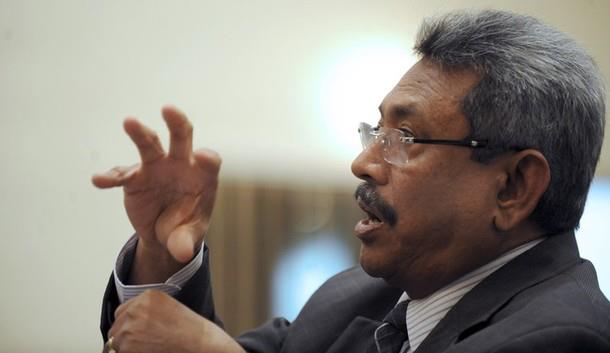
Gota Becomes Dog Abductor: Inside Story Of The Cruel Massacre Of Dogs In Sri Lanka

December 29, 2013
Secretary to the Ministry of Defence and Urban Development
Secretary to the Ministry of Defence and Urban Development
 Several
months prior to the Commonwealth Heads of Government Meeting (CHOGM)
was held in November 2013 in Colombo, a massive operation to make the
city of Colombo look clean and attractive for the event, was implemented
by the Ministry of Defence and Urban Development.
Several
months prior to the Commonwealth Heads of Government Meeting (CHOGM)
was held in November 2013 in Colombo, a massive operation to make the
city of Colombo look clean and attractive for the event, was implemented
by the Ministry of Defence and Urban Development. Part
of this operation was to remove nearly 300 homeless dogs from the
streets, and house them in temporary shelters. The organisation for
Animal Rights and Welfare ‘Ahinsa Sri Lanka’ was told by the Colombo
Municipality, that the dogs will be released in the areas they were
taken from, soon after CHOGM ended.
Part
of this operation was to remove nearly 300 homeless dogs from the
streets, and house them in temporary shelters. The organisation for
Animal Rights and Welfare ‘Ahinsa Sri Lanka’ was told by the Colombo
Municipality, that the dogs will be released in the areas they were
taken from, soon after CHOGM ended. This
assurance was made public, through newspapers and websites prior to
CHOGM. But at the latest news conference held in this regard, Animal
Rights Activist and the Chairperson of the Animal Welfare Trust
Iranganie de Silva,( wife of Minister Nimal Siripala de Silva)
disclosed, that these dogs numbering 280, had been taken in vehicles
belonging to the Armed Forces to Halavatha. ” we can assume that the
dogs were killed as they have disappeared from the Dematagoda
slaughterhouse without any trace and there was no transparency on the
part of the CMC on what they did to the dogs” she said. Read More
This
assurance was made public, through newspapers and websites prior to
CHOGM. But at the latest news conference held in this regard, Animal
Rights Activist and the Chairperson of the Animal Welfare Trust
Iranganie de Silva,( wife of Minister Nimal Siripala de Silva)
disclosed, that these dogs numbering 280, had been taken in vehicles
belonging to the Armed Forces to Halavatha. ” we can assume that the
dogs were killed as they have disappeared from the Dematagoda
slaughterhouse without any trace and there was no transparency on the
part of the CMC on what they did to the dogs” she said. Read More
2013 Top 20: Our Most Popular Posts of the Year
 Photo courtesy Vikalpa
- - on 12/29/2013
 The 20 most read posts on Groundviews over
the course of 2013. Numbers in italics indicate pageviews since the
article was published, accurate at the time of publication.
The 20 most read posts on Groundviews over
the course of 2013. Numbers in italics indicate pageviews since the
article was published, accurate at the time of publication.- CHOGM 2013: A lie well told 14,463
- Coercive Population Control in Kilinochchi 13,476
- Mohammed Irshad’s story and the banality of violence in the Rajapaksa regime12,485
- The niqab and the University of Moratuwa 11,320
- A Guide to Colombo for CHOGM 2013 10,611
- A letter to President Rajapakse from Nelson Mandela 9,550
- Bodu Bala Sena: A Threat To Sri Lanka’s Future 9,513
- Sunila Abeysekera: 1952 – 2013 8,138
- The Al Jazeera interview with Mahinda Rajapaksa: Calling the bluff 7,822
- Bodu Bala Senā and Buddhism’s militant face in Sri Lanka 6,564
- Police in Sri Lanka show their true saffron colours 5,868
- Sheep No More… 5,707
- Gotabaya Rajapaksa: Are you listening? 5,109
- The Numbers Never Lie: A Comprehensive Assessment of Sri Lanka’s LLRC Progress 4,443
- Helping the Police arrest brutish “monks” in Sri Lanka 3,853
- Sri Lanka’s Numbers Game 3,709
- A Tolerant Sri Lanka: How far will we go? 3,594
- Nepotism visualised: The Rajapaksa tentacles in Sri Lanka 3,580
- An unprecedented constitutional crisis in Sri Lanka elicits a yawn 3,510
- The Numbers Never Lie: A Quick Look at Sri Lanka’s LLRC Progress 3,493
For a round-up of content published over 2013, please read this post.
Subscribe to:
Posts (Atom)