
Sri Lanka Two Nations

Peace for the World ! Your War Our Lives!- Sri Lanka:

Peace for the World World ! Your War Our Lives

Peace for the World   World ! Your War Our Lives
The Dalai Lama

A Brief Colonial History Of Ceylon(SriLanka)

Sri Lanka: One Island Two Nations

A Brief Colonial History Of Ceylon(SriLanka)

Sri Lanka: One Island Two Nations

(Full Story)


Search This Blog

Back to 500BC.

==========================

Systematic Genocide of Tamils1956.. 1958.. 1961.. 1974.. 1977.. 1979.. 1981.. 1983.. .. 2008 State-sponsored anti-Tamil violence in 1956, 1958, 1961, 1974

Thiranjala Weerasinghe sj.- One Island Two Nations

?????????????????????????????????????????????????

Rajapaksa Family Stands To Receive In Commission Anywhere Between US$1.2 To US$ 1.8 Billion During 2005-15


Friday, May 31, 2019

Saudi Arabia says firm stand needed to deter Iran, Iraq demurs

Iraq's President Barham Salih arrives to attend the meeting for the Gulf Cooperation Council (GCC),
Arab and Islamic summits in Jeddah, Saudi Arabia May 30, 2019. The Presidency of the Republic of Iraq Office/Handout via REUTERS ATTENTION EDITORS - THIS IMAGE WAS PROVIDED BY A THIRD PARTY.

Marwa Rashad, Aziz El Yaakoubi-MONEY NEWS-MAY 30, 2019

MECCA, Saudi Arabia (Reuters) - Saudi Arabia’s king told an emergency Arab summit on Friday that decisive action was needed to stop Iranian “escalations” in the region following attacks on Gulf oil assets, as American officials said a U.S. military deployment had deterred Tehran.

A Gulf Arab statement and a separate communique issued after the wider summit supported the right of Saudi Arabia and the United Arab Emirates to defend their interests after the attacks on oil pumping stations in the kingdom and tankers off the UAE.

But in a sign of regional tensions, Iraq, which has good ties with neighbouring Iran and Washington, said it objected to the Arab communique, which stated that any cooperation with Tehran should be based on “non-interference in other countries”.

“The absence of a firm deterrent stance against Iranian behaviour is what led to the escalation we see today,” King Salman told the two consecutive meetings late on Thursday night.

The ruler of the world’s top crude exporter said Shi’ite Iran’s development of nuclear and missile capabilities and its threatening of world oil supplies posed a risk to regional and global security.

U.S. Secretary of State Mike Pompeo said on Thursday that the attacks on the four vessels near a major bunkering hub, just outside the Strait of Hormuz, were “efforts by Iranians to raise the price of crude oil around the world.”

Riyadh accused Tehran of ordering the drone strikes, which were claimed by the Iran-aligned Houthi group that has been battling a Saudi-led military coalition in Yemen for four years.

U.S. national security adviser John Bolton said on Thursday that evidence of Iran’s being behind the tanker attacks would be presented to the U.N. Security Council as early as next week.

Tehran, which is locked in several proxy wars with Saudi Arabia in the region, denies any involvement.

“The kingdom is keen to preserve the stability and security of the region, to spare it the scourge of war and to realise peace and stability,” King Salman said.

IRAQ PLEA

Iraqi President Barham Salih, asking the gathering to support Iraq’s stability, said that rising tensions with Iran could spark a war if not managed well and voiced hope that Iran’s security would not be targeted.

Pompeo has warned Iraqi leaders that if they failed to keep in check Iran-backed militias, which now form part of Baghdad’s security apparatus, the United States would respond with force.

Tensions have risen between the United States and Iran after U.S. President Donald Trump a year ago withdrew Washington from a 2015 international nuclear deal with Iran, re-imposed sanctions and boosted its military presence in the Gulf.

Bolton has said that Iranian mines were “almost certainly” used in the tanker attacks. An Iranian official dismissed that as “a ludicrous claim.”

The Islamic Republic has said it would defend itself against any aggression. Iranian Vice President Eshaq Jahangiri has said Tehran was not allowed to pursue development of nuclear weapons as it was banned by Supreme Leader Ayatollah Ali Khamenei.

UAE's Foreign Minister Affairs Sheikh Abdullah bin Zayed Al Nahyan arrives arrives to attend the Gulf Cooperation Council (GCC) meeting in Riyadh

Slideshow (2 Images)

The final communique said regional stability required the establishment of an independent Palestinian state along 1967 borders to include Gaza, the West Bank and East Jerusalem.

MILITARY DEPLOYMENT

U.S. special envoy for Iran, Brian Hook, said on Thursday that a repositioning of U.S. military assets in the region had deterred Iran, but that the United States would respond with military force if its interests are targeted.

The United States has deployed 900 additional troops to the region and extended the stay of 600 other service members, after speeding up deployment of an aircraft carrier strike group and sending bombers and additional Patriot missiles.

Egyptian President Abdel Fattah al-Sisi told the summit it was time to renew discussions on joint Arab defence mechanisms.

The United States and the UAE, which hosts a U.S. air base, on Wednesday activated a defence cooperation agreement signed earlier this year.
 
Gulf states have a joint defence force under the Gulf Cooperation Council (GCC), but the alliance has been fractured by a boycott imposed on Qatar by Saudi Arabia, the UAE, Bahrain and non-GCC Egypt since mid-2017.

The Gulf communique said the six nations had discussed the GCC defence mechanism during their meeting.

Qatari premier Abdullah bin Nasser Al Thani, whose country hosts the largest U.S. military base in the region, attended the summits, the most senior Qatari official to visit the kingdom since the embargo.

Additional reporting by David Brunnstrom in Washington, Ali Abdelaty and Mohamed Elsherifin Cairo, Guy Faulconbridge in London, Lisa Barrington and Sylvia Westall in Dubai, Eric Knecht in Doha and Babak Dehghanpisheh in Geneva; Writing by Ghaida Ghantous; Editing by Leslie Adler and Grant McCool
Posted by Thavam at 6:54 PM
Email ThisBlogThis!Share to XShare to FacebookShare to Pinterest

As he exits, Mueller suggests only Congress can ‘formally accuse a sitting president of wrongdoing’


Special counsel Robert S. Mueller said May 29 that "any testimony" from the Department of Justice would not "go beyond" what is already public. (Photo: Salwan Georges/The Washington Post)

By Matt Zapotosky ,Devlin BarrettandFelicia Sonmez-May 29 at 3:48 PM

Special counsel Robert S. Mueller III said Wednesday that his office could neither clear nor accuse President Trump of obstructing justice, leaving room for Congress to make a call where he would not and fueling impeachment demands among some Democrats.
In his first public remarks on the case since he concluded his investigation, Mueller said that if his office “had had confidence that the president clearly did not commit a crime, we would have said so,” and noted that the Constitution “requires a process other than the criminal justice system to formally accuse a sitting president of wrongdoing.”
But if Mueller was trying to suggest that Democrats could initiate impeachment proceedings, he also seemed to dash any hopes they might have had that he would be their star witness, ready and willing to detail new and unflattering information his office had uncovered about Trump.
Subscribe on:
The special counsel — who noted he was closing up shop and formally resigning from the Justice Department — said that he hoped the news conference would be his last public comments and that if he were compelled to testify before Congress, he would not speak beyond what he wrote in his 448-page report.
[Pelosi faces immediate pressure to begin Trump impeachment]

The comments — the first time Mueller has spoken on live television since his investigation began — mostly reemphasized what the special counsel already had said in his report, and they instantly fueled partisan infighting in Washington.


Special counsel Robert S. Mueller III on May 29 said it would be “unfair” to accuse President Trump of a crime since he could not be charged with a crime. (Photo: Salwan Georges/The Washington Post)

Some Democrats intensified their calls for impeachment, though their leadership in the House remained noncommittal.
In a statement, House Speaker Nancy Pelosi (D-Calif.), who has resisted a move toward such a step, merely thanked Mueller for providing “a record for future action both in the Congress and in the courts” and said lawmakers would “continue to investigate and legislate to protect our elections and secure our democracy.”
Several Democratic presidential contenders — including Sen. Kamala D. Harris (Calif.), Sen. Elizabeth Warren (Mass.) and South Bend, Ind., Mayor Pete Buttigieg — said Mueller’s comments were akin to an impeachment referral. Sen. Cory Booker (N.J.) said Congress “has a legal and moral obligation to begin impeachment proceedings immediately.”
Rep. Justin Amash (Mich.), the only Republican to call for impeachment, tweeted, “The ball is in our court, Congress.”
White House press secretary Sarah Sanders said the administration was “prepared” for an impeachment fight, though she called on Democrats to move on. “After two years, the special counsel is moving on with his life, and everyone else should do the same,” she said.
Trump said in a tweet: “Nothing changes from the Mueller Report. There was insufficient evidence and therefore, in our Country, a person is innocent. The case is closed! Thank you.” Jay Sekulow, his attorney, said Mueller’s statement “puts a period on a two-year investigation that produced no findings of collusion or obstruction against the President.”
That sentiment was echoed by prominent Republicans, including the Senate Judiciary Committee chairman, Sen. Lindsey O. Graham (R-S.C.), and the House minority whip, Rep. Steve Scalise (R-La.). They are among Trump’s biggest supporters on Capitol Hill.
[Mueller and House Democrats at impasse over how much of his testimony would be public]

Democrats vowed to press ahead with their investigations of Trump, and they did not immediately abandon the idea of compelling Mueller to testify. House Majority Leader Steny H. Hoyer (D-Md.) said in a statement after the news conference that Mueller “needs to testify before Congress” and that Mueller’s full, unredacted report needs to be turned over to lawmakers. House Intelligence Committee Chairman Adam B. Schiff (D-Calif.) said, “While I understand his reluctance to answer hypotheticals or deviate from the carefully worded conclusions he drew on his charging decisions, there are, nevertheless, a great many questions he can answer that go beyond the report, including any counterintelligence issues and classified matters that were not addressed in his findings.”
A House Democratic leadership aide said the chamber still intends to call the special counsel to appear before Congress — even if lawmakers have to compel his testimony. Should Mueller refuse, Democrats could issue a subpoena, though they were hoping to avoid such a measure.
Asked Thursday whether he would take such a step, House Judiciary Committee Chairman Jerrold Nadler (D-N.Y.) paused, flashing a pained expression face before responding, “Mr. Mueller told us a lot of what we need to hear today.”
[Roz Helderman on Post Reports: ‘I don’t think Bob Mueller winks and nods. He has said what he has to say.’]

The aide, who follows the House investigations closely and was speaking on the condition of anonymity because of the matter’s sensitivity, argued that there is value in having Mueller appear in public, even if he refuses to answer questions beyond what is in the report. Most Americans, Democrats note, have not read Mueller’s findings — but potentially millions would tune in to a hearing broadcast on national television to hear him review some of what he found.
“There are tons of benefits to the visual. . . . To animate and dramatize the report elevates public awareness of it,” the aide said.
Mueller’s highly anticipated public statement was observed by about a dozen government lawyers who stood in the back of the room on the Justice Department’s seventh floor as Mueller spoke alone at a lectern. Attorney General William P. Barr was traveling in Alaska. The White House was notified Tuesday night that Mueller planned to make the statement, according to a senior White House official. Trump held a conference call with his lawyers before and after Mueller’s remarks, according to Trump lawyer Rudolph W. Giuliani, and told them that he did not think Mueller made any news or broke new ground. Giuliani said the phrase used by the president and his team was, “Nothing new.”
Speaking softly and with an occasional rasp in his voice, Mueller laid out his reasons for not wanting to testify — mainly his belief that his report speaks for itself and his intent to return to private life.
“I hope and expect this to be the only time that I will speak to you in this manner,” Mueller said. “I am making that decision myself. No one has told me whether I can or should testify or speak further about this matter.”
If pressed to testify, he added, he “would not go beyond our report,” because “the report is my testimony.”
“We chose those words carefully, and the work speaks for itself,” Mueller said.
[Mueller complained that Barr’s letter did not capture ‘context’ of Trump probe]

Mueller thanked Barr for making most of his report public — suggesting that there might no longer be tension, as there once was, over how the attorney general was characterizing Mueller’s work. After Mueller had finished his investigation, but before his report was released, Barr had sent lawmakers a four-page letter describing the special counsel’s principal conclusions. That led Mueller to write his own missive to Barr in which he alleged that the attorney general “did not fully capture the context, nature, and substance” of investigators’ work.
Mueller did not address the dispute specifically Wednesday but said he did not question Barr’s “good faith” in releasing the report. He left without taking any questions.
After the news conference, spokespeople for the Justice Department and the special counsel’s office issued a joint statement saying there was “no conflict” between Barr’s and Mueller’s previous statements on how Mueller decided he would not reach a conclusion on whether Trump obstructed justice.
Mueller noted that his team found “insufficient evidence” to accuse Trump’s campaign of conspiring with Russia to tilt the 2016 election but emphasized that investigators did not make a similar determination on whether the president obstructed justice.
That much was already in Mueller’s report. Mueller’s team wrote that Justice Department legal guidance prohibiting the indictment of a sitting president prevented prosecutors from accusing the commander in chief of a crime, even in a private report.
On Wednesday, Mueller sought to explain his thinking more fully. A president, he said, “cannot be charged with a federal crime while he is in office. That is unconstitutional.” And he noted, “Even if the charge is kept under seal and hidden from public view, that, too, is prohibited.”
“Charging the president with a crime was therefore not an option we could consider,” Mueller said.
But Mueller said his team was still allowed to investigate Trump because it was possible that others could be charged. He did not say what prosecutors might have done if the law allowed a president to be charged, but he hinted that lawmakers could still pursue the matter. Hundreds of former federal prosecutors have opined that Mueller laid out sufficient evidence in his report to make an obstruction case against Trump.
Since filing their detailed report, Mueller and his team have been frustrated by what they perceive as a lack of understanding even among lawmakers about a critical legal point — that Justice Department policy and fairness prohibit Mueller from reaching a decision on whether the president committed a crime.
Under that policy, Mueller and his team also think it would be improper for Mueller to say that the president would be charged with obstruction were it not for the Justice Department policy, because saying that would amount to a criminal accusation against the president, according to people involved in the discussion.
Mueller’s team came to believe that making any sort of impeachment referral to Congress also would fall under the category of accusing the president of a crime, according to people familiar with their discussions.
For those reasons, Mueller has been guarded in his comments about the findings and wants to avoid being drawn into a back-and-forth in congressional testimony that could be tantamount to accusing the president of a crime, these people said.
Rachael Bade, Carol D. Leonnig, Karoun Demirjian and Ellen Nakashima contributed to this report.
Posted by Thavam at 6:53 PM
Email ThisBlogThis!Share to XShare to FacebookShare to Pinterest

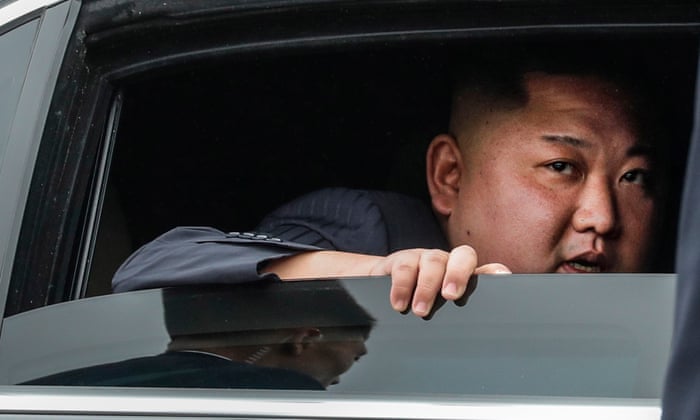
North Korea 'executes envoy to US' after Trump summit failures – report

South Korean paper claims Kim Hyok-chol has been killed and senior negotiator Kim Yong-chol subjected to forced labour
 North Korean leader Kim Jong-un arrives for the second US-North Korea summit in Hanoi, Vietnam. The leader has purged some of his senior staff. Photograph: Wallace Woon/EPA

Justin McCurry-Fri 31 May 2019 

North Korea’s special envoy to the US, who was credited with paving the way for nuclear talks with Washington, has reportedly been executed over the failure of the recent summit between North Korean leader, Kim Jong-un, and Donald Trump.

The South Korean Chosun Ilbo newspaper cited unnamed sources as saying that Kim Hyok-chol and foreign ministry officials who conducted working-level preparations for February’s doomed Trump-Kim summit in Hanoi, were executed in March.

Kim Yong-chol, a senior official who had been US secretary of state Mike Pompeo’s counterpart in the run-up to the summit, is said to have been subjected to forced labour and “ideological education”, the newspaper added.

The South Korean government has not commented on the newspaper’s claims, while the regime in Pyongyang has challenged previous media claimsabout executions.

The Chosun Ilbo claimed, however, that Kim had launched another purge of senior officials in an attempt to divert attention from internal turmoil and discontent.

“Kim Hyok-chol was investigated and executed at Mirim airport with four foreign ministry officials in March,” an unnamed North Korea source said, according to the newspaper, adding that they were charged with spying for the US.

Kim Hyok-chol had been the counterpart to Stephen Biegun, the US special representative for North Korea, before the summit.

Kim Yong-chol was forced to work in Jagang province after his dismissal, the newspaper’s source said, adding that Kim Song-hye, who carried out working-level negotiations with Kim Hyok-chol, was sent to a political prison camp.

Shin Hye-yong, who interpreted for Kim at the Hanoi summit, was reportedly detained at a political prison camp for undermining Kim’s authority by making a critical interpreting mistake, the newspaper said.

Kim Yo-jong, the regime leader’s sister who has been at her brother’s sidethroughout both nuclear summits, is also said to be “lying low” on her brother’s orders, the paper reported, citing an unnamed South Korean government official, who said: “We are not aware of Kim Yo-jong’s track record since the Hanoi meeting.”

While North Korea has not confirmed or denied the executions and other actions taken against officials, the state newspaper Rodong Sinmun said in a commentary on Thursday: “Acting like one is revering the leader in front [of others] but dreaming of something else when one turns around, is an anti-party, anti-revolutionary act that has thrown away the moral fidelity toward the leader, and such people will not avoid the stern judgment of the revolution.”

“There are traitors and turncoats who only memorise words of loyalty toward the leader and even change according to the trend of the time.”

It is the first time since the December 2013 execution of Jang Song-thaek, Kim’s uncle and mentor, that expressions such as “anti-party, anti-revolutionary” and “stern judgment” have appeared in Rodong Sinmun, according to Chosun Ilbo.

Kim has presided over several high-profile purges since he became leader in late 2011 after the death of his father, Kim Jong-il.

He has also punished those whose behaviour he considers disrespectful. In 2016, he ordered the execution of Ri Yong-jin, a senior official in the education ministry, for falling asleep at a meeting chaired by the North Korean leader.

A year earlier, Hyon Yong-chol, a former North Korean defence chief, was reportedly executed with an anti-aircraft gun, for disrespectful behaviour that included napping during a military rally attended by Kim.
Posted by Thavam at 6:53 PM
Email ThisBlogThis!Share to XShare to FacebookShare to Pinterest

Trump bypassed Congress on Saudi weapons sale. Here's how he did it

Critics say administration used 'manufactured' emergency to push $8bn sale without oversight from lawmakers
Saudi air force cargo plane at airfield in Yemen's central province of Marib last year (AFP/File photo)

By Ali Harb-30 May 2019
Schoolchildren in the United States are taught from a young age that a separation of powers is the backbone of American democracy.
The system also comes with checks-and-balances meant to limit the power that the executive, judicial and legislative branches of government can wield - to prevent overreach.
Last week, however, President Donald Trump threw that civics lesson out the window, declaring an emergency to bypass US lawmakers and greenlight an $8bn weapons deal with Saudi Arabia and the United Arab Emirates.
US Secretary of State Mike Pompeo cited recent tensions with Iran to justify pushing the sales through without congressional oversight.
Critics have rejected that justification, noting mounting scepticism towards the Trump administration's claims of an imminent Iranian threat in the Middle East. 
"It seemed more like a manufactured justification that so far is not sitting well with many members of Congress," said Christina Arabia, director at the Washington-based Security Assistance Monitor, which tracks US arms sales and military assistance to foreign countries.
Indeed, senior lawmakers have vowed to push back against the decision.
But the US president holds broad authority, and while the law grants Congress oversight over weapon sales, the administration ultimately has the upper hand.
Here's how it works:

The process

Whether a foreign country is purchasing arms from private American manufacturers or directly from the US government, the State Department has to certify that the sale is in the national security interest of the United States.
The administration, then, has to notify Congress of details of the deal.
While it does not need lawmakers' approval for the sale to go through, members of Congress have 30 days to try to stop it.
Still, blocking a weapon transfer to a foreign nation is a complicated process. Congress would have to pass a disapproval bill in both the House of Representatives and the Senate, and the president can still veto the legislation.
Because of the historical consensus in Washington over strategic foreign policy issues, Congress has seldom protested administration-approved sales.
'It seemed more like a manufactured justification that so far is not sitting well with many members of Congress'
- Christina Arabia, Security Assistance Monitor
In fact, US lawmakers have only succeeded in passing a piece of disapproval legislation against a weapons transfer once.
And that victory was short-lived.
In 1986, Congress blocked the sale of advanced missiles to Saudi Arabia. Then-President Ronald Reagan successfully vetoed the legislation, but he dropped parts of the purchase to satisfy some lawmakers and avoid a congressional override of his objection.
Congress can overturn presidential vetoes with a two-third majority in the House and the Senate.
Despite the difficulty of blocking weapon sales outright, lawmakers do have the power to hold up and derail transfers.
That's what Bob Menendez, the top Democrat on the Senate Committee on Foreign Relations, did with the precision-guided munitions to Saudi Arabia and the UAE, which prompted the recent emergency declaration.
Last year, Menendez halted the entire process by refusing to acknowledge the Trump administration's notification of a sale until he received specific clarifications about US policy in Yemen, where Saudi Arabia is leading a devastating military campaign.
Sometimes, the objection of senior lawmakers convinces the administration to stop the sale on its own, in order to avoid a potential standoff with Congress that could prove politically costly.
For example, in 2017, then-Secretary of State Rex Tillerson stopped the sale of handguns to guards for Turkey's Recep Tayyip Erdogan after protests from key legislators.

Emergency

But the same Arms Export Control Act that gives Congress oversight over major sales also grants the president a way to go around lawmakers.
To bypass Congress, the president must declare that "an emergency exists which requires such sale in the national security interests of the United States".
In practice, the president only needs to submit a justification for such a decision, making the executive branch the sole decider over what constitutes an emergency, Arabia told Middle East Eye.
Despite the relative ease of declaring an emergency, presidents have used that loophole only four times over the past 40 years to push weapon deals through without congressional scrutiny.
Coincidentally, three of those incidents involved Saudi Arabia and its allies:
  • In 1979, Jimmy Carter issued an emergency proclamation to ensure the speedy delivery of arms shipments to the Saudi-backed government in Yemen amid military confrontations with the now-dissolved socialist republic of South Yemen.
  • In 1984, Ronald Reagan used the same provision to send 400 portable anti-aircraft Stinger missiles to Saudi Arabia during the Iran-Iraq war.
  • In 1990, George H W Bush bypassed Congress to send weapons to Saudi Arabia after the Iraqi invasion of Kuwait.
  • In 2006, George W Bush rushed the delivery of precision-guided missiles to Israel during its war against Lebanon without giving Congress a 30-day notice period.
Pompeo cited those precedents in his statement last week, noting that the emergency determination will be a "one-time event".
"This specific measure does not alter our long-standing arms transfer review process with Congress," the secretary of state said.
"I look forward to continuing to work with Congress to develop prudent measures to advance and protect US national security interests in the region."

Congress tried to end US support for Saudi Arabia's war in Yemen. Here's how it failed
Read More »
Arabia noted that the previous emergency declarations were done during wartime, whereas Trump's decision aimed to strip Congress of its powers because of legislators' concerns about Riyadh's human rights violations.
"That's what makes this extremely problematic - because of who the recipients are, because of their abuse, because it's going around Congress for those things," she told MEE.
Since the murder of journalist Jamal Khashoggi at the hands of Saudi government agents at the country's consulate in Istanbul late last year, Trump has repeatedly defied Congress in support of his allies in Riyadh.
While a Republican-controlled Senate unanimously passed a resolution backing the CIA's conclusion that Crown Prince Mohammed bin Salman was responsible for the journalist's killing, the Trump administration didn't budge.
In fact, it has ignored a deadline mandated by the Global Magnitsky Act, a US human rights law, to determine the perpetrators of the crime.
Trump also vetoed legislation that aimed to end US support for the Saudi-led coalition in Yemen.
Marcus Montgomery, a fellow at the Arab Center Washington DC who tracks congressional affairs, called last week's emergency declaration a "clear escalation" by the White House against Congress.
Even key Trump allies, including Senator Lindsey Graham, have expressed opposition to the administration's decision, he said.  
"They're basically accusing the president of stripping Congress of what little oversight that they already have," Montgomery told MEE.
"Even if nothing happens immediately and these arms sales do go through, I could see where in the future Republicans and Democrats could come together to put major, major conditions on future aid to Saudi Arabia."
Posted by Thavam at 6:50 PM
Email ThisBlogThis!Share to XShare to FacebookShare to Pinterest

What it was like to be a Democrat who voted to impeach Bill Clinton


The front page of The Washington Post on Dec. 20, 1998, the day after President Bill Clinton was impeached by the House of Representatives. (Washington Post Staff/The Washington Post)

By Amber Phillips-May 29

Today, crossing party lines on impeachment will get you ostracized by your party, as Rep. Justin Amash (R-Mich.) knows all too well. Was it always this way?
Twenty years ago, five Democratic members of Congress voted to impeach President Bill Clinton, a member of their own party. Two of those lawmakers told The Fix that back then, lawmakers had much more freedom to think for themselves.
"I really don't remember much pressure,” said Gene Taylor, a former congressman from Mississippi and the only Democrat who voted for all four articles of impeachment. “I think everyone understood that every single member had to vote their conscience on that, and I think people more or less left each other alone to their own decisions.”
Taylor said his decision to impeach Clinton was “remarkably cut and dry” for him: Clinton broke the law when he lied under oath to a grand jury about his relationship with Monica Lewinsky. “We are a nation of laws, and being a lawmaker, I thought it was very im
portant that the president be the one who obeys those laws,” he said. “It really was that simple.”
Paul McHale, a Democrat from Pennsylvania, also voted to impeach Clinton. He was traveling abroad when The Fix reached him, so we spoke briefly by email. Like Taylor, he said he does not regret his vote.
"Neither my judgment nor motivation has since changed,” McHale said, pointing us to a speech he gave on the House floor explaining his vote:
“When the president took an oath to tell the truth, he was no different at that point from any other citizen, both as a matter of morality and as a matter of legal obligation,” McHale said in the speech. “We cannot excuse that kind of misconduct because we happen to belong to the same party as the president, or agree with him on issues, or feel tragically that the removal of the president from office would be enormously painful for the United States of America.”
The Clinton era was still a polarized one, and there were political costs for those who crossed party lines to impeach Clinton. Of the five Democrats who ultimately voted to impeach Clinton, three eventually became Republican (including Taylor) and McHale worked in the George W. Bush administration. However, none received the equivalent outcasting that Amash has faced for saying he’s open to impeachment: a primary challenger.
[Democrats who stood with Clinton through impeachment urge caution in pursuit of Trump]

As I wrote last week, in the Clinton era, there were more swing districts for both parties, and there was an understanding among party leaders that vulnerable members had to do what they had to do to represent their constituents and stay elected. The people who broke from their party had constituencies that were atypical from the rest of their party — one Democrat who voted to impeach Clinton, Ralph Hall, represented rural Texas, for example. Such a district doesn’t exist for Democrats anymore.
Both Taylor and McHale said they cast their vote to impeach Clinton with future generations, future presidents in mind. McHale said that at the end of his speech in particular he spoke “with President Trump — or someone like him — in mind”:
“By his own misconduct, the president displayed his character and defined it badly,” McHale said of Clinton at the time. “His actions were not ‘inappropriate.’ They were predatory, reckless, 
breathtakingly arrogant for a man already a defendant in a sexual-harassment suit — whether or not that suit was politically motivated. And if, in disgust or dismay, we were to sweep aside the president’s immoral and illegal conduct, what dangerous precedent would we set for the abuse of power by some future president of the United States? We cannot define the president’s character. But we must define our nation’s.”
When The Fix asked Taylor if he had any advice for Democrats in the House today on whether to impeach Trump, he simply said: “Do the best thing.”
Posted by Thavam at 6:49 PM
Email ThisBlogThis!Share to XShare to FacebookShare to Pinterest

Labour rulebook doesn’t mention IHRA antisemitism definition or examples


By Georgina Lee-29 May 2019

Last summer, Labour found itself in a bitter row over antisemitism, with many Jewish leaders condemning the party for its handling of the issue.

Marie van der Zyl, President of the Board of Deputies of British Jews, accused Jeremy Corbyn of “leading the Labour Party into a dark place of ugly conspiracy theories” and said the opposition had “become a home for overt antisemites and antisemitism”.

Labour adopted the International Holocaust Remembrance Alliance (IHRA) definition of antisemitism in 2016.

The sticking point last year was whether to also incorporate the IHRA’s eleven examples of antisemitic behaviour.

After months of wrangling, in September 2018, the party said it had adopted “all of the IHRA examples of antisemitism”.

But FactCheck can reveal that there is no mention of the IHRA, its definition, or any of the eleven examples in the 2019 Labour Party Rulebook — or the section of their website that deals with Labour’s code of conduct.

What was promised?

On 4 September 2018, a Labour spokesperson said that the party’s ruling National Executive Committee (NEC) “has today adopted all of the IHRA examples of antisemitism, in addition to the IHRA definition which Labour adopted in 2016, alongside a statement which ensures this will not in any way undermine freedom of expression on Israel or the rights of Palestinians.”

The NEC has the power to update codes of conduct without waiting for approval from the party conference. But eight months after the announcement, it is not possible to find the IHRA definition or its examples anywhere in the 2019 Labour Party Rulebook.

Are the IHRA examples included in any other published party documents?

There’s a section on Labour’s website called “Code of Conduct: Antisemitism and other forms of racism”.

You might expect this page to include the IHRA definition and its examples — but it doesn’t.

At the bottom, there is a link to the now-defunct 2018 party rulebook, which the webpage says “contains all of Labour’s codes of conduct”. The 2018 rulebook does not include the IHRA definition or its examples either.

Labour’s website contains only one document that uses the IHRA definition of antisemitism:
the 2017 Race and Faith Manifesto. But crucially, this doesn’t include the eleven IHRA examples.

In July 2018, the Jewish Chronicle published what they understood to be Labour’s internal guidelines on handling antisemitism.

This document, titled “NEC Code of Conduct: Antisemitism”, sets out “examples of conduct likely to be regarded as antisemitic” that were “in part derived from the IHRA working examples”.

As that language suggests, the guidelines don’t include the full suite of IHRA examples — in fact, they omit the following four:
  • “Accusing Jewish citizens of being more loyal to Israel, or to the alleged priorities of Jews worldwide, than to the interests of their own nations”
  • “Denying the Jewish people their right to self-determination, e.g., by claiming that the existence of a State of Israel is a racist endeavor.”
  • “Applying double standards by requiring of it a behavior not expected or demanded of any other democratic nation.”
  • “Drawing comparisons of contemporary Israeli policy to that of the Nazis.”
It’s not clear whether that Code of Conduct still applies, or whether it’s been superseded by the announcement that Labour has adopted all eleven IHRA examples.

What do Labour say?

We asked Labour to point us to a public document that includes the eleven IHRA examples. They were unable to do so.
FactCheck understands that not every policy adopted by the NEC is placed on the party’s website, including the definitions of Islamophobia and disability.

The Conservatives have form too

FactCheck caught the Conservatives in an almost-identical omission last year. In July, we reported that the Conservative rulebook didn’t use the term antisemitism, despite Theresa May’s assertion that the party had adopted the IHRA definition.

Just hours after we published our article, the Conservative party webpage seemed to have been quietly updated to include a mention of the IHRA that wasn’t there before.
Posted by Thavam at 6:49 PM
Email ThisBlogThis!Share to XShare to FacebookShare to Pinterest

Resounding Victory For Modi At Lok Sabha Election 2019

By S. Sivathasan –MAY 28, 2019

S. Sivathasan
logoMahatma Gandhi cited in a single cryptic sentence his reason for selecting Nehru as India’s first Prime Minister – “India is safe in Nehru’s hands”. Today India in her millions have echoed in chorus, “India is safe in Modi’s hands”. This affirmation comes after trial and test for a full five-year term. A billion Indians had a million reasons for deciding so.
I wrote five articles on Modi’s electoral prospects, from 7 October 2018; the last being on 19 May 2019, two days ahead of exit polls results. In my articles 1 – 4, I maintained with assurance and certainty that Modi and BJP will have 300 + seats. I give below some of my predictions made in my articles up to May 19, 2019 and the actuals after the elections.
How did such forecasts become possible? Having followed India’s progress, multi-sector growth, all too visible developments and owing them very much to the Modi regime, the polity had decided well ahead whom to attribute the success to. A repeat of the same became the urge and mission of the voter. To those who surveyed happenings in India, every ripple was observable. Predictions became easy.
Making them better understood, were eloquent expositions by Modi and his Ministers in Parliament. The countrywide speeches made by the leadership carried the masses sky high. Modi himself flew 100,000 miles to address the masses at 160 mammoth meetings. In contrast to these persuasive speeches was the puerile prattle from the Congress leader. Little wonder he lost even the family pocket borough – Amethi in UP — to Smriti Irani whose victory was certain from the day Rahul announced his shift to Vayanadu
To this writer what moved mountains in the voting pattern in favour of BJP was the sustained performance of the regime in five years, presented in a masterly fashion by Modi. Above all, the charisma he exuded gripped his audiences like a narcotic. He took the masses as intelligent human beings who could understand all the statistics that he splashed across. From the very outset, when he entered national politics six years ago, he got the trusted support of his lieutenants and carried the masses with him.
His reading and absorption of Swami Vivekananda he used with deadly effect. To him food to the starving, poverty alleviation of the neglected farmer, satisfying the material side of life before reaching for the less intelligible spiritual, were all relevant and important. Sages mortified the flesh. Vivekananda and Modi understood perfectly Ramakrishna when he said “To the starving man God appears in the form of bread”. This perception underlay the payment of a token Rs. 6,000/= per annum per farmer family. Doubling of farmer income by 2022, the 75th year of independence is the solid pledge for the immediate future. Rahul promised 12 times more immediately after victory! Who believed it?
Seat share that the polity gave, displayed trust reposed in Modi and disbelief of Rahul. Sathyam Eva Jayathe – Truth Alone Triumphs – is inscribed in bold relief in Lok Sabha. “Na Anarithum”- never untruth- was not ever inscribed in Rahul’s mind. It was best exemplified in his refusal to acknowledge his untruth over Rafael Deal even after Nirmala Sitharaman, Minister of Defence ripped and demolished him five times in parliament and out.
The dust has settled over the hustings. What hovers yet more is the euphoria about the victory. It has won the encomia of the world and brought genuine – not formal – accolades from world leaders. India’s reactions were different. After voting in phase III when 302 or 59% of the electorates had voted, it became clear that BJP was winning. After phase IV on April 29 and 69%, the leadership was reassured of a great victory. 
Not wishing to waste even a day from then, Modi ordered a macro plan be outlined for the first 100 days rolling into 2022 (75th year of independence), 2030, 2040 and even 2050. The 22 oppositionist formations showing their hideous front and divided back, scampered for their own safe haven and stridently reassured themselves and the voters of a great victory. Six Prime Ministerial aspirants had already become PMs and remained rivals till 23, May 2019. However strident their cry, the country thought otherwise. Modi is now set on his next five-year term with a third term to follow.

Read More

Posted by Thavam at 6:47 PM
Email ThisBlogThis!Share to XShare to FacebookShare to Pinterest

Foreign policy complexities to the fore in India 


article_imageMay 29, 2019, 8:33 pm

In his second term in office Indian Prime Minister Narendra Modi will continue to find that his challenges on the foreign policy front are as exacting and as complex as his domestic chores. One of his foremost challenges locally is to generate jobs in increasing numbers for the employable who are entering the job market monthly in the tens of thousands, it is reported. However, challenges such as job creation, it is bound to be found, are tied-up considerably with the deftness and effectiveness with which the Modi administration manages its foreign policy questions.

Interestingly, this close link between domestic economic issues and foreign policy formulation and direction is not peculiar to only India in the South Asian region. The dominance of economics over most other considerations is so great currently that the foreign policy posers in focus here could be found to be common to most states of this region, big or small.

There is the case of Sri Lanka, for instance. For understandable reasons its present preoccupations are of a security nature but once Sri Lanka satisfies itself that its security chores have been satisfactorily dealt with it would need to think of long term stability and the latter could only come through ethnic and religious harmony combined with sustained economic growth and re-distributive justice. In fact, the achievement of the latter tasks will lay the basis for national security in the long term. These issues call for a deft handling of questions on a number of fronts and these challenges spare none of the states of the region.

India has been on a fine balancing act over the years on the foreign policy front but the present correlation of international political forces is such that it would be required of India to carry out this act with increasing delicacy and tact. It is reported that Prime Minister Modi’s first international state visit in his second term would be to none other than the Maldives; a small state in South Asia, like Sri Lanka. As some commentators have pointed out, this serves the purpose of underlining India’s concern for the sustenance of democracy in the Maldives but the visit is also indicative of the great importance India places on good neighbourly relations.

Viewed from this perspective, it does not strike the observer as advisable for India to keep the Pakistani Prime Minister out of the Indian Prime Minister’s upcoming swearing-in ceremony. Inasmuch as it is important for India’s closest neighbours to be on the best of terms with her always, it is crucial that India ensures that all efforts are made by her to mend fences with Pakistan. Minus such exercises even a measure of peace is inconceivable in South Asia.

It is hoped that Sri Lanka would understand the message from India coming out of Modi’s planned visit to the Maldives, and work out its implications perceptively. Opposition sections in Sri Lanka in particular have this fatal tendency of attaching disproportionate importance to extra-regional actors on resolving dilemmas confronting Sri Lanka currently on the foreign policy front but there is no getting away from the paramount importance of having cordial and mutually-beneficial ties with India. This is in consideration of India being our closest neighbour and the biggest country in the region at that.

China and Russia, for example, are unlikely to sacrifice their good relations with India for Sri Lanka’s sake, come crunch time. Besides, these states are not likely to undermine their ties with the US and the West to further Sri Lanka’s interests if such actions run contrary to their own national interests. Such are the ways of Realpolitik.

Accordingly, it would be in Sri Lanka’s legitimate interests to make the best use of India’s current regional policy emphasis on generating greater cordiality in its immediate neighbourhood. The same applies to the Maldives. In other words, India’s smaller neighbours in particular would do well to work in concert with India insofar as their best interests are served this way. Ideally, a good neighbourhood policy should be the choice of India’s closest neighbours as well.

However, India’s field of engagement in the days ahead would far transcend South Asia. Almost immediately after Modi’s visit to the Maldives he is expected to attend a Shanghai Cooperation Organization summit in Kyrgystan and a G20 summit in Osaka, Japan. In other words, the Indian leader would be interacting with all the powers that matter currently because the two organizations in question have to do with almost all of them.

The SCO has within its fold China and Russia, for instance, and the G20 features the foremost powers of the West led by the US along with many other world heavyweights. India would be perceiving it to be in her interests to work cordially with all these powers and she cannot be at serious cross-purposes with any one of them.

Given that complexity, fluidity and ambiguity chiefly characterize the current international political and economic order, India would have no choice but to adopt a highly nuanced and flexible foreign policy. For example, she cannot afford to have long, strained ties with China, although it is plain that she is engaged in a struggle for influence and control with China in the South Asian region.

Such competition is only to be expected between two major regional powers but it would be in their economic interests in particular to relate as cordially as possible with each other. India is a major economic power in her own right, but China’s economic penetration is world wide and it would be foolhardy on a state’s part to ignore this fact.

On the other hand, India cannot afford to even briefly forget contemporary power realities which are in a state of flux. While getting on as best as she could with China it would be in her interests to be on the most cordial terms with the US and other Western powers that matter as well. This is in order to balance her ties with China and Russia and to also perpetuate her commitment to democracy and its principal values. Meanwhile, India would like to be on the best of terms with Russia in view of Russia’s recent tilt towards Pakistan and also in consideration of Russia’s attempts to regain a firm foothold in South-west Asia and Afghanistan.

India ought to be concerned about the US’ perceived manoeuvres in the Asia-Pacific but she would believe it to be in her interests to not to be at cross-purposes with the US in this theatre because of the tremendous and growing economic importance of the ASEAN region, where China’s economic links are growing.
Accordingly, a country of India’s stature cannot afford to look at the world in stark black-and-white terms. For India and other powers of her kind the world presents itself mainly in shades of grey. Their foreign policies would need to be finely calibrated to meet their prime needs. It could be said that Modi’s leadership is likely to be tested very considerably in the arena of foreign policy as well.
Hopefully, India under Modi’s Premiership, would consider it to be on its priority list to ensure that SAARC is up and running once again. BIMSTEC has its merits in comparison to SAARC no doubt, but SAARC is no spent force and should be seen as vital in re-establishing good neighbourly relations in the region.
Posted by Thavam at 6:46 PM
Email ThisBlogThis!Share to XShare to FacebookShare to Pinterest
Newer Posts Older Posts Home
Subscribe to: Posts (Atom)

Sri Lanka's Killing Fields 2

https://www.facebook.com/oneislandtwonations


25th Regular Session Human

Rights Council


No Fire Zone - Full Documentary/M


Web: http://www.yarlmusic.com

'No Fire Zone - The Killing Fields of Sri Lanka


Vasudeva Nanayakkara tells Judiciary to go to Hell! Who are you to
say so? ask Sumanthiran

MA Sumanthiran’s Speech in Parliament on January 10th, 2013
Speech by M.A> Sumanthiran MP in Parliament on January 10th, 2013 ~ Debate on the Impeachment of Chief Justice Dr. Shirani Bandaranayake ~

Masters of Money: Marx (3/3 BBC) .avi


பதிவுகள் (PATHIVUKAL-

ONLINE TAMIL MAGAZINE)

அனைவருடனும் அறிவினைப் பகிர்ந்து கொள்வோம்!'
'Sharing Knowledge with every one' !
logo.gif (31909 bytes)

Sri Lankan Tamil
Diaspora


*BBC Tamil

தமிழோசை

BBCSinhala.com
*සංදේශය
BBC SINHALA

Warning Disturbing Images: New Footages

Of Alleged War Crimes


US AMBASSADOR

i i

Lanka Killing Fields - Channel 4 UK Part 1

M.A. Sumanthiran explains not attending 19th UNHRC Sessions-BBC

Last king of Kandy remembered in Tamil Nadu

The last King of Kandy
The paintings of the King and Queen made by a British Army officer before they were taken to Vellore
The throne, crown and other regalia of Sri Wikrama Rajasinghe in the display of Colombo museum. Image courtesy: Srilanka.travel-culture.com

*Justice for All? - The International Criminal

*Reconciliation in Sri Lanka Slow progress

LLRC head’s wife to be appointed as Justice Ministry Secretary


SRI LANKA – TELL THE

A FEDERAL CONSTITUTION IS

THE BEST FOR OUR COUNTRY

JUSTICE C. V. WIGNESWARAN, FORMER JUDGE OF
THE SUPREME COURT OF SRI LANKA

NORAD

*Pawns of Peace: Evaluation of Norwegian peace efforts in Sri Lanka, 1997-2009


Nimalka Fernando speech

Nimalka Fernando speech

SRI LANKA – TELL THE TRUTH [AMNESTY

TNA MP Sumanthiran's submission against 18th Amendment

Parliamentary debate on deterioration of human security in the North of Sri Lanka


*Conversations on Courage: Archbishop

*Dr. Jehan Perera on Post Election Expectations
Kenya: Water Scarcity

Hot News-Sri Lanka: One Island Two Nations

Sri Lanka: Jaffna Public Library

destroyed by Sinhala Police -

================

Tamil Canadians

*Monks destroy Muslim shrine as police stand idle


*Univer
sity of Jaffna, Sri Lanka.


*Jaffna(City)


Journalists For Democracy in Sri Lanka

*Journalists For Democracy in Sri Lanka

Lasantha

AlJazeeraEnglish


AlJazeeraEnglish

Pages

  • Home

Blog Archive

  • ►  2010 (79)
    • June (1)
    • October (10)
    • November (25)
    • December (43)
  • ►  2011 (1583)
    • January (35)
    • February (43)
    • March (46)
    • April (80)
    • May (103)
    • June (118)
    • July (132)
    • August (103)
    • September (143)
    • October (251)
    • November (242)
    • December (287)
  • ►  2012 (5390)
    • January (329)
    • February (368)
    • March (334)
    • April (385)
    • May (364)
    • June (392)
    • July (394)
    • August (447)
    • September (468)
    • October (508)
    • November (677)
    • December (724)
  • ►  2013 (9140)
    • January (732)
    • February (690)
    • March (736)
    • April (713)
    • May (717)
    • June (773)
    • July (771)
    • August (746)
    • September (847)
    • October (802)
    • November (811)
    • December (802)
  • ►  2014 (9437)
    • January (807)
    • February (707)
    • March (825)
    • April (746)
    • May (841)
    • June (800)
    • July (816)
    • August (762)
    • September (740)
    • October (788)
    • November (767)
    • December (838)
  • ►  2015 (9180)
    • January (829)
    • February (688)
    • March (790)
    • April (735)
    • May (775)
    • June (714)
    • July (800)
    • August (772)
    • September (770)
    • October (804)
    • November (772)
    • December (731)
  • ►  2016 (9001)
    • January (811)
    • February (779)
    • March (834)
    • April (759)
    • May (773)
    • June (777)
    • July (715)
    • August (642)
    • September (532)
    • October (804)
    • November (771)
    • December (804)
  • ►  2017 (9110)
    • January (816)
    • February (740)
    • March (812)
    • April (748)
    • May (795)
    • June (756)
    • July (835)
    • August (781)
    • September (714)
    • October (742)
    • November (604)
    • December (767)
  • ►  2018 (7234)
    • January (795)
    • February (740)
    • March (798)
    • April (717)
    • May (667)
    • June (557)
    • July (490)
    • August (450)
    • September (502)
    • October (452)
    • November (421)
    • December (645)
  • ►  2019 (4764)
    • January (599)
    • February (579)
    • March (632)
    • April (603)
    • May (663)
    • June (640)
    • July (251)
    • August (23)
    • November (161)
    • December (613)
  • ►  2020 (8707)
    • January (623)
    • February (644)
    • March (796)
    • April (776)
    • May (791)
    • June (750)
    • July (794)
    • August (774)
    • September (720)
    • October (696)
    • November (717)
    • December (626)
  • ►  2021 (7817)
    • January (627)
    • February (610)
    • March (678)
    • April (642)
    • May (664)
    • June (655)
    • July (631)
    • August (650)
    • September (669)
    • October (691)
    • November (624)
    • December (676)
  • ▼  2022 (4312)
    • January (697)
    • February (656)
    • March (744)
    • April (731)
    • May (754)
    • June (680)
    • July (25)
    • September (25)

About Me

View my complete profile
Watermark theme. Powered by Blogger.
