Peace for the World World ! Your War Our Lives

The Dalai Lama
A Brief Colonial History Of Ceylon(SriLanka)
Sri Lanka: One Island Two Nations
A Brief Colonial History Of Ceylon(SriLanka)
Sri Lanka: One Island Two Nations
(Full Story)
Back to 500BC.

Thursday, September 8, 2016
MR’s Breakaway & SLFP’s Family-Rule Mindset

By Vishwamithra1984 –September 7, 2016
“The essence of oligarchical rule is not father-to-son inheritance,
but the persistence of a certain world-view and a certain way of life … A
ruling group is a ruling group so long as it can nominate its
successors … Who wields power is not important, provided that the
hierarchical structure remains always the same.” ~ George Orwell
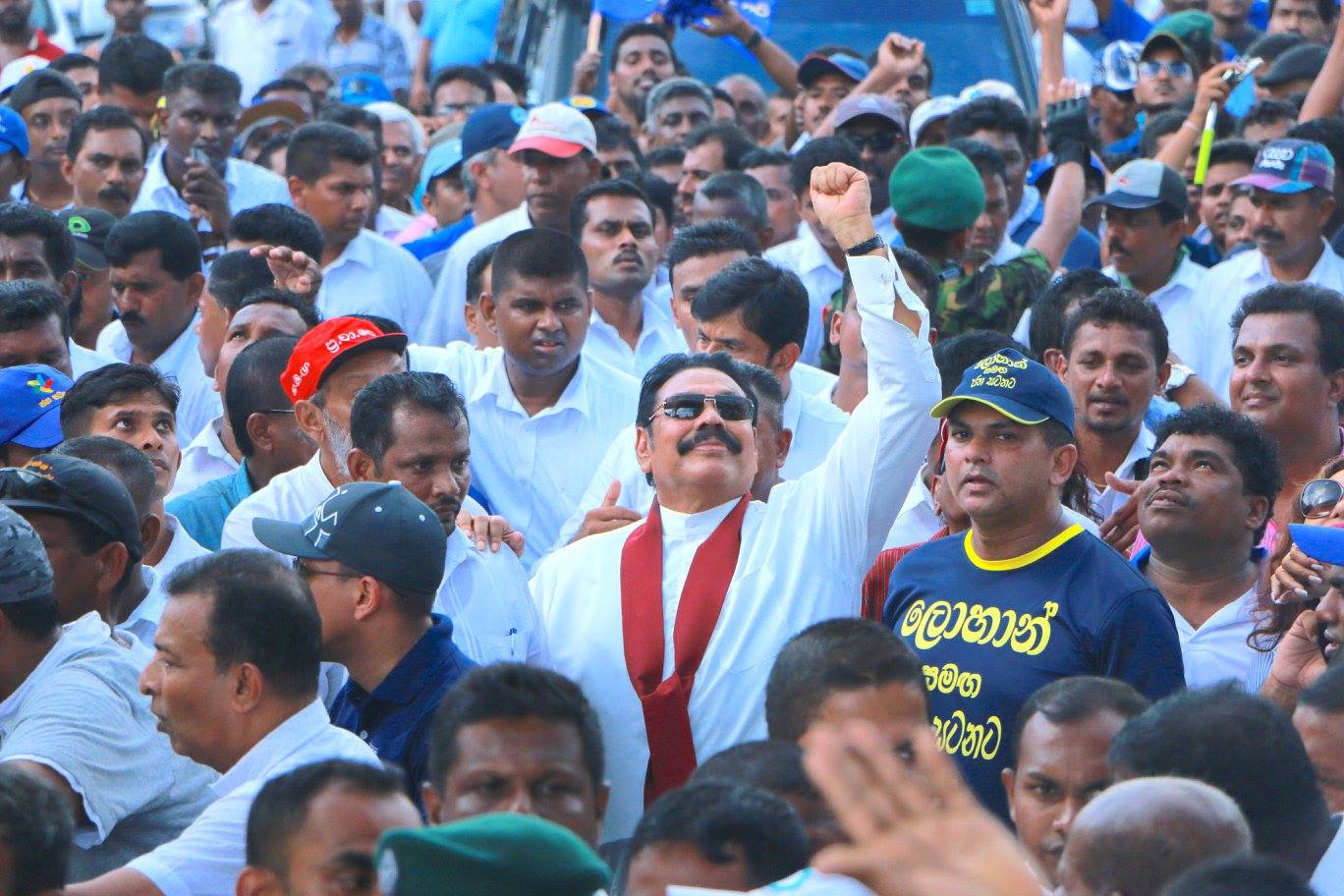 Succession
of leadership of political parties is always a subject of controversy.
In Sri Lanka, all these political entities which came into being in the
early part of the 20th Century, the overall political dynamic has been
that they were basically founded on either political ideology or
representing a particular social class. Ceylon National Congress, not as
a political party, but as the mainstream political entity of the
Legislative and State Councils days, was in a sense the source of all
political activity at the time. The dominance of the Ceylon National
Congress in the political mosaic in Sri Lanka cannot be denied. Its
pre-eminent role in shaping and defining the national political
discourse and drafting and enacting laws and legislations to suit the
individual lines of that mosaic in the period immediately preceding
Independence in 1948 has been adequately chronicled.
Succession
of leadership of political parties is always a subject of controversy.
In Sri Lanka, all these political entities which came into being in the
early part of the 20th Century, the overall political dynamic has been
that they were basically founded on either political ideology or
representing a particular social class. Ceylon National Congress, not as
a political party, but as the mainstream political entity of the
Legislative and State Councils days, was in a sense the source of all
political activity at the time. The dominance of the Ceylon National
Congress in the political mosaic in Sri Lanka cannot be denied. Its
pre-eminent role in shaping and defining the national political
discourse and drafting and enacting laws and legislations to suit the
individual lines of that mosaic in the period immediately preceding
Independence in 1948 has been adequately chronicled.
Yet the baton of leadership of the Ceylon National Congress, inaugurated
in 1919, beginning with its founding leader Sir Ponnambalam
Arunachalam, passed from one hand to the other without discrimination
against any ethnicity, caste or creed. Its nucleus was the
Colombo/foreign-educated elite representing all ethnic groups,
Sinhalese, Tamil, Muslim and Berger. Its secular stance on almost all
national issues was commendable and the sense of camaraderie
demonstrated among its members was exemplary, at least in the first few
years of its operations. The first cracks in this union of multi-ethnic
Congress appeared when Sir Ponnambalam Arunachalam resigned from the
Congress in 1921. Delivering the ‘Sir Ponnambalam Arunachalam Memorial
Oration’, on January 19, 2009, Dr. Brendon Goonartane, scholar
physician, said:
